Multimodal Assessment in ABA: Why One Tool Isn't Enough
Multimodal assessment combines several tools for one learner. See why guidelines warn against single-instrument testing and how to audit yours.
Key takeaway
Multimodal assessment means using more than one tool to understand a learner. No single test can capture a whole person. So you combine several strategies into one package.

genArete: Learner-Centered Skill Assessment
Free learning path on this topic
Child Development for Behavior Analysts
Typical development for behavior analysts. Kristen Byra's overview, then Kelly Brzak's deep dives on ages 2 to 5, 6 to 8, and 9 to 11, with milestones, common problem behaviors, and programming tips for each band.
Experts who cover this
2 recordings on openceu cover multimodal assessment aba.
- Featured talk1 CEU
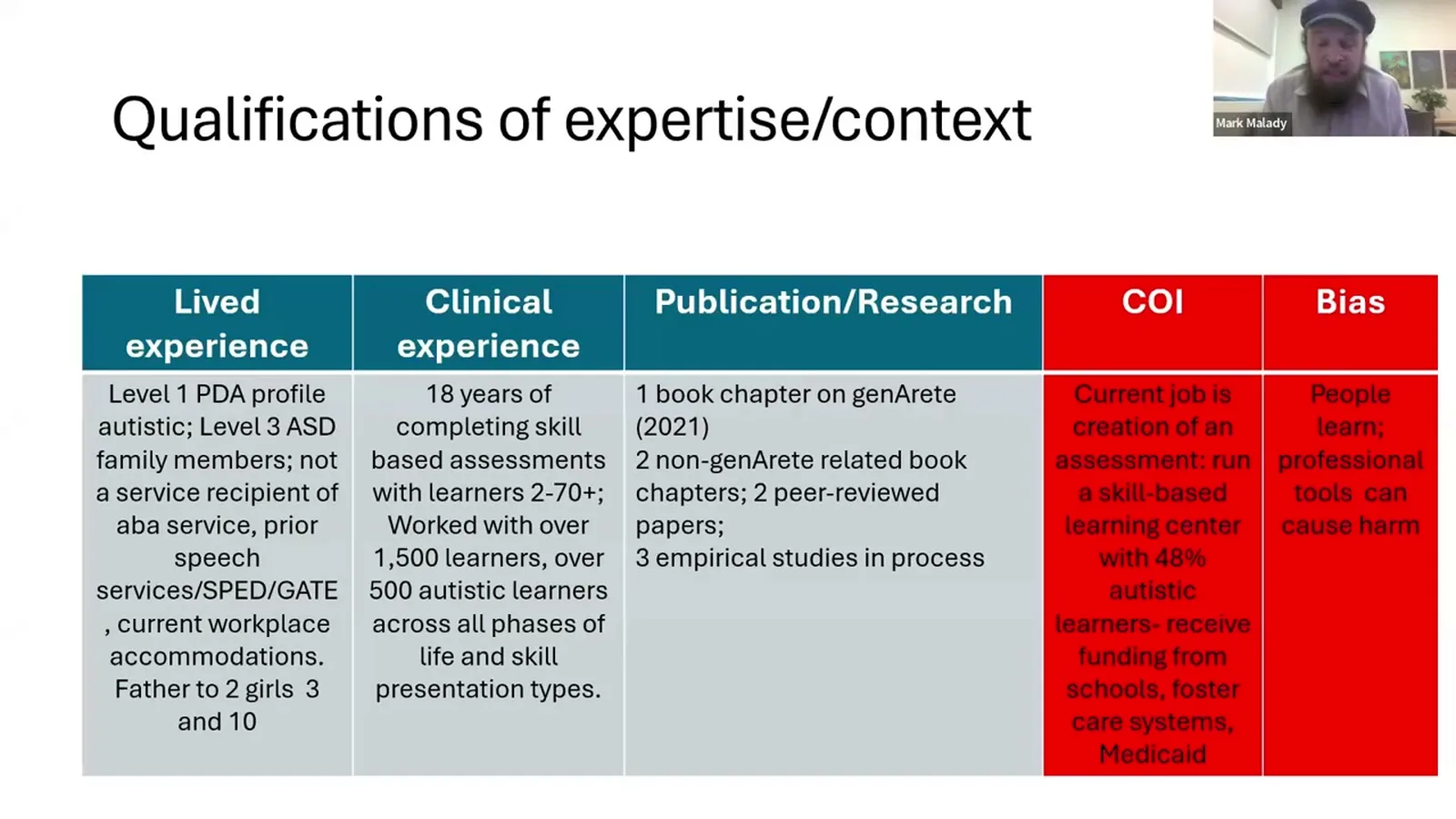
genArete: Learner-Centered Skill Assessment
Mark MaladyThe Behaviorist Bookclub
Citing CASP/APBA guidelines, Mark argues no single instrument fits every learner and clinicians should combine multiple assessment strategies into an…
- 1 CEU
Generate: Learner Centered Skill Assessments
Mark MaladyThe Behaviorist Bookclub
CASP/APBA guidance recommends against single-instrument assessment in favor of individualized assessment packages; Mark gives a practical audit tip of…

On this page · 7 sections▾
Multimodal assessment means using more than one tool to understand a learner. No single test can capture a whole person. So you combine several strategies into one package. Each tool adds a piece the others miss.
This idea matters to BCBAs, RBTs, teachers, and parents. A single test can lead to a narrow, biased plan. A mix of tools gives a fuller, fairer picture. That picture is what good, learner-centered goals are built on.
What multimodal assessment is#
Mark Malady frames multimodal assessment around one simple truth. Learners are different, so one tool cannot fit them all. Field guidelines back this up. They warn that no single instrument works across learners.
a big recommendation of the guidelines is that to this point, they have not seen single instruments that can fit the need across learners. From the talk — Mark Malady
The guidelines Mark cites come from CASP and APBA, two ABA practice groups. Their advice is clear. Do not lean on a single-modal approach. Build a package that fits the person in front of you.
Why one tool is not enough#
Every assessment tool has a lens and a blind spot. A language tool may miss daily living skills. A broad rating scale may miss fine detail. When you use only one, you inherit all of its gaps.
A multimodal approach covers those gaps. One tool checks language, another checks adaptive skills, another checks something else. Together they build a rounded view. That view is much harder to argue with.
This also protects against a hidden risk. A single tool can push everyone toward the same narrow goals. A mix keeps the focus on the individual. It makes real differentiation possible.
The red flag test#
Mark offers a sharp way to check your own practice. Imagine pie-charting the assessments you used for your last ten clients. If every client got the same tool, that is a warning sign. It means you are not truly individualizing.
If everybody, if you have one color, that should be a red flag. That means that the multimodal vision is not playing out, right? We're not actually differentiating. From the talk — Mark Malady
The color test is quick and honest. One color across all clients means one approach for all. Real learner-centered work looks more varied. Different learners should call for different tool mixes.
Building an assessment package#
 Advertisement
Mark keeps the how-to simple. You do not need a brand new system. You pick the tools that fit each learner and name the set. Then you track that combination like a code.
if you use the VB map and the Ables and the Vineland, you just make a unique code for whatever package of assessments you do. From the talk — Mark Malady
Here he names three common tools by their short names. The VB-MAPP and the ABLLS check language and learning skills. The Vineland checks adaptive, real-life skills. Mixing them gives a broader read than any one alone.
Naming the package helps you stay organized. You can see at a glance which learners got which mix. That record makes the red flag test easy to run later. It keeps you honest about differentiation.
The full method is walked through in Generate: Learner Centered Skill Assessments.
How multimodal assessment helps learners#
A multimodal approach leads to fairer, richer goals. Each tool shines a light on a different area. One shows language, another shows daily living skills. Together they reveal strengths a single test would miss.
This also guards against a copy-paste plan. When every learner gets the same tool, goals start to look alike. A varied tool mix pushes you to see each person. The plan then fits the learner, not a template.
Families feel the difference too. A rounded assessment shows you looked at the whole child. It respects the child's real life and needs. That respect builds trust in the plan you propose.
There is a practical payoff as well. A broad view catches gaps early, before they grow. You spend less time chasing the wrong goal. The learner makes faster, more meaningful progress.
A multimodal set also strengthens your clinical case. Two or three tools that agree give you more confidence. When they disagree, that tension points to something worth exploring. Either way, you learn more than one tool could show.
This approach does take more planning up front. You choose tools on purpose instead of by habit. But the payoff is a plan you can defend. It reflects the real learner, not a default.
What the research says#
Research keeps pointing to the limits of a single measure. One study of parent-directed early intervention found mixed results across six children. The authors concluded these mixed outcomes highlight the need for multimodal assessment of treatment (Parent-directed, intensive early intervention for children with pervasive developmental disorder). One data source alone did not tell the whole story.
Combining tools can also sharpen diagnosis. In one study, a mix of motor questionnaires, a movement battery, and a reach task was used. This multimodal set helped tell autistic children apart from ADHD and typical peers with useful accuracy (A multimodal approach can identify specific motor profiles in autism and attention-deficit/hyperactivity disorder). Several measures together beat any single one.
The pattern shows up in other populations too. A review of eating disorders in adults with intellectual disability named multimodal assessment as an emerging need. The authors called for multicomponent assessment and treatment models (Eating disorders in adults with intellectual disability). Across fields, one tool rarely captures a complex person.
FAQ#
What is multimodal assessment in ABA? It is the practice of using several assessment tools for one learner. No single test can capture a whole person. You combine tools so each one covers the others' gaps. The result is a fuller, fairer picture of the learner.
Why do guidelines discourage single-instrument assessment? Because no one tool fits the needs of every learner. A single test brings its own blind spots and biases. Guidelines from groups like CASP and APBA recommend against single-modal approaches. They ask clinicians to build individualized assessment packages instead.
How do I know if my assessments are truly multimodal? Try Mark Malady's red flag test on your last ten clients. Chart which tools you used for each one. If every client got the same tool, that is a warning sign. Real differentiation shows a varied mix across learners.
 Advertisement
Turn this topic into a CEU
You just studied this. Now get credit for it.
Watch genArete: Learner-Centered Skill Assessment with Mark Malady, BCBA and earn 1 free BCBA CEU. Detailed certificate, delivered the moment you finish.
Keep going with a free learning path
Child Development for Behavior Analysts
Typical development for behavior analysts. Kristen Byra's overview, then Kelly Brzak's deep dives on ages 2 to 5, 6 to 8, and 9 to 11, with milestones, common problem behaviors, and programming tips for each band.