Increased Latency Prompting for Toddlers: Why 10 Seconds of Silence Wins
Most 2-5 year olds need more than 3-5 seconds to respond. How to use increased latency, repetition, and fewer demands to get real language, from a BCBA-led CEU.
Key takeaway
Count to ten before you say another word, swap "oh look, here's the car, touch the wheels, how many tires?" for "car. beep beep," and stop stacking WH questions on a two-year-old who is still figuring out how mouths work.
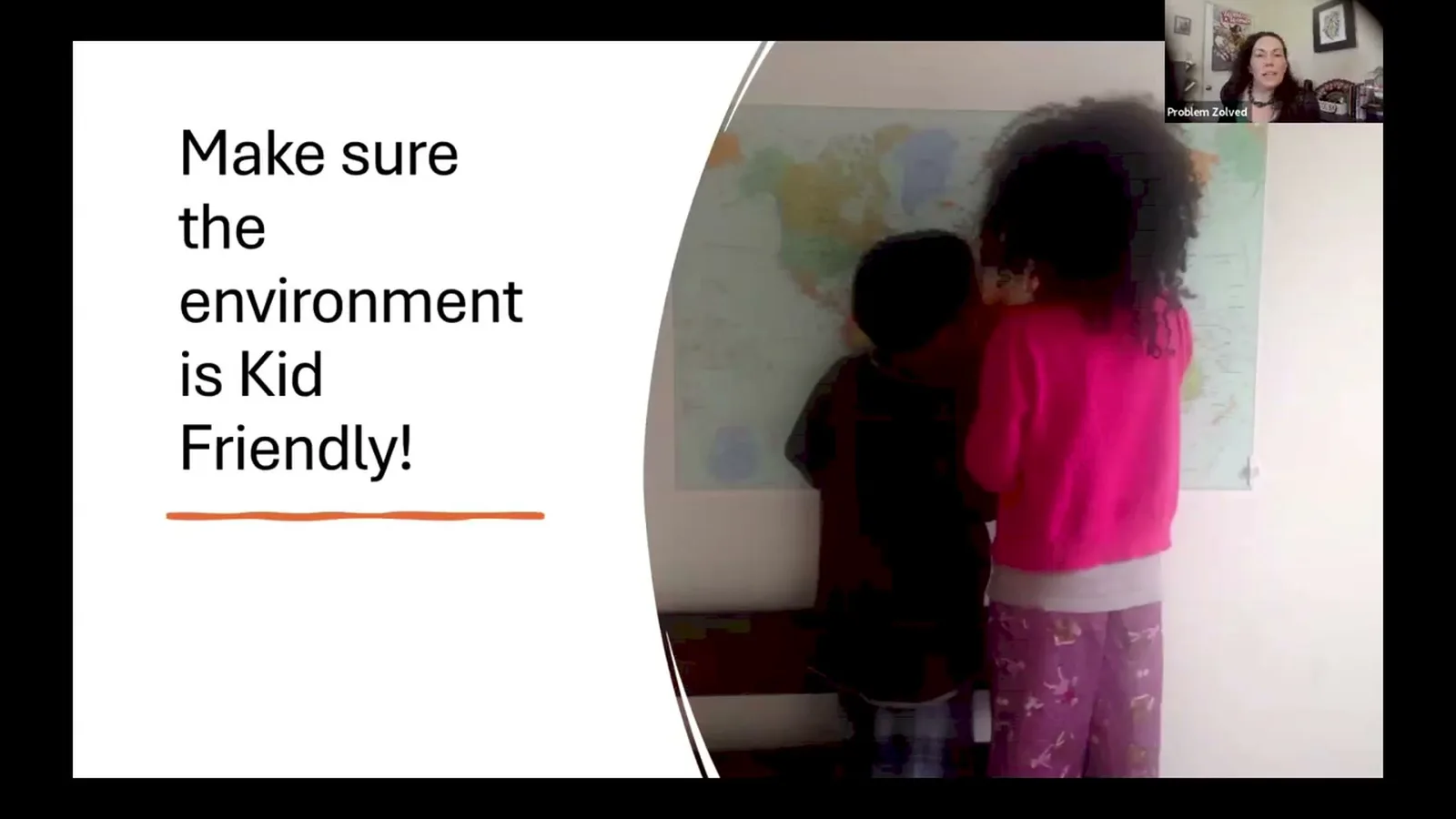
Child Development Deep Dive: Early Childhood (2-5 year olds)
On this page · 9 sections▾
Count to ten before you say another word, swap "oh look, here's the car, touch the wheels, how many tires?" for "car. beep beep," and stop stacking WH questions on a two-year-old who is still figuring out how mouths work. That is the whole technique in one breath, and it is the difference between a toddler who responds and a toddler who learns to tune you out.
This page pulls the prompting and demand-density piece out of Kelly Brzak's BCBA-led CEU on early childhood programming. If you supervise BTs working with 2 to 5 year olds, this is the part of her training your team needs taped to the inside of the session bag.
Where the 3-5 second prompt rule came from and why it fails toddlers#
Most of us got taught the same thing in coursework: present the SD, wait three to five seconds, then prompt. That rule was written for learners who already have a stable response repertoire. It was not written for a 30-month-old who is still building the motor plan to get a single word out of their mouth.
When you cap latency at five seconds with a toddler, you almost always prompt before the kid was actually done thinking. You teach prompt dependence, you teach "the adult will rescue me," and you train your own behavior to fill silence with more talking. None of that builds independent responding.
Kelly's reframe is simple. Stretch the wait, narrow the language, and trust that the kid is still working on it.
What 10 seconds of silence actually feels like in session#
Ten seconds is uncomfortable. It feels like a problem. It is not a problem.
"I want to encourage you to look into and use increased latency. Instead of expecting a response within three to five seconds. I've found many children that will respond independently in 10 seconds or longer of silence."
Try this in your next session. Present the SD, then put your hands in your lap, close your mouth, and silently count "one Mississippi" up to ten. Watch where the kid's eyes go. Watch their hands. A lot of the time the response shows up around second seven or eight, right where you used to prompt.
If the kid still has not responded at ten seconds, then you prompt. You did not lose anything. You just stopped harvesting prompt-dependent responses and started harvesting independent ones.
The "car / beep beep" rule: repetition over interrogation#
The second half of the fix is what comes out of your mouth when you are not silent. Most BTs, when handed a toy car and a two-year-old, will produce roughly fifteen language acts in the first twenty seconds. Kelly's example of what that sounds like:
"Use repetition of single words. Beep beep. Instead of, oh, look, here's the car. Touch the wheels. How many tires?"
That second version is six demands disguised as play. It is exhausting for a typical toddler and impossible for one who is still building joint attention. The first version, "car. beep beep," is one label, one sound effect, and a giant runway of repetition the kid can actually catch.
Repetition is not a downgrade. It is the dosage early learners need. Read the same board book six times. Push the same car across the same rug with the same "beep beep." That is the input that turns into output.
Why too many WH questions punish responding#
WH stacking, "what color is the car, who drives the car, where does it go, what does it say," looks like teaching. It is actually a punishment schedule for emerging speakers.
"If we reduce the questions or demands, we give them less of a chance to avoid us or ignore us or tell us no."
Every WH question a toddler cannot answer is a trial they "failed." Stack five of them in a row and the kid learns one very clear contingency: when this adult talks, hard stuff happens. Avoidance behavior follows. Eye contact drops. The session goes sideways and the BT writes "non-compliant" in the notes.
The fix is upstream. Stop asking, start labeling. "Car. Beep beep." Then wait.
Yes-no questions as a verbal behavior bridge#
When you do need to evoke a response, do not start with WH. Start with yes-no.
"Be mindful of confusing verbal behavior instead of jumping in with WH questions. Evoke yes-no questions."
Yes-no is a one-bit choice. The motor plan is small (a head shake, a single word, a sign), the receptive load is small, and the kid has a 50% chance of being right by guessing, which means the reinforcer flows even on a wobble. That is exactly the setup an early learner needs to build a responder repertoire.
"Want the car?" is a better trial than "what is this?" "Is it red?" is a better trial than "what color?" Once yes-no is solid across people and stimuli, you have earned the right to start adding WH back in, one question type at a time.
Coding tech language: counting questions vs statements per minute#
You cannot fix what you do not measure, and the BT who is over-talking almost never knows they are doing it. Kelly's tool is dead simple: sit in on a session with a tally sheet and code two columns. Questions per minute. Statements (labels, comments, narration) per minute.
A healthy ratio for a 2 to 5 year old skews heavily toward statements. If your tally comes back at 12 questions per minute and 3 statements per minute, you have your answer for why the kid is shutting down.
Show the BT their own numbers. Not your impression of their session. The actual tally. Then code it again the next week. This is the cleanest BST cycle there is for language coaching, and it does not require you to tell anyone they are doing it wrong. The data does that.
How to coach an over-talkative BT without making them defensive#
Most over-talking is anxiety. The BT can feel the silence and they are filling it because silence feels like failure. So when you coach this, you are not correcting a skill error. You are giving them permission to do less.
Three moves that work:
- Hand them a script. Not a full session plan, just five labels and three sound effects for the toys they brought. "Today we are only saying these eight things." It feels weird for ten minutes and natural by minute fifteen.
- Sit silently beside them and model one round. You do the toy. You wait ten seconds. You say one word. Then you hand it off. Watching the silence is a different teach than hearing about it.
- Frame the change as a kid behavior, not a BT behavior. "We are trying to get more independent responses from Mateo this month, so we are going to cut adult talk in half and stretch wait time to ten seconds." Now the BT is on the kid's team, not the defendant.
FAQ#
Will using longer latency slow down skill acquisition? Not in our experience. You will see fewer prompted responses per session and more independent ones, which is the actual goal. Trials to mastery often go down because you are no longer reinforcing prompt dependence.
What if the kid just walks away during the silence? That is information, not failure. It usually means the SD was not motivating, the materials were wrong, or pairing is not where it needs to be. Drop back to the kid's lead, follow them, and try again with a stimulus they actually want.
How do I document latency changes in a treatment plan? Write it into the prompting hierarchy as the wait-time parameter. Something like "10-second response window before any prompt is delivered, across all acquisition targets for client age 2 to 5." Then track prompted vs independent responses so the data shows the shift.
Is increased latency the same as time delay prompting? They are cousins. Constant time delay and progressive time delay are formal prompt fading procedures with specific intervals built around an expected response. Increased latency, as Kelly uses it here, is a clinical adjustment to the standard 3 to 5 second wait so toddlers get enough processing time to respond independently.
How do I retrain a BT who keeps stacking WH questions? Code their language for one session. Show them their questions-per-minute number. Give them a five-word script for the next session and a stopwatch with a ten-second silence rule. Re-code one week later. Most BTs self-correct inside three sessions once they can see the data.
Bridge this back to your supervision#
The technique is small. The downstream effect on a toddler caseload is not. Stretching wait time, swapping interrogation for labeling, and keeping a question tally on your BTs will move independent responding faster than almost anything else you can adjust in a session.
If you want the full clinical context, including the goal-writing piece, the trials-to-criterion piece, and Kelly's running record format for tech language, watch the CEU.
Turn this topic into a CEU
You just studied this. Now get credit for it.
Watch Child Development Deep Dive: Early Childhood (2-5 year olds) with Kelly Brzak and earn 1 free BCBA CEU. Detailed certificate, delivered the moment you finish.