The Consultation Model for School BCBAs: Inquiry Beats Evaluation
How to consult in schools as a BCBA using an inquiry stance, pre-meetings, and feedback that keeps rapport, from a BCBA-led CEU.
Key takeaway
Most school consultations fall apart before anyone observes a student. A BCBA walks in, watches for twenty minutes, hands back a list of fixes the teacher is already trying, and leaves.
Practical Takeaways for School-Based Behavior Analysts
Free learning path on this topic
Supervision, Done Right
Four supervision CEUs that build on each other. What reflective supervision is, how to build a supervision system, how to assess supervisee competence instead of counting hours, and how supervision affects provider outcomes. The BACB asks supervisors for three supervision CEUs per cycle. This covers it.
On this page · 9 sections▾
Most school consultations fall apart before anyone observes a student. A BCBA walks in, watches for twenty minutes, hands back a list of fixes the teacher is already trying, and leaves. The teacher feels judged. The plan does not get used. The student does not get better. The fix is small and boring: take an inquiry stance instead of an evaluative one, spend fifteen minutes in a pre-meeting before you ever watch the kid, and give feedback in a way that keeps the relationship intact. A University of Florida survey of 1,680 teachers found this is exactly where partnerships succeed or fail.
What 'consultation model' actually means in a school#
A consultation model is the working agreement between a BCBA and a school team. You are not the classroom teacher. You are not the principal. You are a behavior specialist who is brought in to help the people who are with the student every day do their jobs better. That framing matters because schools already have a culture, a daily rhythm, and a set of routines you did not build. Your job is to support that system, not replace it.
In practice, a consultation model has three parts. First, a clear scope: what you can and cannot do, written down. Second, a clear process: pre-meetings, observations, planning, follow-up. Third, a clear stance: how you talk to the adults in the room. Get any of those three wrong and the plan stalls.
Inquiry vs. evaluative: the one stance shift that changes everything#
The biggest shift is how you walk in the door. An evaluative stance sounds like a judge. An inquiry stance sounds like a partner. Teachers can feel the difference inside the first sentence.
we want to create a culture of collaboration with the school, the teachers, the staff... we don't want to come in and see as being evaluative of the staff
When the teacher feels evaluated, they get defensive. When they get defensive, they hide what is not working. When they hide what is not working, your plan is built on bad information. Inquiry is not soft. It is just better data collection. You ask what they have tried, what they think the kid needs, and what is in their way. Then you watch.
The UF survey is the receipt. Of teachers who had worked with a BCBA, 79 percent wanted to do it again. The ones who did not gave three reasons: interventions were not realistic, the BCBA cited a lack of resources but did not help fix it, and there was an overstep of professional boundaries. All three of those come from skipping the relational work up front.
Pre-meeting scripts that 15 minutes can fix#
The single highest-leverage move is a fifteen-minute pre-meeting before any observation. It does not have to be a sit-down. A short call, a Google Form, or a tight email thread is enough. The point is to listen first.
I had a BCBA come in and they observed my student. They didn't ask me any questions. They didn't talk to me and they gave recommendations of which I felt I was already doing
This is the failure mode you are trying to prevent. You skip the pre-meeting, you miss what is already in place, you recommend it back, and you burn your credibility on day one. Fifteen minutes prevents that.
A pre-meeting should also confirm the legal scaffolding. Does the student have an IEP? If not, is the team starting the process? Have the parents been notified, and has consent been signed if it is needed? You need answers to those before you set foot in the classroom. IDEA requires parent consent before an FBA, before an initial evaluation, and before a reevaluation. If the answer is "we just want you to come look," that is your cue to slow down.
Three questions to ask before any observation#
Keep the script short. Three questions cover most of the ground:
- What has been working with this student?
- What is not working?
- What do you think you need, and what do you think the student needs?
before you do your observation, 15 minutes, let me know what's been working. What's not working. What do you think you need?
Those three questions do four things at once. They surface what is already in place so you do not repeat it. They give the teacher voice, which buys you trust. They tell you what supports the teacher thinks are missing, which is often the real intervention. And they show you the gap between the teacher's read of the situation and what you will see in the observation. That gap is a data point.
If a written form is easier for the teacher, use a form. The medium is not the point. The listening is.
Feedback that lands without putting the teacher on defense#
Feedback is where most BCBAs lose the room. The fix is to lead with what you saw, not what they did wrong, and to tie observations to the student instead of to the adult.
A simple swap helps. Instead of "you gave 35 negative statements in 15 minutes," try "I noticed the class got a lot of stop and no, and not many specific praise statements. Research points to about five positive statements for every one negative. Want to look at that together?" Same content. Different door. Dr. Ellis frames the move this way: ask the question from an inquiry stance, not as an evaluator.
Two more rules of thumb. First, never call out a student in front of peers when you debrief, and never call out a teacher in front of other staff. Praise in public, coach in private. Second, if you saw a real problem, name it, but name it as a shared problem to solve. "How can we better support this student?" is a sentence that opens conversations. "You're reinforcing the wrong thing" is a sentence that closes them.
Making interventions feasible (or you wasted the trip)#
The UF teachers were blunt about this one. The top reasons they did not want to work with a BCBA again were that the interventions were not realistic, that the plan cited a lack of resources but did not help fix it, and that there was an overstep of professional boundaries. A behavior plan that asks for a token board, a first-then board, or a visual schedule, with no help building any of them, is a plan that will not run.
Feasibility means three things. The teacher can do the intervention without a second adult in the room. The materials exist or you helped build them. The intervention fits the routine that is already there. If a plan fails any of those tests, rewrite it. A weaker plan that runs every day beats a perfect plan that runs once.
This is also where fidelity lives. Build in a check on the adults, not just the student. A simple weekly fidelity walk-through, even five minutes, tells you whether the plan is being used and whether it needs to change. If the answer is "we tried it for two days and stopped," that is information, not failure. You change the plan.
When consultation should become direct service#
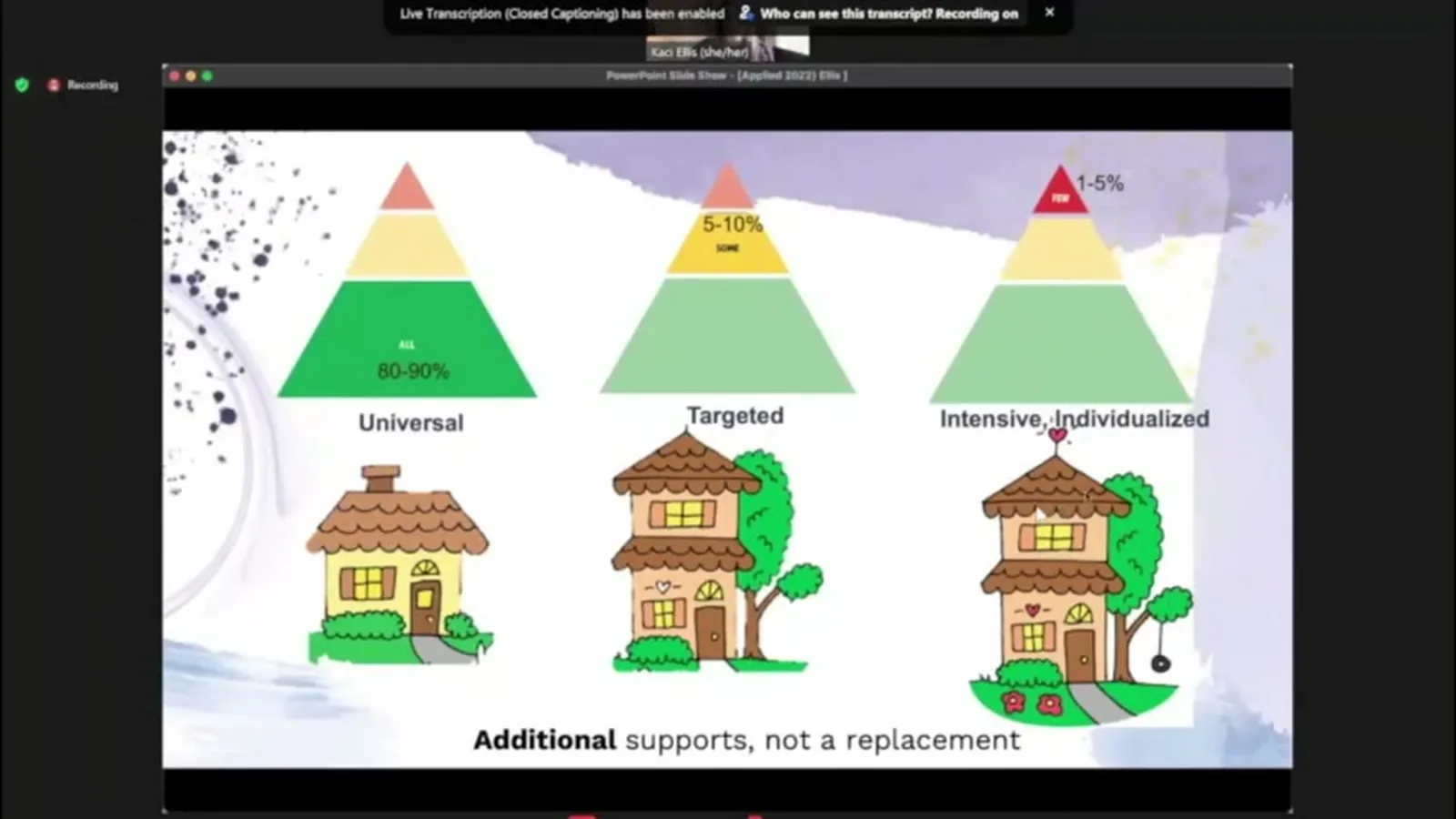
Some students need more than consultation. The signal is usually a mix of two things: the classroom is running its tier one supports well, and the student is still not responding. If tier one is broken, no amount of direct service from you will hold. Fix tier one first. If tier one is in place, the team has tried targeted tier two supports, and the student still needs more, you have a real tier three case.
Even then, you are not the superhero. You are the behavior expertise on a team. The plan should be written with the teacher, the parent, and the rest of the school team in the room. You should not be the only signature on the BIP. You should not be the only person who knows what is in it. And you should always share the FBA results and the plan with the family.
FAQ#
What is a consultation model in school-based ABA?
It is the working agreement that defines your scope, your process, and your stance when you support a school team. Scope means what you can do under your ethics code and your contract. Process means pre-meetings, observations, planning, and follow-up. Stance means inquiry over evaluation.
How do I sound less judgmental when giving teacher feedback?
Lead with what you saw, not with what they should have done. Tie the observation to the student's behavior, not to the teacher's character. Offer to look at the pattern together. Ask what is in the way. And keep coaching feedback in private.
Is it OK to give recommendations without observing first?
No. Skipping the observation, or skipping the pre-meeting before the observation, is the single biggest reason teachers do not want to work with a BCBA again. Get the context first, watch the student, then recommend.
How do I get teachers to actually trust me?
Start with a fifteen-minute pre-meeting and three questions. Show up when you said you would. Make the plan feasible. Help build the materials. Follow up. Trust is the byproduct of small promises kept.
What should be in a school consultation contract?
Scope of services, ethical boundaries you cannot cross, who you report to, how observations get scheduled, how consent gets confirmed, how data gets shared, restraint and seclusion policies, and the process for moving from tier one questions to tier three support. Write it before you start. Reference it when things get tense.
Watch the full session#
Dr. Kaci Ellis spent an hour walking through the consultation model, the PBIS tier map, the legal scaffolding around IEPs and FBAs, and the on-the-ground scripts that hold all of it together. If you support schools as a BCBA, the full session is the version of this you want.
Turn this topic into a CEU
You just studied this. Now get credit for it.
Watch Practical Takeaways for School-Based Behavior Analysts with Dr. Kaci Ellis and earn 1 free BCBA CEU. Detailed certificate, delivered the moment you finish.
Keep going with a free learning path
Supervision, Done Right
Four supervision CEUs that build on each other. What reflective supervision is, how to build a supervision system, how to assess supervisee competence instead of counting hours, and how supervision affects provider outcomes. The BACB asks supervisors for three supervision CEUs per cycle. This covers it.