Values - Your compass through the clinical journey - Applied 2022
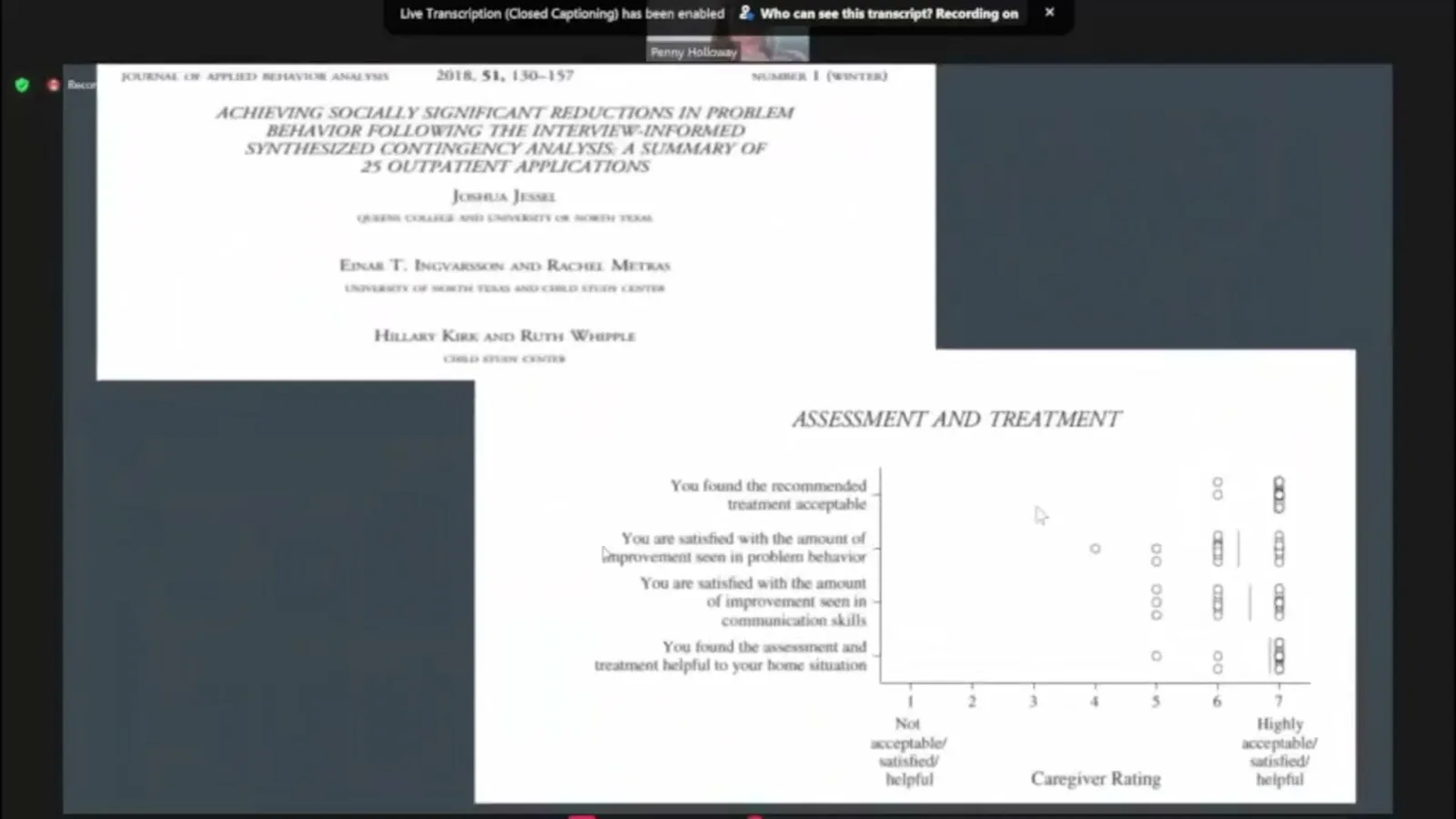
Abstract This session presents a practical, values-driven approach to ethical clinical decision-making in ABA. The presenter frames the BACB core principles—compassion, dignity, respect, and integrity—as a “compass” guiding intake, assessment, goal selection, and day-to-day treatment. Participants learn how to audit organizational and personal values, elicit and rank client and stakeholder priorities, and translate those findings into assessment choices and programming (e.g., values-aligned intake conversations, outcomes-preference ranking, and boundary setting). The session emphasizes “values over procedures,” trauma-assumed care, compassionate responding that moves beyond empathy to action, and the routine incorporation of assent/assent-withdrawal and enhanced choice. Concrete tools are discussed (e.g., universal protocols, individualized treatment-integrity checklists, and social-validity measures) alongside the distinction between efficacy and effectiveness, highlighting how to iterate plans when stakeholder experience does not yet match the data. By the end, attendees can connect values to observable staff and caregiver behaviors, structure programming both “backward” from stakeholder priorities and “forward” from client needs, and use social validity—along with indicators of happy, relaxed, and engaged behavior—to evaluate ethical impact and sustain change.
Cancel any time. Cert delivered to your inbox the moment you pass the quiz.
What you'll learn
- 1Learning Objectives
- 2• Describe how the BACB core principles function as a values compass to guide ethically sound intake, assessment, and treatment decisions.
- 3• Explain the rationale for prioritizing “values over procedures” and adapt intake/assessment conversations to align with client and stakeholder values.
- 4• Identify methods to elicit and rank values (e.g., outcomes-preference discussions) and use them to select assessments and define goals that fit the client’s context.
- 5• Apply trauma-assumed and compassion-based practices—including assent/assent-withdrawal and enhanced choice—to maintain safety, dignity, rapport, and televisability.
- 6• Develop and implement individualized protocols (e.g., universal protocols and treatment-integrity checklists) that translate values into observable caregiver and staff behaviors and support generalization.
- 7• Assess social validity and treatment effectiveness using stakeholder-reported outcomes and indicators of happy, relaxed, and engaged behavior, and use findings to refine programming.