How a BCBA Should Prep a Family for a Psychiatrist Appointment
Psychiatrists often prescribe on vibes alone. Send sleep, affect, and behavior data so they do not have to, from a BCBA-led CEU.
Key takeaway
Walk into a med check with a one-page handoff of sleep, affect, and behavior data, coach the parent to be the one who says it out loud, and only attend yourself when the family asks you to or the data needs interpretation.
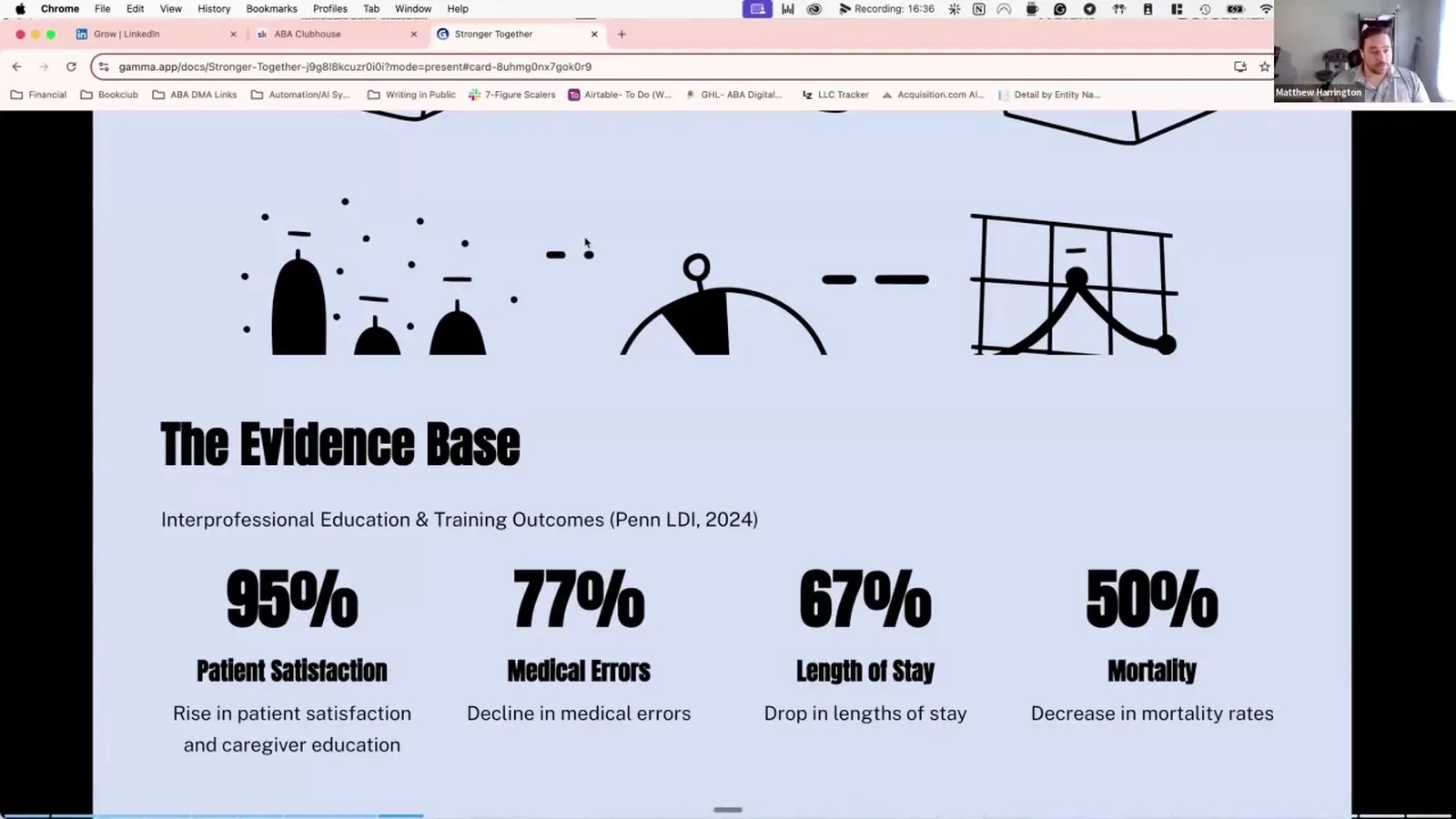
Stronger Together: Care Collab
Free learning path on this topic
PDA and Demand Avoidance
B. Kuereine Gray's three PDA talks plus Clelia Sigaud on the logic of anxiety. What PDA is and isn't, how to collaborate with caregivers, how to handle complex profiles and replacement behaviors, and why demand-avoidant learners respond the way they do.
On this page · 9 sections▾
Walk into a med check with a one-page handoff of sleep, affect, and behavior data, coach the parent to be the one who says it out loud, and only attend yourself when the family asks you to or the data needs interpretation. That is the whole job a BCBA has at a psychiatry appointment. Not to recommend a dose. Not to argue brand names. Not to take over the room. Just to make sure the prescriber has more than a parent memory and a vibe check to work with.
This page pulls directly from a one-hour CEU on care collaboration. If you want the full session, the watch card above takes you to it. If you want the psychiatry slice, keep reading.
Why psychiatry appointments often go sideways without data#
Most med checks for a kid on the autism spectrum run about fifteen minutes. The prescriber asks the parent how the last two weeks went. The parent tries to remember. The parent leans on whatever happened in the car ride over, or the meltdown at school yesterday, or the calm weekend that made them think the meds are working fine. Then a decision gets made.
That is not a knock on psychiatrists. They are doing the best they can with the data in the room.
Sometimes I feel like they prescribe based on vibes alone.
The fix is not to demand more time. The fix is to load the room with better inputs before the appointment starts. A BCBA already collects most of those inputs every session. The problem is that data lives in your binder, not in the prescriber's hand.
The three data streams every psychiatrist actually wants#
Send these three things, in this order, and you will outpace 90% of the handoffs psychiatrists ever see.
- Sleep data. Hours, wake-ups, time it took to fall asleep, naps. Two weeks back, day by day.
- Affect data. A simple 1 to 5 rating of mood per session or per day. Add a one-word note like flat, weepy, giddy, irritable.
- Behavior data. Frequency or rate of the target behaviors you are tracking. Same window as the sleep and affect data so they line up.
Graph them on top of each other. That is it. You are not interpreting. You are not making a recommendation. You are giving the psychiatrist what they would have built themselves if they had the time.
All the psychiatrist can do is go off of the verbal behavior that the family is giving them.
Your job is to widen what the family can hand them.
How to build a one-page med-check handoff#
One page. Front side only. If it spills to a second page, you are over-explaining.
Top of the page: client first name, date of birth, date of appointment, prescriber name, the medication and current dose, and the date that dose was last changed. That row alone saves the prescriber two minutes of chart digging.
Middle of the page: a single chart with three lines or three small stacked panels. Sleep hours per night, affect rating per day, target behavior count per day. Two weeks of data. Mark any med change with a vertical line so the eye snaps to it.
Bottom of the page: three short sentences. One on what changed. One on what stayed the same. One on the specific question the family wants the appointment to answer. No clinical opinions. No medication suggestions. That is a scope line you do not cross.
Email it to the parent the day before the appointment with a short note: please print this and bring it, or pull it up on your phone when the doctor asks how things have been.
Sleep data: the most underrated input in medication decisions#
If you only send one of the three data streams, send sleep.
So many times is sleep a huge factor in the way that medication is reacted to.
Stimulants suppress appetite and sleep. SSRIs can cause early waking. Alpha agonists like guanfacine knock kids out earlier than parents expect. Antipsychotics can flip a kid from four hours a night to twelve. Every one of those shifts changes the behavior pattern the family is about to describe in the appointment, and the prescriber needs to know which way the sleep moved before they touch the dose.
You do not need a fancy tracker. A Google Sheet the parent updates each morning works. Bed time, wake time, total hours, and a yes or no for night wake-ups. Two minutes a day. The graph almost draws itself.
Coaching the parent to be the messenger#
You are not the one talking at the appointment. The parent is. Your job is to make sure the parent walks in feeling like the expert on their own kid, because they are.
A week before the appointment, sit with the parent for fifteen minutes. Walk them through the one-pager. Ask them to say in plain words what they see in the graph. If they say "he has been a wreck," push them gently toward "he has been waking up at four in the morning for ten of the last fourteen days and his aggression count tripled in that same window." Same information. One version a prescriber can act on. One version they cannot.
Then give the parent the one question that anchors the whole visit. Something concrete. Should we move the dose, hold it, or change the timing? That single question turns a fifteen-minute vibe check into a fifteen-minute decision.
When you should attend the appointment yourself#
Default to not attending. Most of the time, a well-prepped parent with a one-page handoff gets a better outcome than a parent plus a clinician crammed into a telehealth square.
Attend when one of these is true.
The data is genuinely confusing and the family cannot explain it. A bimodal sleep pattern, two simultaneous med changes, a behavior spike that lines up with a school transition you alone know about. Any of those are worth your hour.
The psychiatrist has asked you to. Some prescribers will tell the family, please have the BCBA on the next call. When that happens, show up.
The family has explicitly asked, and you have a written release of information on file. Not a verbal yes in the car. A signed release that names this prescriber.
Anything outside those three buckets, stay off the call and let the parent run it. A BCBA who keeps attending every visit ends up positioned as the patient's representative, which is not your role and not within your scope.
Following up after the visit without overstepping#
Ask the parent to forward you whatever the prescriber wrote in the after-visit summary, or to text you the new dose and timing. Update your behavior plan with the change date so future graphs have that vertical line in the right spot.
Then send the prescriber a two-line email a week or two later. Something like: thanks for the visit on March 4. Behavior count dropped from 12 a day to 4 a day in the week after the dose change. Sleep is holding at 9 hours. Happy to send the updated graph if helpful. That is it.
What information do you want me to gather prior to this appointment that will help you?
Ask that question once. Most prescribers will tell you exactly what they want for the rest of the relationship.
You are not chasing them. You are not requesting a call. You are not suggesting a dose. You are showing up consistently with clean data, and you are leaving the prescribing to the person whose name is on the script. That is the lane.
FAQ#
Should a BCBA attend a psychiatry appointment?
Usually no. Send a one-page data handoff and coach the parent to present it. Attend only when the data needs in-person interpretation, the prescriber has asked you to, or the family has signed a release naming this prescriber and asked you to come.
What data should I send a psychiatrist before a med check?
Sleep, affect, and behavior data for the two weeks leading up to the visit. Line them up on the same time axis so the prescriber can see how they move together. Mark any prior med change with a vertical line.
Can a BCBA recommend a medication change?
No. Recommending, adjusting, or suggesting specific medications or doses is outside the BCBA scope of practice. You can describe behavior patterns and answer questions about your data. The prescribing decision belongs to the psychiatrist.
How do I coach a parent to advocate at a psych appointment?
Walk them through the data handoff a week ahead. Help them translate vague descriptions into specific ones. Give them one concrete question to anchor the visit, such as whether to change the dose, hold it, or shift the timing.
What if the psychiatrist will not respond to my emails?
Stop emailing. Route everything through the parent. Hand them a clean one-pager, coach them on how to present it, and let the prescriber respond to the patient instead of to you. Many prescribers will open a direct line once they see two or three clean handoffs come in through the family.
Bring better data to the next visit#
If you want to see how care collaboration with psychiatrists fits into the bigger picture (SLPs, OTs, schools, pediatricians, and the BACB scope lines that hold it all together), the full CEU is one hour and free.
Turn this topic into a CEU
You just studied this. Now get credit for it.
Watch Stronger Together: Care Collab with Matt Harrington and earn 1 free BCBA CEU. Detailed certificate, delivered the moment you finish.
Keep going with a free learning path
PDA and Demand Avoidance
B. Kuereine Gray's three PDA talks plus Clelia Sigaud on the logic of anxiety. What PDA is and isn't, how to collaborate with caregivers, how to handle complex profiles and replacement behaviors, and why demand-avoidant learners respond the way they do.