Where Behavior Skills Training Falls Short for Real Relationship Safety
BST works great for stranger lures and runs short for caregiver and partner harm. Here is when to use it, when to layer in judgment, from a BCBA-led CEU.
Key takeaway
Behavior skills training, or BST, has clear safety limitations when the threat lives inside a relationship: the whole model rests on the assumption the client can leave the situation, it skips the discrimination training step that turns a rule into judgment, and it almost never programs for generalization beyond the room where it was taught.
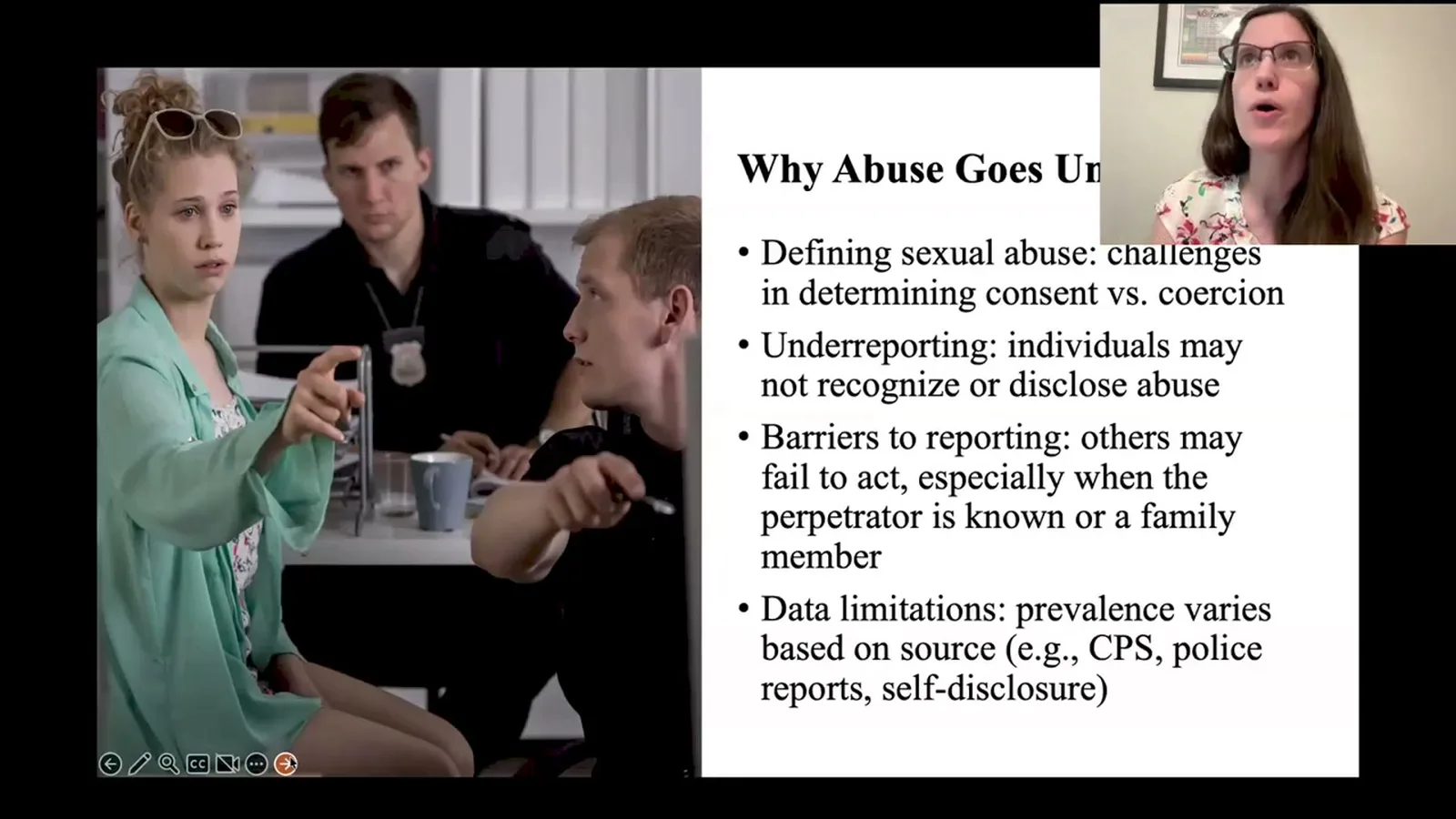
An Examination of Abuse Prevention
Free learning path on this topic
Caregiver Collaboration and Parent Training
Leanne Page on why caregivers disengage and how to tell a skill gap from a relationship problem. Then Matt Harrington's seven habits for parent training and a workflow for setting collaboration goals with schools, pediatricians and other partners. Four CEUs, all free.
On this page · 8 sections▾
Behavior skills training, or BST, has clear safety limitations when the threat lives inside a relationship: the whole model rests on the assumption the client can leave the situation, it skips the discrimination training step that turns a rule into judgment, and it almost never programs for generalization beyond the room where it was taught. That is a problem when you write treatment plans for kids and adults with intellectual and developmental disabilities, or IDD, because the people most likely to harm them are not strangers in a parking lot. They are caregivers, peers, partners, and direct support staff. The Board Certified Behavior Analyst, or BCBA, who only runs the standard "say no, get away, tell" loop is teaching the wrong response set for the most common kind of harm.
This page is for the BCBA writing the actual program. You already know BST works. You want to know where it bends, why it bends, and how to extend it so the skill shows up when it matters.
What BST does well#
BST is a four-step package: instruction, modeling, rehearsal, feedback. It has a strong evidence base for a narrow class of safety threats, the kind where the rule is simple and the response is the same every time. Stranger lure walks up to the client in a public space. Client says no. Client moves away. Client tells a trusted adult. There is one cue, one chain, and one acceptable answer.
For that situation, BST holds up. The data on abduction prevention shows BCBAs and educators can teach the chain, watch it generalize to a few staged probes, and feel okay about the skill being in repertoire. That is real. Do not throw it out.
Behavior skills training can work really well for specific kinds of safety threats. But if we're teaching a child to recognize abuse that's happening in relationships, it's going to be a little bit more nuanced than that. From the talk — Lund and Broner
The point is not that BST fails. The point is the class of threats it was built for is the smallest slice of what your client will face.
The hidden assumption: the client can leave#
Every "say no, get away, tell" program carries a quiet premise. The client can get away. That premise breaks the moment the person doing harm is the one running the shower, plating the meal, or driving the van.
BST, when you're looking at relationships, we're making the assumption that the person with a disability is able to actually leave that situation. However, in situations where they are relying on the person for care, they may not actually be able to leave that situation. From the talk — Lund and Broner
Sit with that for a second. If your client lives in a group home and a direct support staff member is the perpetrator, the "get away" step is not just hard. It is not a step that exists. The client cannot walk out. They need that person for transfers, for meds, for meals. The escape contingency the program rehearsed has no real-world referent.
The same logic applies to peers in the same classroom, family members in the same house, and partners in the same apartment. The contingency built into BST assumes a public stranger and an open exit. When the situation is private and the exit is closed, the chain has nowhere to go.
You can still teach the skill. You just have to admit out loud that the response set needs to be different. Reporting, asking for help from a third party, and identifying who that third party is. Those become the operative behaviors. Leaving is not the goal. Disclosing to someone outside the closed system is.
Knowledge vs. doing in real settings#
There is a second gap, and the research names it clearly. Clients can pass a quiz on safety rules and still not use the rule when the moment shows up. Stating the response is not the same as emitting the response under real conditions.
Most interventions are evaluated in highly structured, controlled environments. Classroom-based programs improve understanding of boundaries, but they don't necessarily prepare individuals for the variability and ambiguity of real relationships. From the talk — Lund and Broner
If the studies that support your program were run in a clinic room with two clinicians and a printed scenario card, the rule got learned in that room. The real situation has noise, history, an attachment, a uniform, and a closed door. None of that was in baseline.
The honest read is this: you have evidence the skill exists in your client's repertoire under teaching conditions. You do not have evidence it shows up at home, in the day hab, on the bus, or in the bedroom. That is not a failure of BST. That is the boundary on what the data actually says.
Discrimination training and judgment#
The bridge from rule to real use is discrimination training. The client has to decide when the rule applies, when it does not apply, and which version applies.
A stranger asking for help loading a couch is one stimulus class. A long-time staff member asking the client to come into a bedroom alone is a different stimulus class. The right response to each is different. "Say no, get away, tell" is the answer for the first. Quietly making it through the moment and disclosing to a case manager later may be the answer for the second.
If you only teach one response, you have not taught safety. You have taught a habit that fires in the wrong rooms.
Judgment lives in the gray area between two similar antecedents that need two different responses. BCBAs teach discrimination every day for tacts, mands, and conditional discriminations. The same logic applies here. You build it with multiple exemplars across multiple settings with multiple people, and you reinforce the right discrimination, not just the right rule.
How to layer judgment into your BST program#
You do not have to rip BST out. You layer judgment on top. A few moves that work:
- Expand your stimulus pool past strangers. Run scenarios where the person initiating the unsafe behavior is a known peer, a familiar staff member, a sibling, or a partner. If every probe in your program uses a stranger, your client has only practiced one discrimination.
- Teach a wider response menu. Beyond "no, leave, tell," teach quiet reporting, body cues the client can trust, and a list of people outside the system the client can disclose to. Not every situation has a safe exit, and the program should not pretend it does.
- Train across people, not just across trials. The clinician running the rehearsal is part of the stimulus. If only one BCBA delivers the program, the response will stay tied to that BCBA. Bring in caregivers, teachers, and other staff to run the same probes.
- Make warning signs an actual skill. Teach the client to identify behaviors that signal risk, like secrecy, isolation, and pressure to stay quiet, even when the person is familiar. That is content most BST programs skip.
- Treat preferences as a building block. "I like" versus "I don't like" is the entry point to consent. Without it, the client cannot evaluate a situation. They can only follow a rule.
None of this requires a new framework. It requires you to write more exemplars into the program and accept that judgment has to be taught directly, not assumed.
Programming for generalization on purpose#
Generalization is the part that gets waved away. Every BCBA learned in school that you have to program for it. Most safety programs do not.
If we want individuals to navigate real relationships, our teaching has to reflect real conditions. Role play, peer discussion, real life context, and most importantly, multiple varied examples. Because generalization is not automatic. It has to be programmed. From the talk — Lund and Broner
Put that on a sticky note. Generalization is not automatic. It has to be programmed.
In practice, programming for generalization on a safety skill looks like this:
- Multiple varied examples. Not three scenarios with the same structure. Three scenarios with different people, different settings, different cues, and different right answers.
- Role play that mirrors real conditions. Run it in the kitchen, the bedroom, the van, the dayroom. Run it with the actual staff who work with the client, not just the BCBA.
- Peer discussion. Other clients give answers that are not yours. That is good. It exposes the learner to a wider range of interpretations and forces a real discrimination instead of a parroted rule.
- Real life context. The most useful probe is the next time the actual situation almost happens. If a known caregiver pushes a boundary in a small way, that is the moment to coach the response, not a Tuesday at 2pm in the clinic.
- Maintenance built in. Schedule probes at one month, three months, six months. Skills decay. Safety skills decay quietly, because there is no error correction loop in the natural environment.
You already do this for mands and academic skills. The job is to apply the same standard to safety programming and stop assuming the classroom version will hold up at home.
Frequently asked questions#
Does behavior skills training work for sexual abuse prevention?
It works for a narrow slice of it. BST has the strongest evidence for stranger-based threats where the client can recognize the cue and physically leave. For abuse inside ongoing relationships, like caregivers, peers, partners, and family, the BST chain assumes an exit that does not exist and a response set that does not fit. Use BST for what it was built for, and build a different response set for the relational case.
Why doesn't "say no, get away, tell" work with caregivers?
Because the client cannot get away. The caregiver is the person who runs daily life. The client depends on them for bathing, feeding, transport, or meds. The "get away" step has no real-world referent, so the chain dies at step two. A program that targets caregiver harm has to teach a different sequence. Recognize warning signs. Disclose to a person outside the closed system. Use body cues as data. Not the same chain with a new actor.
How do you teach judgment in ABA?
You teach it the same way you teach any conditional discrimination. Multiple exemplars. Varied antecedents that require different responses. Reinforcement for the right discrimination, not just the right rule. The shift is that you stop training one fixed chain and start training the client to evaluate the situation first and choose the response second. Role play, peer discussion, real settings, and many varied examples are the delivery system. Generalization is not automatic. It has to be programmed.
Watch the full session#
If you want the data behind every claim on this page, like the perpetrator breakdown, the meta-analysis on prevalence, and the full critique of the safety skills research, the recording is the source. One CEU.
Turn this topic into a CEU
You just studied this. Now get credit for it.
Watch An Examination of Abuse Prevention with Tricia Lund & Carolyn Broner and earn 1 free BCBA CEU. Detailed certificate, delivered the moment you finish.
Keep going with a free learning path
Caregiver Collaboration and Parent Training
Leanne Page on why caregivers disengage and how to tell a skill gap from a relationship problem. Then Matt Harrington's seven habits for parent training and a workflow for setting collaboration goals with schools, pediatricians and other partners. Four CEUs, all free.