Why Sex Education Is Abuse Prevention for Adults With IDD
Anatomy alone is not sex ed. Consent, body cues, and healthy relationship skills are how clients stay safe. Here is what to add, from a BCBA-led CEU.
Key takeaway
Teaching only anatomy is not sex education, and for adults with intellectual and developmental disabilities (IDD), that gap can become a safety crisis.
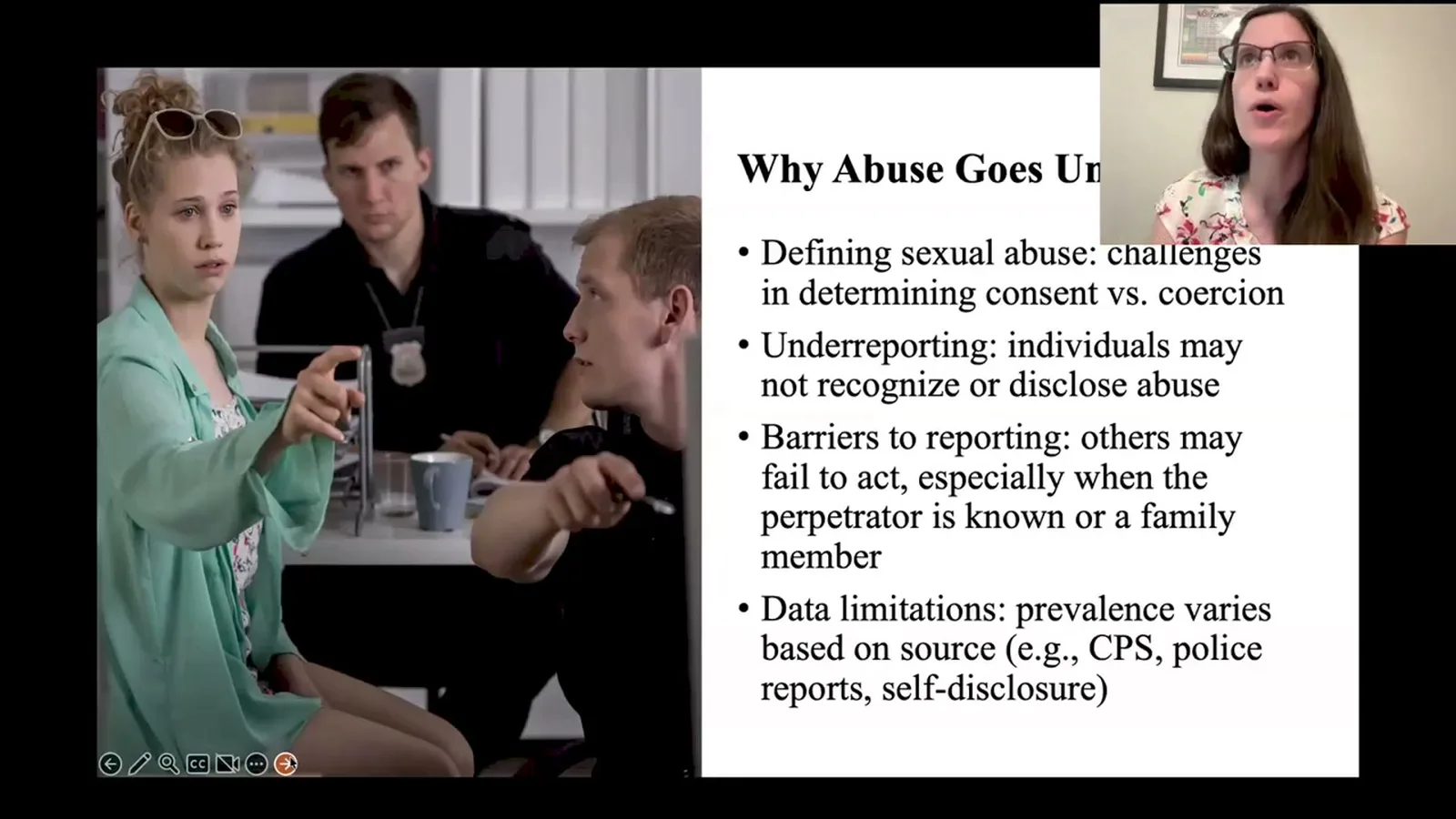
An Examination of Abuse Prevention
Free learning path on this topic
PDA and Demand Avoidance
B. Kuereine Gray's three PDA talks plus Clelia Sigaud on the logic of anxiety. What PDA is and isn't, how to collaborate with caregivers, how to handle complex profiles and replacement behaviors, and why demand-avoidant learners respond the way they do.
On this page · 8 sections▾
Teaching only anatomy is not sex education, and for adults with intellectual and developmental disabilities (IDD), that gap can become a safety crisis. Tricia Lund, a Board Certified Behavior Analyst (BCBA) and licensed sexuality educator, shared a story in her talk about an adult client who was sexually abused by a peer in a life-skills classroom. The client did not report it. He had been taught the names of body parts, but no one had taught him what a healthy friendship looks like, or that the feelings in his chest and stomach were his body telling him something was wrong. He thought that was just what friends did. Most of the time, when we say "we taught safety," what we mean is "we taught a rule." Real prevention asks more than that. It asks our clients to read their own body cues, name what they like and do not like, and trust themselves enough to act on it.
What sex ed actually covers (and what most curricula skip)#
When people hear "sex education," they often picture a diagram of body parts and a quick puberty lesson. The National Sex Education Standards describe something much wider. Comprehensive sex ed covers consent. It covers what a healthy relationship looks like and feels like. It covers anatomy and physiology, but it does not stop there. It covers sexual development across the lifespan, not just adolescence. It covers gender identity and expression, sexual orientation, sexually transmitted infections, interpersonal violence, sexual autonomy, and self-determination in sexual decision making.
Sex education is abuse prevention. And I think that there is a tendency that when we think of sex ed, we tend to think of just the basics. But according to the National Sex Education Standards, sex education talks about consent, breaks down what a healthy relationship looks like and feels like, talks about anatomy and physiology. From the talk — Lund and Broner
That list is the standard for people without disabilities. For adults with IDD, most programs cover one or two items on it, if any.
Why anatomy-only programs leave clients exposed#
There is a pattern Lund names plainly. Adults with IDD often get a watered-down version of sex ed, if they get one at all. Anatomy is easy to teach. You can point at a worksheet and say the words. Consent, body autonomy, and relationship judgment are harder, so they get cut. The result is a client who can label body parts but cannot tell the difference between a friend and a person who is hurting them.
Frequently, people with disabilities are excluded from sex education. And so that means they're not getting all of these things. And if they are being taught sex education, oftentimes it's kind of a watered-down version. We might just be teaching the things that are easy to teach, like anatomy. But oftentimes, we kind of stop there. From the talk — Lund and Broner
This matters because of who actually causes harm. As Lund and Broner cover in their look at perpetrator patterns, most abuse against adults with IDD is committed by someone the person already knows. A peer in a day program. A caregiver. A staff member. A partner. If our curriculum prepares clients for strangers but not for relationships, we are preparing them for the wrong risk.
Body cues, interoception, and self-trust#
One of the most important shifts in the talk is the move from "what to do" to "what your body is telling you." Interoception is the felt sense of what is happening inside your body. A tight chest. A churning stomach. A pulled-in feeling that says "I want to leave." For many adults with IDD, those signals are real, but no one has helped them notice the signals or trust them.
Lund described what would have been different for her client if he had been taught to read his own body.
If there had been some education around "my body is giving me cues that I don't like what's happening to me, and I can trust that," and if there had been some education around "these are some things I can say and do when these things are happening," then I think the abuse could have been stopped a lot sooner. From the talk — Lund and Broner
For a BCBA, this means treating body-awareness as a teachable skill, not a personality trait. Pair felt states with words. "My stomach feels tight. I do not like this. I can say stop. I can leave. I can tell someone I trust." Practice it across many situations, not just one.
Healthy relationships as a teaching unit#
If most harm happens inside a relationship, then relationships are the unit of instruction. Not "strangers vs. not strangers." A healthy relationship has a shape. People are kind most of the time. They listen when you say no. They do not ask you to keep secrets that make you feel sick. They do not get angry when you set a limit. They do not touch your body in ways you have not agreed to. They do not punish you for changing your mind.
Teach this directly. Use stories, role plays, and side-by-side examples. Show a healthy friendship and a controlling one. Ask the client what feels different. Help them name the warning signs of a relationship that is moving from safe to unsafe: someone pushing past their no, someone testing whether they will tell, someone making them feel they cannot leave. These are skills, and like any skill they need many examples, varied contexts, and practice in real-life settings.
This is also where behavior skills training reaches its limits. BST works well for a clear-cut script, like refusing a lure from a stranger. It is a weaker fit when the person doing harm is the same person providing care, food, or transportation. The client cannot just "leave."
Consent skills your client can actually use#
Consent for adults with IDD is not a single lesson. It is a set of skills built up over time.
- Preference language. "I like this. I do not like this." Practice with neutral examples first, like food, music, or activities, then move into touch and proximity.
- Yes and no in the body. Pair the words with the felt sense. "When I say no, my body feels firm. When I say yes, my body feels open."
- Permission to change your mind. Teach that a yes can become a no at any point. Then honor that in your own sessions so the skill generalizes.
- Asking for consent from others. This is a piece many programs skip. Adults with IDD can be on the receiving end of harm and they can also act in ways that cross other people's limits without meaning to. Teaching both sides protects everyone in the room.
- Telling a trusted person. Identify two or three named people the client can go to. Practice the words. Practice what happens after the words.
Broner framed the bigger shift this way.
These are not rigid rules. They are context-dependent skills, which means we're no longer just teaching what to do. We're teaching how to evaluate situations. From the talk — Lund and Broner
That is the heart of it. Rules tell a client what to do once. Skills give them something they can use every time the situation is new.
A starter list for adding sex ed to your program#
You do not have to overhaul a whole curriculum to start. Here is a small, practical list of additions a BCBA can fold into existing programming without waiting for permission from anyone else.
- Add an interoception goal. Even one. "Client will name a body cue (tight chest, stomach drop, pulled-in feeling) in three of five practice scenarios."
- Teach the shape of a healthy friendship. Use video models, social stories, and side-by-side comparisons of safe and unsafe interactions.
- Practice preference language outside of touch first. Food, music, weekend plans. Build the skill on low-stakes content, then carry it into harder content.
- Name the people. Help the client list two to three trusted adults by name. Rehearse going to them. Make sure those adults know they are on the list.
- Include peers and caregivers in your examples. Not only strangers. The risk landscape is relational, so the teaching examples should be relational.
- Bring in a partner if you are not the right teacher. Many BCBAs do not feel ready to teach sex ed directly. That is fair. Loop in a licensed sexuality educator, an SLP, a social worker, or a parent. The point is that the content shows up, not that you deliver it alone.
- Get consent for the teaching itself. Tell the client what you are about to cover and why. Let them say no to a topic. This models the skill you are trying to teach.
For more on why the standard ABA safety package falls short of this kind of teaching, see where current abuse prevention training misses the real risk.
Frequently asked questions#
Is sex education considered abuse prevention?
Yes. Comprehensive sex education includes consent, healthy relationship skills, body autonomy, and the ability to recognize warning signs. Each of those reduces the likelihood that abuse will go unreported, unrecognized, or unchallenged. Lund frames sex ed as the most direct prevention tool a BCBA can add to a safety program, because most harm happens inside a relationship and inside the body, not in a parking lot with a stranger.
What should sex education for adults with IDD include?
At minimum, six areas. Anatomy and physiology. Sexual development across the lifespan. Healthy relationships and what they look like and feel like. Consent, including the right to change your mind. Body awareness and interoception, so the client can read their own cues. Warning signs of abuse from people they know, including peers, caregivers, and partners. Anything less is the watered-down version Lund warns against.
How do you teach consent to someone with an intellectual disability?
Start small and concrete. Teach preference language with neutral content first (food, music) before moving into touch and proximity. Pair the words "yes" and "no" with the felt sense in the body. Practice giving consent and asking for consent. Honor the client's no in everyday sessions so the skill generalizes. Use many examples, varied contexts, and direct practice, not just talk. Consent is a judgment skill, not a rule, and it needs to be taught like one.
Where to go from here#
If you want to see how Lund and Broner make the full case, including the prevalence data, the perpetrator patterns, and the shift from rule-following to judgment-based teaching, watch the recorded CEU below. It is one CEU hour, free, and pairs with a short audit quiz for credit.
Turn this topic into a CEU
You just studied this. Now get credit for it.
Watch An Examination of Abuse Prevention with Tricia Lund & Carolyn Broner and earn 1 free BCBA CEU. Detailed certificate, delivered the moment you finish.
Keep going with a free learning path
PDA and Demand Avoidance
B. Kuereine Gray's three PDA talks plus Clelia Sigaud on the logic of anxiety. What PDA is and isn't, how to collaborate with caregivers, how to handle complex profiles and replacement behaviors, and why demand-avoidant learners respond the way they do.