Why Most Abuse Prevention Training for IDD Clients Misses the Real Risk
Adults with IDD face sexual abuse at twice the rate of the general population, and most of it comes from people they know. Learn what to teach instead, from a BCBA-led CEU.
Key takeaway
One in three adults with intellectual and developmental disabilities (IDD) will be sexually abused in their lifetime, and most of the harm comes from people they already know and trust, not strangers, which means the stranger danger lessons baked into many Board Certified Behavior Analyst (BCBA) safety curricula are aimed at the wrong threat and skip the relationship skills clients actually need.
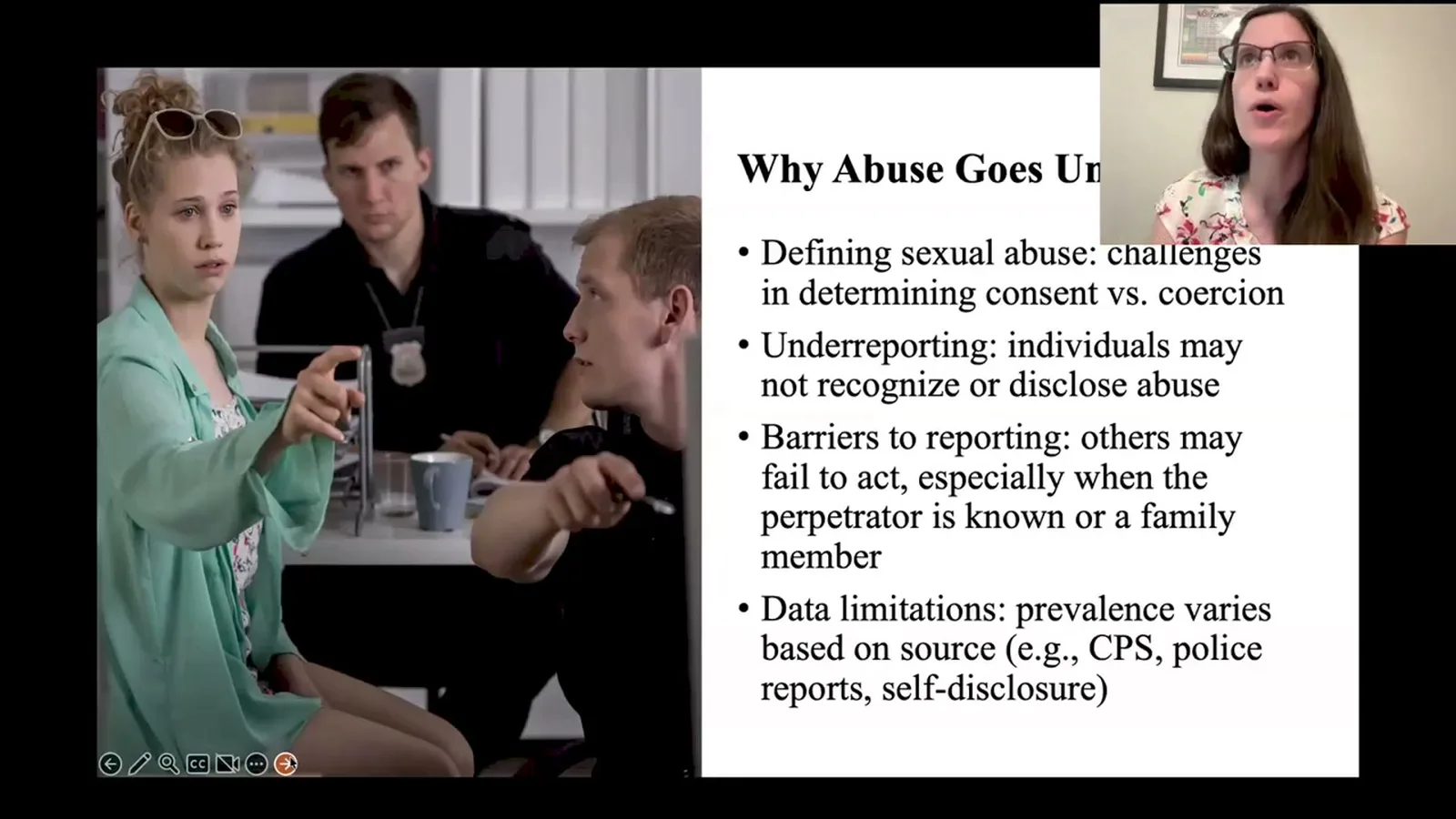
An Examination of Abuse Prevention
Free learning path on this topic
Caregiver Collaboration and Parent Training
Leanne Page on why caregivers disengage and how to tell a skill gap from a relationship problem. Then Matt Harrington's seven habits for parent training and a workflow for setting collaboration goals with schools, pediatricians and other partners. Four CEUs, all free.
On this page · 8 sections▾
One in three adults with intellectual and developmental disabilities (IDD) will be sexually abused in their lifetime, and most of the harm comes from people they already know and trust, not strangers, which means the stranger danger lessons baked into many Board Certified Behavior Analyst (BCBA) safety curricula are aimed at the wrong threat and skip the relationship skills clients actually need. This page walks through what the data really says, where current ABA safety training falls short, and what to add to your work this quarter.
The 1-in-3 number every BCBA should know#
The headline number comes from a meta-analysis by Borowski. A meta-analysis pools data from many studies, so the number is more trustworthy than any one paper on its own. The findings are hard to read but they matter.
Adults with intellectual disabilities face sexual abuse at about twice the rate of adults without disabilities. For adults with IDD, the lifetime rate is about one in three. Rates are higher for men with IDD than the rates we usually see in the general male population, which matters because most older safety programs were written for girls and women. And the more support a person needs with daily care, the higher the risk climbs. People with high support needs face the greatest risk of all.
Individuals with disabilities face double the risk of experiencing sexual violence across their lifetime compared to people without disabilities. And this is especially true for adults. One in three adults with intellectual disabilities are going to experience sexual abuse. From the talk — Lund and Broner
If you only remember one number from this page, remember that one. It is the floor of the problem, not the ceiling.
Why the real numbers are probably higher#
Here is the part that often gets cut from a quick training. The one in three figure is almost certainly low. There are three reasons.
First, studies use different definitions of sexual abuse. Some only count unwanted touch. Others count touch plus things like being sent sexual images. When the definition is small, the count is small. The harm did not shrink. The window we looked through did.
Second, many adults with IDD do not know that what is happening to them is abuse. Lund described a client who was abused by a peer in his life skills classroom and thought that is just what friends do. He did not like it. He did not report it. He had no word for it.
Third, even when something is told to a parent or staff member, it does not always get reported up the chain. Sometimes it is handled in the home. Sometimes a relationship is assumed to be fine because the two people are dating, when one of them cannot actually consent.
When you stack these together, the takeaway is simple. The one in three rate is what we can count. The real rate is higher. Plan your programs for that reality.
What current safety training usually covers#
Most BCBA safety work uses behavioral skills training, often shortened to BST. BST has four steps. Tell the learner what to do. Show them. Have them practice. Give feedback until they get it right. It is structured, it is teachable, and the research on it is solid for certain risks.
The catch is what BST has been studied on. The bulk of the relationship safety research uses the same scenario over and over again. A stranger walks up and offers a lure, like asking the person to come look at something in a car. The learner is taught to say no, get away, and tell a trusted adult. The program works. The skill generalizes. The client passes.
That is a useful skill. It is also the wrong skill for the most common kind of harm. Most safety curricula assume the abuser will be a stranger. The research tells a different story. Abuse is far more likely to come from someone the person already knows and trusts.
Hartrow, Elias, and Davis found in 2021 that about one in three perpetrators were family members or people the person already knew. Forty-four percent had a care provider relationship with the person they harmed. These are not strangers in a parking lot. These are people we let into the home, the day program, and the group home.
Where rule-based training breaks down in real relationships#
There are two big reasons strict rule following breaks down once a real relationship is in the room.
The first is generalization. A rule like "do not talk to strangers" is clean. A rule like "tell me if a peer touches you" is not, because the peer may also be the friend who sits next to the learner at lunch, plays Mario Kart with them after dinner, and helps them pick out clothes. Skills learned in a quiet teaching room often do not carry over into messy, daily life. Broner was careful with how she said this in the talk.
First, to be very clear, there is no direct evidence that rule-based ABA strategies are ineffective. However, the literature consistently points to limitations, particularly in how relationships are taught. Skills that are learned in structured environments often do not generalize to the complexity of real-world relationships. From the talk — Lund and Broner
The second is power. A standard BST script assumes the learner can walk away. With a stranger, they often can. With a paid caregiver who helps them shower, dress, and eat, they often cannot. They cannot fire that person. They may not have another way to get help with personal care. "Say no and leave" is not a real option when leaving means losing care.
This is the gap. We teach what to do. We do not teach how to decide, who counts as safe, what a warning sign looks like in someone you know, and what to do when leaving is not on the table.
If we're only teaching people with disabilities to respond to strangers, or we're only teaching people with disabilities to respond to partner abuse, we're missing a lot of skills. And we may be not setting our client up, we're not taking the opportunity to actually teach them the skills that they're going to need in order to stay safe. From the talk — Lund and Broner
What to add to your curriculum this quarter#
You do not have to throw out BST. You just have to widen what BST is pointed at. Lund and Broner suggested moving from rule following toward judgment. Here is a short, practical add-on you can start this quarter.
Teach boundaries as a discrimination, not a rule. Run BST trials where the person doing the touching is a peer, a sibling, a paid staff member, and a stranger, not just the stranger. Use the same four steps. Change who is in the role play.
Teach warning signs in known people. Things like a caregiver who only helps when no one else is around, a peer who asks for secrets, or a partner who threatens to leave if a request is refused. These are the patterns adults with IDD report most often.
Teach the difference between "I like this" and "I do not like this," and treat that as the start of consent skills, not the end. Many adults with IDD have been trained their whole lives to comply. Compliance is the opposite of consent. Programs need to make space for a real no.
Teach what to do when leaving is not safe yet. Who can be told. How to ask for a different staff member. How to ask for a private moment with a family member or case manager. These are not BST allure scripts. They are the closest a person may get to a safety plan.
Practice in real settings, with real variation. Generalization does not happen on its own. It has to be programmed into the plan. Multiple examples, multiple people, multiple places.
This is also where comprehensive sex education quietly does abuse prevention work. When a learner can name their body, name a healthy friendship, and name a feeling in their gut that says something is off, they have more tools than a stranger danger rule will ever give them.
How this page fits the full CEU#
This page is the overview. The recorded CEU goes deeper on the data, the studies behind each number, the ABA literature review Broner walked through, and the parts of comprehensive sex education that act as primary prevention. If you want the full picture, the one CEU recording is the place to get it. The companion pages on this site go deeper on perpetrator patterns, where behavior skills training falls short for real relationship safety, and why sex education for adults with IDD is itself an abuse prevention strategy.
Frequently asked questions#
How common is sexual abuse in adults with intellectual disabilities?
About one in three adults with IDD will be sexually abused in their lifetime, based on the Borowski meta-analysis. That is roughly double the rate seen in adults without disabilities. The rate is even higher for adults with high support needs, and the true number is almost certainly higher than what studies can count, because of underreporting, mixed definitions, and clients who do not know that what happened to them was abuse.
Is stranger danger training enough for adults with IDD?
No. Strangers are on the list of possible perpetrators, but they are not the most common one. One in three perpetrators are family members or acquaintances, and forty-four percent have a care provider relationship with the person they harm. A program that only teaches "say no to strangers" is aimed at the wrong threat, and may give families a false sense of safety.
What is the difference between knowledge and skill in safety training?
Knowledge is being able to say the rule. Skill is using the rule in the moment, with the right person, in a setting that does not look like the teaching room. Across the research, learners with IDD often pass the knowledge check and still struggle in real life. That gap is why current programs need to add discrimination training, judgment, and practice in real settings, not just more rules.
Watch the full CEU#
If this overview is useful, the one hour recording from Lund and Broner walks through every study cited here, including the Borowski meta-analysis and the Hartrow, Elias, and Davis perpetrator data, plus the practical shift from rule following to judgment-based teaching. It is one BACB CEU, and it is free to watch.
Turn this topic into a CEU
You just studied this. Now get credit for it.
Watch An Examination of Abuse Prevention with Tricia Lund & Carolyn Broner and earn 1 free BCBA CEU. Detailed certificate, delivered the moment you finish.
Keep going with a free learning path
Caregiver Collaboration and Parent Training
Leanne Page on why caregivers disengage and how to tell a skill gap from a relationship problem. Then Matt Harrington's seven habits for parent training and a workflow for setting collaboration goals with schools, pediatricians and other partners. Four CEUs, all free.