Grief Support at the Front Lines: Training Day Hab and Group Home Staff to Support Adults with IDD Through Bereavement
Presented by Tricia Lund
Adults with intellectual and developmental disabilities (IDD) remain among the most underserved when it comes to bereavement support. Barriers limit access to traditional grief services for individuals living in community settings. For many adults with IDD, Direct Support Professionals (DSPs) in group homes and day habilitation programs may be the most consistent — and often only — source of support following a death loss. This presentation will explore barriers to grief support, the critical role of frontline staff, the benefits of DSP training, and key content areas for an effective grief training curriculum.
Register free & watch nowCancel any time. Cert delivered to your inbox the moment you pass the quiz.
Learner ratings
from 26 learners
100% would recommend this CEU to other professionals in their field (17 responses)
“Love the information and how we can better support clients”
— Danielle M.“She knew her topic well and was well prepared. Gave helpful, specific information to consider.”
— Elizabeth L.“I love Tricia's trainings! This is such an important topic, and is definitely something DSPs and other staff have such an impact on how the individual navigates the experience. We have a close family friend who is a man in his 50s with autism. His father died and I remember seeing him at the wake, and worrying how he was going to cope. he had very rote "sayings," and responses, and even though he didn't seem very affected, and he was handling it well, that doesn't mean he didn't feel it or the reality didn't set in later. As you said, maybe he didn't understand the permanence of it, or how it ”
— Lee D.“great information on a tough topic”
— Richie P.“Thank you!”
— Kristina N.
About this CEU
Adults with intellectual and developmental disabilities (IDD) remain among the most underserved when it comes to bereavement support. Barriers limit access to traditional grief services for individuals living in community settings. For many adults with IDD, Direct Support Professionals (DSPs) in group homes and day habilitation programs may be the most consistent — and often only — source of support following a death loss. This presentation will explore barriers to grief support, the critical role of frontline staff, the benefits of DSP training, and key content areas for an effective grief training curriculum.
From the talk
What was covered
How to train group home and day hab staff to support adults with intellectual and developmental disabilities (IDD) after a death, from Tricia Lund's OpenCEU talk.
- Use the words death and dying with clients, because euphemisms confuse people who take language literally.
- Treat frontline staff as the real grief response your clients will get, and train them for that role.
- Watch for quiet grief: sudden compliance, sleeping more, and new complaints of aches and pains.
- Build training around normalizing grief, spotting grief responses, and helping the person stay connected to who died.
- Check whether your organization's grief policy covers clients after a death, not only staff.
- Offer information and choices about funerals and rituals instead of deciding for the person.
Why Grief Support Rarely Reaches Adults with IDD
Adults with IDD grieve. That should be obvious. Tricia Lund noted that research did not take it seriously until around the 1980s. Before that, many people assumed this group did not understand death. If they did not understand it, the thinking went, they could not grieve it. That old idea still shapes services today.
She asked the audience to name barriers before she showed her slide. The lists matched. One barrier is a belief that talking about death will make behavior worse. Another is communication and thinking differences. She looked for a grief therapist for her own clients and came up empty. Few therapists felt ready for the cognitive differences. Few were comfortable with an AAC device (a tool that helps someone speak).
Money comes next. Many adults live on a fixed income. Lund doubted that insurance pays for grief therapy at all. Transportation is its own wall. So is staffing. This shows up in a group home or a day habilitation program (a daytime program that builds skills). One staff member may cover three or four people. Getting one person to an appointment can mean hauling everyone along. Any single barrier looks solvable. Stacked together, they add up to no therapy at all.
not talking about death is going to make things even harder down the line
From the talk — Tricia Lund
Why Direct Support Staff Are the Realistic Option
If therapy is out of reach, who is left? The people already in the room. Direct Support Professionals (staff who give daily hands on care) see clients more than anyone else does. A BCBA, a board certified behavior analyst, pops in and pops out. Managers higher up may care, but they are not there at bedtime.
Lund was honest that staff turn over too. Her point was relative, not ideal. Compared to everyone else in the system, frontline staff are simply there more often.
Attendees named the reason fast. Staff have already paired with the client. They have rapport (a trusting working relationship). They know the person's nuances. That history is hard to replace and impossible to schedule.
There is a second reason. After a move into a group home, family contact often thins out. Phone access, scheduled visits, distance. Lund refused to shame families for this. She focused on the result. When a death happens, the person may have no one nearby to lean on except the staff on shift. Those staff are the grief response whether or not anyone trained them. Training decides if that response helps or hurts.
staff are going to be more consistent and more readily available than other people in the organization
From the talk — Tricia Lund
What Untrained Staff Do Instead
Lund described an incident she learned about from another provider. A woman in a group home had just lost a caregiver to death. She was crying. A staff member came in and swore at her, telling her to be quiet so she would not set off everyone else. Lund read that as a staff member seeing behavior and reaching for punishment instead of compassion and curiosity.
Punishment is the loud failure. The quiet one is distraction. We are not talking about that right now. Finish your coloring sheet. Cooking class is starting. Sometimes that is the schedule talking. Sometimes it is just easier in the moment. Either way, the feeling goes unprocessed, and the person learns that support is not available here. That cost shows up later as anxiety, depression, and loneliness.
The third failure is missing grief that does not look loud. Teams watch for big, visible behavior. Property destruction after a parent dies gets noticed. A person who becomes unusually easy to work with may not. Sleeping much more is a grief response. So are new complaints of aches and pains, which are somatic symptoms (body signs driven by emotion). If nobody makes that link, the team chases a medical problem and misses the loss.
they're more compliant than they ever used to be
From the talk — Tricia Lund
Say the Word Death, and Say It Plainly
Lund uses death and dying on purpose. Passed away. Lost. Went to a better place. Those phrases feel gentle, and they are confusing for people who take language literally. A person with autism or an intellectual disability may hear that someone is misplaced, or on a trip. Research she pointed to supports plain words.
She went further. Clients read our discomfort even when we pick the right word. An odd pause or a strange inflection carries the message. So the first competency to build is comfort with the words themselves. That is free, and you can start today.
She was clear that this talk covered death losses only. Other losses matter too. Job losses, breakups, a move to a different group home, friends moving away. Those hit harder for people who already have less control over their lives. Lund also moved between person first and identity first language on purpose, matching what each person told her they prefer.
If we're uncomfortable, we don't talk about it. If we don't talk about it, we're not prepared for it.
From the talk — Tricia Lund
What Belongs in a Grief Training for Frontline Staff
Start by normalizing grief. Grief is hard, but it is not a disorder or a problem to erase. Staff need to hear plainly that people with IDD grieve, and that the old assumption was wrong.
Then cover how grief can look different here. It does not always look different. But a person with limited speech cannot open with a feelings statement. A person with complex medical needs may show very little on the outside. Staff also need a word for complicated grief (grief that stays severe much longer). The DSM, the manual of mental health diagnoses, includes prolonged grief disorder (grief that does not ease over time). Lund pushed back on the idea that grief has a set clock. She also noted a real risk. People with disabilities are more likely to land in that category, because the support never came.
Cover anniversaries next. Holidays and dates bring the person back, and happy memories can land as sadness. Then teach ways to keep a connection. Keep photos up. Talk about the person. Make a pillow from an old shirt. Light a candle. Lund has had clients write messages on rice paper and put them in a river, where the paper dissolves. What she sees too often is the opposite. Staff remove every photo and every gift so the person will not get upset. She said the research points the other way. Keeping the connection helps.
Close the curriculum with staff. In group homes and day programs, roommates and program members die too. Staff grieve those deaths and often get an email and nothing else. Training should say where staff can get support, and leadership should make sure that support exists.
Grief is a normal response to losing something that you loved and something that you cared about.
From the talk — Tricia Lund
Skills Staff Need in the Moment
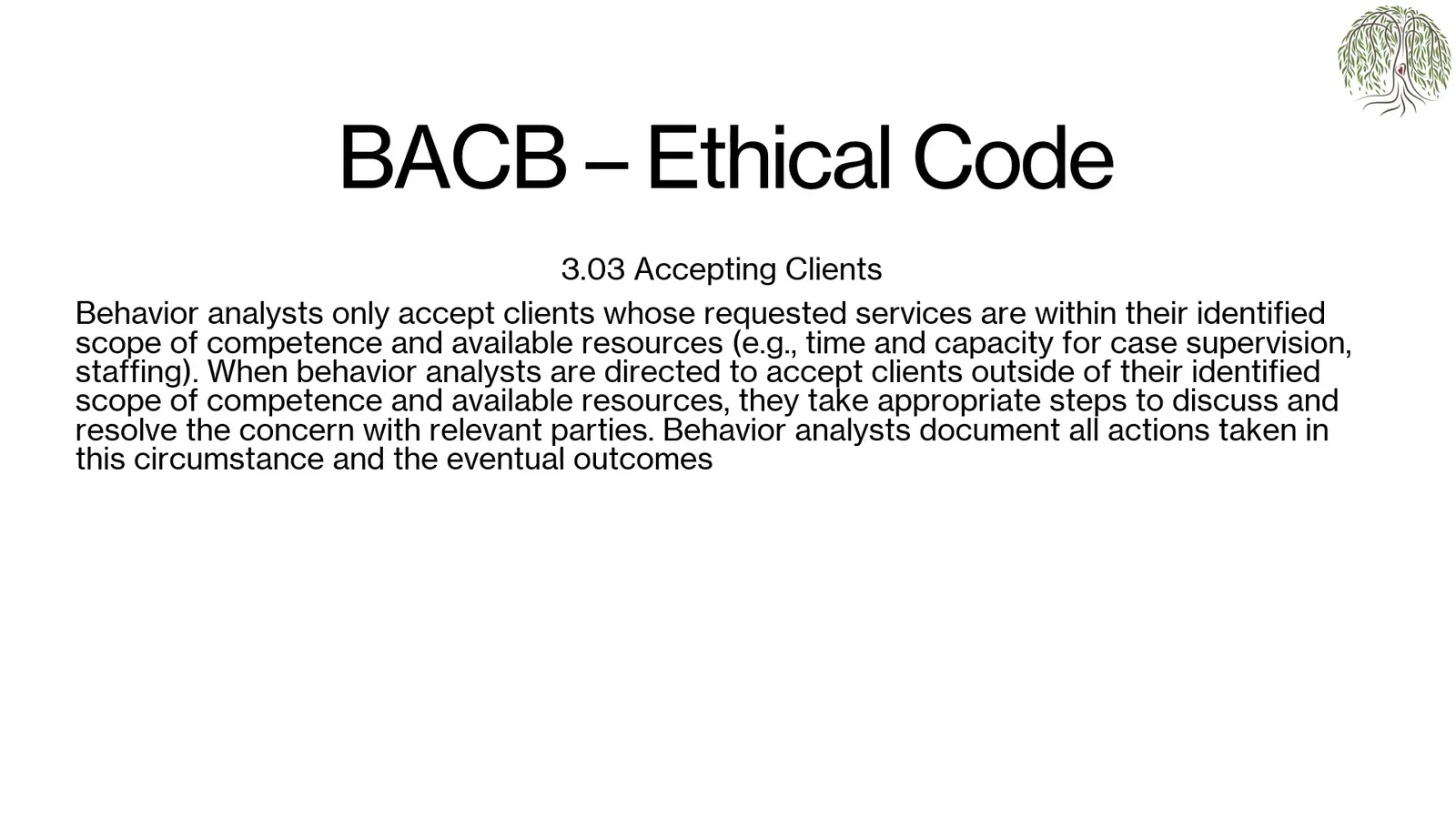
Staff often say this is not their job. Lund agreed with half of that. She is not asking anyone to act as a counselor. She warned against practicing outside your scope of competence (the work you are trained for). The ask is smaller and harder to dodge.
One concrete skill is tolerating the same question again. Where is dad. Dad died. Ten minutes later, where is dad. Staff get worn down and answer with frustration. The person may be asking for good reasons. Talking is how some people process. Others may not yet hold the idea that death is permanent, so they keep checking. Answering with compassion the tenth time is a trainable skill.
The other skill is dropping the timeline. Lund hears staff say his mom died three years ago, he should be over it by now. She asks a better question back: should he though. Grief has no deadline, and staff who believe it does will treat ordinary grief as noncompliance.
You can still feel sad for someone that died three years ago, 10 years ago, 20 years ago, and that's okay.
From the talk — Tricia Lund
Why the Training Does Not Happen, and What the System Punishes
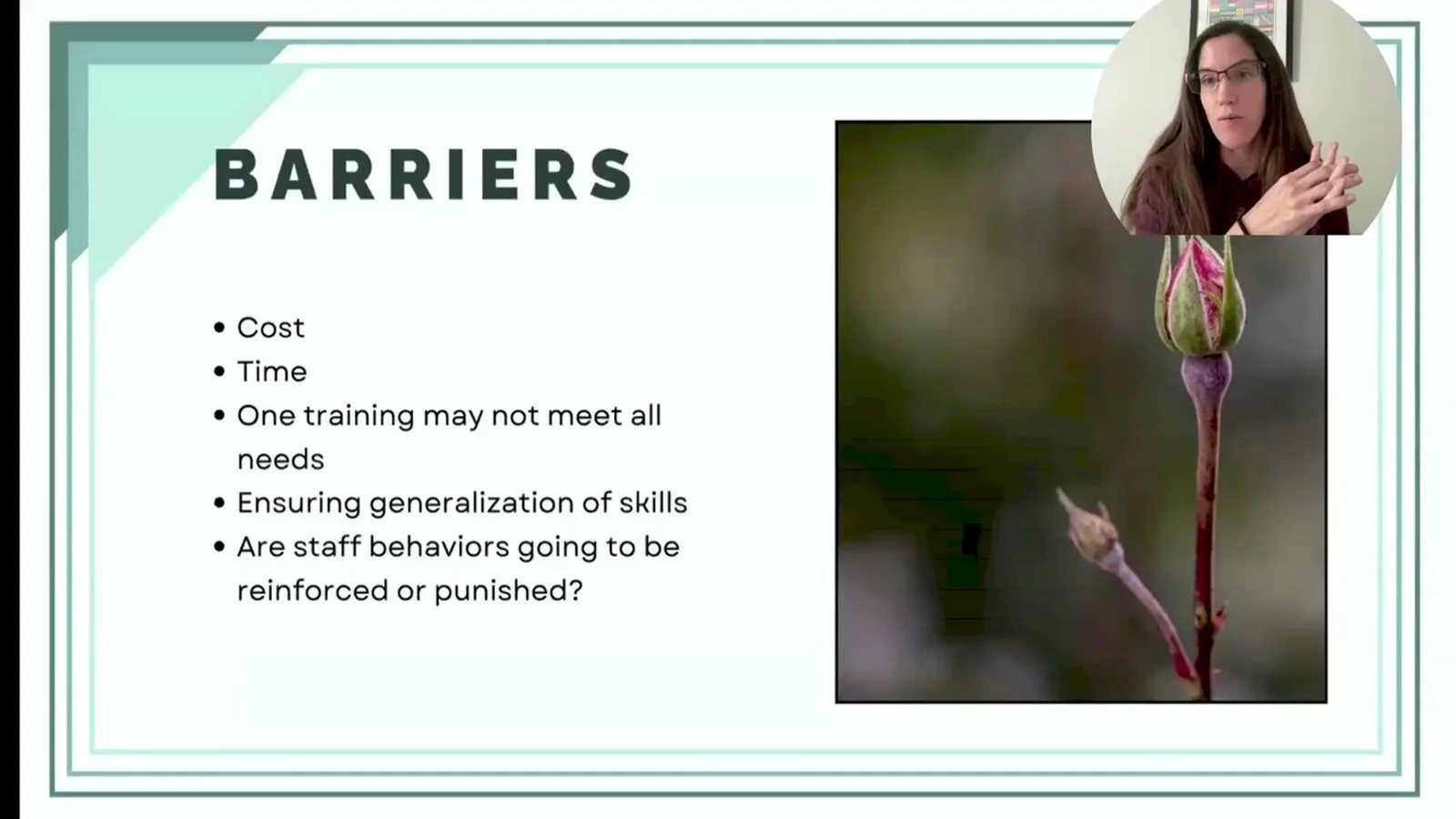
Cost is the first barrier to the training itself. Someone has to pay a trainer, pay staff who stay late, or cover the floor while staff are away. Time is the second. A program runs from nine to four, then staff drive people home. There is no gap in that day.
One training also cannot cover everyone. Support looks different for a person who is medically fragile. It looks different again for a person from a different culture, or a person who does not speak. Lund set a realistic goal instead: raise grief literacy and raise compassion. The studies she reviewed ran the training two ways. One was a full day. The other spread a couple of hours across about a week. Both raised staff comfort and knowledge. She flagged the honest limitation: those studies did not follow up later.
That gap is where behavior analysts are useful. We already think about whether a new behavior keeps getting reinforced, and about generalization (using a skill in new places). A one day training with no maintenance plan is a workshop, not a change.
The deepest barrier is a contingency problem. Picture a staff member who stops and sits with a grieving client. They miss a clock out. Nobody is watching the other four people. Meds go out late. The compassionate act produces trouble for the person who did it.
sometimes just the way the organization runs, we tend to punish compassion in staff
From the talk — Tricia Lund
From Caring For Someone to Deciding With Them
Lund ended with a mindset shift. The care focus model comes from love. I care about you, so I will take care of you. The trouble is the built in gap. I am up here deciding how many feelings you can handle, and whether you go to the funeral.
That model produces the behaviors she had already criticized. Shield the person from the death. Skip the funeral. Take down the photos. Say better place instead of died. Distract, so nobody has a hard feeling. The intent is kind and the result is harm.
The alternative is an autonomy focus. Share information and let the person tell you how much they want. She has walked clients through a written schedule of a funeral, part by part. The person says which parts they can do and how long they can stay. They can also say no. That is a choice they made, not one made for them.
Where does a team start? Lund offered free training to group homes she already contracts with and got no takers. Her audience pushed a bottom up approach. Begin with small, low effort changes on the floor. Build staff buy in, then bring numbers upward before asking for funding. She is also taking the case to larger disability organizations, including the Arc. She was candid that nobody in the room had the full answer yet.
You are the expert on your own grief. You are the expert on how much of this you can do.
From the talk — Tricia Lund
Common questions
Do adults with intellectual disabilities really grieve?▾
Yes. Lund noted that research only started addressing this seriously around the 1980s. Before that, many people assumed this group could not understand death or loss. That assumption was wrong. Grief may look different, especially for people with limited speech or complex medical needs, but it is there.
What should staff say when a client keeps asking where a parent who died is?▾
Answer again, plainly, with the real words. Repeating the question is often how a person processes the news out loud. For some people it also reflects their cognitive level. The permanence of death has not settled yet, so they keep checking. Frustration from staff teaches the person to stop asking, not to understand.
How long does grief training for direct support staff need to be?▾
The studies Lund reviewed used one full day, or a few hours a day across about a week. Both formats raised staff comfort and knowledge. None of the studies she found followed up later to see if the learning held. That gap is where maintenance and generalization planning matters.
Where can I find research on grief and intellectual disability?▾
Lund pointed to Omega, the journal of death and dying, as her most productive source. She also named the Journal of Applied Research in Intellectual Disabilities and the Journal of Policy and Practice in Intellectual Disabilities. Her broader point was to read outside ABA specific journals, since search habits keep us siloed.
Should a client with IDD attend a funeral?▾
That is the person's call, not the team's. Give real information first, including a step by step description of what will happen. Then let them choose which parts they can handle and how long they can stay. Declining is a valid choice when it comes from the person instead of from staff.
About the speaker
Tricia Lund runs Summit Behavioral Consulting. She does most of her work with adults with IDD in group homes and day programs. She holds a master's in special education. She has been accepted into a master's of social work program. She is a certified sexuality educator and a certified trauma professional, with ongoing work in somatic experiencing and death education. She also has a sister with a disability and expects to become her guardian, which shaped her focus on grief support in this population.
This summary was generated from the recording’s transcript. Quotes are taken word for word from the talk.
What you'll learn
- 1Learning Objectives 1. Participants will identify at least three barriers that limit access to traditional grief support for adults with IDD living in community settings
- 22. Participants will explain why direct service providers are critical in providing care after a death loss
- 33. Participants will identify benefits of training direct service providers to support adults with IDD after a death loss
- 44. Participants will identify content areas that should be included in trainings to direct support staff
Concepts in this CEU
Related talks
Talks that cover the same concepts
Interdisciplinary Grief Support for People with Disabilities: Enhancing Outcomes Through BCBA-LPC Collaboration
The Behaviorist Bookclub
Increasing Competence and Confidence in Helping People with Disabilities through Grief
The Behaviorist Bookclub

Shaping Behavior Change when ADHD is in the Picture
The Behaviorist Bookclub
That's Outside My Scope of Competence
Willow Mentorship & Consulting, LLC
Reframing Behavior through an ADHD Lens
The Behaviorist Bookclub
Compliance to Commitment: Seven Habits of the Highly Effective Caregiver Trainer
The Behaviorist Bookclub
More from The Behaviorist Bookclub
Harm Reduction Within ABA Practice
The Behaviorist Bookclub
Supervising Beyond Technical Skills: Professionalism, Communication, and Clinical Judgment
The Behaviorist Bookclub
Reflective Supervision and Client Outcomes
The Behaviorist Bookclub
OpenCEU is supported by advertising from third-party sponsors. Sponsors are clearly labeled, have no influence over course content, instructors, or CEU decisions, and never appear on certificates. The BACB does not sponsor, approve, or endorse OpenCEU sponsors or their products.