Respect for Autonomy in ABA: Giving People a Say
Respect for autonomy means honoring a person's right to choose. Learn why giving agency is one of the most powerful tools in ethical ABA care.
Key takeaway
Respect for autonomy means honoring a person's right to choose. The person leads decisions about their own life. Helpers support those choices instead of overriding them.
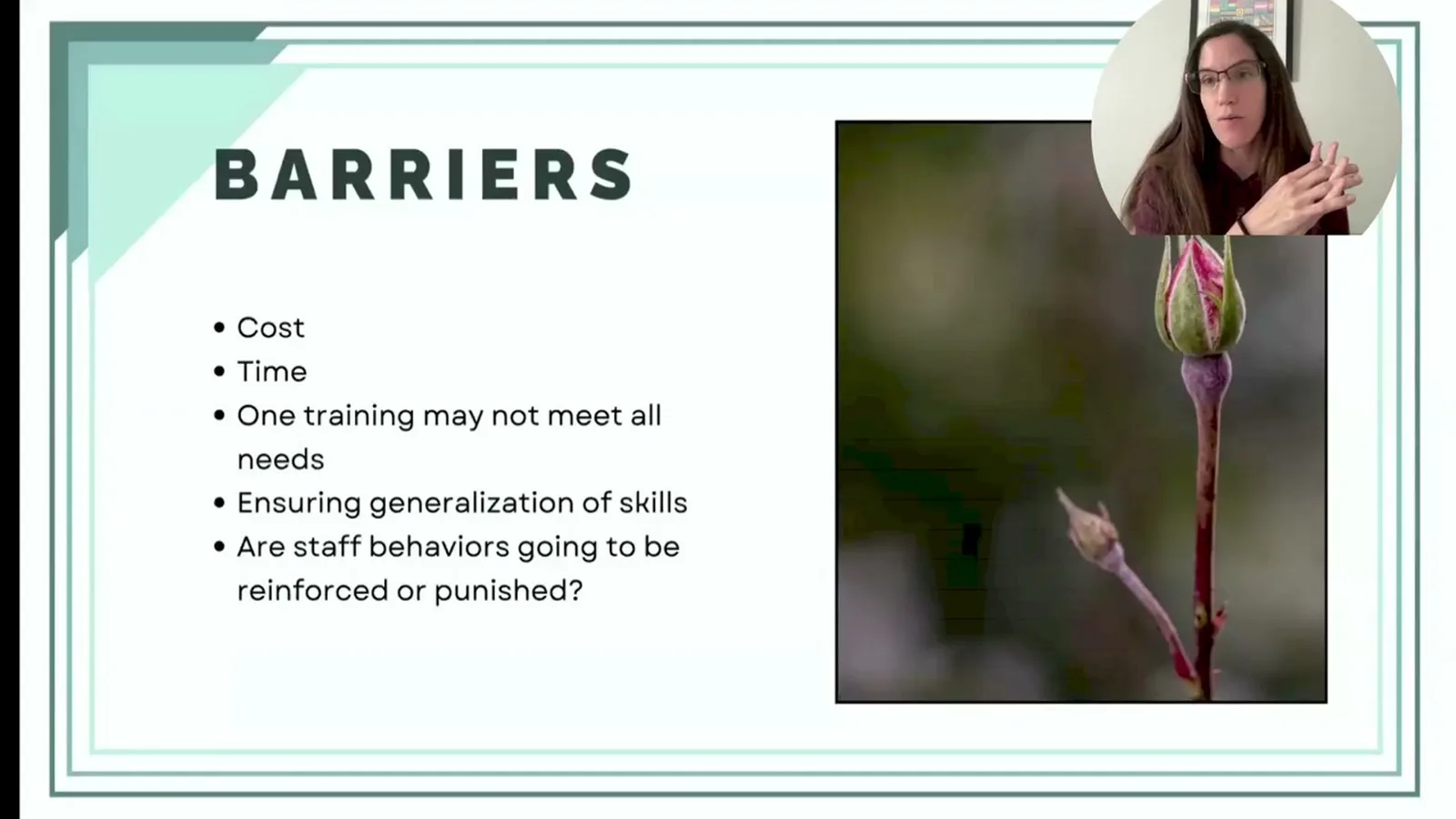
Grief Support at the Front Lines: Training Day Hab and Group Home Staff to Support Adults with IDD Through Bereavement
Free learning path on this topic
Your 4 Ethics CEUs, Done
Four ethics CEUs in three courses, all free. Start with Matt Harrington's assent and data course, then ethical guardrails in behavior reduction, then cultural considerations in clinical practice. Every course carries ethics credit, so this path covers the BACB requirement with nothing to buy.
Experts who cover this
2 recordings on openceu cover respect for autonomy.
- Featured talk1 CEU
Grief Support at the Front Lines: Training Day Hab and Group Home Staff to Support Adults with IDD Through Bereavement
Tricia LundThe Behaviorist Bookclub
Lund proposes shifting from the caring focus model to an autonomy-focused mindset where the person with IDD decides how much of a funeral or death ritual they…
- 1 CEU
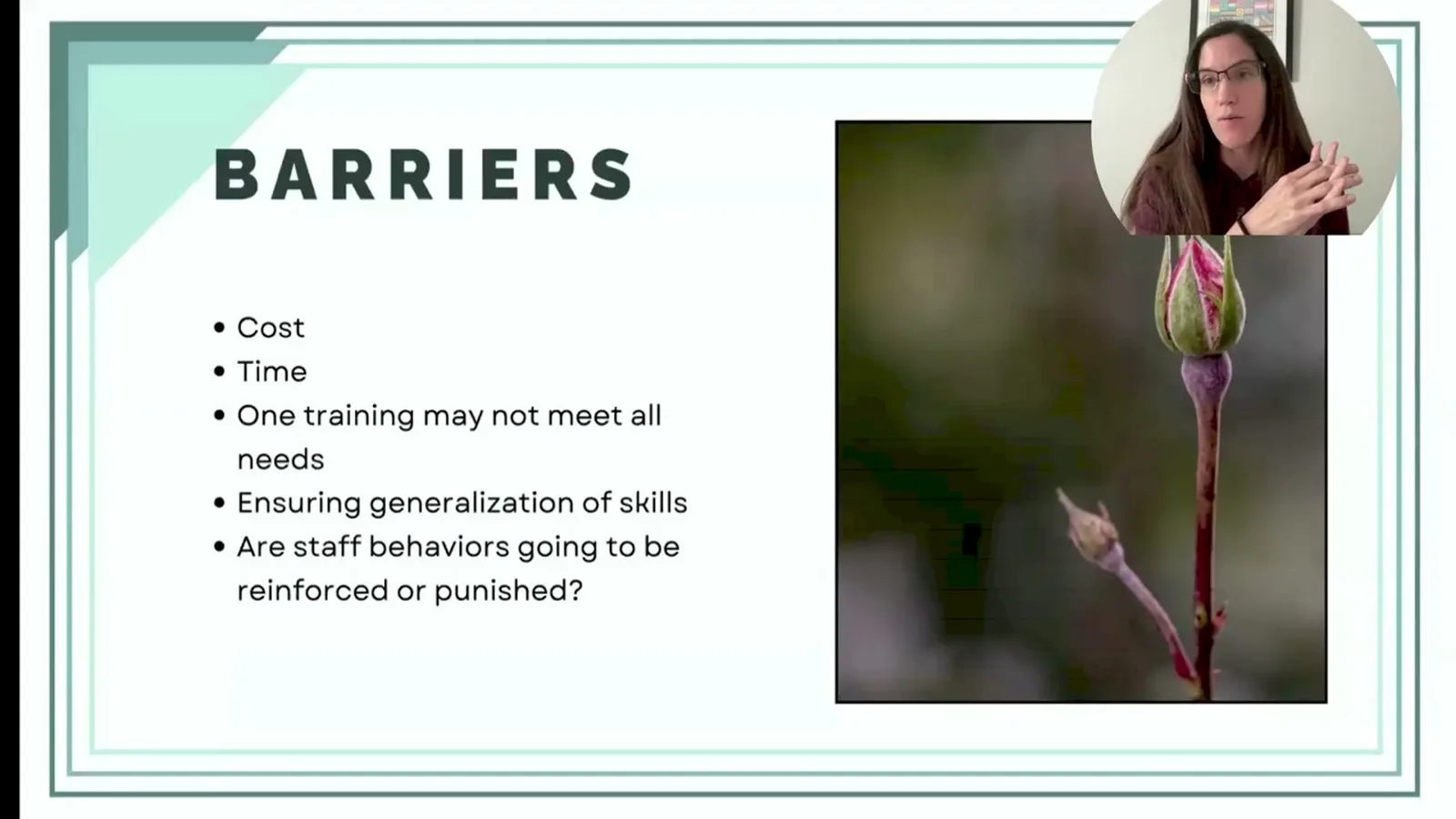
New Year, New Care Collab Goals
Matt HarringtonThe Behaviorist Bookclub
Presented as an ethical rationale for collaboration: without it, caregivers are forced to arbitrarily pick between providers rather than making an informed…
On this page · 9 sections▾
Respect for autonomy means honoring a person's right to choose. The person leads decisions about their own life. Helpers support those choices instead of overriding them. It is a core value in ethical ABA.
This matters to BCBAs, RBTs, and direct care staff. It shapes how you treat the people you serve. It also builds trust and dignity. When people have a say, care feels human.
Autonomy over a caring-for mindset#
Many helpers slip into a caring-for stance. They decide what is best and do it. That can be kind, but it takes control away. Respect for autonomy shifts the balance back.
Tricia Lund works with adults with disabilities during grief. She names the mindset she wants staff to adopt.
I'm wondering if we can shift the mindset to something that's more focused on autonomy, where we're equal and we're talking about it... You are the expert on your own grief. You are the expert on how much of this you can do. From the talk — Tricia Lund
The key phrase is the expert on your own life. The person knows their own limits best. Your job is to listen, not to decide for them. That respect changes the whole relationship.
Agency as an intervention#
Giving choice is not just polite. It can be a powerful tool for healing. Lund calls agency one of the best interventions she knows. A little control goes a long way.
giving agency is, I think, one of the best interventions ever. Giving a little bit of agency. When someone feels empowered, when someone feels that they have control, grieving will be easier. From the talk — Tricia Lund
This flips a common idea. Control is not a reward you earn. It is a support that helps people cope. A person who feels empowered handles hard moments better. Agency is the treatment, not an extra.
Choice in real, hard moments#
Autonomy shows up most in tough situations. A funeral is one clear example. Lund does not force a client to attend or skip it. She lays out the options in full detail.
I've had clients where the funeral is an option and I have a schedule that shows you everything that's going to happen at this funeral. And you are able to tell me I can do this part, but not this part. From the talk — Tricia Lund
Notice the method. She shares clear, honest information first. Then she lets the person pick their level. They can join one part and skip another. Choice becomes real when the person knows what they are choosing.
Autonomy needs good information#
 Advertisement
You cannot choose well without facts. Respect for autonomy depends on honest information. When helpers hold back, choice breaks down. Matt Harrington makes this point about care teams.
when you don't care collaborate, caregivers are going to end up feeling like I have to choose one or the other... by not care collaborating, we're not giving them the information to then turn around and make an informed decision From the talk — Matt Harrington
Without shared information, families face fake choices. They pick blindly between providers. Real autonomy needs the full picture. So share what you know, clearly and early.
Support the choice, do not make it#
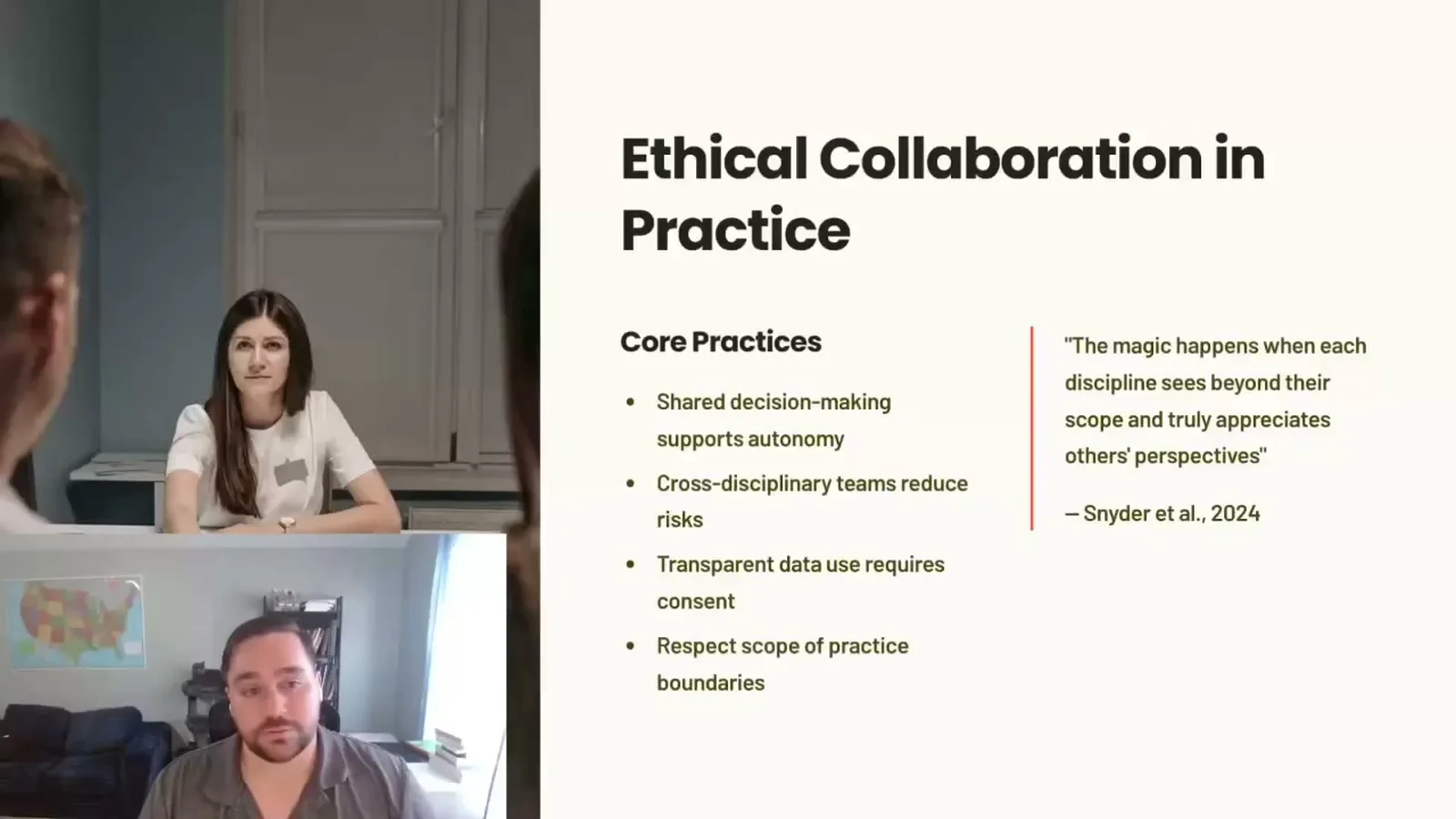
Autonomy does not mean you step back and vanish. It means you support the person's decision. Harrington describes shared decision-making this way. The choice belongs to the client and caregiver.
Shared decision-making supports autonomy, not by us making decisions, but for the client and the caregiver From the talk — Matt Harrington
This is a fine but vital line. You bring your knowledge to the table. You help weigh options and explain trade-offs. Then the person makes the call. Your expertise serves their choice.
Balancing autonomy and safety#
Autonomy does not erase your duty of care. Staff must still keep people safe. Sometimes those two goals seem to pull apart. Good practice holds both at once.
The answer is rarely all or nothing. You can offer choice within safe limits. You can explain a real risk and still honor a wish. Respect for autonomy means starting from choice, then adding support. It does not mean abandoning care.
This balance takes skill and patience. You learn a person's limits over time. You give more control as trust grows. The goal is a person who feels both safe and free.
Small choices build big trust#
Autonomy does not start with huge decisions. It grows from small daily choices. Which shirt to wear. Which task to do first. These little moments teach a person their voice matters.
So build choice into ordinary routines. Offer two good options often. Let the person pick and honor their pick. Each honored choice deepens their trust in you.
Over time, small choices prepare bigger ones. A person who chooses daily learns to weigh options. They practice having a say in low-stakes moments. Then they are ready for the choices that matter most.
Autonomy for people who need support#
Some worry that autonomy skips people with high needs. It does not. Everyone can have a say at their own level. The support just looks different for each person.
For someone with few words, you watch their signals. You offer choices they can show with a look or reach. You honor a clear no, even without speech. Assent and autonomy work for every person you serve.
The point is never to hand someone a choice they cannot handle alone. The point is to give real choice with the right support. You adjust the help, not the respect. Dignity stays constant for everyone.
FAQ#
What does respect for autonomy mean in ABA?
It means honoring a person's right to make their own choices. The person leads decisions about their own life and care. Helpers support those choices instead of overriding them. It is a core ethical value in the field.
How is giving agency an intervention?
Feeling in control helps people cope with hard moments. A person who feels empowered handles stress and grief better. So offering choice is not just polite. It is a support that improves how someone gets through a challenge.
How do you respect autonomy while keeping someone safe?
You start from choice, then add support. Offer real options within safe limits. Share honest information about any risk. You can honor a person's wishes and still meet your duty of care.
You can see the care team version of this idea in New Year, New Care Collab Goals.
 Advertisement
Turn this topic into a CEU
You just studied this. Now get credit for it.
Watch Grief Support at the Front Lines: Training Day Hab and Group Home Staff to Support Adults with IDD Through Bereavement with Tricia Lund and earn 1 free BCBA CEU. Detailed certificate, delivered the moment you finish.
Keep going with a free learning path
Your 4 Ethics CEUs, Done
Four ethics CEUs in three courses, all free. Start with Matt Harrington's assent and data course, then ethical guardrails in behavior reduction, then cultural considerations in clinical practice. Every course carries ethics credit, so this path covers the BACB requirement with nothing to buy.