Cultural Considerations Across Teams, Systems & Practice
Presented by Makenzie Sandler, BCBA

In this third installment of her cultural considerations series, Makenzie Sandler, BCBA, extends cultural responsiveness and BACB Ethics Code standards (treating others with compassion, dignity, and equity; standard 1.07 on cultural responsiveness and diversity) from individual client work to teams, systems, and organizational practice through an Organizational Behavior Management lens. She explains how ethics looks different at the systems level, where practitioners often advise rather than control implementation, enter existing power dynamics, and affect groups instead of individuals. After defining culture as the shared values, beliefs, and practices of a group, she examines workplace microcultures — by job title, clinic versus in-home teams, hybrid versus in-person staff, neurodiversity, meeting participation styles, tenure, region, and hobbies — and how unexamined cultural biases can damage supervision relationships, reduce psychological safety, and distort performance evaluations. Using research on employee recognition, including a 2025 study of over 500 nurses that ranked compensation, private verbal appreciation, and written acknowledgment above public programs like employee of the month, she argues that recognition is most effective when individualized, immediate, and preference-based. Practical applications include the Performance Diagnostic Checklist–Human Services, employee preference assessments beginning at the interview, inclusive performance-evaluation language, floating holiday policies, clarified communication norms and jargon, and ongoing reanalysis of behavior-change systems as preferences and staffing change.
Register free & watch nowCancel any time. Cert delivered to your inbox the moment you pass the quiz.
Learner ratings
from 61 learners
100% would recommend this CEU to other professionals in their field (27 responses)
About this CEU
In this third installment of her cultural considerations series, Makenzie Sandler, BCBA, extends cultural responsiveness and BACB Ethics Code standards (treating others with compassion, dignity, and equity; standard 1.07 on cultural responsiveness and diversity) from individual client work to teams, systems, and organizational practice through an Organizational Behavior Management lens. She explains how ethics looks different at the systems level, where practitioners often advise rather than control implementation, enter existing power dynamics, and affect groups instead of individuals. After defining culture as the shared values, beliefs, and practices of a group, she examines workplace microcultures — by job title, clinic versus in-home teams, hybrid versus in-person staff, neurodiversity, meeting participation styles, tenure, region, and hobbies — and how unexamined cultural biases can damage supervision relationships, reduce psychological safety, and distort performance evaluations. Using research on employee recognition, including a 2025 study of over 500 nurses that ranked compensation, private verbal appreciation, and written acknowledgment above public programs like employee of the month, she argues that recognition is most effective when individualized, immediate, and preference-based. Practical applications include the Performance Diagnostic Checklist–Human Services, employee preference assessments beginning at the interview, inclusive performance-evaluation language, floating holiday policies, clarified communication norms and jargon, and ongoing reanalysis of behavior-change systems as preferences and staffing change.
From the talk
What was covered
Makenzie Sandler, BCBA on taking Ethics Code 1.07 from the caseload to the org chart: microcultures, recognition research, and the PDC-HS (a tool for spotting workplace barriers).
- Ask new hires how they want feedback, praise, and holidays during the interview, then ask again as preferences shift.
- Favor immediate, private, specific thanks tied to a named value over a public employee-of-the-month program.
- Run the PDC-HS before you assume a staff problem is a motivation problem.
- Rewrite labels like unsatisfactory. A new employee should not be scored down for work not yet attempted.
- Define what words like urgent and feedback mean in each department, and cut the number of communication platforms.
- Check whether your recognition system rewards visibility and seniority instead of actual contribution.
Why Ethics Looks Different Across Teams and Systems
Most ethics training in ABA points at one place: the caseload. You write the plan. You train the tech. You watch the data. In this third talk in her series, Makenzie Sandler, BCBA, moves that lens up a level. She looks at ethics through Organizational Behavior Management (using ABA on workplace behavior).
At the system level, four things change. You often do not control how a plan gets used. You advise instead of decide. You walk into power dynamics that were set long before you arrived. And your outcomes land on groups, not on one person.
That last shift matters most for reward systems. With one client, you can match the reward to the person. With a whole staff, one reward will miss most of them. Sandler used a lemon to make the point. Some people love a strange treat. Most people want cake. If the group prize is a whole lemon, the group is not going to move.
The core principle does not change. Treat people with compassion, dignity, and equity. The word client just gets wider. Your clients are now your staff, your team, and the system itself.
Oftentimes you're pushing into where power dynamics are already set.
From the talk — Makenzie Sandler, BCBA
Ethics Code 1.07 and Two Reads of the Same Message
Code 1.07 sits in the BACB Ethics Code (the rules behavior analysts agree to follow). It covers cultural responsiveness (adjusting to how other people live). Sandler's summary is short. Find your own cultural biases. Then do something about them.
Her example is a supervisor from New York City. That supervisor is direct and gets to the point fast. The people around them read that as professional and efficient. Now give that supervisor a supervisee from the rural South. The same message can land as abrupt, rude, or even hostile.
The behavior did not change. The listener did. When we miss that, the damage is quiet and slow. Supervision relationships sour. Psychological safety (feeling safe to speak up) drops. Feedback stops working. Teams split into camps, with techs on one side and leadership on the other.
It also shows up in your paperwork. Sandler pointed at reviews that carry a self score and a supervisor score. Same behavior, two different numbers. That gap is often cultural, not clinical. Read it as a performance problem and you will fix the wrong thing.
Neither perspective is unethical.
From the talk — Makenzie Sandler, BCBA
Microcultures: The Small Groups Inside Your Organization
Sandler defines culture as the shared values, beliefs, and practices of a group. It shows up in what the group says it cares about, and in what the group actually does each day. Every company posts values. People either lean into them or lean away.
Then she shrinks the frame. Microcultures (small cultures inside a bigger one) are where most workplace friction lives. Job title is the first one. BCBAs, techs, schedulers, billing, and leadership can each run on their own norms. Setting is next. Clinic staff sit inside a team of twenty-five. In-home staff drive to two cases and work in a silo.
Hybrid teams split the same way. The remote group and the in-office group can drift into low-grade resentment. Or they can build real warmth once they finally meet in person. Schools do this too. Two buildings in the same district run on different unwritten rules.
The rest of her list: neurodiversity (brains that work in different ways), meeting style, tenure, region, and hobbies. Two staff who learn they both live in Texas bond fast. So do the yoga people and the sports people. None of this is bad. It is just real, and it shapes who gets heard.
And the microcultures can literally be down to just a team of two, right?
From the talk — Makenzie Sandler, BCBA
The Employee of the Month Problem
Sandler asked the room a simple question. When the spotlight hits you, do you wave or do you run? The answers split hard. Some said it is an honor. Some said they turn red and leave. That split is the whole problem with a public program. It assumes one reward fits everyone.
She raised three checks. First, access. Who votes? Do in-office staff get more face time with the deciders than remote staff? Can part-timers win, or only full-timers? If one region gets fewer referrals, that region learns it can never win, so it stops trying.
Second, preference. An extra day off is not a reward when nobody covers your work. A snack basket is not a reward when you cannot eat the food. Public praise is not a reward for a person with social anxiety or a trauma history. It can also fail someone who processes attention in a different way.
Third, and this is the sharp one: watch for staff who slow down on purpose. Someone with a strong idea may sit on it in a meeting. The praise that follows can feel worse than staying quiet. That is escape (behavior that gets you out of something), and your program built it.
Would they be performing higher if they knew they wouldn't be publicly recognized?
From the talk — Makenzie Sandler, BCBA
What the 2025 Nurse Recognition Study Found
Sandler cited Heyman et al., a 2025 study of over 500 nurses, all RNs. The nurses ranked the kinds of recognition they actually wanted. The top three were compensation, private verbal appreciation, and written thanks.
Employee of the month did not rank high. Neither did a photo on the wall or a name in the newsletter. The study also found meaningful differences in preference across demographic groups. That is the part worth sitting with. One program cannot serve a mixed staff well, because the groups inside your staff do not want the same thing.
She lined this up with the broader literature. Public recognition tends to rank below individual approaches. What works is personal, direct, authentic, and fast.
Her example will feel familiar to any behavior analyst. A staff member covers a shift for a coworker having a rough week. You thank them, name the exact behavior, and name the value it matched. You do it that day. You do not file it away for a bonus thirty days out. Immediacy is not a nice touch here. It is the mechanism.
That highlighted our value of teamwork, right? Do it right then.
From the talk — Makenzie Sandler, BCBA
Preference Assessments That Start at the Interview
A participant raised preference assessments (finding out what a person actually likes) at hiring. Sandler said her clinic does this, and not only for recognition. They ask new hires what food and drinks they want in the break room, then they stock it. When supplies run low, they ask again.
They ask again because preferences move. Someone who wanted cash this year may want a different bonus after a promotion. Money matters more in some seasons than others. A fixed reward menu goes stale.
The interview is the right place to start. What food do you like? How do you like to be recognized? How do you like feedback: written, in person, right away, public, or private? These are small questions with long-running answers.
Then Sandler brought it back to first principles. If your reward is not actually a reward, you are not reinforcing anything (making a behavior happen more). You still have metrics. You still have a program. The motivation is just missing, so the behavior does not move. This holds for a BCBA with five techs, not only for a large organization. You already run a recognition system. Find out what each of those five people wants from it.
behavior goes where reinforcement flows.
From the talk — Makenzie Sandler, BCBA
Use the PDC-HS Before You Blame Motivation
When staff behavior does not change, most teams guess at why. Sandler's fix is to assess instead. The Performance Diagnostic Checklist for Human Services, or PDC-HS, is built for exactly this. It is a short tool that finds workplace barriers. Any behavior analyst can read a quick article and run it. In an interview format, it takes about ten to fifteen minutes per person.
Take a common problem: everyone shows up late. Before you write a policy, look at the walk. Maybe parking is a mile from the door. Maybe the time clock sits at the very back of a big store, past every coworker on the floor. Staff enter the building on time, then get pulled into five friendly conversations. They are not late to work. They are late to the clock. Those two problems need different fixes.
Then keep going after you launch. A system is not done on day one. New hires need to be onboarded into the behavior-change program, not just into the job. Ask whether you actually have buy-in. Ask whether the plan reaches every person or quietly skips a group whose values do not match it.
Is your intervention working? Is the behavior actually increasing? Have you created other barriers?
From the talk — Makenzie Sandler, BCBA
Evaluation Language, Floating Holidays, and the Word Urgent
Start with your performance evaluation. Look hard at the words. If a row asks whether staff are engaged in meetings, what is the opposite? Disengaged? Someone taking careful notes and sending sharp questions by email afterward is participating. It just is not loud. Sandler calls that quiet participation, and a scale that cannot see it will score it as a failure.
Now look at your rating labels. Most scales end at needs improvement or unsatisfactory. A new hire can get marked down for a task they have not had the chance to try yet. Sandler suggests labels that are truer and land better: excited for growth, or novel opportunity.
Next, holidays. A floating holiday policy fixes a lot at once. Give a set number of days and let staff choose which ones they need. Do not question the choices. Ask at the interview too. Cover dress code needs, fasting periods where daily food at meetings is hard, and norms about handshakes or eye contact. Handled up front, these stop being awkward. They are just how your workplace runs.
Last, jargon. Your organization runs on words that mean different things in different departments. Urgent in billing is not urgent in clinical authorizations. I need your feedback could mean written notes, a meeting, or praise. Define the words. Then count your communication channels. Most teams have too many and no rule about who checks what.
So even the word urgent can mean different across different microcultures related to the departments in the organization.
From the talk — Makenzie Sandler, BCBA
Common questions
Does the BACB Ethics Code apply to how I treat staff, not just clients?▾
Yes. Sandler applies the same core principles of compassion, dignity, and equity to employees, teams, and whole systems. Code 1.07 covers cultural responsiveness. It asks you to find and address your own cultural biases. Those biases show up in supervision and performance reviews just as much as in client work. The standard does not change at the org chart. Only the people it points at do.
What is a microculture at work?▾
A microculture is a small group inside a larger organization with its own shared values, beliefs, and daily practices. Sandler points to job title, clinic versus in-home teams, remote versus in-office staff, neurodiversity, meeting style, tenure, region, and hobbies. They can be as small as two people. They are not a problem on their own, but they decide who gets heard and who gets recognized.
Is an employee of the month program a bad idea?▾
Sandler does not ban it, but the research she cited does not support it as a primary tool. A 2025 study of over 500 nurses ranked compensation, private verbal appreciation, and written thanks above public programs. If you keep a spotlight program, assess employee preferences first. Check who can realistically win it. Watch for staff who reduce performance just to stay out of the spotlight.
What is the PDC-HS and who can run it?▾
The PDC-HS is the Performance Diagnostic Checklist for Human Services. It is a short assessment for finding why a staff behavior is not happening. Sandler describes it as very user friendly. Any behavior analyst can read a quick article and run it. In an interview format, it takes roughly ten to fifteen minutes per person. Use it before you assume the issue is motivation.
How often should I redo employee preference assessments?▾
Often enough to catch change. Sandler's clinic starts at the interview and reassesses whenever they restock, because preferences shift with seasons, life events, and promotions. Someone who wanted a cash bonus last year may want something else after a raise. Treat it as ongoing reanalysis, not a one-time onboarding form.
About the speaker
Makenzie Sandler, BCBA, is a behavior analyst who was tagged an ethics enthusiast after speaking at VABA in Virginia, and she works ethics into nearly everything she presents. She mentors and supervises practitioners at every level, from techs to new BCBAs to administrators, and consults with ABA organizations outside her own caseload. This talk was the third in her CEU series on cultural responsiveness and cultural humility.
This summary was generated from the recording’s transcript and reviewed for accuracy. Quotes are taken word for word from the talk.
What you'll learn
- 1Learning Objectives
- 2By the end of this CEU, participants will be able to:
- 3Identify relevant BACB Ethics Code standards and describe how cultural variables influence ethical decision-making across teams and organizational systems
- 4Analyze workplace practices that may unintentionally reinforce inequities or create misalignment across diverse teams
- 5Apply Organizational Behavior Management (OBM) strategies to design culturally responsive communication, feedback, and performance supports
Concepts in this CEU
Related talks
Talks that cover the same concepts
Building a Supervision System That Actually Works
The Behaviorist Bookclub
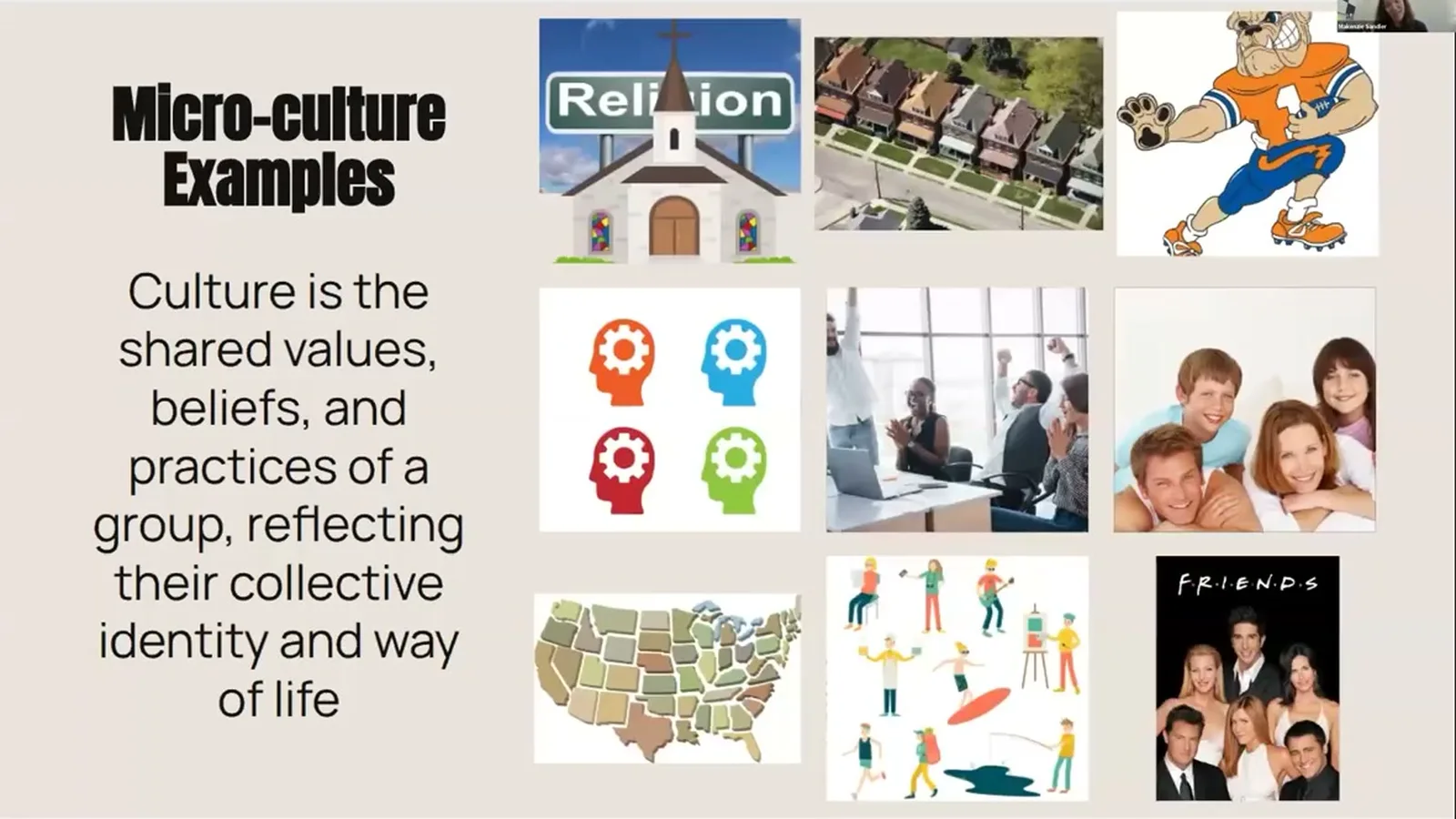
Cultural Considerations in ABA Clinical Practice
The Behaviorist Bookclub
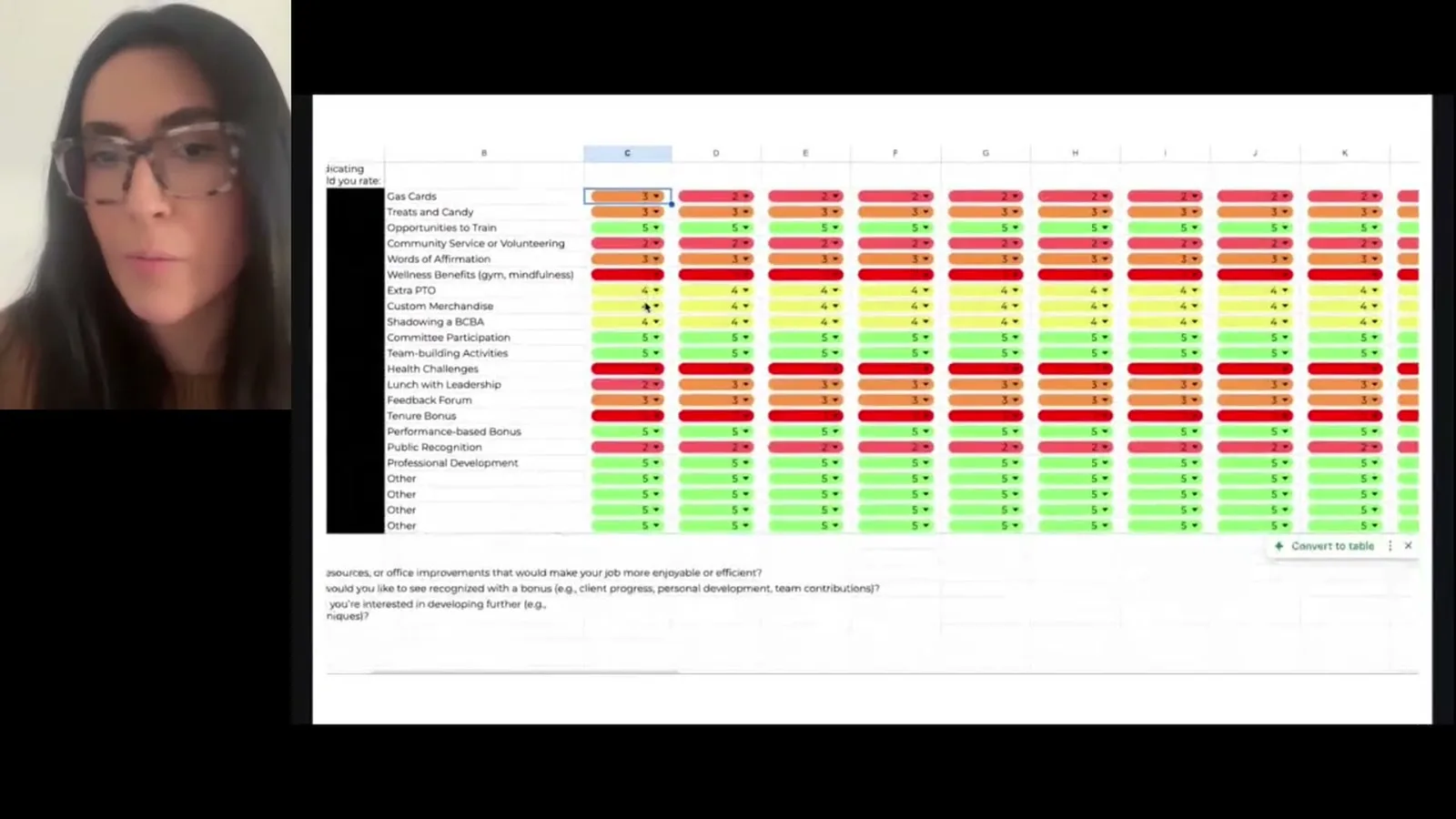
Dunder Mifflin’s Guide to Training and Onboarding: Lessons from The Office
The Behaviorist Bookclub
Shaping Behavior Change when ADHD is in the Picture
The Behaviorist Bookclub

Developing Team Culture Through Psychological Safety
Copper Consulting Group
Reflective Supervision and Provider Outcomes in ABA
The Behaviorist Bookclub
More from The Behaviorist Bookclub
Empowering Autonomy and Self-Management in ADHD Learners
The Behaviorist Bookclub
From Hours to Competence: Assessing and Developing Supervisee Skills
The Behaviorist Bookclub
Getting the Right Answer Isn’t Enough: Establishing Speaker–Listener Repertoires for Complex Learning
The Behaviorist Bookclub
OpenCEU is supported by advertising from third-party sponsors. Sponsors are clearly labeled, have no influence over course content, instructors, or CEU decisions, and never appear on certificates. The BACB does not sponsor, approve, or endorse OpenCEU sponsors or their products.