Microculture: The Small Group Inside the Culture
A microculture is a small shared-value group inside a larger culture. Learn how it shapes ABA teams, families, and rapport with clients.
Key takeaway
A microculture is a small group inside a bigger culture. The people in it share values, beliefs, and habits. Those habits are often a little different from the group around them.

Cultural Considerations Across Teams, Systems & Practice
Experts who cover this
2 recordings on openceu cover microculture.
- Featured talk1 Ethics CEU
Cultural Considerations Across Teams, Systems & Practice
Makenzie SandlerThe Behaviorist Bookclub
Introduces "microculture" as smaller shared-value groups within an organization (by title, clinic location, hybrid vs. in-person, hobby, tenure), arguing these…
- 1 Ethics CEU
Cultural Considerations in ABA Clinical Practice
Mackenzie SandlerThe Behaviorist Bookclub
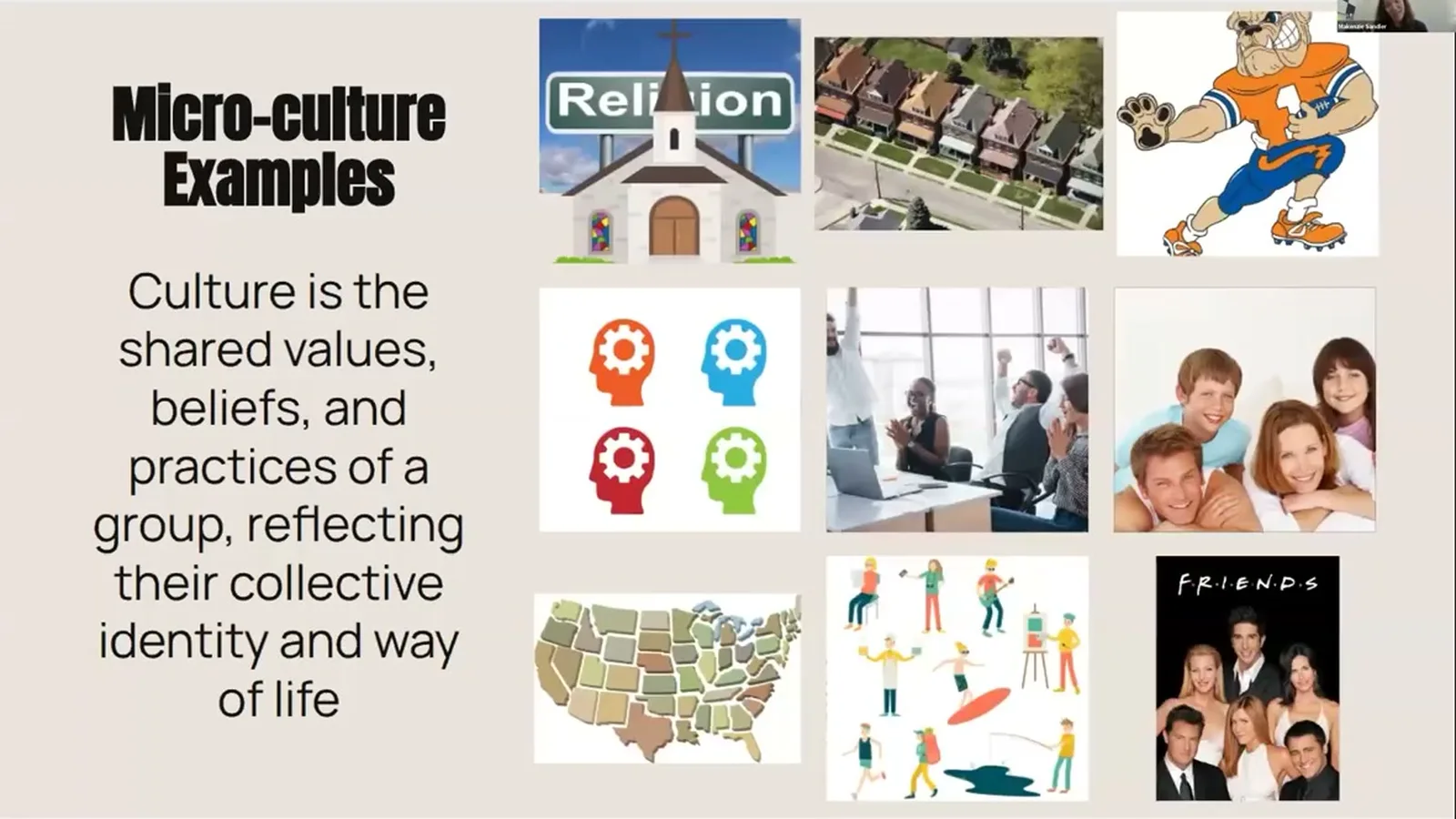
Mackenzie's central framework: beyond broad group culture (religion, region, ethnicity), everyone belongs to smaller microcultures (workplace, neighborhood…

On this page · 9 sections▾
A microculture is a small group inside a bigger culture. The people in it share values, beliefs, and habits. Those habits are often a little different from the group around them. Think of the coworkers who eat lunch together every day. Think of two people in a two-person office. They have their own way of doing things.
This matters in behavior work. A microculture shapes how a person acts right now, in this room. If you only look at broad labels like religion or region, you miss the real picture. The smaller group is where day-to-day behavior gets shaped. When you see it, you build better trust with families, coworkers, and clients.
What a microculture actually is#
A microculture is the culture within the culture. A person may practice a religion. But they also belong to one church or temple where they go. That smaller group has its own norms. The same is true for a college, a job, or a neighborhood.
Makenzie Sandler builds her talks around this idea. She says broad culture tells you a little. The microculture tells you a lot more. It is closer to the person. It is where you can actually connect.
Microcultures show up at work#
Every workplace holds many microcultures. They form around job titles, clinic sites, and work styles. A BCBA, or board certified behavior analyst, may act one way as a group. RBTs, the frontline therapists, may act another way. Neither is wrong. They are just different small cultures.
These groups form for simple reasons. Shared breaks. Shared tasks. Shared inside jokes. The water cooler chat is a microculture in action. Sandler points to this to show how small and normal these groups are.
especially in the world of organizations and employment in general... microcultures exist, right? Like, do you have that chat at the water cooler? From the talk — Makenzie Sandler
They can be as small as two people#
A microculture does not need a crowd. It can be one pair of coworkers. Two people can share strong values that set them apart from the rest of the team. That small bond still drives how they work and talk.
Sandler is clear about this size. A team of two counts.
the microcultures can literally be down to just a team of two, right? Like an office of two or two people that really have these high shared values, beliefs, and practices that are just different than the other group members. From the talk — Makenzie Sandler
Job title creates its own culture#
 Advertisement
Title shapes behavior more than people expect. The role you hold puts you with a certain group. That group builds shared habits over time. It can even build shared bias without anyone meaning to.
This is why Sandler asks teams to name their microcultures out loud. If BCBAs act one way and RBTs act another, that gap is worth seeing.
microcultures that exist maybe on what's your title, right? Is there a microculture that BCBAs at this organization behave in a certain way versus BCABAs or RBTs. From the talk — Makenzie Sandler
Place shapes people too#
Where you live and work is its own microculture. Sandler uses New York City to make the point. The city is one place on a map. But each borough feels different. People from each one carry their own norms and pride.
The same goes for a neighborhood or a home town. Two families in the same city can feel worlds apart. When you meet a client, their place is a clue. It tells you what may be reinforced in their daily life.
People switch which microculture is driving#
Here is the part that helps most in practice. A person belongs to many microcultures at once. But only one tends to lead at a time. The setting decides which one steps forward.
Someone acts one way at home. They act another way at work. They shift again with old college friends. Each setting pulls up a different set of values. Sandler frames this as behavior that follows the microculture in the room.
The lesson is simple. Watch the setting. It shows you which small culture is guiding the person right now. That helps you meet them where they are.
You can use this with your own team too. A coworker may be quiet in a big meeting. That same person may lead the room in a small group. Neither version is the real one. Both are shaped by the small culture in play. When you notice the shift, you judge less and understand more.
Why this beats broad labels for rapport#
Broad demographic groups feel too big to act on. You cannot build trust with a whole religion or a whole region. But you can connect over a shared college or a shared home town. That is a microculture you both can name.
This is why Sandler treats microcultures as the practical tool. Ask about the small groups. Find the overlap. That overlap is where real rapport starts. It works with families and with coworkers alike.
The same care helps you avoid quiet bias. When you assume things about a broad group, you often get it wrong. When you ask about a person's real small groups, you learn who they are. That respect shows. Families notice when you treat them as individuals, not as a label. Coworkers notice it too.
if you run into someone and you went to the same college, you're probably like, Oh, did you go to that one event on that last Saturday of April every year? From the talk — Makenzie Sandler
Sandler covers the clinical side of this idea in Cultural Considerations in ABA Clinical Practice. ABA is applied behavior analysis, the field this work sits in.
What the research says#
This page draws on three recorded talks by Makenzie Sandler. None of the talks cite outside journal articles. So the guidance here rests on the talks themselves, not on separate published studies.
If you want to go deeper with primary research, look to the source talks first. They lay out the microculture framework in full and give many worked examples. Pairing that with your own reading on cultural humility in behavior work is a strong next step.
Frequently asked questions#
What is the difference between culture and microculture?
Culture is the big group, like a religion, region, or ethnicity. A microculture is a smaller group inside it. It could be one church, one job title, or one neighborhood. The small group shapes day-to-day behavior more directly. It is closer to the person, so it is easier to act on.
Can a microculture really be just two people?
Yes. Sandler says a microculture can be a team of two. Two coworkers who share strong values and habits form their own small culture. Size does not matter. What matters is shared values, beliefs, and practices that set the pair apart from the wider group.
How do microcultures help me build rapport with clients?
They give you common ground you can name. Broad labels are too large to bond over. But a shared home town or school is specific. You can talk about it. Ask about the small groups your client belongs to. Find where your worlds overlap, and start there.
 Advertisement
Turn this topic into a CEU
You just studied this. Now get credit for it.
Watch Cultural Considerations Across Teams, Systems & Practice with Makenzie Sandler, BCBA and earn 1 free BCBA CEU. Detailed certificate, delivered the moment you finish.