The Performance Diagnostic Checklist, Explained
The Performance Diagnostic Checklist helps you find the real reason staff performance slips, so you fix the environment instead of blaming effort.
Key takeaway
The Performance Diagnostic Checklist, or PDC, is a short assessment. It helps you find out why a staff member is not doing a task well.

Cultural Considerations Across Teams, Systems & Practice
Experts who cover this
3 recordings on openceu cover performance diagnostic checklist.
- Featured talk1 Ethics CEU
Cultural Considerations Across Teams, Systems & Practice
Makenzie SandlerThe Behaviorist Bookclub
Recommends the PDC-HS as a quick, clinician-friendly OBM assessment to identify actual environmental barriers behind a performance problem (e.g., late…
- 1 Supervision CEU
Design Smarter: Using Instructional Design to Improve Staff and Stakeholder Training
AllyThe Behaviorist Bookclub
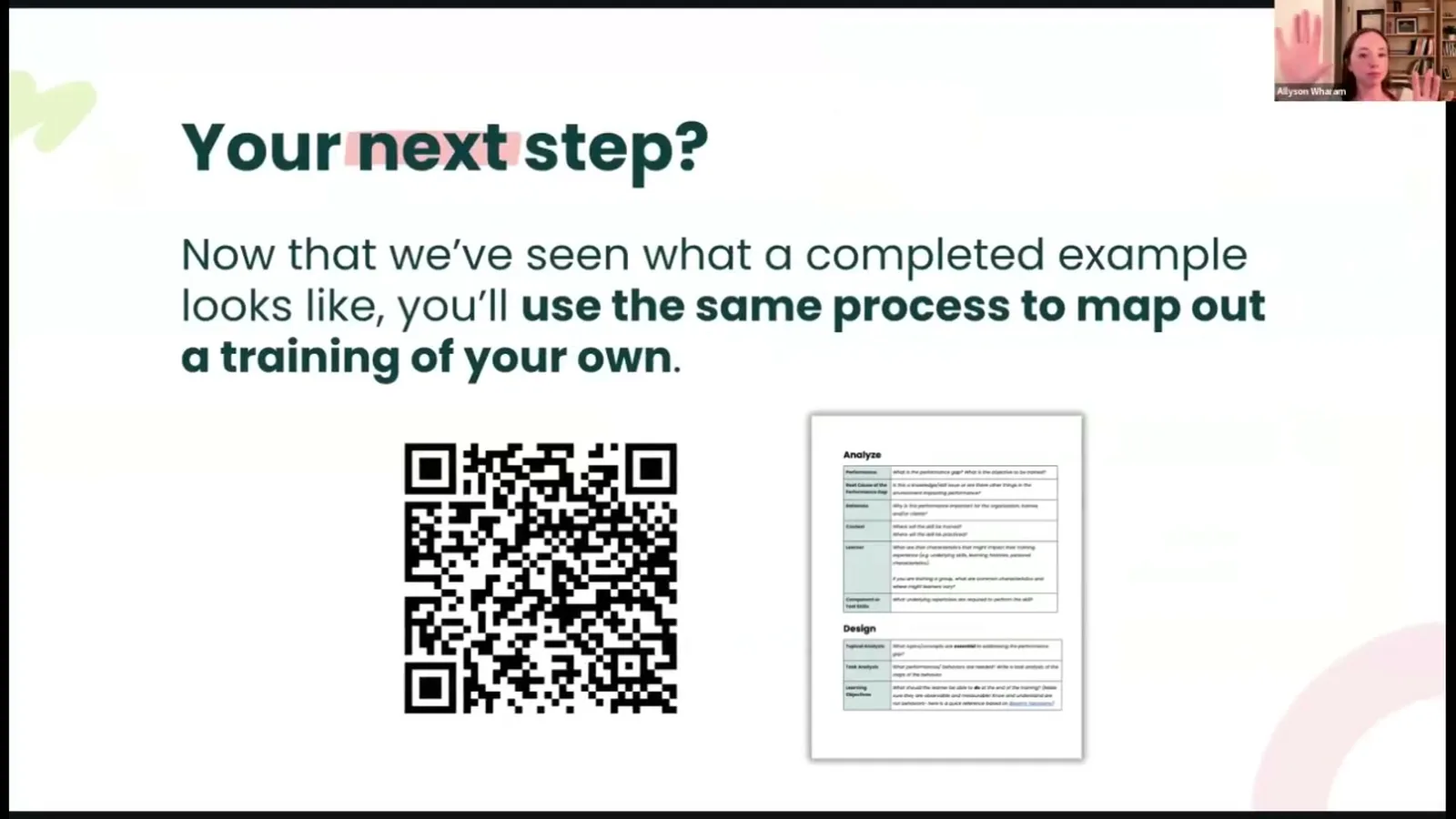
Recommends the performance diagnostic checklist (and a newer caregiver-specific version by Ainsley Hodges) as a tool for determining whether a performance gap…
- 1 Supervision CEU
Building a Supervision System That Actually Works
Lauren DonovanThe Behaviorist Bookclub
Mentioned as a tool for identifying why a supervisee is struggling by ruling out skill deficits, performance deficits, or other barriers before intervening.

On this page · 8 sections▾
The Performance Diagnostic Checklist, or PDC, is a short assessment. It helps you find out why a staff member is not doing a task well. Instead of guessing, you check the work environment for real barriers.
Most managers assume a struggling employee just needs to try harder. The PDC pushes back on that. It asks what in the setting makes the right behavior hard or the wrong behavior easy. When you know the true cause, your fix actually works. That saves time, money, and a lot of frustration.
What the checklist actually looks at#
The PDC comes out of organizational behavior management, which is the science of changing behavior at work. The tool breaks a performance problem into a few clear areas. It asks about training, about tools and processes, about what happens before a task, and about what happens after it.
Each question has a yes or no answer. A "no" points to a possible problem. You add up the "no" answers by area. The area with the most problems becomes your focus. Then you build a fix that targets that exact area.
The most common version in our field is the PDC-HS, short for the Performance Diagnostic Checklist for Human Services. It was built for clinics, schools, and homes where staff support clients. Lauren Donovan keeps it simple for supervisors and just calls it the Performance Diagnostic Checklist.
Stop blaming effort, look at the setup#
Makenzie Sandler uses a clear example. Say your team keeps clocking in late. The easy story is that they are lazy or careless. But the checklist asks you to watch the actual path they walk.
if I'm an employee and I have to walk through the front door and then the employee clock in location... is in the very, very, very back. What is the behavior that your employees are engaging in from the front door to the back? Are they running to get there on time? Probably not. From the talk — Makenzie Sandler
That is the whole point. The clock is in the wrong spot. Moving it fixes the lateness faster than any lecture about effort. The PDC keeps you looking at the environment first.
Ask this before you build a training#
Not every problem is a knowledge gap. Sometimes staff know exactly what to do but the system gets in the way. Ally warns against jumping straight to a new training when the real issue lives somewhere else.
Using something like the performance diagnostic checklist, the PDCHS, could be a good place to start to think about, is this a performance intervention outside of training that we need to look at? From the talk — Ally
Training costs hours and money. If the true barrier is a missing form or a confusing step, more training does nothing. The checklist tells you when to train and when to fix the process instead. Ally also points to a newer version from Ainsley Hodges that looks at caregiver training, support, and performance. You can learn more in Design Smarter: Using Instructional Design to Improve Staff and Stakeholder Training.
Skill problem or performance problem#
 Advertisement
When someone you supervise struggles, Lauren Donovan starts by sorting the cause into a few buckets. Is the person missing a skill, or do they have the skill but not the support to use it? Those two problems need very different fixes. She frames it as a simple question. Is this a skill deficit, a performance deficit, or something else?
A skill deficit means the person cannot do the task yet. Teaching helps here. A performance deficit means they can do it but something blocks them. Maybe there is no reminder, no time, or no feedback. The PDC helps you tell these apart before you act. For a deeper look at this, watch Building a Supervision System That Actually Works.
It is quick, and you repeat it#
You do not need special certification to run the PDC. A board certified behavior analyst, meaning a licensed clinician who studies behavior, can pick it up fast. Makenzie makes that clear.
using something like the PDCHS, right? Tools exist out there for us... any behavior analyst could pick up the PDCHS, read a quick article and run it. From the talk — Makenzie Sandler
It also does not eat your whole day. Makenzie notes it takes about 10 to 15 minutes per person. The catch is that you are not done after one pass. People and settings change, so you run it again over time. Treat it as a habit, not a one-time event.
One tool, several versions#
The PDC has grown into a small family of tools. The first version targeted general workplaces. Then came the PDC-HS for human services. Later versions cover safety on the job and support for parents. Each keeps the same four-area structure but fits a different setting.
This matters because you want the version that matches your work. A clinic supervisor reaches for the PDC-HS. A caregiver coach might use the parent-focused version. The core logic stays the same. You look at the environment, score the areas, and fix the area that scores worst.
What the research says#
The PDC has more than good word of mouth. A growing body of studies backs it up. A large review of 28 studies found strong support for the tool and its versions, while noting spots that still need study (Echeverria & Wilder, 2024).
Real settings show it works. In schools, the checklist helped teachers hand out reward tokens far more often once the right fix was found (Hoffmann & Pastina, 2024). In group homes, it lifted the quality of staff data collection for clients with serious behavior needs (Guercio & Hunyadi, 2023).
Researchers are also making the tool easier to use. A published guide walks through how to give the PDC-HS step by step (Goldman et al., 2023). Another study built clearer score cutoffs and decision steps. Practitioners who used those aids were almost five times more likely to pick the right area to fix (Vance, Saini, & Guertin, 2022).
Frequently asked questions#
Who fills out the Performance Diagnostic Checklist?
Usually a supervisor or manager completes it about an employee who is having a performance problem. You answer questions about training, tools, and the setting. You can also gather input by watching the work and talking to the staff member. The goal is an honest picture of the environment rather than a judgment of the person.
How is the PDC different from just giving feedback?
Feedback is one possible fix. The PDC comes first and tells you if feedback is even the right move. It sorts the cause into areas like training, tools, antecedents (what happens before a task), and consequences (what happens after). If the real problem is a missing resource, feedback alone will not solve it. The checklist points you to the fix that matches the true cause.
How often should I run it?
Run it whenever a clear performance problem shows up. Then run it again after you try a fix, to see if things improved. Settings shift over time, so a single check can go stale. Makenzie describes it as something you reanalyze on a regular basis. Short and repeated beats long and one-time.
 Advertisement
Turn this topic into a CEU
You just studied this. Now get credit for it.
Watch Cultural Considerations Across Teams, Systems & Practice with Makenzie Sandler, BCBA and earn 1 free BCBA CEU. Detailed certificate, delivered the moment you finish.