RBT Onboarding Checklist: What to Cover Week One in ABA
A behaviorally defined RBT onboarding checklist that covers values, expectations, BST, and pairing in week one, from a BCBA-led CEU.
Key takeaway
Week one for a new RBT is an operational checklist, not a paperwork dump, and this page lays out exactly what to cover, in what order, and how to write each item so a brand-new technician can actually do it.
Dunder Mifflin’s Guide to Training and Onboarding: Lessons from The Office
Free learning path on this topic
Supervision, Done Right
Four supervision CEUs that build on each other. What reflective supervision is, how to build a supervision system, how to assess supervisee competence instead of counting hours, and how supervision affects provider outcomes. The BACB asks supervisors for three supervision CEUs per cycle. This covers it.
On this page · 8 sections▾
Week one for a new RBT is an operational checklist, not a paperwork dump, and this page lays out exactly what to cover, in what order, and how to write each item so a brand-new technician can actually do it. If you are a BCBA or clinical director, you can use this as the working draft for your own onboarding doc. If you are a new RBT, you can use it to ask better questions on day one.
What a real onboarding checklist looks like (and what most are missing)#
Most RBT onboarding checklists are a stack of forms. Sign the handbook. Watch the HIPAA video. Print the badge. Read the policy binder. That stuff matters for legal reasons, but it does not prepare a person to walk into a session on Monday and run a program.
A real onboarding checklist is a list of behaviors. Each item names a person, names an action, names where and when the action happens, and names what "done" looks like. If you cannot tell from reading the item whether the RBT did it or not, the item needs to be rewritten.
policies and procedures should be a set of operational definitions and task analyses of desired behavior. So, again, that onboarding and training is designed to clarify whatever expectations you may have with your team members and to leave no room for interpretation or question about what should or shouldn't be done. From the talk — Mellanie Page
That framing is the whole game. Treat your checklist as a task analysis of the job, not a stack of HR forms, and most of the usual week-one problems get smaller on their own.
Day one: values and culture, defined as behaviors#
The first thing a new RBT picks up is not your data system. It is the feel of the place. Who greets them. Whether anyone explains why the work matters. Whether the person training them seems to care. That impression sticks, and it shapes how hard the RBT will work to fit in.
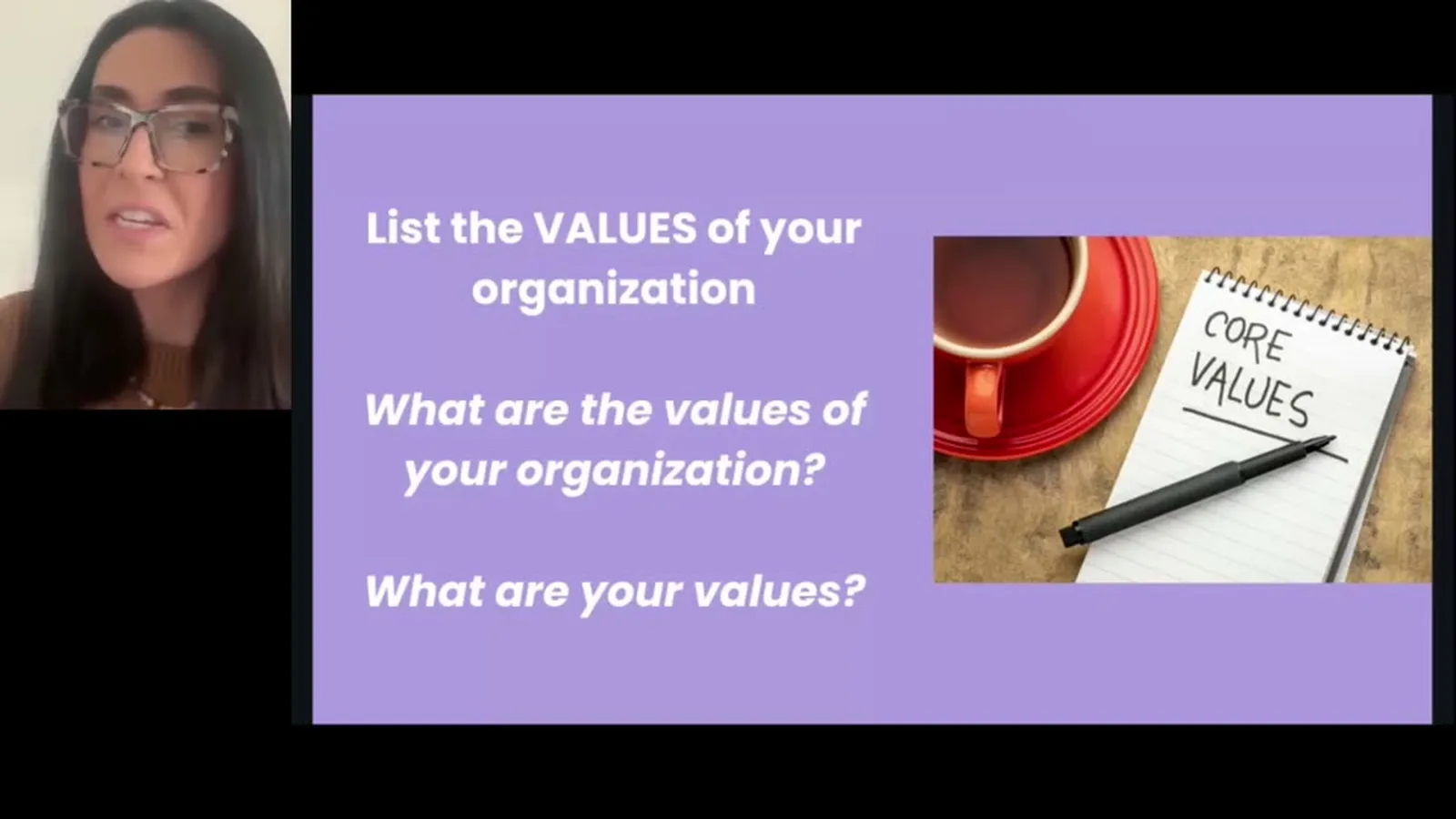
onboarding is more than just training on technical skills. It's this introduction to your organization, to its values. It's the first taste of your company culture. And it's a key opportunity to effectively influence your new team members, to show them what it's about to work at your place of work. From the talk — Mellanie Page
So put values first on the checklist, but do not stop at the word. "We value collaboration" is not a behavior. Write the behaviors that show collaboration on your team. Examples that came up in the talk: asks for input before finalizing a treatment protocol, shares an update in the team chat at the end of every session, attends the weekly interdisciplinary meeting. Those are observable. A new RBT can read them and know what to do.
Day one checklist items, written as behaviors:
- Meet your direct supervisor for a 30-minute intro. Share three things about yourself. Hear three things about the clinic.
- Read the one-page values doc. Pick the value that means the most to you. Write one sentence on why.
- Watch your supervisor run a 15-minute session segment. Note three things they did that match a value.
- Tour the clinic with a current RBT. Ask where the reinforcers, data sheets, and first-aid kit live.
These take a few hours. They are not filler. They are how you set the tone before the science starts.
Clear expectations: the five questions every item must answer#
This is the hinge of the whole checklist. Every item should answer five questions: who does it, what is the behavior, where does it happen, when does it happen, and how should it happen. If even one of those is missing, the RBT is guessing.
As a leader, the most impactful thing you can do early and often is establish clear expectations for team members. Clear expectations are well-defined and they specify all of these things. Most failures and shortcomings of new team members are due to lack of clear expectations. From the talk — Mellanie Page
Try this with "engage with your client." Engage how? Follow their lead? Run trials? Only when they are calm? Three RBTs will read that sentence and do three different things. Now try it as: "During the first ten minutes of session, the RBT will pair by joining the client's preferred activity and delivering reinforcers on a rich schedule, with no demands placed." That is a behavior an RBT can do and a BCBA can score.
Run every existing item on your current onboarding doc through the five questions. The ones that fail get rewritten before any new hire sees them.
Pairing, BST, and skill priorities for week one#
A new RBT cannot learn everything in week one. So pick the skills that show up every single day, have the biggest impact on the client, and matter most to the family. Spend most of your training time there. Cut or delay the rest.
The talk named three filters for a skill being "critical": high impact, used often, and socially significant. Pairing passes all three. Reinforcement delivery passes all three. Following a behavior plan during a tantrum passes all three. The history of behaviorism does not. Neither does the org chart.
Use behavior skills training for each critical skill: instruct, model, rehearse, feedback. Talk it through, show it, have the RBT do it, then give specific feedback. Repeat until the RBT meets criterion in a clean run. Move on.
Week-one skill targets, in order:
- Pairing. Joining play, following the client's lead, delivering reinforcers without placing demands.
- Reinforcement delivery. Timing, magnitude, variety, and pulling from the preference assessment.
- Prompting and prompt fading at the level the assigned client needs.
- Basic data collection. What to score, when to score it, where the sheet lives, and how to fix a mistake.
- Behavior plan first responses. The first two steps for the top one or two target behaviors, scripted.
If your training week tries to cover more than five core skills, you are probably going broad when you should go deep. Pick the few that matter, run BST on each, and let the rest come in week two and beyond.
Incident reporting and communication, written as task analyses#
The two areas that go wrong fastest when expectations are vague are incident reporting and team communication. A new RBT who is not sure whether something counts as a reportable incident will often wait, ask a coworker, or say nothing. None of those are what you want.
report an incident immediately. This might be a directive that we provide a trainee, but if that expectation doesn't specify what is a reportable incident and what isn't, right? Or who should be contacted, the RBT might hesitate or inform someone who isn't responsible for handling incidents and delay appropriate responses. From the talk — Mellanie Page
So write the incident step as a task analysis on the checklist itself. Something like: "A reportable incident is any of the following: injury to client or staff, property damage above a set dollar amount, missing persons, allegations of abuse, medical events. If any happens, stop the session, ensure safety, notify the assigned BCBA within 15 minutes by phone, and complete the incident form in the EHR within two hours."
Do the same for communication. Where do you put your daily session note. Who do you message about a schedule change. Who covers if a parent texts your work phone. Each line is a behavior with a who, what, where, when, and how.
This is also where you write your non-examples. Show the RBT what a vague item looks like next to a clear one. The contrast teaches faster than the rule.
Downloadable RBT onboarding checklist (week-by-week)#
You can build your own checklist from the sections above, but if you want a starting point, pull from the framework you just read. Days one and two are values, tour, and shadowing. Days three through five are BST on the top five skills, with at least one rehearsal of incident reporting. End of week one is a paired session where the RBT runs the first ten minutes, the BCBA runs the rest, and both debrief on what to keep and what to fix.
A few rules to keep your checklist usable long term:
- Limit week one to about 15 to 20 items. More than that and people skim.
- Every item is a behavior, not a topic.
- Each item has a sign-off column, not just a checkbox. The sign-off says who confirmed it and when.
- Review the checklist every quarter. Cut items that no longer match how you actually work.
FAQ#
What should a new RBT do in their first week?
In week one a new RBT should meet the team, learn the clinic's values as observable behaviors, pair with their assigned client, run BST on the top five high-impact skills, walk through the incident-reporting steps with a real example, and finish the week running part of a session with a BCBA present.
How long should RBT onboarding take?
Most clinics need two to four weeks of structured onboarding before a new RBT is independent on session, even after the 40-hour training is complete. Week one is the values, expectations, and first BST loops. Weeks two through four add in client-specific protocols, supervision feedback cycles, and a slow handoff from shadowing to full sessions.
What goes on an RBT onboarding checklist?
A strong RBT onboarding checklist covers values defined as behaviors, clearly written expectations that answer who, what, where, when, and how, BST on pairing, reinforcement, prompting, data, and behavior plan first responses, a task analysis of incident reporting, communication protocols, and a final paired session as a competency check.
Watch the full talk#
If you want the full version of the framework behind this checklist, with clips from The Office that make each idea stick, Mellanie's CEU is the source.
Turn this topic into a CEU
You just studied this. Now get credit for it.
Watch Dunder Mifflin’s Guide to Training and Onboarding: Lessons from The Office with Mellanie Page and earn 1 free BCBA CEU. Detailed certificate, delivered the moment you finish.
Keep going with a free learning path
Supervision, Done Right
Four supervision CEUs that build on each other. What reflective supervision is, how to build a supervision system, how to assess supervisee competence instead of counting hours, and how supervision affects provider outcomes. The BACB asks supervisors for three supervision CEUs per cycle. This covers it.