Competency-Based Onboarding for ABA: How to Build It
How to design competency-based onboarding for an ABA company using BST, behavioral definitions, and shaping, from a BCBA-led CEU.
Key takeaway
Competency-based onboarding is a company-level framework for training new staff on the small set of skills that actually matter, with a clear mastery bar for each one, before they ever run a session alone. This is a program design choice, not a supervisor preference.
Dunder Mifflin’s Guide to Training and Onboarding: Lessons from The Office
Free learning path on this topic
Supervision, Done Right
Four supervision CEUs that build on each other. What reflective supervision is, how to build a supervision system, how to assess supervisee competence instead of counting hours, and how supervision affects provider outcomes. The BACB asks supervisors for three supervision CEUs per cycle. This covers it.
On this page · 8 sections▾
Competency-based onboarding is a company-level framework for training new staff on the small set of skills that actually matter, with a clear mastery bar for each one, before they ever run a session alone. This is a program design choice, not a supervisor preference. The company picks the skills, defines mastery, builds the practice reps, and decides when a new hire is cleared. A Board Certified Behavior Analyst (BCBA) who owns this design is doing what most ABA companies still leave to chance. The default in our field is a calendar-based program. Three days of slides, a quiz, a week of shadowing, and a start date. Competency-based onboarding replaces all of that with a different question. Can this Registered Behavior Technician (RBT) do the job, or not?
What competency-based onboarding actually means in ABA#
A calendar-based program says a new RBT is ready when the calendar says so. Friday at 5pm, training is over. A competency-based program says the new RBT is ready when they can do the work to a defined standard. The two systems look similar from the outside. The difference shows up six weeks later, in session quality, in supervisor hours spent re-teaching, and in turnover.
The company-level work has four parts. First, pick the small set of skills that count. Second, write a behavioral definition of mastery for each one. Third, teach each skill with Behavior Skills Training (BST). Fourth, track who has passed which skill on a shared scorecard. If any one of those four parts is missing, the program slides back toward calendar-based by default.
The reason this matters is retention. Not staff retention, though that improves too. Skill retention. When a new RBT walks out of a slide deck without practicing, most of what they heard is gone by the next morning.
Retention rates for lecture-style learning are about 5%. But when we involve active participation, retention rates increased to 75%. So do you ever have an RBT come out of training, and they're asking, like, the most basic questions, and you think, how did you not learn that in training? From the talk — Mellanie Page
Pick the right competencies: impact, frequency, social significance#
The first design choice is which skills go in the program at all. The instinct is to include everything. The 40-hour curriculum, the policies, the documentation system, the seven assessments, the four behavior plans. A competency-based program does the opposite. It picks a short list and trains those to fluency.
Mellanie offers a three-question test for any skill before it goes on the list.
The first question is impact. Does this skill cause a ripple effect on session quality? Pairing does. Reinforcement does. Documenting the company holiday policy does not. High-impact skills unlock other skills. Pick those.
The second question is frequency. Will the RBT use this skill every day, or once a quarter? Daily skills earn a spot. Quarterly skills get a job aid, not a training block.
The third question is social significance. Can you finish the sentence "you are learning this because"? If not, the skill does not belong in onboarding. The RBT will not remember it, and you will not have time to teach it well.
I think that there are three key things that we can look for to determine if a skill really is critical versus that it's high impact. So how to reinforce behavior, how to establish the MO, how to pair some of you named some of these high impact skills. From the talk — Mellanie Page
Frequency frequency frequency is important because it provides those learning opportunities. And we want to have many of them so that our learners can become fluent. If there's a skill that's not needed frequently, then it's likely not critical. From the talk — Mellanie Page
Run every candidate skill through all three filters. Most ABA companies end up with eight to twelve core competencies on the list, not forty.
Use BST to teach each one (instruct, model, rehearse, feedback)#
Once the list is locked, each skill is taught with the same four-step pattern. BST is a teaching model where the trainer explains the skill, shows the skill, watches the trainee try it, and gives feedback. The skill is not finished until all four steps are done.
Instruct is the short explanation. A page or less of plain language. No jargon piled on top of jargon. Plain language matters here because most new RBTs are coming straight out of high school or a first job, and the field is loaded with acronyms.
Model is the trainer doing the skill in front of the trainee. Live or video. The trainee watches, takes notes, and asks questions.
Rehearse is the trainee trying the skill. Role play first, with another trainer playing the client. Then a real session with a real client, with the trainer in the room.
Feedback is specific, behavioral, and given right after the rep. Not at the end of the day. Not at the next supervision. Right after. The reinforcer that grows a new skill is feedback that lands while the rep is still fresh.
BCBAs who run BST well treat the four steps as non-negotiable. Skip the model and the trainee guesses. Skip the rehearsal and you trained a lecture. Skip the feedback and you trained a guess.
Define mastery before you train, not after#
Here is the design step most companies skip. Before any training session happens, write down what mastery looks like for that skill. Specific. Measurable. Observable.
For pairing, mastery might be ten consecutive minutes of client engagement with no demand placement, scored on a paired observation. For reinforcer delivery, it might be three out of three trials with correct timing and a correct preferred item. For data collection, it might be agreement of 90% or higher with the supervisor on a 15-minute observation.
The mastery definition is written before training starts. Not after. If you wait until after, the bar drifts to match whatever the new hire happens to do. That is calendar-based onboarding wearing a new shirt.
A useful test is whether two different supervisors, watching the same trainee, would score the same result. If yes, the definition is tight enough. If no, rewrite it.
This is the same discipline a BCBA applies when writing client targets. Apply it to the staff.
Track competency on a simple staff scorecard#
Once the competencies are picked and mastery is defined, the company needs one shared place to record who has passed what. A spreadsheet is fine. A row per staff member, a column per competency, a date and a supervisor initial in each cell when the skill is passed.
The scorecard does three things at once. It tells a new hire exactly where they stand. It tells the supervisor what to coach next. And it tells the company whether the onboarding program is producing fluent staff or just clocking hours.
Add a date for the last check on each skill. Skills decay. A pairing rep that was clean in week one can drift by week six. The scorecard makes that drift visible, and the BCBA can build a quick refresher into supervision.
One more rule. The scorecard is shared with the staff member. Not stored in a manager folder. If the new RBT can see their own progress, they will push to close the gaps. If they cannot see it, they will guess.
Move from a calendar-based program to a mastery-based one#
If your current program is calendar-based, do not rip it out in one weekend. Move one piece at a time.
Start with the competency list. Sit down with two or three senior BCBAs and run every current training block through the three-question filter. Cut the blocks that fail. The list will shrink. That is the point.
Next, pick three or four skills and write the mastery definitions for those. Just three or four. Do not try to define mastery for the whole list in the first month. You will not get it right, and you will burn out the supervisors writing it.
Then add BST to those three or four. Build a short instruct doc, record a model video, schedule the rehearsal, and write the feedback form. Run a cohort of two or three new hires through it. Watch what breaks. Fix it. Then add the next three or four skills.
Within two quarters, a company that started with a calendar-based program can have a working competency-based core for the highest-impact skills. The rest of the curriculum follows in version two and version three.
The signal that the new program is working is not a happy survey. It is the supervisor calendar. Are BCBAs spending the first six weeks of a new RBT's tenure re-teaching pairing? If yes, the program still has a calendar problem. If no, the competency design is starting to hold.
They should be socially significant. Like this is to me, um, what I call the art of, because if I can't explain why something is important, if I can't complete the sentence, right, you're learning this because then it's not important. From the talk — Mellanie Page
Frequently asked questions#
What is competency-based training in ABA?
Competency-based training is a model where a new RBT or BCBA is cleared to work independently when they can demonstrate each required skill to a defined standard, not when they have logged a certain number of training hours. The company picks the skills, defines mastery in observable terms, teaches each skill with BST, and tracks results on a shared scorecard. It is a program design owned by the company, not a coaching style owned by individual supervisors.
How do you measure RBT competency?
Pick one observable, measurable definition per skill before training starts. For pairing, you might use a 10-minute paired observation with no demands. For reinforcement delivery, a three-trial check on timing and item selection. For data collection, an agreement score against the supervisor on a 15-minute session. Two supervisors watching the same trainee should score the same result. If they do not, the mastery definition is too loose and needs a rewrite.
Is competency-based onboarding required for ABA companies?
The Behavior Analyst Certification Board (BACB) requires the 40-hour RBT training and a competency assessment for credentialing, but it does not prescribe the design of your internal onboarding program. That choice is on the company. Most insurance audits and parent expectations push toward a competency model in practice, because session quality and parent trust depend on staff who can actually do the work, not staff who sat through the right number of hours.
Watch the full talk#
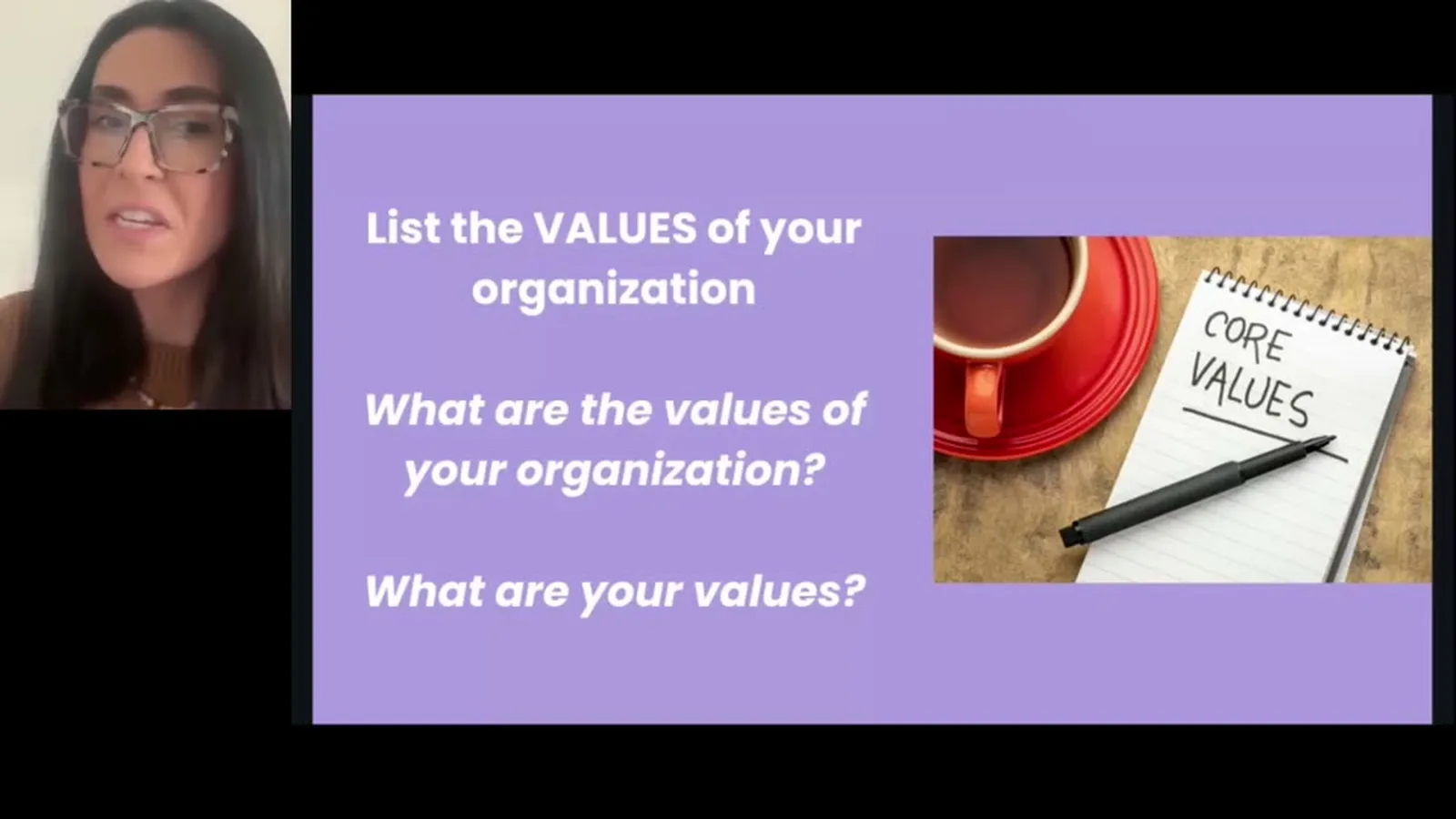
Mellanie Page walks through the design choices behind a competency-based onboarding program, with concrete examples on values, jargon, shaping learning, clear expectations, and engagement. If you run or own an ABA company and you are still on a calendar-based program, this is the talk to send to your clinical leadership team before your next training redesign.
Turn this topic into a CEU
You just studied this. Now get credit for it.
Watch Dunder Mifflin’s Guide to Training and Onboarding: Lessons from The Office with Mellanie Page and earn 1 free BCBA CEU. Detailed certificate, delivered the moment you finish.
Keep going with a free learning path
Supervision, Done Right
Four supervision CEUs that build on each other. What reflective supervision is, how to build a supervision system, how to assess supervisee competence instead of counting hours, and how supervision affects provider outcomes. The BACB asks supervisors for three supervision CEUs per cycle. This covers it.