Multi-Tiered Systems of Support (MTSS) for BCBAs
MTSS is the tiered school framework behind PBIS. Learn the three tiers, why tier 1 comes first, and how BCBAs use it to support all students.
Key takeaway
Multi-tiered systems of support, or MTSS, is a way to organize help in schools. It sorts support into three levels, or "tiers." Every student gets tier one, and a smaller group gets more as needed.
Explore free BCBA CEU courses
Free learning path on this topic
Supervision, Done Right
Four supervision CEUs that build on each other. What reflective supervision is, how to build a supervision system, how to assess supervisee competence instead of counting hours, and how supervision affects provider outcomes. The BACB asks supervisors for three supervision CEUs per cycle. This covers it.
Experts who cover this
The recording behind this guide covers multi-tiered systems of support.
- 1 Supervision CEU
Practical Takeaways for School-Based Behavior Analysts
Dr. Kaci EllisThe Behaviorist Bookclub
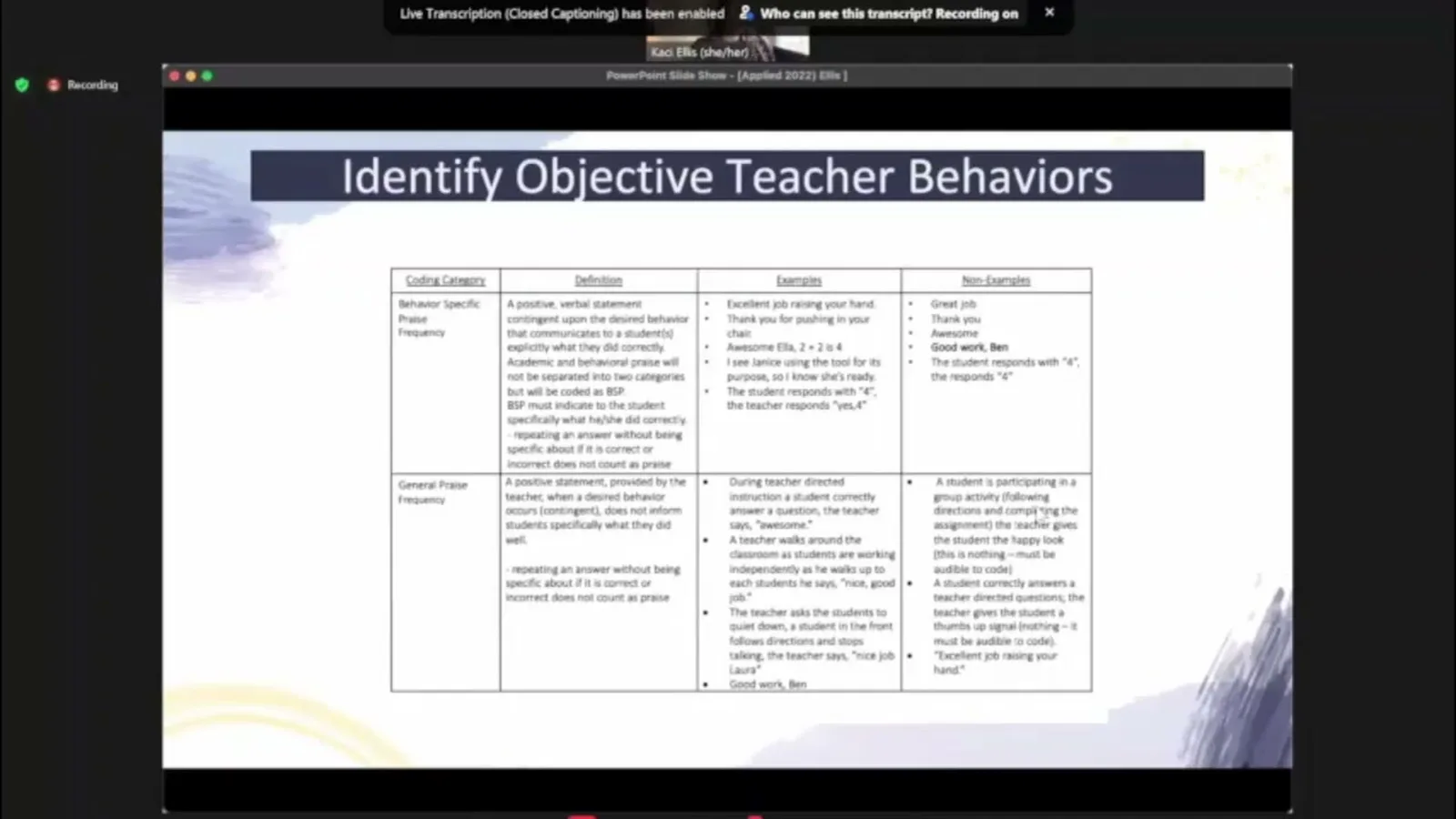
Framed as the umbrella under which PBIS sits, with the presenter walking through the percentage of students expected at each tier and stressing that tier two…
On this page · 8 sections▾
Multi-tiered systems of support, or MTSS, is a way to organize help in schools. It sorts support into three levels, or "tiers." Every student gets tier one, and a smaller group gets more as needed.
This matters because schools cannot give every child intensive help. MTSS spreads support in a smart, layered way. BCBAs, teachers, and school teams use it to catch problems early. Getting the base level right saves time for everyone.
MTSS is the umbrella#
Many people know the term PBIS. It stands for Positive Behavioral Interventions and Supports. Dr. Kaci Ellis explains how it fits inside the bigger frame.
PBIS sits, it's a framework, and it sits within very similar multi-tiered systems of supports. That's the umbrella. From the talk — Dr. Kaci Ellis
So MTSS is the wide structure. PBIS is one system that lives under it. Both share the same tiered logic. Knowing this helps a BCBA speak the same language as a school team. The terms can differ, but the tiered idea stays the same.
The three tiers explained#
Each tier serves a different share of students. Most students do fine with the base level of support. A smaller group needs targeted help on top of that.
80 to 90% of our students are responsive to this universal support. Targeted intervention is when these 5 to 10% are not being responsive to our universal supports for whatever reason. From the talk — Dr. Kaci Ellis
Tier one is the universal level for all students. Tier two is targeted help for a smaller group. Tier three is intensive, individual support for the few who need the most.
Picture a pyramid to keep the shares clear. The wide bottom is tier one for everyone. The middle is tier two for some. The narrow top is tier three for a few. The shape reminds us where most of the work should sit.
Add support, never replace it#
A common mistake is swapping one tier for another. A struggling student should not lose tier one to get tier two. Dr. Kaci Ellis stresses that the tiers stack on top of each other.
It's really important to know that these are additional supports and not a replacement. From the talk — Dr. Kaci Ellis
A tier two student still gets all the tier one support. The extra help is added, not traded. This keeps the strong base in place for every child. Pull the base away, and the whole plan weakens. The tiers work as layers, not as separate boxes.
Why tier one does the heavy lifting#
 Advertisement
Tier one is the foundation of the whole pyramid. It is built from simple, proven classroom practices. These come from decades of research on what teachers can do. Clear schedules, attention signals, praise, and active supervision all fit here.
When tier one is strong, fewer students need extra tiers. Claudia Segoe explains the payoff for busy educators.
The reality is that when we create classroom spaces that are healthy at the tier one level, at the universal level, we save ourselves an incredible amount of time as educators. And we're multiplying our impact, right? From the talk — Claudia Segoe
A strong base prevents many problems before they start. That means fewer referrals for individual support. It also means calmer classrooms and more time to teach. Tier one is not the boring part. It is where the biggest wins live.
A gap in teacher training#
There is a catch with these tier one practices. Many teachers never learn them in school. Patrick Jackman shares a number that shows the problem.
Only 49% of teacher prep programs even informed their teacher candidates of these practices, which is really scary. From the talk — Patrick Jackman
This gap is a chance for BCBAs to help. Coaching teachers on tier one moves can lift a whole class. It also cuts the number of students who get referred for individual support. A BCBA who strengthens tier one helps far more students at once.
You can find more school-based strategies in Practical Takeaways for School-Based Behavior Analysts.
Simple tier one practices to start with#
Tier one does not require fancy tools. It rests on a handful of daily habits. A clear classroom schedule tells students what comes next. A shared attention signal brings the room back to focus fast.
Pre-corrects remind students of the rule before a hard moment. Frequent chances to respond keep students active in the lesson. Specific praise tells students exactly what they did well. Active supervision means the teacher moves, scans, and stays close.
None of these moves take much time. Together, they build a calm, predictable room. That calm is what lets most students thrive at tier one. A BCBA who coaches these habits gives a teacher tools they can use every day.
What the research says#
Research supports MTSS as an effective school framework. One systematic review looked at 40 elementary studies from 2004 to 2020. It found MTSS effective in schools worldwide, especially for behavior change (Nitz et al., 2023).
The framework runs on data and a clear problem-solving process. One process evaluation applied this to literacy across the tiers. It found gains in core instruction and intervention supports (Murdoch, Morrison, & Strickler, 2024).
Data tools help teams place students in the right tier. Curriculum-based measurement, or CBM, is one such tool. Researchers describe steps to use CBM data within the MTSS framework. The steps guide instruction and help teams write IEP goals (LaLonde, VanDerwall, & Walsh, 2023). These tools turn the tiered idea into daily decisions.
The research also points to a real-world truth. MTSS works best when the whole school buys in. Teachers, staff, and leaders all play a part. When everyone shares the plan, the whole system holds together and lasts over the years.
FAQ#
What is the difference between MTSS and RTI?
RTI, or Response to Intervention, focuses mostly on academics. MTSS is broader and covers both academics and behavior. MTSS is often seen as the wider umbrella that includes RTI ideas.
How do students move between tiers?
Teams use data to decide, not just a gut feeling. If a student does not respond to tier one, they add tier two. Progress is tracked, and support goes up or down based on the data.
What is a BCBA's role in MTSS?
BCBAs often coach teachers on strong tier one practices. They also help design tier two and tier three plans. Their data skills fit the problem-solving heart of the framework.
 Advertisement
Keep learning
Earn free BCBA CEUs on openceu
Browse on-demand recordings from verified ACE providers and earn CEUs across autism, ABA, and behavior analysis. Detailed certificate, delivered the moment you finish.
Keep going with a free learning path
Supervision, Done Right
Four supervision CEUs that build on each other. What reflective supervision is, how to build a supervision system, how to assess supervisee competence instead of counting hours, and how supervision affects provider outcomes. The BACB asks supervisors for three supervision CEUs per cycle. This covers it.