Active Supervision in ABA: Move, Watch, and Prevent
Active supervision means moving among learners with clear sight lines. Learn how BCBAs and teachers use it to prevent problems and praise good behavior.
Key takeaway
Active supervision means an adult watches and moves among learners on purpose. It is more than standing in one spot and looking around. You scan the room, walk near students, and step in early.
Explore free BCBA CEU courses
Free learning path on this topic
Supervision, Done Right
Four supervision CEUs that build on each other. What reflective supervision is, how to build a supervision system, how to assess supervisee competence instead of counting hours, and how supervision affects provider outcomes. The BACB asks supervisors for three supervision CEUs per cycle. This covers it.
Experts who cover this
The recording behind this guide covers active supervision aba.
- 1 Supervision CEU
Practical Takeaways for School-Based Behavior Analysts
Dr. Kaci EllisThe Behaviorist Bookclub
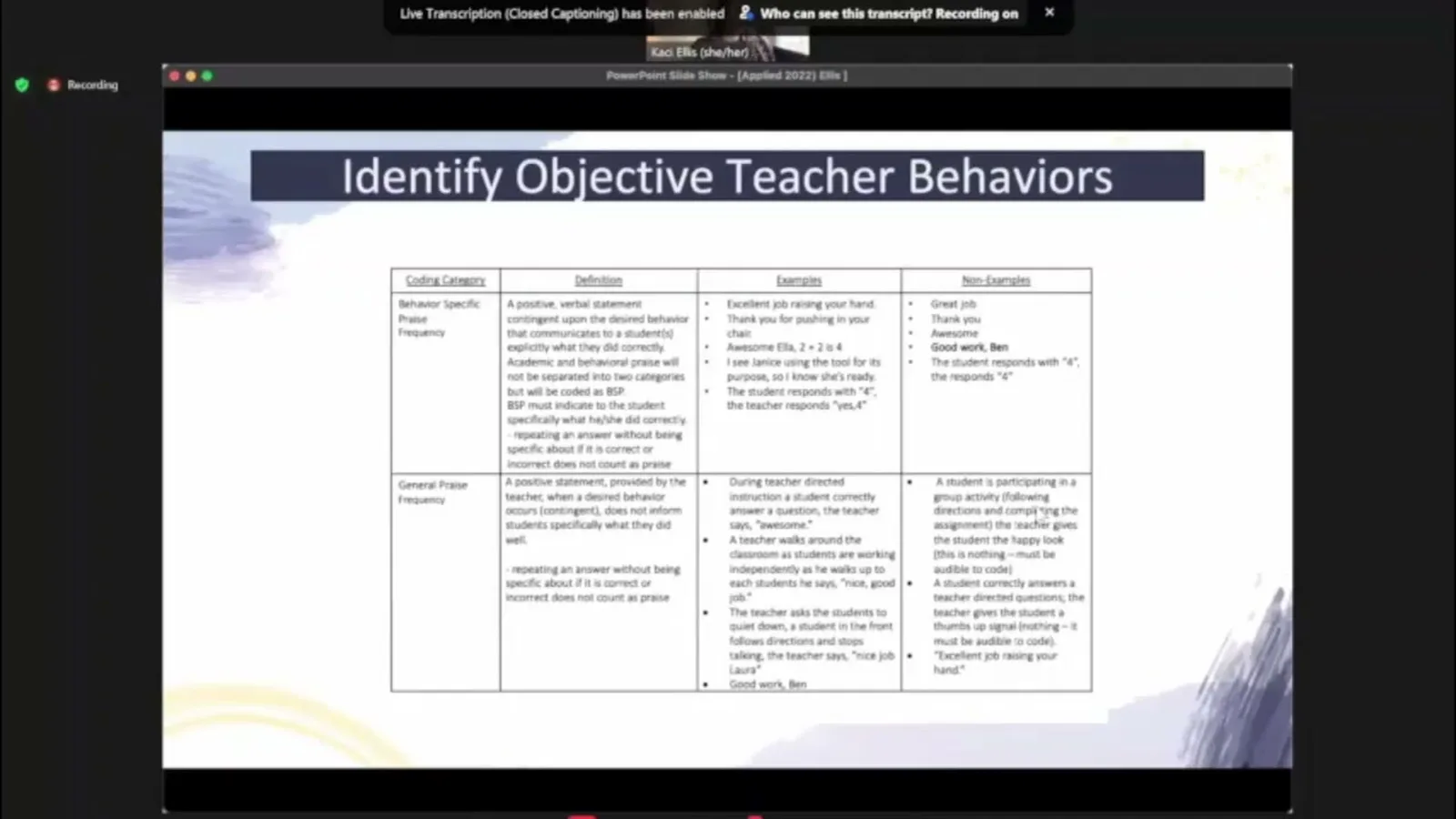
One of the classroom-wide checks the presenter looks for during observations: predictable routines and an environment designed so an adult always has clear…
On this page · 6 sections▾
Active supervision means an adult watches and moves among learners on purpose. It is more than standing in one spot and looking around. You scan the room, walk near students, and step in early.
This skill matters because it stops problems before they start. BCBAs, RBTs, teachers, and parents all use it to keep kids safe. It also creates many small chances to praise good behavior. A room with active supervision feels calmer and runs smoother.
What active supervision actually means#
Active supervision is one piece of a well-run classroom. It grows out of clear routines and a smart room setup. Dr. Kaci Ellis calls this larger idea "maximizing structure."
Maximizing structure, again, all about developing those predictable routines, designing an environment to elicit appropriate behavior and minimize crowding and distraction. From the talk — Dr. Kaci Ellis
Structure and supervision work together. When routines are clear, an adult can watch behavior instead of chasing chaos. The setup should let one adult see every child at once.
Ellis looks for this during her classroom observations. She checks where each adult stands and what they can see. Blind spots and hidden corners are red flags.
It allows for active supervision. So when you're looking at the classroom structure, making sure that wherever the teacher is standing or an adult, there's active supervision, there's lines of sight, something to consider. From the talk — Dr. Kaci Ellis
The key phrase is "lines of sight." An adult should be able to see all learners from where they stand. That view lets them catch small problems early.
Moving your body, not just your eyes#
Watching from a chair is not active supervision. The word active means the adult keeps moving. Claudia Segoe puts this in blunt, plain terms.
Staff proximity literally means that my body is close to the learner's body. We need to be moving around as educators in a group of kids. From the talk — Claudia Segoe
Moving close does a few things at once. It reminds learners that support is near. It also lets the adult notice small signs, like a child getting frustrated.
Proximity is a gentle tool. You do not have to say a word to help. Just standing near a struggling student can settle the moment.
Movement also spreads your attention fairly. When you circle the room, no group gets ignored for long. Every learner gets a turn with an adult close by.
A steady path also makes your presence predictable. Students learn that an adult will pass by soon. That steady rhythm keeps behavior on track without harsh words. It also lets you catch off-task moments while they are still small.
Turning proximity into quiet praise#
 Advertisement
Being close creates the perfect chance to give praise. You can catch a child doing the right thing and say so. Patrick Jackman describes how simple this looks.
You can go over there and give Johnny a fist bump and be like, nice job, dude. You got your materials out. I appreciate it. And it's a little bit more discreet. From the talk — Patrick Jackman
The word "discreet" is the point here. Quiet praise does not put a child on the spot. It also does not force a struggling student to save face in front of peers.
This kind of feedback works both ways. You can praise good behavior or give a small correction. Because you are close, you can keep your voice low and kind.
Loud, public feedback often backfires with older kids. A private word protects the student's dignity. Active supervision makes these private moments easy and frequent.
Frequent praise also shifts the mood of a room. When you catch good behavior often, students feel seen. That positive attention makes them want to keep it up. Being close lets you deliver that praise many times a day.
Designing the room for clear sight lines#
Good supervision starts before any student arrives. It starts with how you set up the space. A messy or crowded room hides behavior from view.
Ellis warns about "crowding and distraction" for a reason. Tight spaces create pushing, bumping, and lost focus. They also block your view of what is happening.
Hidden nooks are another trap. A cozy reading corner can become a blind spot. If you cannot see it, you cannot supervise it.
Aim for a room where you can see every child at once. Keep furniture low and pathways open. Place yourself where your eyes cover the whole group.
Traffic patterns deserve thought as well. Crowded doorways and narrow aisles create friction between students. Open, clear paths let you and the learners move freely. Good flow means fewer bumps, fewer conflicts, and clearer sight lines.
Notice how these experts stack their ideas. Ellis focuses on room design and sight lines. Segoe focuses on moving your body close. Jackman focuses on the quiet praise that closeness allows. Together they show that active supervision is setup, movement, and feedback all at once.
What the research says#
Some research has tried to measure adult movement in real classrooms. One study asked pre-service early childhood teachers to wear step counters and set step goals. The goal was to see if more steps meant more student interactions. Results showed only small, mixed effects. The data were too variable for firm conclusions (study on goal setting and step counters for inclusive pre-service teachers).
Supervision also helps skills stick after teaching ends. In one study, adults with severe disabilities learned a leisure-dance skill through training. The new skill spread to real community dances the learners attended. Still, some active supervision by caregivers was needed to keep those gains strong (leisure-dance instruction for community-living skills study).
Both studies point to the same lesson. Supervision is not a passive backdrop. It takes real adult effort to keep behavior on track.
FAQ#
What is the difference between supervision and active supervision?
Basic supervision can mean simply being present in the room. Active supervision means you move, scan, and interact on purpose. The adult stays busy watching and stepping in, not just standing by.
Why is active supervision part of PBIS and Tier 1 support?
It prevents problem behavior for the whole group at once. Moving and watching lets adults catch issues before they grow. It also creates many chances for praise, which builds a positive room.
How do you supervise a large group of students?
Set up the room so you can see everyone from any spot. Keep moving in a path that covers all areas. Remove blind spots like hidden corners so no student is out of view.
Active supervision is a Tier 1 tool covered in the school-based session Practical Takeaways for School-Based Behavior Analysts.
 Advertisement
Keep learning
Earn free BCBA CEUs on openceu
Browse on-demand recordings from verified ACE providers and earn CEUs across autism, ABA, and behavior analysis. Detailed certificate, delivered the moment you finish.
Keep going with a free learning path
Supervision, Done Right
Four supervision CEUs that build on each other. What reflective supervision is, how to build a supervision system, how to assess supervisee competence instead of counting hours, and how supervision affects provider outcomes. The BACB asks supervisors for three supervision CEUs per cycle. This covers it.