Helping a Client With Autism or IDD Attend a Funeral
Front-loading, environmental tweaks, transition objects, and choice frameworks so clients can show up at funerals. From a BCBA-led CEU.
Key takeaway
A funeral is a one-shot event with a fixed time, a packed room, and high feelings, and most of the prep work that helps a client with autism or an intellectual or developmental disability (IDD) show up well is squarely in the lane of a Board Certified Behavior Analyst (BCBA).
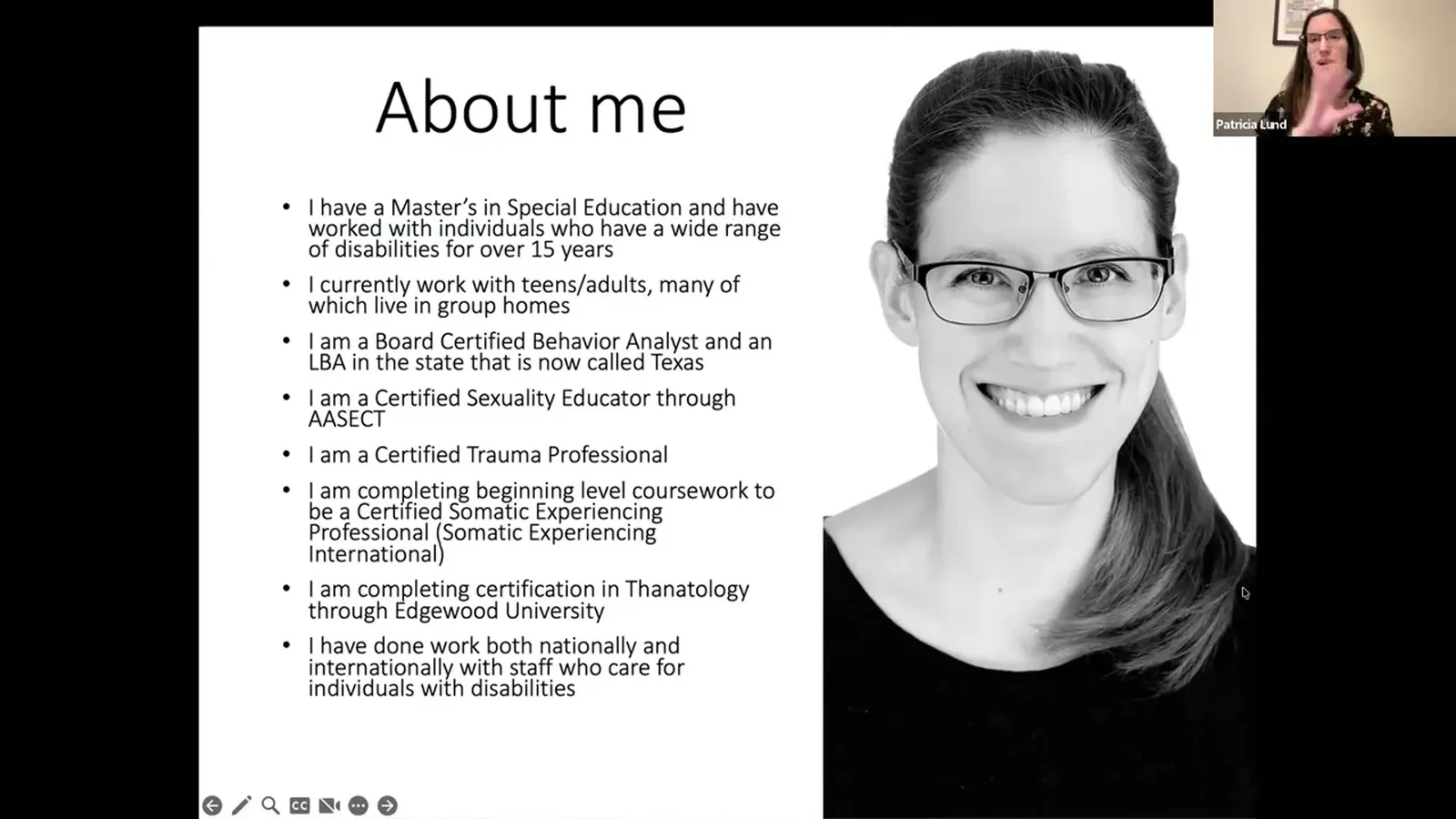
Interdisciplinary Grief Support for People with Disabilities: Enhancing Outcomes Through BCBA-LPC Collaboration
Free learning path on this topic
Your 4 Ethics CEUs, Done
Four ethics CEUs in three courses, all free. Start with Matt Harrington's assent and data course, then ethical guardrails in behavior reduction, then cultural considerations in clinical practice. Every course carries ethics credit, so this path covers the BACB requirement with nothing to buy.
On this page · 8 sections▾
A funeral is a one-shot event with a fixed time, a packed room, and high feelings, and most of the prep work that helps a client with autism or an intellectual or developmental disability (IDD) show up well is squarely in the lane of a Board Certified Behavior Analyst (BCBA). You can front-load the day with photos and a short visit to the venue, build a small choice menu that gives the client real control, suggest environmental tweaks so the sensory load stays manageable, design participation roles that work for users of augmentative and alternative communication (AAC, the picture boards, tablets, and devices clients use to speak), and help the family think about splitting the service into a smaller private piece and a larger public one. None of that is therapy. All of it is the kind of antecedent work BCBAs already do every week for school transitions, dental visits, and birthday parties. The funeral is just a more tender version of the same job.
Why Clients With Disabilities Get Excluded From Funerals#
Patricia Lund opens this part of the talk by naming the reason most pages on this topic skip. Clients with disabilities often do not go to funerals because the adults around them are scared of behavior in a quiet room, scared the client will not get it, or are too flooded by their own grief to plan for another person. Those reasons are honest, and Lund treats them as honest. She does not scold caregivers. She just points out that staying home is often the default, and the default has a cost.
Sometimes we do it because we don't want to see behavior. Sometimes we don't do it because we're scared they're not going to get it, or we're worried about our own emotional health. All very valid reasons. But there's research that shows that participating in these death rituals can actually help the grieving process. From the talk, Patricia Lund
That last sentence is the reason to do the prep at all. Showing up at the service, even for part of it, gives the client a marker in time. Something happened. We were there. The body is not coming back. Skipping the funeral does not protect anyone from grief. It just removes the one event most people use to start the work.
Before you build a plan, check three things with the family. Has the client been to a funeral before. What words for death do they have in their AAC vocabulary or sign set. And what does the family actually want, a full visit, a graveside only, or a quiet five minutes before the doors open. Those answers shape the rest of the plan.
Front-Loading the Event With Visual Schedules and Site Visits#
Front-loading means walking through the event before the event. You already do this for new dentists, new classrooms, and new staff. A funeral is the same shape of task with higher stakes.
Build a short visual schedule that names every step in order. We will drive to the church. We will see flowers. We will sit in a long wooden bench called a pew. A person at the front will talk. Some people will cry. Some people will hug. We will stand up. We will walk past a box called a casket. We will drive to the cemetery. We will go home. Keep each step to one short sentence and one picture. If the client uses an AAC device, load the words from the schedule onto it so they can talk about the day during prep and after.
Lund recommends taking the client to the actual venue before the service when you can. Walk the parking lot. Sit in a pew. Look at the graveside. If the venue is locked, pull up photos on Google Maps street view together. The point is to make the unfamiliar familiar so the day-of nervous system has fewer surprises to track.
Two or three short prep sessions across a week beats one long one. Watch for the client narrating the plan back to you. That is the signal the schedule has landed. If they cannot, simplify the steps or cut one out.
We can do front loading. We can do videos, visual schedules. We can take them to where the funeral is going to be held or to the graveside before they even go. From the talk, Patricia Lund
Building a Choice Menu for Day-Of Participation#
The fastest way to reduce escape behavior at a hard event is to give the client real choices inside the event. Not fake choices. Real ones. Two options, both okay with the family, and the client picks.
A choice menu for a funeral might look like this. Do you want to sit in the back row or the middle row. Do you want to put your flower on top of the casket or next to it. Do you want to stay for the pastor talking or step out and come back for the song at the end. Do you want to hug Aunt Mary or wave at Aunt Mary. Do you want to ride to the cemetery with mom or with grandma.
Write the menu down in advance and share it with the family so no one is surprised when the client picks the back row. Each choice cuts a tiny piece of unpredictability out of the day and hands the client a small piece of control in a room where they have very little.
The deeper move here is autonomy. Most clients with IDD spend funeral day being moved around by other people. A choice menu flips that. They are still inside the family's plan, but inside the plan they get to drive.
Environmental Modifications That Reduce Sensory Overload#
A funeral is loud in ways most caregivers do not notice until they go with a sensory-sensitive client. Organ music. Crying. Echo off stone walls. Heavy perfume. Long stretches of sitting still. Tight clothes. Hugs from strangers.
You can plan around most of it. Scout a quiet room the client can leave to and come back from, a side chapel, a vestibule, even a parked car with a trusted adult. Let the client wear soft clothes under the dress shirt or skip the tie. Bring loop earplugs or noise-canceling headphones and practice wearing them during prep visits so they are not a new thing on the day. Pick a seat near an exit. Keep a transition object, the small comfort item the client uses to settle, in a pocket or bag where they can reach it without asking.
For clients who get overwhelmed by hugs from people they do not know, give them a script and a sign. A printed name tag that says "I prefer waves to hugs" works. So does a quiet cue from you to a few key family members before the service starts.
Plan a check-in cadence. Every fifteen minutes, you or the support person quietly asks, are you good to stay or do you want a break. The break is not a failure. It is the plan working.
Meaningful Roles for Nonverbal and AAC Users#
Most funeral planning assumes the person attending will give a speech, sing along, or work a receiving line. None of that is required. The point of a role is that the client did something real, not that they performed in a neurotypical way.
Lund offers a short list of roles that work for nonverbal clients and AAC users. They can program a short message on their AAC device and play it at the graveside, either to the person who died or to the group. They can draw a picture that the family displays on an easel. They can pick the flowers. They can pick a song. They can carry the program. They can hand out tissues. They can light a candle.
Maybe they can program a message on their AAC device that they say to the person that's dead or that they say to the congregation. Maybe they draw a picture that we display. Maybe they're the ones that get to pick out the flowers or they pick out the songs, but finding ways to kind of increase their participation. From the talk, Patricia Lund
The job of the BCBA is to make the role doable. If the AAC message is the plan, practice it during prep so the client can fire it on the first try. If a drawing is the plan, decide where it goes, who carries it in, and what the family will say about it. A role that fails on the day is worse than no role at all, so test the role twice before you commit to it.
Tell the family what the role is and why. Family members who are grieving hard will sometimes wave off small roles as too much fuss. Hold the line. The role is the thing the client will remember.
Talking to Family About Splitting the Service#
For some clients, the full service is too long, too loud, or too crowded no matter how well you prep. The answer is not to leave them home. The answer is to ask the family if they can split the service into two pieces.
Maybe we hold a private funeral when the child is there and then we hold a larger one for everyone else at a separate time. Maybe they're there for only the outside portion, not the inside portion, right? There's lots of things we can do to help facilitate that. From the talk, Patricia Lund
A split service can look like a short private viewing in the morning with five close family members, then the public service in the afternoon without the client. Or the client comes only for the graveside, which is shorter, outdoors, and easier to leave. Or the family does a small ritual at home, a candle and a song and a photo, on the same day as the funeral so the client has their own version of the marker.
When you bring this up with the family, lead with the goal, not the logistics. The goal is that the client gets to mark the loss, that the family gets to grieve fully, and that no one is white-knuckling the back pew. Then offer the format. Most families have never heard of a split service and will be relieved someone is offering a permission slip.
You are not making the call here. The family is. Your job is to lay out the options, name the trade-offs, and back whatever they pick.
Frequently asked questions#
Should I bring my autistic client to the funeral or protect them from it?
Default toward bringing them, then design the visit so it is doable. Protection by exclusion sounds kind in the moment but tends to leave the client confused for months, asking where the person went. A short, prepped visit, even just the graveside, gives the client a real event to attach the loss to. If the full service is too much, use the split-service options above.
What if the family doesn't want my client at the service?
That is the family's call, and you back it. What you can do is offer alternatives so the client still gets to mark the loss. A small ritual at home on the same day with a photo and a song. A drawing the family displays at the service even if the client is not there. A short visit to the gravesite a day or two later when the crowd is gone. Bring a list of options, not a single ask, and let the family pick.
How do I prep a client who has never been to a funeral before?
Start one to two weeks out if you can. Build a visual schedule with one picture per step. Watch a short, factual video of a funeral together, not a movie scene, an actual one from a hospice or funeral home channel. Visit the venue if it is open. Practice the AAC vocabulary they will need, words like dead, died, sad, hug, sit, quiet, home. Build the choice menu with the family. Run a five-minute rehearsal of the moment that worries you most, usually walking past the casket. The goal is not to make the day feel normal. The goal is to make the day feel known.
Want the full BCBA scope conversation?#
This page covers one event. The full CEU walks through the Reed and Elliott continuum, the death education tools, the ethical lines around what BCBAs can and cannot do, and the BCBA-LPC handoff. If you are planning to do this work with more than one client, watch the recording.
Turn this topic into a CEU
You just studied this. Now get credit for it.
Watch Interdisciplinary Grief Support for People with Disabilities: Enhancing Outcomes Through BCBA-LPC Collaboration with Patricia Lund and earn 1 free BCBA CEU. Detailed certificate, delivered the moment you finish.
Keep going with a free learning path
Your 4 Ethics CEUs, Done
Four ethics CEUs in three courses, all free. Start with Matt Harrington's assent and data course, then ethical guardrails in behavior reduction, then cultural considerations in clinical practice. Every course carries ethics credit, so this path covers the BACB requirement with nothing to buy.