DRA for Night Waking: Teach a Replacement Behavior Instead of Calling Out
Replace night-waking call-outs with a functional alternative using DRA. Picking the replacement and reinforcer, from a BCBA-led CEU.
Key takeaway
DRA for night waking is a function-based way to replace attention-maintained call-outs with a behavior the child can do alone, in bed, in the dark, at 2 a.m.
Waking to Reinforcement
On this page · 10 sections▾
DRA for night waking is a function-based way to replace attention-maintained call-outs with a behavior the child can do alone, in bed, in the dark, at 2 a.m. During a Q&A in this talk, a clinician named Caitlin asked Dr. Emily Ice what could replace a child yelling for mom in the middle of the night. That question is the whole reason this page exists. Most night-waking call-outs are not random. They are a learned bid for the parent, because the parent is the SD the child trained on at bedtime. If you remove the call-out without giving the child something else to do, you are running extinction. DRA, or differential reinforcement of an alternative behavior, gives the child a real path back to sleep that does not depend on you walking down the hall.
This page is for BCBAs and BCaBAs writing sleep protocols, and for the parents reading along with them. We will pick a replacement behavior, pick a reinforcer that does not re-create the original problem, and teach the whole thing during the day so the family is not trying to shape new skills at 2 a.m.
Why night waking call-outs are usually attention-maintained#
Healthy sleepers wake up many times each night. Adults wake about once every 90 minutes. Kids wake even more often. We usually do not notice, because we slide right back into sleep. A child whose only "fall asleep" routine includes a parent in the room cannot slide back. They wake into the lighter sleep stage, the parent is not there, and the environment does not match the SDs they trained on. So they do what worked at bedtime: they call out.
That call-out is a behavior with a function. In most cases the function is access to the parent: attention, proximity, or co-regulation. As Dr. Ice puts it:
Sleep interfering behaviors include calling out for parents, getting a glass of water, self-stimulatory behavior.
When the function is attention, you have two honest choices. You can withhold the reinforcer (extinction, with a burst the parents have to survive at 2 a.m.). Or you can teach a different behavior that produces a different reinforcer the child can access alone. DRA is the second choice. It is gentler on the family, and it teaches a skill the child carries forward.
What DRA looks like applied to a child who wakes and yells for mom#
DRA at night has three parts.
- Pick a behavior that is incompatible with yelling and compatible with falling back asleep.
- Pick a reinforcer that is already in the room (or can travel with the child) and does not require an adult.
- Reinforce the new behavior on a thick schedule until it competes with the old one, then thin.
The treatment-planning logic is the same logic Dr. Ice uses across the talk:
In treatment planning, we look at the function of those incompatible behaviors and then look at either reducing the MO for those incompatible behaviors and or reduce or eliminate the availability of those incompatible behaviors.
For a yelling-for-mom kid, the MO is "I am awake, I am alone, and I do not know how to get back to sleep." The replacement has to address that MO with something the child can run themselves.
Picking a replacement behavior that is compatible with falling back asleep#
A good replacement behavior at night meets four tests. It does not require the parent. It does not require getting out of bed. It does not produce alerting input (bright light, screens, food). And it has a clear end state that loops back to sleep.
That rules out a lot. A token board requires an adult to deliver the token. A glass of water requires getting up. A request for a snack reintroduces the parent as the SD and adds a competing reinforcer. None of those qualify as DRA in this context. They are just new forms of the same problem.
What does qualify:
- Reaching for a transitional object the child already knows and likes.
- Re-triggering a white noise machine or sound device with a button the child can press.
- A self-comfort routine the child rehearses at bedtime (slow breathing, squeezing a stuffed animal, rolling to a pre-picked side).
- Turning on a red-spectrum nightlight on a timer.
The point of these is that they are SDs the child can call up on their own, that match the SDs they trained on at bedtime. Dr. Ice frames the whole upgrade this way:
Instead, we want to think about replacing those sleep dependencies with ones that can be there all night long, traveling with the child as needed and teaching them to fall asleep on their own.
Examples: self-comfort routines, transitional objects, white noise re-trigger#
Three replacement options that work for most school-age clients.
Transitional object plus breathing. The child picks a stuffed animal at bedtime and practices a five-breath squeeze sequence. At night, the SD is "I am awake, I see the animal, I do the breaths." The reinforcer is the calmer state itself, which sets up the transition back to sleep. This works well for kids who already use a comfort object.
White noise re-trigger. A white noise machine within the child's reach with a single big button. If the noise has stopped (or the child has woken into a quieter sleep stage), they press it. The noise comes back on, the SD is restored, and the child has done something with their hands instead of yelling. This works well for kids who fall asleep with white noise as the last step of the bedtime chain.
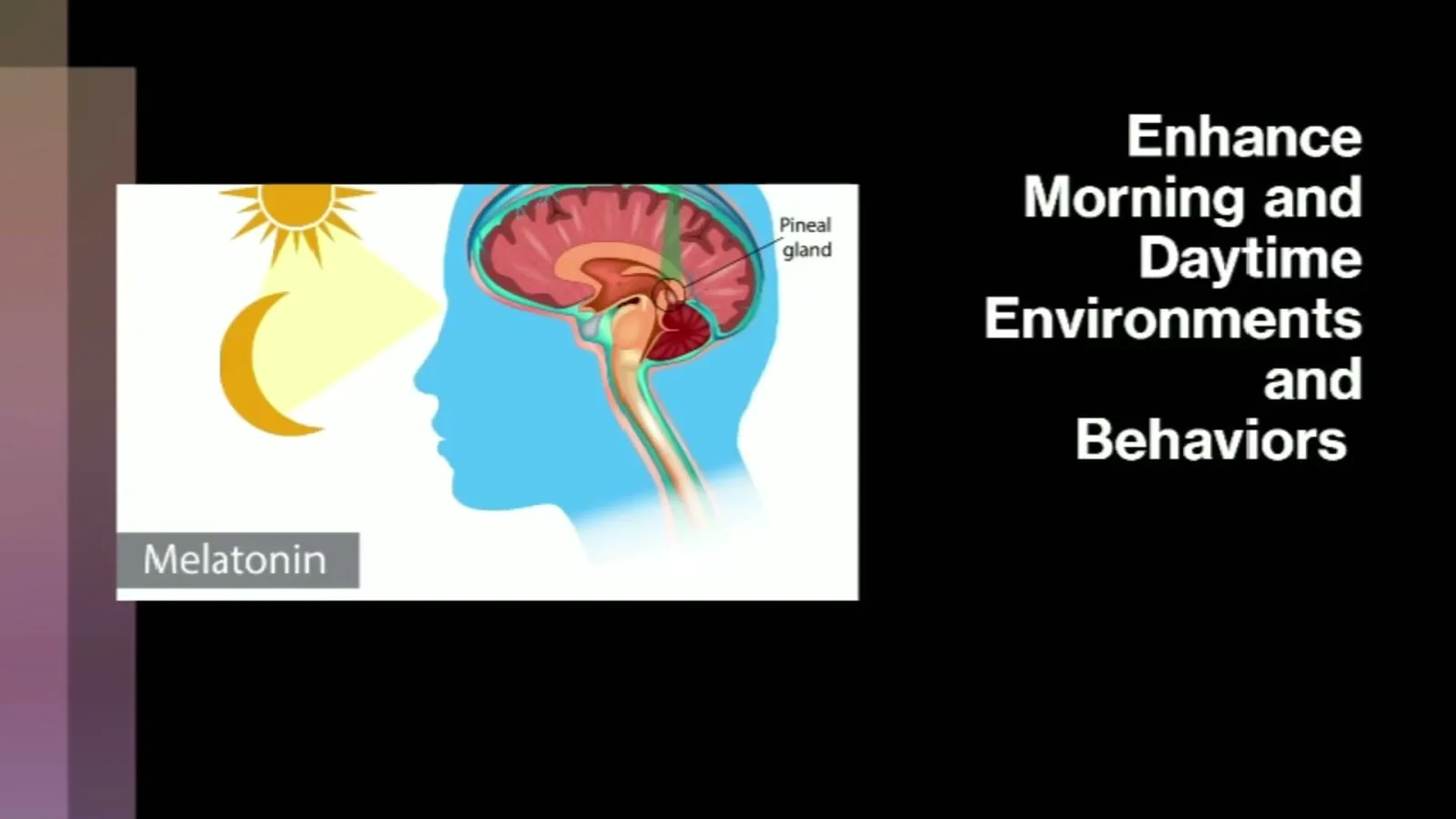
Red light routine. A dim red-spectrum nightlight the child turns on by pressing a button on the bedrail. They scan the room, see the same things they saw at bedtime, and the environment matches. Red light is used because it does the least damage to melatonin production. This works well for kids whose night-waking is part fear, part learned call-out.
Pick one. Do not stack all three. The point is one clean SD the child can find in the dark.
How to reinforce the replacement without re-introducing the parent-as-SD problem#
This is where most DRA-for-sleep plans break. The team picks a replacement, then says "we will give the child a sticker in the morning." That is a long-delayed contingency for a behavior that has to compete with calling mom in the moment. It also still routes the reinforcer through the parent, which keeps the parent as part of the chain.
Build the reinforcer into the behavior itself.
- White noise re-triggered = the room sounds like bedtime again. Reinforcer delivered.
- Transitional object squeezed five times = slower breathing, lower arousal. Reinforcer delivered.
- Red light on = familiar room visible. Reinforcer delivered.
A morning token or a sticker chart is a fine secondary layer for the next-day debrief, but it cannot be the primary reinforcer. The primary reinforcer has to be in the room, at the moment of waking, with no adult involved. Otherwise the child will call out, you will come in (because they are six and you are their parent), and you will have accidentally reinforced the old behavior under the new schedule.
Teaching the replacement during the day, not at 2 a.m.#
You cannot shape new skills with a half-asleep kid at 2 a.m. Teach the replacement during the day, then chain it into the bedtime routine, then let it carry over to the night-waking moment.
A teaching sequence that works:
- Practice the replacement behavior in a calm daytime setting. Five trials, low demand.
- Add it to the wind-down portion of the bedtime routine. The child does it as one of the last steps before lights out, every night.
- Rehearse a "pretend you woke up" mini-drill at bedtime. The child closes their eyes, opens them, runs the replacement, and lies back down. Two reps.
- Tell the child the plan in plain language: "If you wake up and feel like calling for me, you can press the noise button and roll over."
This is just behavior chaining. By the time the child is using the replacement at 2 a.m., it is a behavior they have run dozens of times in easier conditions. You are not asking them to learn under deprivation.
What to do the first 3 nights when the old behavior surges#
The old behavior will spike. That is normal. The function has not changed, the schedule has, and the child is doing what used to work harder and louder. This is an extinction burst layered on top of your DRA.
Plan for it. Three rules for the first three nights.
- The replacement gets the full reinforcer every single time the child uses it. Thin the schedule later.
- The old behavior (yelling) gets the lowest-quality response you can deliver without scaring the child. The Excuse Me protocol from this talk is a great fit here. The parent goes in for a brief, low-attention check, says something like "I forgot to turn off the stove, be right back," and leaves. Short, boring, predictable.
- Track frequency, not just duration. Night three usually looks worse than night one before it gets better. If you only watch duration, you will think it failed.
If the burst is still escalating on night five, the function is probably not pure attention. Re-assess for fear, sensory, or medical drivers.
When DRA is not enough (fear, sensory, medical)#
DRA assumes the function is something a behavior analyst can address with reinforcement contingencies. Three conditions break that assumption.
Fear. Older kids who are scared of intruders, monsters, or being alone in the dark are not asking for attention. They are asking for safety. Caitlin's case in the talk is close to this. Dr. Ice pointed at acceptance and commitment therapy and CBT for insomnia as the right tools. A DRA layer can still help, but the safety piece (locked-door check-ins, gradual fading of parental presence, a nightlight if needed) comes first.
Sensory. Some kids wake because the room is too warm, too quiet, too bright, or the sheets feel wrong. That is an environmental SD problem, not a behavior selection problem. Fix the environment first.
Medical. Sleep apnea, restless legs, GI pain, and side effects from medication will all wake a child. As Dr. Ice said clearly, behavior analysis does not fix sleep apnea. Refer to a pediatrician or sleep medicine clinic before you build a behavior plan around something that has a medical cause.
If you screen these out and the function still looks like attention, DRA is the right move.
FAQs#
What replacement behavior actually works for a 6-year-old? The white noise re-trigger is usually the easiest win. The child presses one button and the room sounds like bedtime again. Transitional object plus breathing is the second-easiest. Avoid anything that requires getting out of bed or seeing a screen.
How do I reinforce something that happens at 2 a.m.? Build the reinforcer into the behavior itself. A morning sticker is too far away to compete with calling mom. The room going back to "bedtime conditions" is immediate and competes well.
Will my kid just start using the replacement to get me? Only if the replacement still routes through you. If the white noise button is in the child's bed and you never come in for it, the child cannot use it to bid for your attention. That is why the reinforcer has to live in the room.
How is this different from extinction with a token? Extinction withholds the reinforcer with no alternative. The kid screams until the behavior dies. DRA gives the child a different behavior that gets a different reinforcer, so the function is still met. It is kinder, and it tends to hold up better on night three.
Do I teach the replacement at bedtime or during the day? Both. Daytime practice for the skill, bedtime rehearsal for the chain. Never first contact at 2 a.m.
Take this into your next sleep case#
If you are writing a sleep protocol for a kid who wakes up yelling for mom, sit with the function first, then pick the replacement, then build the reinforcer into the room. Watch Dr. Emily Ice's full hour for the four-term contingency framing, the Excuse Me protocol walkthrough, and the assessment tools she uses to scope the case. The talk is one CEU.