Building a Bedtime Token System That Doesn't Wake the Kid Up
Design a bedtime token system that reinforces calm without disrupting sleep onset, from a BCBA-led CEU.
Key takeaway
Design this page as a behavioral chain, stepping the reinforcement value down across each bedtime step so the token board ends in sleep, not in a wide-awake kid asking for one more song.
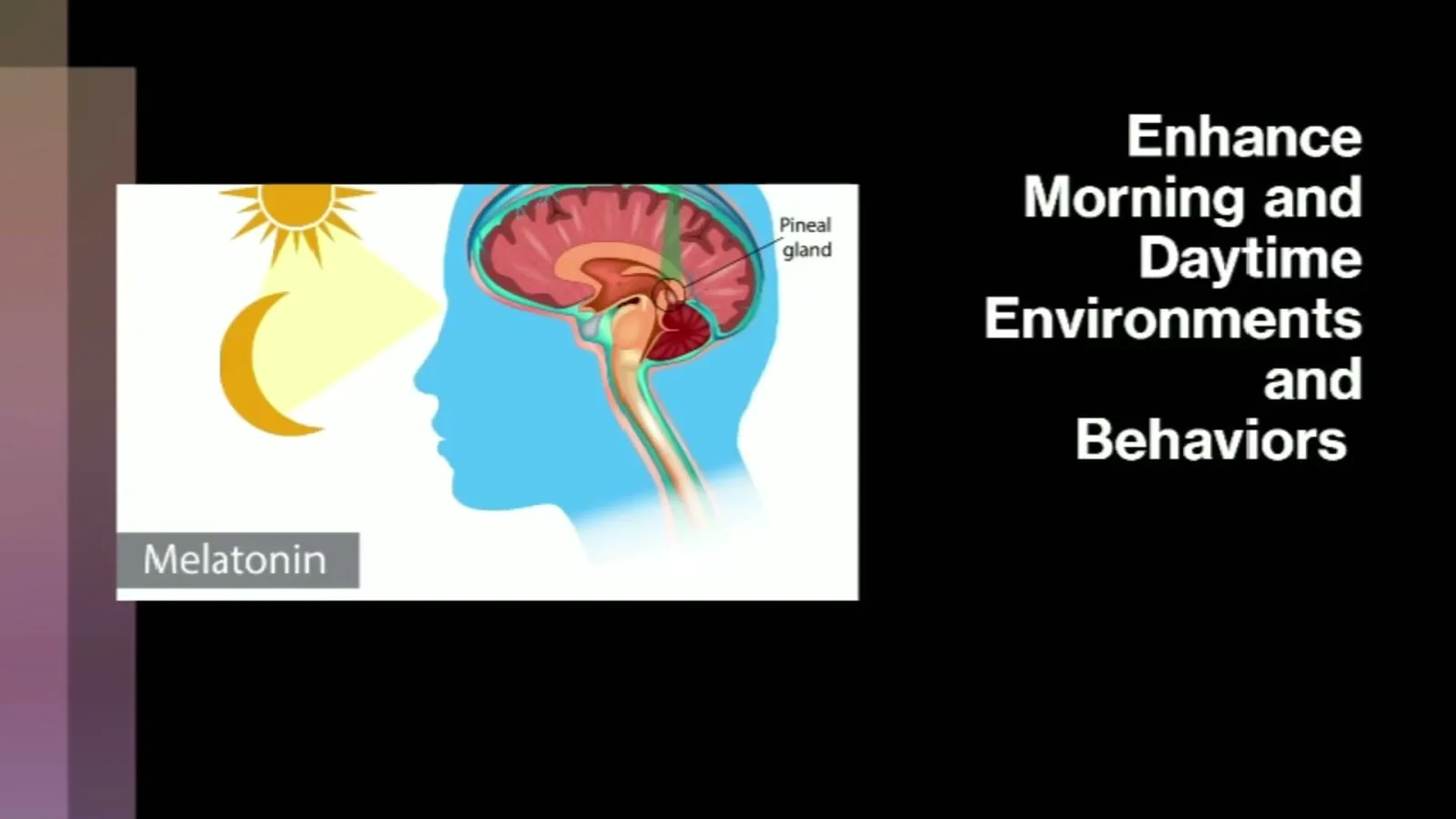
Waking to Reinforcement
On this page · 10 sections▾
Design this page as a behavioral chain, stepping the reinforcement value down across each bedtime step so the token board ends in sleep, not in a wide-awake kid asking for one more song. The failure mode you are designing around is the one most clinicians hit on the first try. The token board works during the day, the family brings it to bedtime, and the kid is more alert at 8:45 than they were at 8:15. A Board Certified Behavior Analyst (BCBA), the credential most behavior analysts hold, can fix this on paper before the family ever runs it. The fix is in how the tokens are placed in the chain, what gets cashed in for what, and where the back-up reinforcer lives. Dr. Emily Ice walked through the underlying logic in a CEU on the four-term contingency of sleep. This guide turns that logic into a token board you can hand a family on Monday.
Why most bedtime token boards backfire (they wake the kid up)#
A token, by itself, is a neutral object. The kid earns one and the kid gets something. The behavior analyst built that pairing during the day, when the kid was awake and supposed to be awake. That same token board, brought into bedtime without redesign, signals one thing to the kid. Stay awake to earn the next one.
That is the failure mode. The board does its job. The kid stays alert because the contingency told them to.
The deeper issue is what surrounds the token. Praise. Eye contact. A small bell that dings. A bright sticker. A parent kneeling at the bed and looking excited. None of that fits the goal of the moment, which is to lower arousal. The board lifts arousal because every part of the delivery lifts arousal.
The job of a bedtime token system is the opposite. Each token has to nudge the kid one step closer to behavioral quietude, the term Dr. Ice uses for the absence of behavior that lets sleep show up. A token board that does this looks almost boring by the last step. That is the point.
Rule 1: tokens earned during the day, cashed during the day, NOT at bedtime#
The first rule is to keep the cash-in away from the bed.
A back-up reinforcer that the kid trades tokens for at 8:30 is a reason to stay awake at 8:30. If the back-up is screen time, dessert, or a new toy, the kid is now negotiating against sleep. Sleep is already a slow, low-salience reinforcer. It does not win that contest.
Move the entire token-economy to the daytime. Tokens earned at school, in session, or during the after-school routine. Cash-in happens before dinner, or at breakfast, or on Saturday morning. The board can still feature in the bedtime chain, but only as a quiet acknowledgment. The kid does not trade in tokens at the bed.
If a family insists on a bedtime token because a sibling has one, give the bedtime kid a separate board with a separate purpose. The bedtime board reinforces routine steps. The daytime board still holds the powerful back-ups. The two boards never touch.
Rule 2: token deliveries inside the bedtime chain must step DOWN in arousal#
If a token is going to appear inside the bedtime chain, the delivery has to step down in arousal at each step. This is the core idea from Dr. Ice's talk applied to the token system.
So instead of going quickly from a high preference down into no preference, try and we look at that individual's repertoire of reinforcers and help shape the steps of that routine in such a way that there's little pockets of reinforcement, but that are stepping down in quality and strength. From the talk — Dr. Emily Ice
A step-down looks like this. The token at step one comes with a warm voice and a high-five. The token at step three comes with a quiet whisper and a thumbs-up. The token at step five comes with a soft touch on the shoulder, no words, lights already low. By the last token, the delivery itself has faded into the routine.
If you cannot fade the delivery, do not use tokens for that step. Use a non-token marker like a quiet check on a chart. The board is a tool, not a requirement.
Designing a step-down token board: 5 tokens, 5 routine steps, decreasing salience#
A workable bedtime board uses one token per routine step. Five steps is a good starting place. The steps go from the highest-arousal step at the start to the lowest-arousal step at the end.
A sample order:
- Pajamas on. Token one. Bright sticker. Warm "great job." Lights still on.
- Teeth brushed. Token two. Smaller sticker. Calmer voice. Overhead light off, lamp on.
- Toys put to bed. Token three. Plain mark on the chart. Whisper. Lamp dimmed.
- Book read. Token four. Quiet check. Soft hand on the back. Nightlight only.
- In bed, lights out. Token five. A silent tap on the chart. No voice. White noise on.
The board itself should change in salience too. Use velcro tokens that get attached with a quiet press, not a hook-and-loop rip. Skip noisemakers, bells, and light-up boards. The board should be on the wall, not in the bed.
The kid does not cash in any of these tokens. The cash-in waits until morning.
Where to place the back-up reinforcer (morning, not midnight)#
This is the move that makes the whole system fit Dr. Ice's framework. The back-up reinforcer goes in the morning.
If the kid earned all five tokens, breakfast comes with the chosen back-up. Five minutes of a favorite show. A picked-out outfit. A small treat in the lunchbox. The back-up has to be something the kid actually cares about, and it has to be reliably delivered the next morning.
This placement does two jobs at once. First, it pulls the high-arousal moment to a time of day when arousal is the goal. Second, it makes wake time the reward time, which lines up with Dr. Ice's point that a consistent wake time is one of the strongest variables in pediatric sleep treatment. The kid has a reason to wake up at the same time, and the family has a clean reason to hold that wake time steady.
A note for families who already use a morning reward. Stack the token cash-in on top. The kid can still have their regular breakfast. The token-earned back-up is on top of that, and only on the mornings after the board was completed.
Combining token reinforcement with DRO during the in-bed window#
Once the kid is in bed and the lights are out, the token board stops. The next 10 to 20 minutes are the in-bed window, and tokens are the wrong tool for it.
Use Differential Reinforcement of Other behavior, DRO. DRO means you reinforce the absence of a target behavior for a set interval. In the in-bed window, the target behaviors are calling out, getting out of bed, or any of the sleep-interfering behaviors the family logged in baseline.
The interval is short and grows with success. Start where the kid is. If the baseline shows the kid stays quiet for two minutes before calling out, set the interval at two minutes. Use Dr. Ice's Excuse Me protocol as the delivery vehicle. The parent checks in at two minutes, gives a low-quality piece of attention, says a quiet "excuse me, I need to check the laundry," and steps out. If the kid stayed quiet, that counts. Each successful interval is the DRO reinforcer. Each night, drop the first interval and stretch the next.
There is no token at this stage. The reinforcer is the parent's quiet return, then sleep itself.
Common failure modes: high-pitched praise, light-up boards, exciting back-ups#
Three failures show up most often when a team puts a bedtime token board in place.
The first is high-pitched praise. The voice the team used during the day does not work at 8:45. Coach the parents to drop pitch, slow the pace, and shorten the words. "Good job" becomes a whispered "yes."
The second is a board that lights up, plays a sound, or has any moving piece. Anything the kid wants to look at is a problem. Replace it with a paper chart on the wall or a quiet velcro board.
The third is a back-up reinforcer that is too exciting. If the back-up is "you get to stay up an extra 15 minutes on Friday," the system pays the kid in stay-awake time. The system is now working against itself. The back-up has to fit the morning, not the night.
A bedtime routine can really prime the child for sleep through behavioral chaining. It can also help us help that child transition to lower level reinforcers so that sleep is given the chance to shine in that moment. From the talk — Dr. Emily Ice
Fade plan: from per-step tokens to per-night to intermittent#
The board is scaffolding, not a forever tool. Plan the fade from day one and tell the family the plan so they do not panic when you start to thin it.
Phase one is per-step tokens for one to two weeks. The kid earns a token at each routine step. The team logs how long the chain takes and how often the kid completes all five.
Phase two collapses the board to one token per night. The kid earns the token at the very last step, in bed with lights out. The cash-in is still in the morning. This phase runs for another week or two.
Phase three goes intermittent. The token shows up two or three nights a week, on a schedule the kid cannot predict. The back-up reinforcer is still real, but it is rarer.
Phase four removes the board. The routine itself, plus the consistent wake time and the morning structure, holds the chain together. The kid sleeps because the chain ends in sleep, not because a sticker is waiting.
If a phase fails, drop back one phase and hold there for a week. Dr. Ice's broader point about behavioral sleep treatment applies here. The data tells you when to move.
How can we reduce the time between the SD, the environmental conditions, and the reinforcer of sleep? We want that time to be as minimal as possible. From the talk — Dr. Emily Ice
Frequently asked questions#
Should tokens be given right before lights out?
A token can be given at the very last step, as long as the delivery is silent or near-silent and the cash-in is in the morning. The token at lights out should be the lowest-salience token of the night. No voice, no sticker, just a quiet mark on the board.
What back-up reinforcer works without ruining sleep onset?
A morning back-up. Five minutes of a favorite show at breakfast, a picked-out outfit, a small treat in the lunchbox, or a chosen activity in the morning routine. The back-up has to be something the kid wants and the family can deliver every time the board was completed.
How do I keep parents from getting excited when delivering tokens?
Coach the delivery in the hallway before the routine starts. Have the parent practice the whispered voice and the low-pitch praise. Score yourself on the same checklist you give the parent. Parents copy what they see modeled, so model the quiet version.
Can this work for a non-verbal kid?
Yes. The board itself is visual, the steps are pictured, and the tokens are physical. The praise can be a touch on the shoulder. The back-up can be a preferred item delivered in the morning. The DRO during the in-bed window does not require any language from the kid.
How is this different from a regular bedtime routine?
A bedtime routine is the behavior chain. A token system layers a reinforcement schedule on top of that chain. The token system gives you a way to pay the kid for completing each step, and a way to fade that payment as the routine becomes a habit. The chain is the road. The tokens are the lane markers.
Watch the full talk#
Dr. Ice walks through the four-term contingency of sleep, the assessment tools that surface sleep-interfering behaviors, and the function-based treatments that hold up against the failure modes covered here. If you are designing sleep protocols for a family this week, this is the talk to watch before the next parent meeting.