Caseload Management for BCBAs: Ethics and Balance
Caseload management keeps client care safe and BCBAs sane. Learn how to spot an over-full schedule, protect supervision hours, and talk to your agency.
Key takeaway
Caseload management means keeping your number of clients at a level you can serve well. It is about how many kids you carry and how much time each one truly needs.
Dunder Mifflin’s Guide to BCBA Ethics: Lessons from The Office
Free learning path on this topic
Your 4 Ethics CEUs, Done
Four ethics CEUs in three courses, all free. Start with Matt Harrington's assent and data course, then ethical guardrails in behavior reduction, then cultural considerations in clinical practice. Every course carries ethics credit, so this path covers the BACB requirement with nothing to buy.
Experts who cover this
2 recordings on openceu cover caseload management aba.
- Featured talk1 Ethics CEU
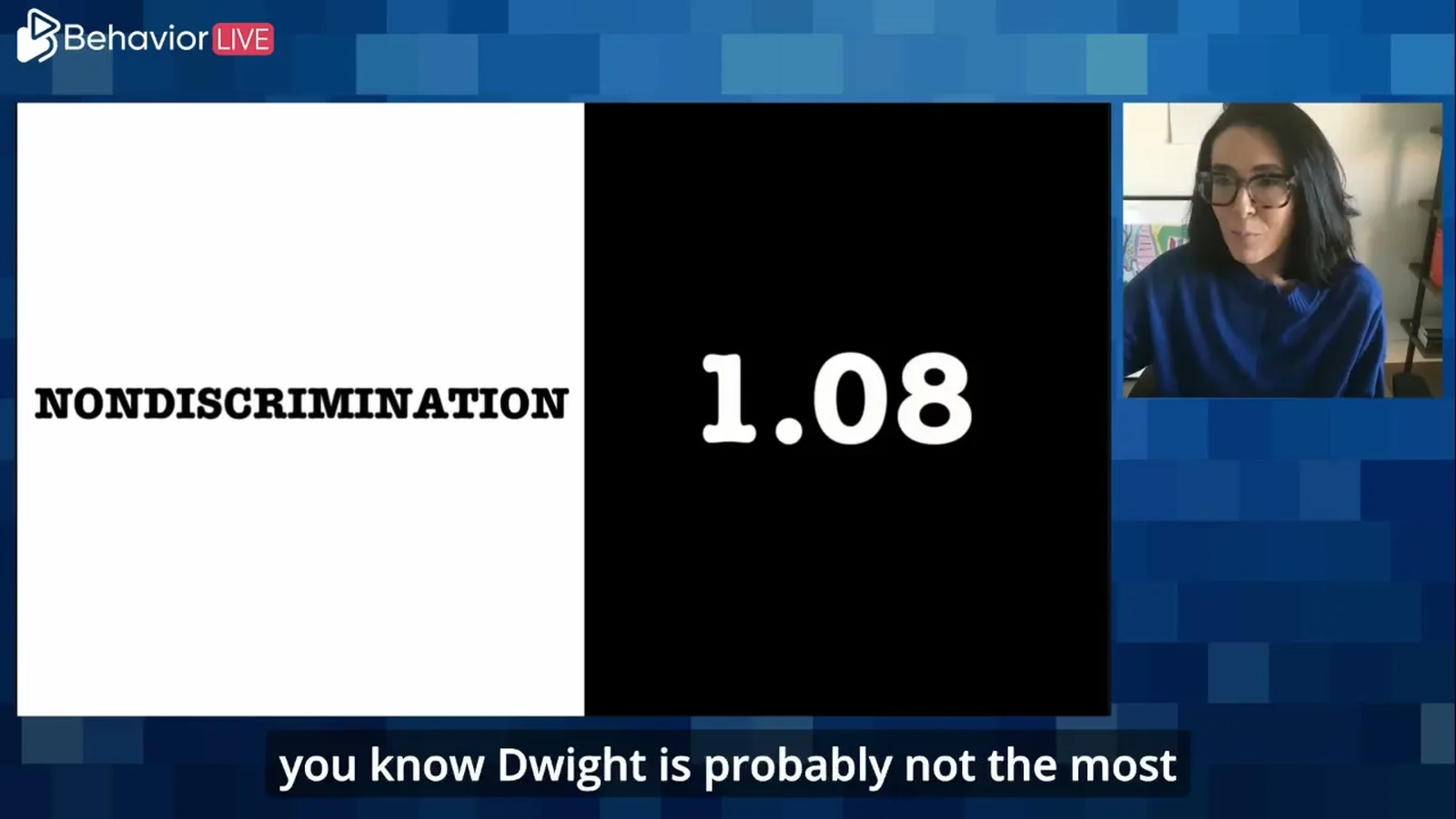
Dunder Mifflin’s Guide to BCBA Ethics: Lessons from The Office
Mellanie PageThe Behaviorist Bookclub
Raised in Q&A as an ethical tension when large agencies push BCBAs beyond capacity, suggesting a two-way conversation with supervisors about manageable…
- 1 Ethics CEU
Ethically Scaling an ABA Company
Matt Harrington and 3 Pie SquaredThe Behaviorist Bookclub
Discussed as the first thing that gets sacrificed as a BCBA-owner takes on hiring, billing, and scheduling duties; the co-founder describes having to admit she…
On this page · 6 sections▾
Caseload management means keeping your number of clients at a level you can serve well. It is about how many kids you carry and how much time each one truly needs. When the number climbs too high, care quality drops.
This matters for every BCBA, owner, and supervisor. A crowded schedule sounds productive on paper. In practice it can starve clients of the supervision and attention they need. Managing your caseload well is both a quality issue and an ethics issue.
An over-full caseload is an ethics problem#
A large caseload is not just tiring. It can push you past the point where you can supervise safely. Mellanie Page frames this as a real ethical tension in the field.
Many large agencies are pushing BCBAs beyond capacity, and it affects client care. From the talk — Mellanie Page
When you are stretched thin, some clients get less than they deserve. Supervision hours shrink. Program updates slow down. The people who lose the most are the learners who cannot speak up for themselves.
Talk to the person who assigns cases#
You do not have to accept every new case in silence. A calm, specific conversation can protect both you and your clients. Page suggests bringing your real schedule to whoever sets your caseload.
If we can sit down with a case loader and say, look, this is my schedule, and this is where I don't feel like I'm sufficiently providing supervision here. From the talk — Mellanie Page
Notice how concrete this is. You are not just saying you feel busy. You are pointing to exact gaps where supervision is falling short. That makes the problem hard to ignore and easy to fix.
Come to that talk with data. Show your hours, your drive times, and your supervision minutes per client. A clear picture helps a supervisor make a fair call.
Clinical work is the first thing to slip#
 Advertisement
Growth pulls a BCBA in many directions. Owners and leads often pick up hiring, billing, and scheduling. When that happens, the clinical caseload is usually what gets squeezed first.
April, a BCBA and co-founder, names this honestly.
I cannot maintain a full caseload and manage staff and do all the pieces needed. From the talk — April
Admin work is heavier than many expect. Stephen puts a rough number on it for a single team.
for a team, which would be a BCPA and probably six to seven staff, you're looking at maybe 15 to 20 hours of admin work, right, that come into play. From the talk — Stephen
So plan for that hidden load. If you take on staff or systems, your clinical caseload should shrink to match. Trying to do both at full size leads to burnout and thin care.
Build a caseload you can actually hold#
Good caseload management is a design choice, not luck. It starts before the schedule fills up. Think about drive time, client needs, and your own limits together.
Group clients by area when you can. Long drives eat hours you could spend on care. A tight map means more real supervision time per week.
Match cases to your skills too. A client with complex needs takes more of you than a stable one. Weigh that when you decide how many to hold. Two hard cases may equal four steady ones.
Check your caseload often, not once a year. Client needs change as they grow. A load that felt fine in spring may feel crushing by fall. Small, regular reviews keep you ahead of trouble.
What the research says#
Researchers have studied why some clinicians manage caseloads well and others struggle. One study built a tool called the Caseload Management Support System to find the barriers. It compared 12 struggling clinicians with 12 high performers (LeBlanc et al., 2019).
The tool looks at more than raw client counts. It samples areas like time management and the geographic spread of a caseload. It also checks how well a clinician's skills match each client's needs.
The gaps were not random. The biggest differences showed up in time management and in understanding funder rules and consequences. In fact, the total score explained about 89% of the difference in clinician performance (LeBlanc et al., 2019).
Insurance funding is a big part of this picture. Funders bring rules and limits that make caseloads harder to manage. Clinicians who understood those constraints, and what happens when they are missed, performed far better.
The lesson is practical. Caseload trouble is often a skills-and-systems problem, not a character flaw. Better time management and clearer knowledge of insurance limits can move a struggling clinician toward high performance.
FAQ#
What is a reasonable caseload for a BCBA?
There is no single magic number. It depends on client needs, drive time, and how much admin you carry. A good caseload leaves room for real supervision on every case.
How do I know my caseload is too big?
Watch for supervision hours you cannot fill and programs you cannot update. If care quality is slipping, the number is likely too high. Rising stress and missed follow-ups are warning signs too.
How do I ask my agency to lower my caseload?
Bring your real schedule and specific gaps, not just a feeling. Show where supervision is falling short and by how much. Concrete data makes the conversation fair and hard to dismiss.
Caseload pressure often shows up while a company is trying to grow, a core theme in Ethically Scaling an ABA Company.
 Advertisement
Turn this topic into a CEU
You just studied this. Now get credit for it.
Watch Dunder Mifflin’s Guide to BCBA Ethics: Lessons from The Office with Mellanie Page and earn 1 free BCBA CEU. Detailed certificate, delivered the moment you finish.
Keep going with a free learning path
Your 4 Ethics CEUs, Done
Four ethics CEUs in three courses, all free. Start with Matt Harrington's assent and data course, then ethical guardrails in behavior reduction, then cultural considerations in clinical practice. Every course carries ethics credit, so this path covers the BACB requirement with nothing to buy.