Design Smarter: Using Instructional Design to Improve Staff and Stakeholder Training
Presented by Ally
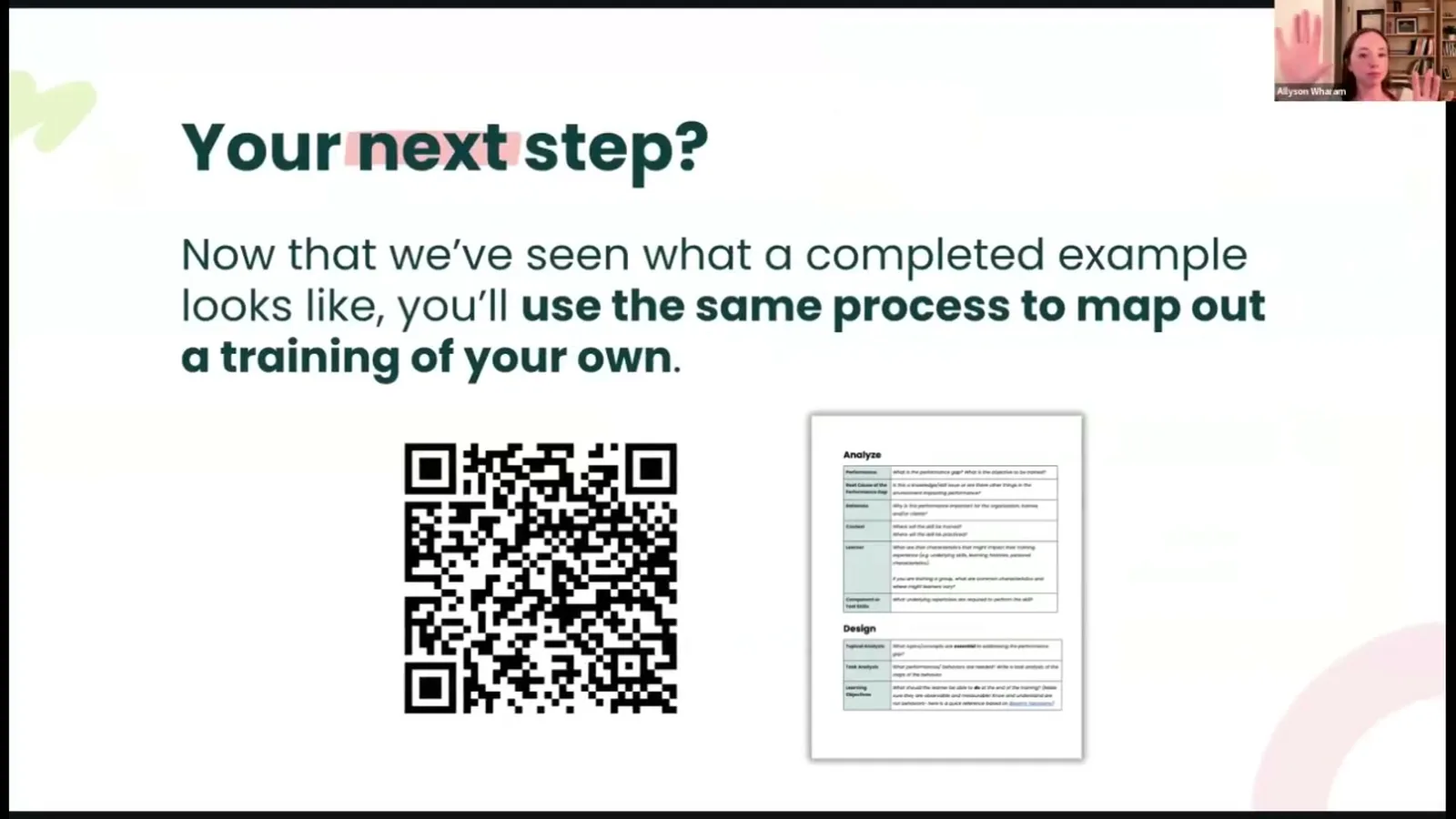
This presentation introduces a systematic approach to instructional design tailored for behavior analysts delivering training to staff, caregivers, or broader stakeholders. Using the ADDIE model (Analyze, Design, Develop, Implement, Evaluate), Allie Wharam walks participants through how to analyze performance gaps, identify root causes, and develop intentional training that leads to generalizable behavior change. Through a blend of instructional theory and behavioral application, the presentation illustrates how to connect BST with larger training structures, including multimedia delivery, job aids, and evaluation systems. Participants explore how to avoid training pitfalls such as overcomplexity, low engagement, and poor follow-through. Allie also shares actionable resources, including a design template, worked examples, and guidance for both in-person and asynchronous training design. Designed for BCBAs, supervisors, and OBM professionals, this CEU offers a concrete pathway to elevate training quality and align instruction with both learner needs and system constraints.
Register free & watch nowCancel any time. Cert delivered to your inbox the moment you pass the quiz.
About this CEU
This presentation introduces a systematic approach to instructional design tailored for behavior analysts delivering training to staff, caregivers, or broader stakeholders. Using the ADDIE model (Analyze, Design, Develop, Implement, Evaluate), Allie Wharam walks participants through how to analyze performance gaps, identify root causes, and develop intentional training that leads to generalizable behavior change. Through a blend of instructional theory and behavioral application, the presentation illustrates how to connect BST with larger training structures, including multimedia delivery, job aids, and evaluation systems. Participants explore how to avoid training pitfalls such as overcomplexity, low engagement, and poor follow-through. Allie also shares actionable resources, including a design template, worked examples, and guidance for both in-person and asynchronous training design. Designed for BCBAs, supervisors, and OBM professionals, this CEU offers a concrete pathway to elevate training quality and align instruction with both learner needs and system constraints.
What you'll learn
- 1Learning Objectives
- 2By the end of this CEU, participants will be able to:
- 3Describe the five components of the ADDIE framework (Analyze, Design, Develop, Implement, Evaluate) and explain how they align with the clinical decision-making process used in ABA (e.g., FBA to intervention design).
- 4Identify key points of overlap between ABA-based training (e.g., BST, shaping, generalization) and instructional design theories, such as Gagné’s Nine Events of Instruction.
- 5Analyze performance gaps to determine whether training is the appropriate intervention, using tools like the PDC-HS or learner/contextual analysis.
- 6Apply instructional design strategies to create effective, engaging trainings for adult learners (staff, caregivers, or school stakeholders) that improve skill acquisition and generalization.
- 7Design clear, measurable learning objectives and use instructional scaffolds (e.g., checklists, job aids, worked examples) to support transfer to real-world application.
- 8Evaluate training effectiveness using behavior-analytic data collection methods, social validity checks, and iterative feedback loops.
Concepts in this CEU
More from The Behaviorist Bookclub
Foundations of Reflective Supervision in Behavior Analysis
The Behaviorist Bookclub
Teaching WH-Questions Isn’t Enough: Building True Conditional Discrimination
The Behaviorist Bookclub
Reframing Behavior through an ADHD Lens
The Behaviorist Bookclub
OpenCEU is supported by advertising from third-party sponsors. Sponsors are clearly labeled, have no influence over course content, instructors, or CEU decisions, and never appear on certificates. The BACB does not sponsor, approve, or endorse OpenCEU sponsors or their products.