Sex Education as Abuse Prevention in ABA
Sex education gives clients the words to name and report abuse. Learn why BCBAs treat it as core abuse prevention, not a separate topic.
Key takeaway
Sex education teaches people about their bodies, boundaries, and relationships. Many people think of it as a separate school topic. But in ABA, it plays a bigger safety role than that.

It’s Complicated: Teaching Relationship Safety That Reflects Real Life
Free learning path on this topic
Your 4 Ethics CEUs, Done
Four ethics CEUs in three courses, all free. Start with Matt Harrington's assent and data course, then ethical guardrails in behavior reduction, then cultural considerations in clinical practice. Every course carries ethics credit, so this path covers the BACB requirement with nothing to buy.
Experts who cover this
2 recordings on openceu cover sex education as abuse prevention.
- Featured talk1 CEU
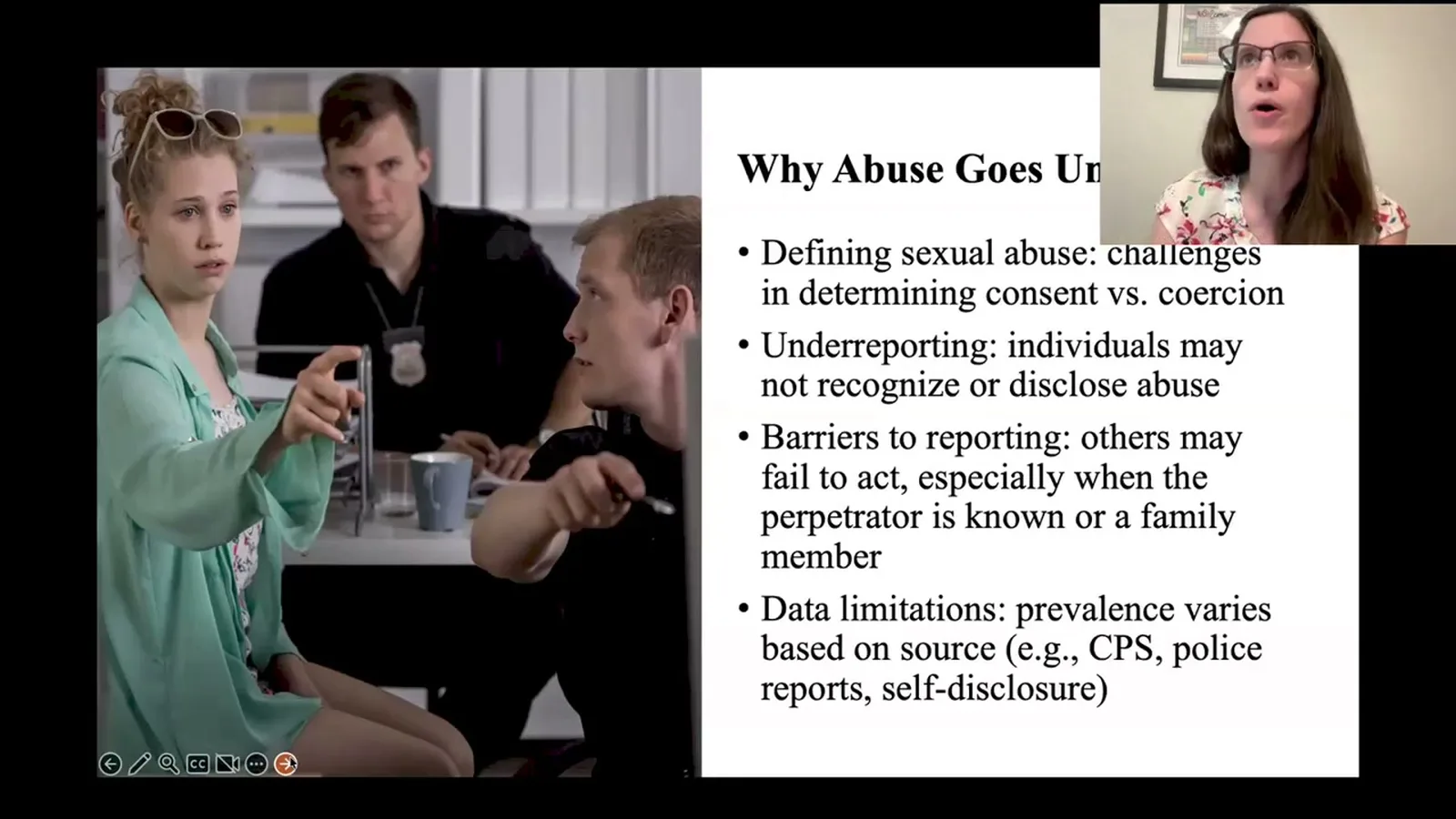
It’s Complicated: Teaching Relationship Safety That Reflects Real Life
Patricia "Tricia" Lund, CSE, LBA & Carolyn Broner, M.S. Ed.The Behaviorist Bookclub
Lund's central reframe for the teen/adult portion of the talk: teaching sex ed (boundaries, healthy relationships, disclosure language) is itself abuse…
- 1 CEU
An Examination of Abuse Prevention
Tricia Lund & Carolyn BronerThe Behaviorist Bookclub
Framed as a largely missing piece of ABA safety programming: comprehensive sex education (per the National Sex Education Standards) covers consent, healthy…

On this page · 7 sections▾
Sex education teaches people about their bodies, boundaries, and relationships. Many people think of it as a separate school topic. But in ABA, it plays a bigger safety role than that.
This matters because clients cannot report harm they cannot name. People with disabilities face higher rates of abuse. Giving them clear words and clear rules is a form of protection. BCBAs, RBTs, teachers, and parents all share this job.
The core reframe#
Tricia Lund makes one point the center of her work. She asks us to stop splitting these two topics apart. Sex education and abuse prevention are one and the same.
Sex education is not separate from abuse prevention. It is abuse prevention. From the talk — Patricia "Tricia" Lund
This reframe changes how a team plans its programs. It moves sex education out of the "extra" pile. It becomes a core safety goal, like teaching a child to cross the street. When we teach a boundary, we are also teaching safety. The two goals cannot be pulled apart.
Why language is protection#
A person needs words to report a problem. Without those words, harm stays hidden. A child who cannot name a body part struggles to describe what happened. Tricia Lund frames sex education as a way to give people that language.
in sex education, we're giving people language in order to disclose if something's happened. From the talk — Patricia "Tricia" Lund
Teaching someone to spot a broken boundary does the same work. It builds a clear standard for what is and is not okay.
when we teach someone to recognize when a boundary has been violated or when we're teaching someone how to identify abuse, that is sex education... but it is also, you know, abuse prevention. From the talk — Patricia "Tricia" Lund
A client who knows the rule can notice when it breaks. That awareness is the first step toward telling someone. A person who was never taught the rule may not know a line was crossed. Silence often follows that confusion.
What "comprehensive" really means#
 Advertisement
Good sex education covers far more than body parts. It includes consent, healthy relationships, and knowing your own limits. Tricia Lund lists the wide scope drawn from national standards.
a comprehensive sex education is going to talk about... consent... bodily autonomy and identifying cues of felt safety... interpersonal violence, sexual autonomy, and then self-determination and sexual decision making. From the talk — Tricia Lund
Each of these topics builds a safety skill. Consent teaches a person to say no and to hear no. Bodily autonomy teaches that their body belongs to them. Felt safety teaches a person to notice when something feels wrong.
Self-determination adds another layer of protection. It teaches a person to make their own choices. A person who expects to have a say is harder to control. These skills work together to lower risk.
The exclusion problem#
Here is the gap that puts clients at risk. Many people with disabilities never get this teaching. When they do, it is often stripped down and thin.
frequently people with disabilities are excluded from sex education... if they are being taught sex education, oftentimes it's kind of a watered-down version. From the talk — Tricia Lund
A watered-down version usually stops at anatomy. It skips consent, relationships, and how to report harm. That leaves the most important safety skills untaught. The very people at higher risk get the least protection.
BCBAs can help close this gap. They can push for full programs, not thin ones. They can teach consent and boundaries as real skills with real practice. You can hear more of this safety framing in An Examination of Abuse Prevention.
How to teach it as a skill#
ABA is built for teaching skills, and safety skills are no different. You can break consent into small, clear steps. You can role-play saying no in a calm setting. You can practice asking for help until it feels easy.
Repetition and practice make these skills stick. A person who has practiced saying no is more ready to use it. A person who knows the word for a body part can report harm clearly. The teaching is not a one-time talk. It is a set of skills built over time, like any other program.
Teams should also match the lesson to the learner. A watered-down version is not the answer, but neither is a lesson far above the learner's level. Good teaching uses plain words and clear examples. It meets the person where they are and grows from there.
What the research says#
Research backs up the concern about access. One study analyzed a large national data set on students with intellectual disability. Only about 16% of students with moderate to profound needs received sex education (from "Predictors of access to sex education for children with intellectual disabilities in public schools").
The same study found a telling pattern in teacher views. Many teachers doubted these students would benefit at all. Stronger communication skills were the main thing that predicted access. That means the students with the fewest words often got the least teaching.
Standard programs also seem to miss the mark for autistic learners. One study compared autistic and typically developing young adults. Both groups felt the same about sex education, but the autistic group scored lower on sexual awareness (from "Experiences of Sex Education and Sexual Awareness in Young Adults with Autism Spectrum Disorder").
That study concluded mainstream lessons are not enough for this group. It called for specific methods and curricula built for their needs. A separate review of outcomes found most lessons focused on knowledge, not skills or attitudes (from "A systematic review of relationships and sex education outcomes for students with intellectual disability reported in the international literature"). Safety, though, depends on skills a person can actually use.
FAQ#
Why is sex education tied to abuse prevention?
Abuse prevention needs a person to spot and report harm. Sex education gives the words and rules to do that. Teaching consent and boundaries builds the exact skills a person uses to stay safe.
At what age should this teaching start?
Basic safety ideas can start young with simple language. Body names, private parts, and asking permission fit early lessons. More advanced topics like relationships grow with the learner over time.
Do adults with disabilities still need sex education?
Yes. Research shows many autistic adults still want and need this teaching. Programs built for adults can cover dating, consent, and reporting harm. Learning does not stop at the end of school.
 Advertisement
Turn this topic into a CEU
You just studied this. Now get credit for it.
Watch It’s Complicated: Teaching Relationship Safety That Reflects Real Life with Patricia "Tricia" Lund, BCBA, CSE, LBA & Carolyn Broner, Ph.D., M.S. Ed., BCBA and earn 1 free BCBA CEU. Detailed certificate, delivered the moment you finish.
Keep going with a free learning path
Your 4 Ethics CEUs, Done
Four ethics CEUs in three courses, all free. Start with Matt Harrington's assent and data course, then ethical guardrails in behavior reduction, then cultural considerations in clinical practice. Every course carries ethics credit, so this path covers the BACB requirement with nothing to buy.