A Panel on Collaboration in Practice: SLP, OT & ABA Services
Collaboration across disciplines is essential for delivering comprehensive, client-centered autism services. This panel brings together leaders in Applied Behavior Analysis (ABA), Speech-Language Pathology (SLP), and Occupational Therapy (OT) to discuss how interdisciplinary partnerships can improve communication, align treatment goals, and support meaningful outcomes for children and families. Through discussion of real-world clinical experiences, participants will explore strategies for effective collaboration, navigating differing professional perspectives, maintaining evidence-based practice, and engaging caregivers as active members of the treatment team. The panel will also highlight organizational practices that support successful interdisciplinary service delivery and long-term client success.
Register free & watch nowCancel any time. Cert delivered to your inbox the moment you pass the quiz.
About this CEU
Collaboration across disciplines is essential for delivering comprehensive, client-centered autism services. This panel brings together leaders in Applied Behavior Analysis (ABA), Speech-Language Pathology (SLP), and Occupational Therapy (OT) to discuss how interdisciplinary partnerships can improve communication, align treatment goals, and support meaningful outcomes for children and families. Through discussion of real-world clinical experiences, participants will explore strategies for effective collaboration, navigating differing professional perspectives, maintaining evidence-based practice, and engaging caregivers as active members of the treatment team. The panel will also highlight organizational practices that support successful interdisciplinary service delivery and long-term client success.
Credits
1 CEU · 67 min
From the talk
What was covered
A behavior analyst, a speech therapist, and an occupational therapist explain how they run real interdisciplinary (teams sharing one aligned plan) autism care together. They cover shared goals, technician carryover, cross-training, and billing rules.
- Name your model honestly. Working side by side on separate goals differs from sharing goals and planning together.
- Compare targets inside each goal with the speech therapist and occupational therapist. This stops a skill from being retaught after it is already mastered.
- Put behavior technicians inside speech and occupational therapy sessions. This lets techniques carry over into behavior therapy time the same day.
- When you doubt another discipline's method, gather literature and consult a colleague before you dismiss it out loud.
- Translate the other field's vocabulary into yours before you argue about the method itself.
- Audit overlapping session times weekly and drop the claim rather than drop the collaboration.
Siloed, Multidisciplinary, Interdisciplinary, Transdisciplinary: Which One Is Your Team?
Most clinics use one word for all team care. That word is multidisciplinary. The panel pulled it apart into four models. Siloed (each provider works alone) means separate goals and no shared plan. Multidisciplinary (several fields working side by side) means you work in parallel. Interdisciplinary (different fields sharing aligned goals) means goals and values line up. Transdisciplinary (one shared goal taught by everyone) means the same goal is taught the same way by each provider.
Emily Miller said the team uses two of these labels on purpose. Multidisciplinary is the umbrella term families and payers already know. Interdisciplinary is what the work looks like day to day. The speech and ABA (applied behavior analysis) teams share goals. They still practice inside their own disciplines. They come together to build and check those goals.
The practical test is what happens between sessions. In a parallel model, a child leaves ABA and disappears for 45 minutes. The ABA team gets a quick "how did it go" later. At this organization, the sessions overlap instead. About three out of four clients access ABA plus at least one related service.
I would say that we definitely identify ourselves as multidisciplinary.
From the talk — Theresa Praul-DeFrank, M.A., BCBA, LBS, Jacquie Godwin, M.S., BCBA, LBS, Emily Miller, M.A., CCC-SLP & Megan Thompson, MSOT, OTR/L, DIR-FT
Where ABA and Speech Goals Actually Overlap
Emily described the overlap in plain terms. They work on expressive language. The BCBA (board certified behavior analyst) works on manding (asking for what you want) and tacting (labeling what you see). The words differ. The goal is often the same. So the two clinicians compare the targets inside each goal.
That comparison stops wasted work. A skill mastered in one room should not be retaught in another. It also protects generalization (using a skill in new settings). Emily watches for skills that show up in ABA but not in their room. When something does not carry over, the team changes the plan together.
Jacquie Godwin gave the apraxia (a motor speech disorder) example. The SLP (speech-language pathologist) owns the technique that needs special training. The target gets mastered in speech first. Then ABA takes it into natural settings. Early in their work together, Emily pushed back on an oral motor imitation goal (practice moving the mouth for speech sounds). They gave their rationale. Jacquie asked what they would do instead. They built the goals together from there.
So we might use different terminology, but it's still the same goals in the end.
From the talk — Theresa Praul-DeFrank, M.A., BCBA, LBS, Jacquie Godwin, M.S., BCBA, LBS, Emily Miller, M.A., CCC-SLP & Megan Thompson, MSOT, OTR/L, DIR-FT
RBTs in Speech and OT Sessions: The Carryover Engine
The strongest structural choice on this panel was simple. RBTs (technicians who run direct ABA sessions) attend almost every speech and OT (occupational therapy) session. The panel put that number near 99 percent. The RBT is not a silent observer. They run parts of the session.
That gives the RBT two things. They learn the goals speech and OT are working on. They also learn the techniques and use them during ABA time. Jacquie gave examples. RBTs use proactive strategies to help a child stay regulated. They use behavior specific feedback (praise that names the exact action) that matches how the SLP wants the child to communicate.
The help runs both directions. The SLP and OT ask the RBT for support inside their own sessions. During an obstacle course, the RBT may wait at the far end. The RBT also helps with sequencing and with hard transitions. Many children do not want to leave the OT room.
Jacquie framed this as a second layer of supervision. RBTs are formally supervised by BCBAs. In practice, they are also coached by the speech and OT clinicians they sit with each week.
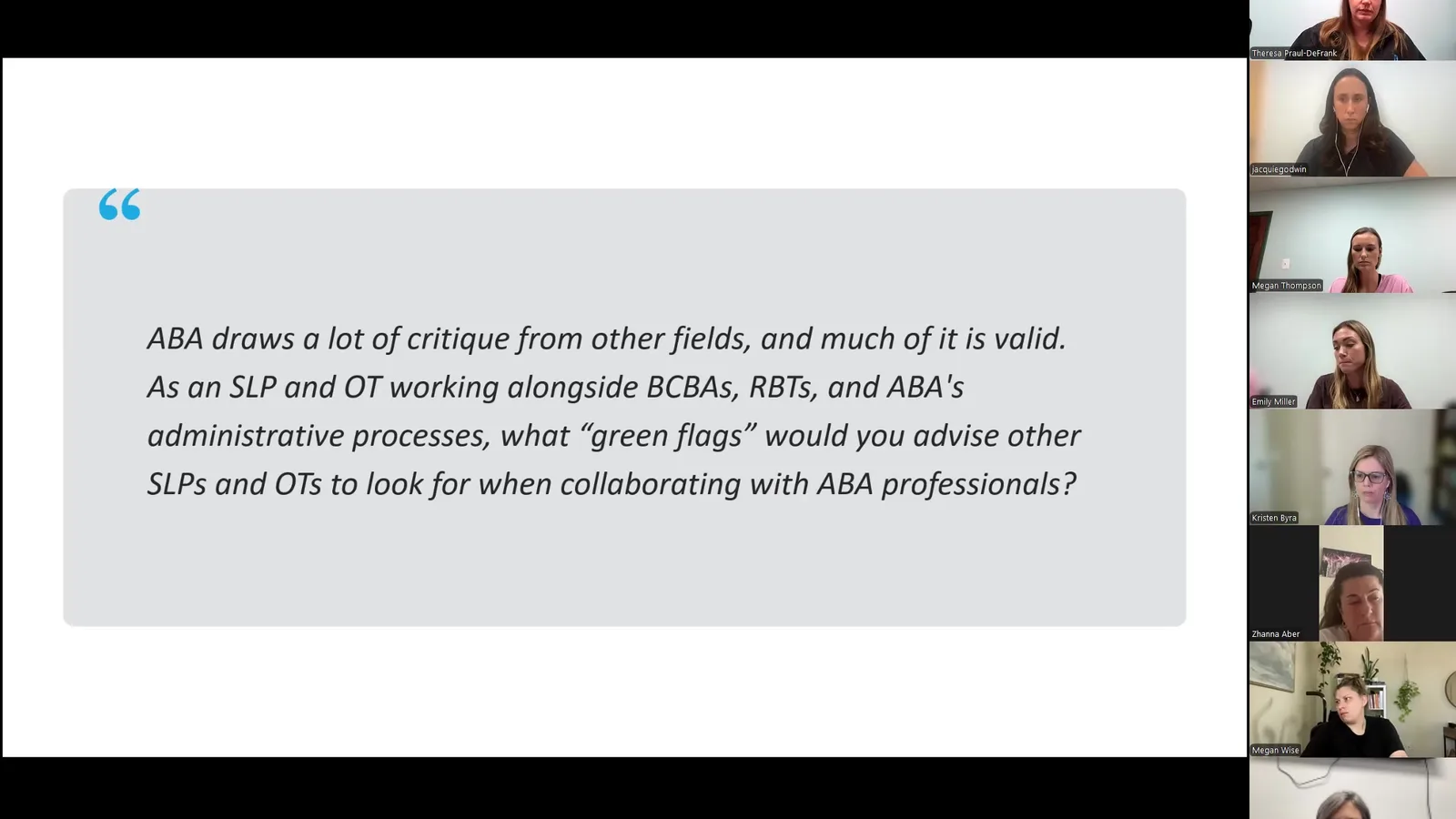
Green Flags SLPs and OTs Look For in an ABA Team
Theresa Praul-DeFrank asked the question many BCBAs skip. ABA draws real critique from other fields. So what makes an ABA partner feel safe to work with?
Megan Thompson started with respect for expertise. Shared goals show up in dressing and pre-writing. The approaches will clash sometimes. The green flag is a partner who explains their thinking and asks for yours. Their example was motivation. An RBT wanted a token board (a chart that tracks earned rewards) for a child who seemed unmotivated. Megan looks at arousal and sensory needs first. The point is to teach each other the reason behind the choice.
Emily's green flag was AAC (tools that support communication without speech). Some SLPs jump straight to high-tech devices. Others start low-tech and build up. Most of their SLPs and many of their BCBAs hold training in PECS (a picture-based communication system). Their advice was direct. Do not talk down to a BCBA about communication.
One attendee asked what to do when outreach gets ignored. Emily said to name it out loud. Some clinicians have only seen older ABA practice. Tell them plainly how you work now. They said the BCBAs they work with turned out to be far more similar to them than they expected.
So I think one of the biggest green flags is finding professionals who value each other's perspectives, that we can all work together as a team and realize that we're all experts in our own individual fields.
From the talk — Theresa Praul-DeFrank, M.A., BCBA, LBS, Jacquie Godwin, M.S., BCBA, LBS, Emily Miller, M.A., CCC-SLP & Megan Thompson, MSOT, OTR/L, DIR-FT
Cross-Discipline Training as an Operational Habit
Shared language does not appear on its own. It gets built in training. This team puts related services staff through trainings they usually never get. Safety Care training is one example. The OT and speech staff take it too.
They also run a training day for RBTs. Every clinical lead teaches a piece of it. Past sessions covered sensory strategies and developmental milestones. Speech leads have run a PECS overview for RBTs. That overview does not certify anyone. It shows RBTs how to support a child moving through the phases.
Other trainings covered AAC more broadly. Staff get iPads and explore different systems hands on. One SLP with deep experience in gestalt language processing (learning language in whole chunks instead of single words) trains the RBTs on it. Children often arrive already labeled that way by a prior center.
Notice the design choice behind all of this. Trainings are not limited to the discipline that runs them. ABA staff take the speech and OT trainings. Speech and OT staff take the ABA trainings.
Training is another big green flag.
From the talk — Theresa Praul-DeFrank, M.A., BCBA, LBS, Jacquie Godwin, M.S., BCBA, LBS, Emily Miller, M.A., CCC-SLP & Megan Thompson, MSOT, OTR/L, DIR-FT
Holding the Evidence Line Without Ending the Conversation
"That is not evidence based" ends conversations fast. Evidence based practice (treatment proven by research) is the standard every clinician should meet. The panel called the concern fair but the delivery risky. Emily traced their own shift. PROMPT (a touch-based cueing system for speech) was the big thing early in their career. They took the three day course. DTTC (repeated practice trials that build motor speech skills) is now the stronger choice for apraxia. They still use pieces of PROMPT with some children. They never use it with children who dislike touch.
Megan said the same about sensory integration (therapy using movement and sensory input). The research base is still being built. The strategies serve as tools, not as the whole plan. Leaders in their field are building trainings and collecting data on it now.
Jacquie offered a useful move. Translate first, then judge. PROMPT leans on behavior specific feedback and oral motor imitation. DTTC uses repeated trials to build motor planning, which is verbal imitation. Gestalt language processing maps onto scripting and delayed echolalia (repeating phrases heard earlier). Megan added another crosswalk. The OT word "dysregulated" lines up with the happy, relaxed, and engaged language ABA uses.
Theresa tied this to Dr. Broadhead's 2015 article on maintaining professional relationships in interdisciplinary settings. BCBAs who aggressively question non-behavioral recommendations stop getting invited back. They described a better sequence. Gather the literature. Consult a colleague in your own discipline. Raise the evidence concern honestly. Then watch the client's goals and watch for harm.
So engaging in healthy skepticism rather than reflexive dismissal is really important here.
From the talk — Theresa Praul-DeFrank, M.A., BCBA, LBS, Jacquie Godwin, M.S., BCBA, LBS, Emily Miller, M.A., CCC-SLP & Megan Thompson, MSOT, OTR/L, DIR-FT
Keeping Caregivers on the Team When You Rarely See Them
Related services often run in the middle of the day. The SLP and OT miss drop off and pick up. So caregiver contact has to be designed, not hoped for.
Two written tools do the daily work. Session spotlights go home each month. They show what ABA, OT, and speech are each working on. Take-home notes go home more often. They cover the session, snack, and bathroom details that parents ask about.
Meetings matter more than paper. BCBAs bill for parent training. OTs and SLPs usually cannot. So the BCBAs invite them onto those calls instead. A newer kindergarten orientation brings the whole team and the center director into one meeting with the family. They review clinical recommendations and what the family can realistically manage.
A consult model covers the fade out. Titration (slowly cutting back services over time) explains what happens next. A child may hit visit limits or move to school full time. The SLP or OT may still visit the home monthly for about three months. Much of that time is not billable. The family keeps support through the handoff.
So we've developed a couple of things to kind of help that collaboration and to let parents know kind of what's going on.
From the talk — Theresa Praul-DeFrank, M.A., BCBA, LBS, Jacquie Godwin, M.S., BCBA, LBS, Emily Miller, M.A., CCC-SLP & Megan Thompson, MSOT, OTR/L, DIR-FT
The Billing and Staffing Math That Makes It Last
Theresa was blunt about the money side. They do not overlap billing. When a child sits in speech, the overlapping ABA codes do not get billed. Their practice management system does not flag these overlaps well. So staff pull them by hand before claims go out. Audits run every week before billing.
They still protect the overlap clinically. Co-treats (sessions where two disciplines work with the child together) happen, and so do partial overlaps. They just do not bill the overlapping minutes. The organization absorbs that cost. In their state, speech overlap draws pushback, while OT overlap has not so far.
Productivity numbers were shared openly. Speech carries an expectation of 30 sessions per week. OT carries 25 hours per week, the same as a BCBA. Clinicians are not penalized when discharges shrink a caseload. A set number of monthly non-billable hours covers team meetings and parent training. A parent training code does exist for speech and OT. Most insurers still will not honor it, and the team keeps pushing.
Scheduling rules close the remaining gaps. Related services run only inside the clinics, which removes drive time. Some plans block OT and ABA on the same day. Clinical leads get access to benefit checks and insurance notes so they can schedule around it. Denials go back to the clinician who built the schedule. Families are urged to call their own plan, since answers vary by representative. Speech moves to timed codes (billed in minute units instead of a flat per-visit rate) in 2027. That change may reduce same-day denials.
Honestly, the big takeaway here is if you can't bill it, don't bill it.
From the talk — Theresa Praul-DeFrank, M.A., BCBA, LBS, Jacquie Godwin, M.S., BCBA, LBS, Emily Miller, M.A., CCC-SLP & Megan Thompson, MSOT, OTR/L, DIR-FT
Common questions
What is the difference between multidisciplinary and interdisciplinary care?▾
Multidisciplinary means providers work side by side on their own goals. Interdisciplinary means the goals and values are aligned across disciplines. The panel said most organizations use multidisciplinary as a loose umbrella term. Their own practice fits the interdisciplinary definition better.
Can ABA and speech therapy be billed at the same time?▾
This panel does not bill overlapping ABA codes during speech or OT sessions. They still allow the overlap clinically and absorb the cost. They run weekly audits before claims go out to catch any overlap. Rules vary by state and plan, so check your own benefits and state law.
How do RBTs support speech and OT goals?▾
RBTs attend nearly all speech and OT sessions and take an active role. They learn the goals and techniques, then use them during ABA time. The SLP and OT also ask the RBT for help with transitions and sequencing. This is the main way skills generalize across rooms.
What should a BCBA do when another discipline recommends something without strong evidence?▾
The panel pointed to Dr. Broadhead's 2015 guidance on interdisciplinary relationships. Gather the literature first, then consult a colleague in your own discipline. Raise the evidence concern directly instead of dismissing it. Then monitor the client's goals and watch for any harm.
What if other providers ignore my attempts to collaborate?▾
Emily suggested naming the silence directly and explaining how you actually practice. Many SLPs and OTs have only seen older ABA practice and made up their minds. A short, concrete description of your approach often closes that gap. The panel said most clinicians find they are more alike than expected.
How do OTs and SLPs get time for parent meetings when they cannot bill for them?▾
BCBAs invite them onto scheduled parent training calls. The organization also sets aside a number of non-billable hours each month. Those hours count toward productivity for speech and OT. A parent training code exists, but most insurers do not honor it yet.
About the speaker
Theresa Praul-DeFrank is the newly appointed chief clinical officer at Beyond Autism Services. They entered the field in 2012. Jacquie Godwin has worked in the field since 2002. They earned their BCBA in 2010 and have spent more than ten years working in a multidisciplinary model. Emily Miller is a speech-language pathologist. Colleagues describe them as the team's expert in apraxia. Megan Thompson is an occupational therapist and senior clinical lead. They run the OT division and earned a BCBA before attending OT school.
This summary was generated from the recording’s transcript. Quotes are taken word for word from the talk.
What you'll learn
- 11) Differentiate between siloed, multidisciplinary, interdisciplinary, and transdisciplinary service delivery models and identify key characteristics of effective interdisciplinary practice. 2) Describe strategies that promote successful collaboration among ABA, SLP, and OT professionals, including role clarification, shared goal development, and professional consultation. 3) Identify approaches for maintaining evidence-based practice while fostering open communication and respect for recommendations from multiple clinical disciplines. 4) Discuss organizational and operational practices that support sustainable interdisciplinary service delivery, including clinical leadership structures, collaborative meetings, and resource allocation.
Related talks
Talks that cover the same concepts
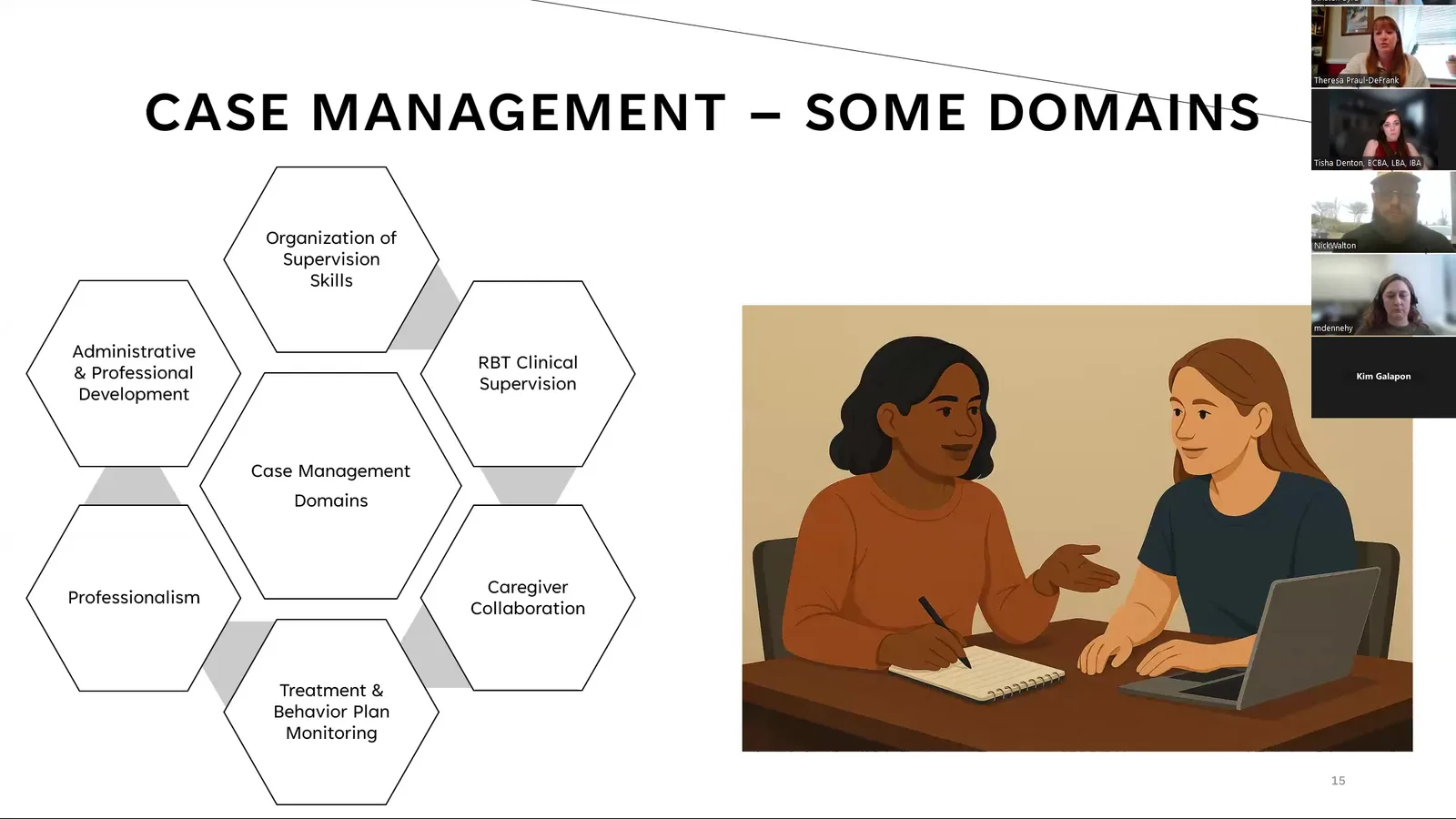
From Peer to Professional: Becoming & Supporting Early Career Behavior Analysts
Upskill ABA
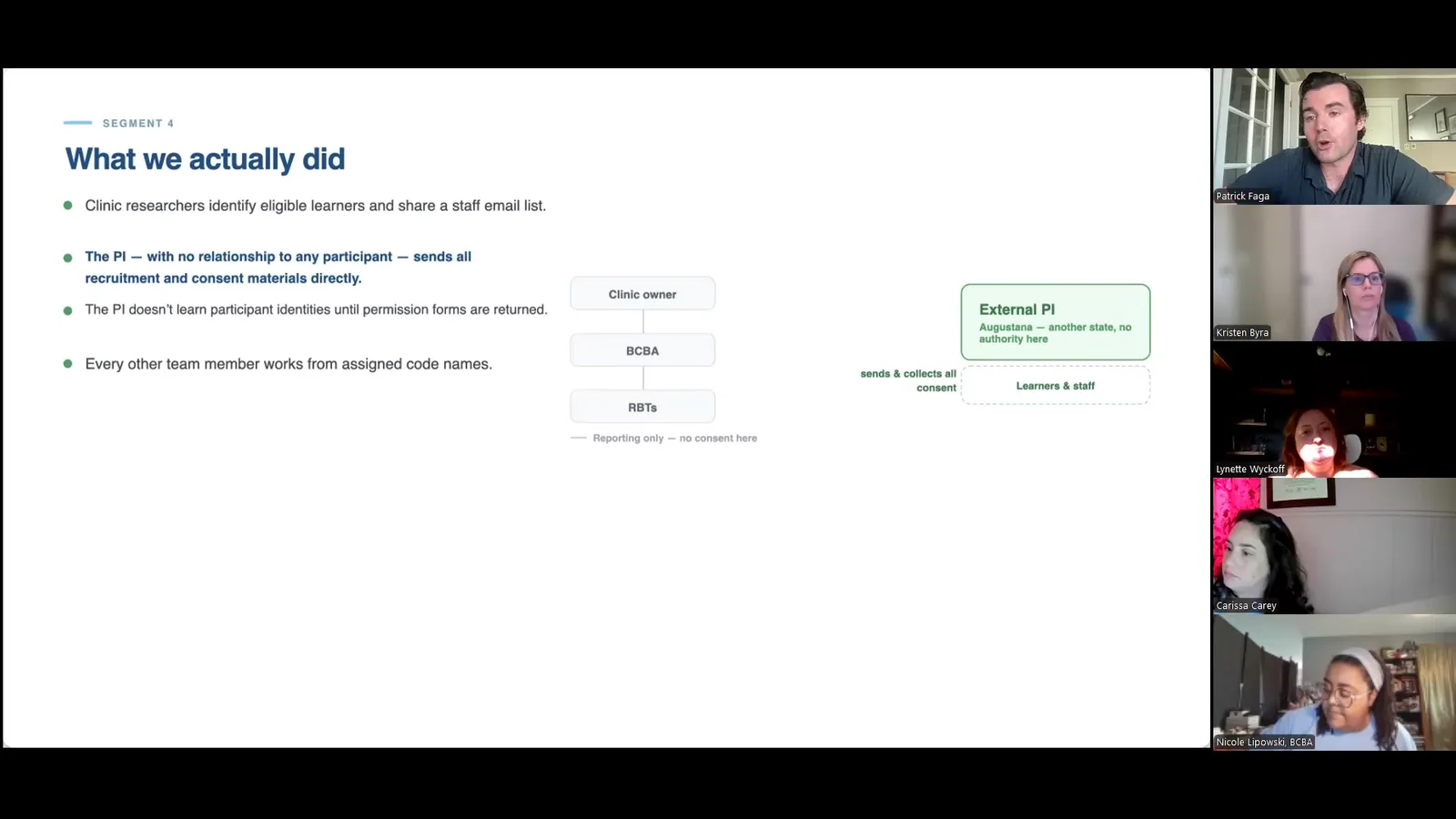
From Idea to IRB: Conducting Research in Your ABA Practice
Upskill ABA
Quality Without Measurement is Just Marketing: A Critical Analysis of Quality Service Delivery
Upskill ABA
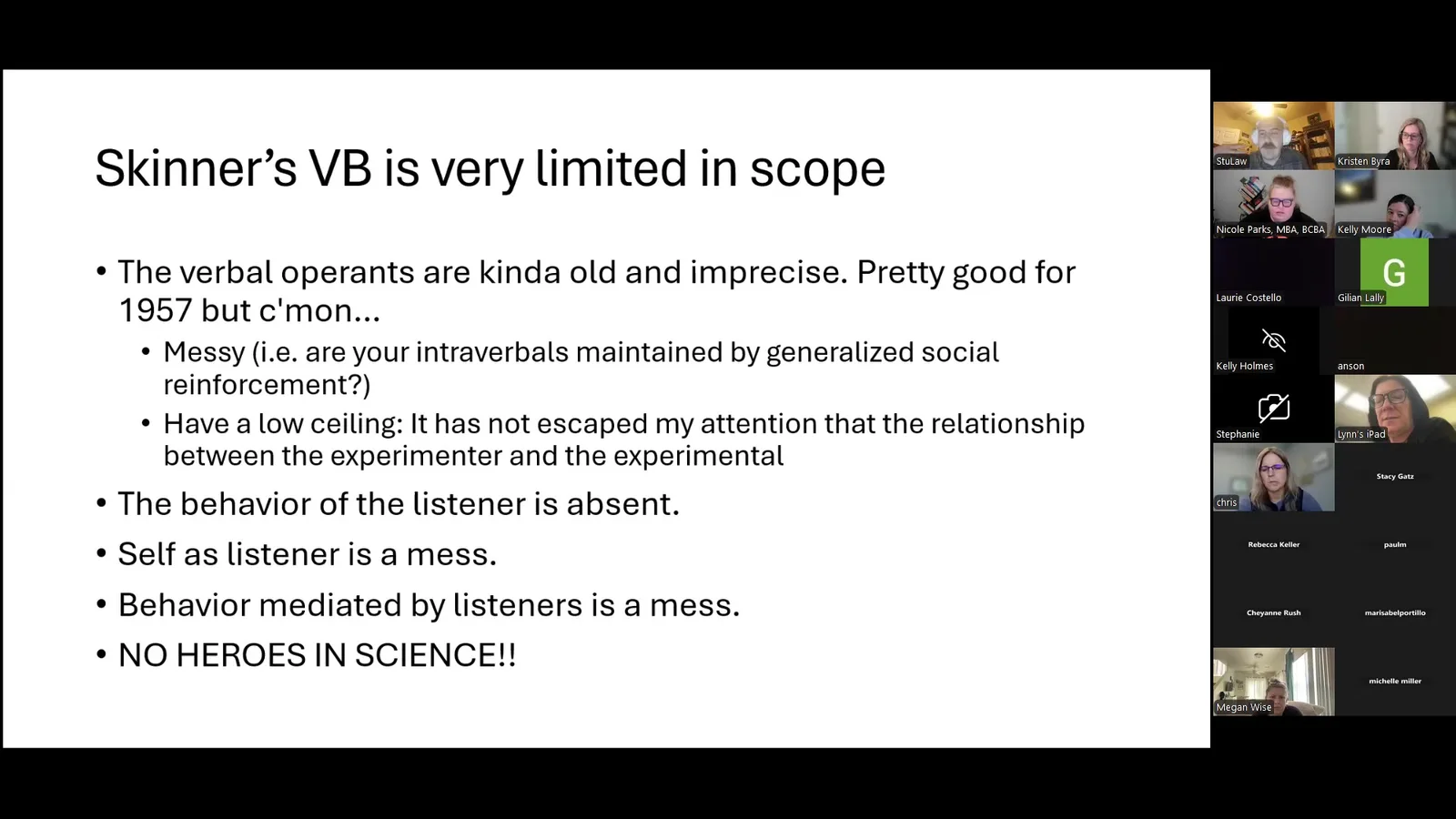
Practical RFT
Upskill ABA
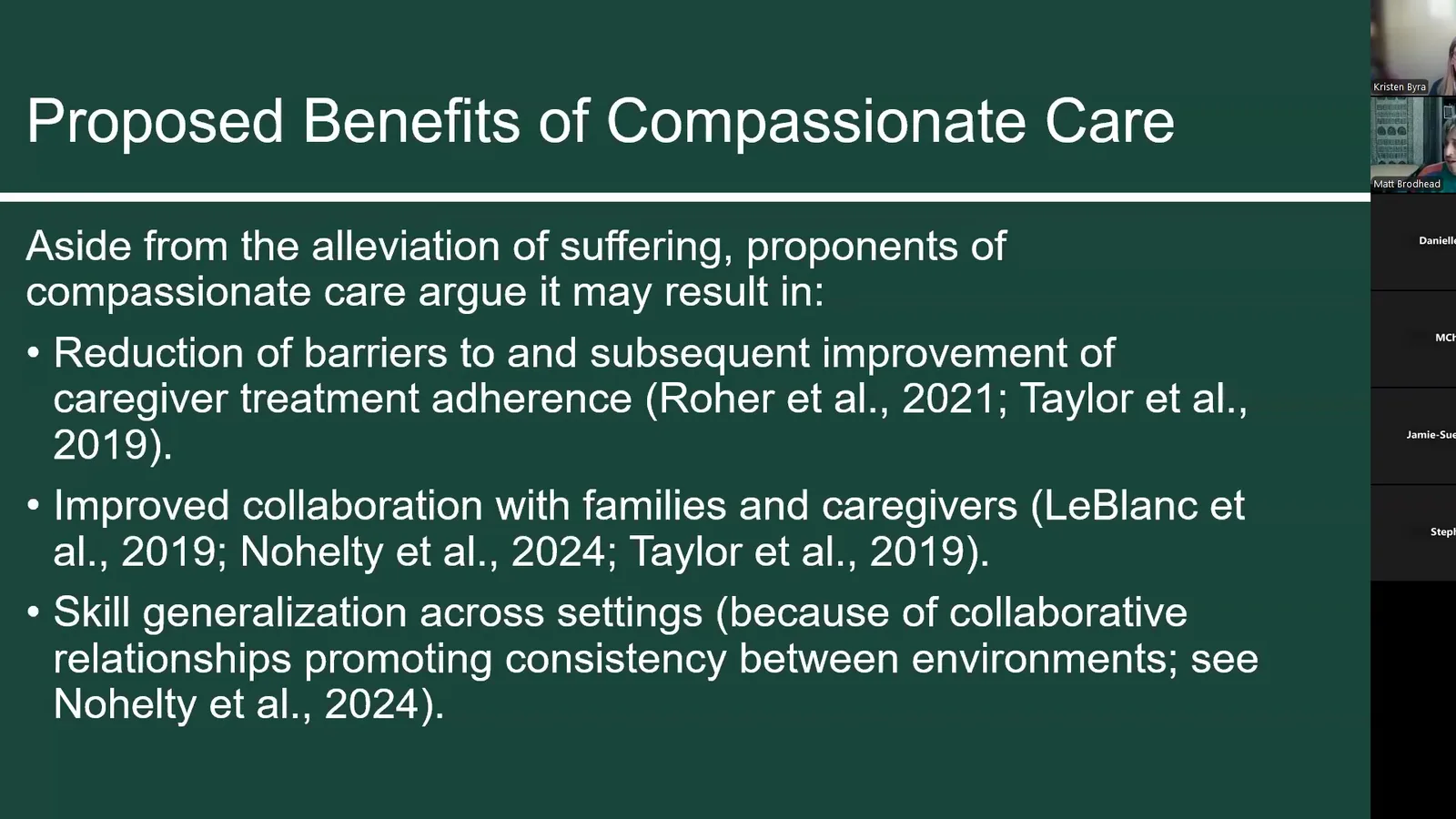
Assent and Compassionate Care: Ethical Issues and Considerations for Practice
Upskill ABA
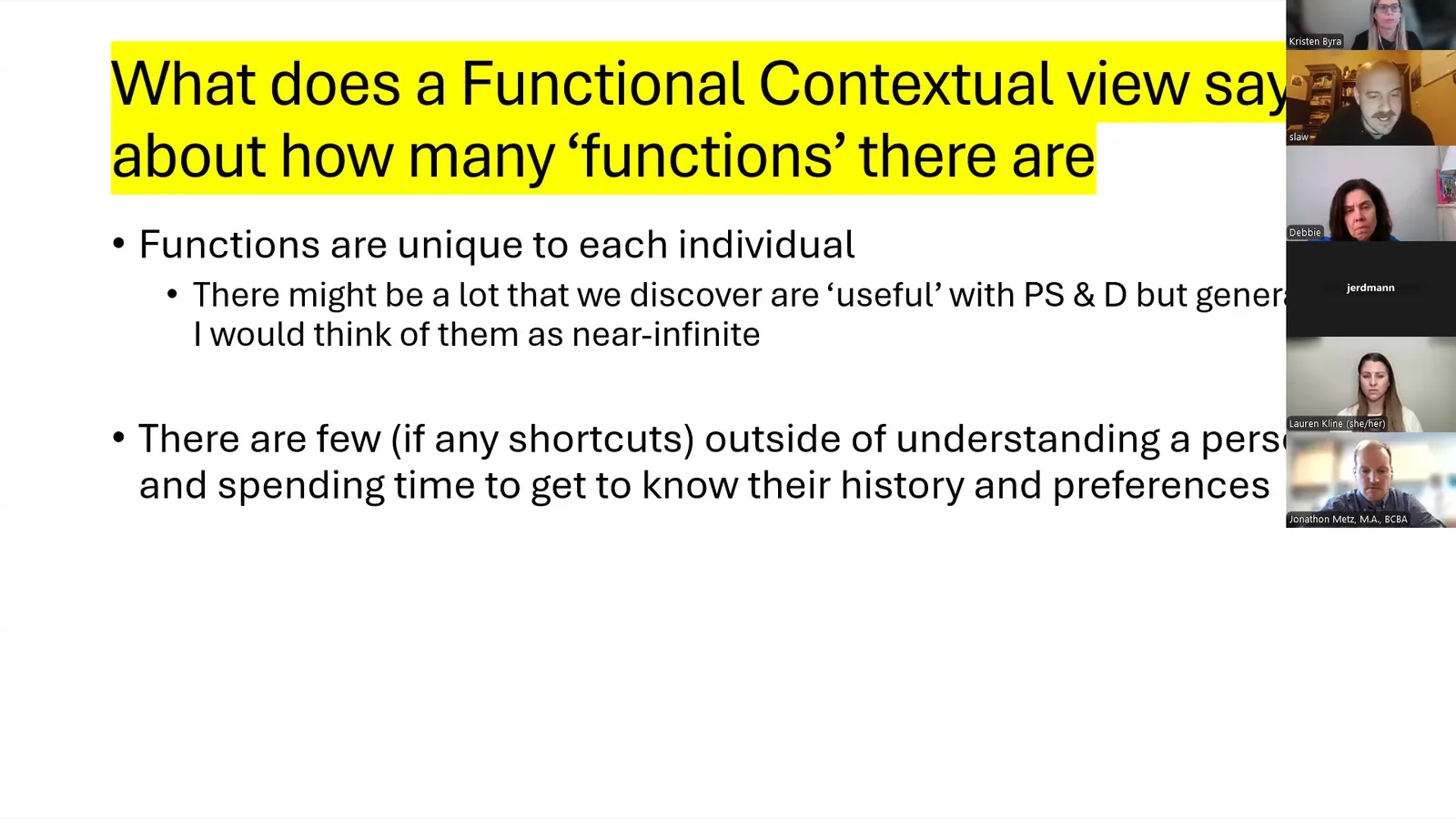
Language Changes the Game (Part 2)
Upskill ABA
More from Upskill ABA
OpenCEU is supported by advertising from third-party sponsors. Sponsors are clearly labeled, have no influence over course content, instructors, or CEU decisions, and never appear on certificates. The BACB does not sponsor, approve, or endorse OpenCEU sponsors or their products.