PECS: How the Picture Exchange System Works in ABA
A plain guide to the Picture Exchange Communication System (PECS): what it teaches, the six phases, and what the research says for BCBAs and families.
Key takeaway
PECS stands for the Picture Exchange Communication System. It teaches people to ask for things with pictures. The learner hands a picture card to another person.
Explore free BCBA CEU courses
Free learning path on this topic
Verbal Behavior: Beyond WH-Questions
Dana Pettus's three-part series on building generative verbal behavior. Why WH-question programs stall, how to establish speaker-listener repertoires, and how to scaffold advanced verbal skills like recall and simple inference. Three hours, three CEUs.
Experts who cover this
2 recordings on openceu cover picture exchange communication system.
- 1 CEU
New Year, New Care Collab Goals
Matt HarringtonThe Behaviorist Bookclub
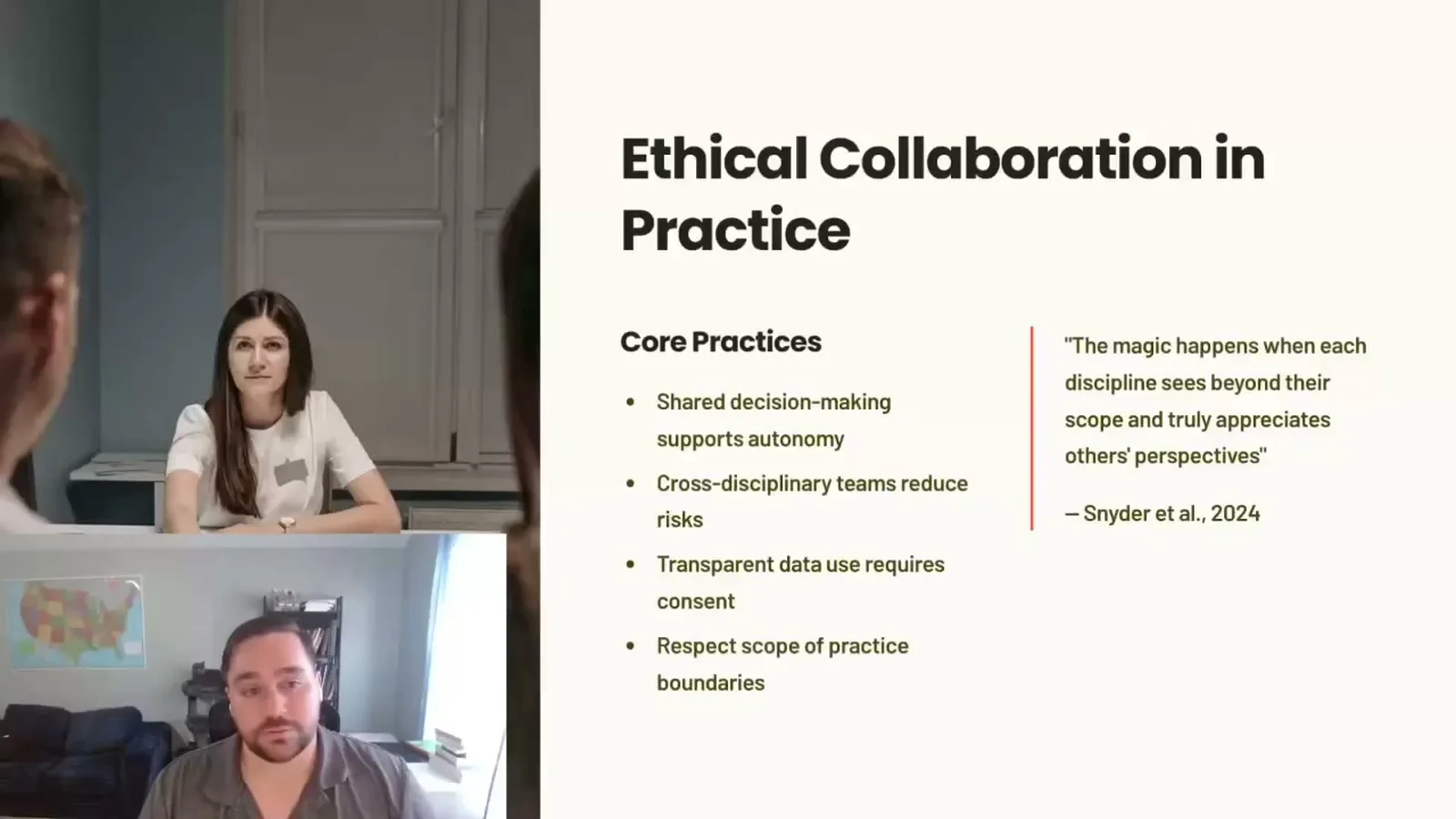
Cited as the BCBA-side communication system that mismatches an SLP's richer AAC device setup when the two disciplines don't coordinate their communication…
- 2.50 CEUs
5 Days of Manding Mastery
Matt HarringtonThe Behaviorist Bookclub
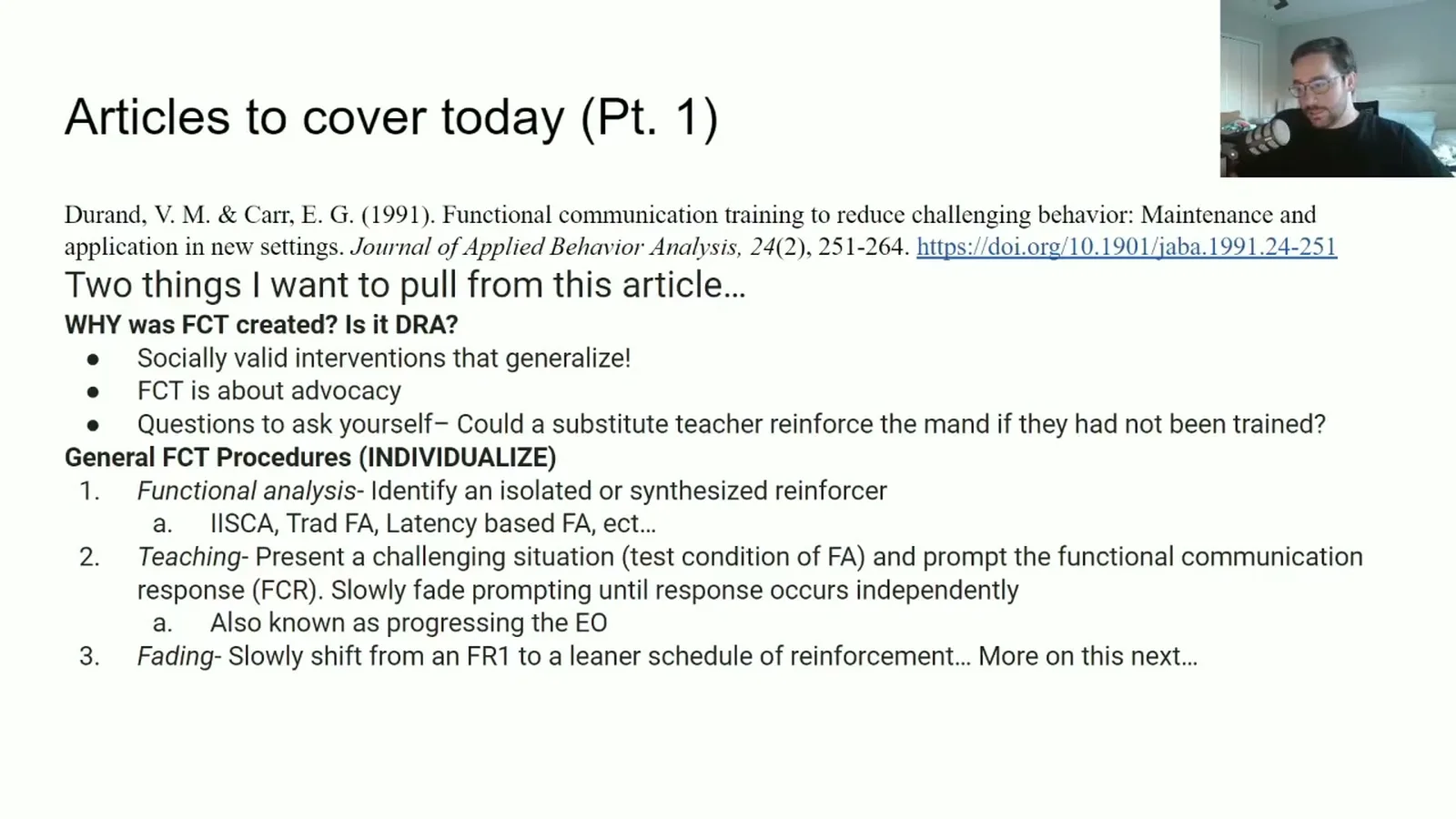
Defined as one of the three mand modalities (alongside vocal and sign) tested in the Valentino modality-assessment article, distinguished explicitly from…
On this page · 8 sections▾
PECS stands for the Picture Exchange Communication System. It teaches people to ask for things with pictures. The learner hands a picture card to another person. In return, they get the item they wanted. That simple trade is the whole idea.
Many autistic children and adults have few or no spoken words. PECS gives them a clear way to ask. BCBAs, RBTs, teachers, and parents all use it. It builds real requests instead of crying or grabbing. That is why it matters so much in daily work.
What PECS actually teaches#
The heart of PECS is the exchange. The learner gives a card and gets something back. This makes each request functional. A functional request is a real ask that changes what happens next.
Alana Wormwood shared a case about an adult client named David. He followed directions but rarely spoke up on his own. She wanted him to advocate for himself.
I really felt was most important for David was some self-advocacy, a more functional communication system. And that's why I eventually decided on PEX. From the talk — Alana Wormwood
David first needed to learn that the card had power. The picture was not just paper. Handing it over produced a real result he cared about.
Building the first exchange#
Learners do not always understand the trade at first. They may hand over a card without knowing why. Alana used a small game to build that link.
I introduced this game Megan recommended, just the PECs cards in a cup game, where we'd put a whole bunch of things in a cup and draw randomly. And whatever card was pulled out, that's what you get. From the talk — Alana Wormwood
The game made the rule clear. One card equals one specific item. After this work, David made his first spontaneous request. He asked for an item that was not even in his sight.
PECS versus a casual picture exchange#
Not every picture swap is real PECS. Formal PECS is a full protocol with six phases. A quick handoff of a picture is something looser.
If I hand over a picture of a goldfish to a therapist or a technician or a caregiver, that could be considered a picture exchange system. Not a formal PEC, that's a totally different thing, but a picture exchange. From the talk — Matt Harrington
This difference matters for teams. Formal PECS has set steps, data, and fidelity checks. A casual picture exchange skips most of that structure. Both can help, but they are not the same tool.
The six phases in plain terms#
 Advertisement
PECS moves through six phases in order. Each phase adds a new skill. Learners master one before moving to the next.
Phase 1 teaches the basic exchange for a wanted item. Phase 2 builds distance, so the learner travels to communicate. Phase 3 teaches picture discrimination, choosing the right card. Phase 4 builds sentences using an "I want" strip. Phase 5 answers the question "What do you want?" Phase 6 teaches commenting, like "I see." The steps grow from simple asks to richer talk.
Coordinating PECS with other tools#
PECS often runs next to speech therapy. The speech therapist may use a full AAC device. AAC means augmentative and alternative communication, like a talking tablet. Goals can clash when teams do not talk to each other.
the SLP is working on AAC, you're working on PEX, but the SLP has 70 different icons on their iPad and you're doing two on your PEX board From the talk — Matt Harrington
That mismatch confuses the learner and the family. The fix is shared planning. Matt covers this care-collaboration approach in New Year, New Care Collab Goals. PECS also connects to mand training, since a mand is a request. You can see how picture mands fit the bigger picture in 5 Days of Manding Mastery.
Who PECS can help#
PECS was built for autistic learners with limited speech. But its reach is wider than that. It has helped learners with multiple disabilities build requesting skills. Those skills also carried over to new, similar situations.
Age is not a hard limit either. Alana's client David was an adult, not a child. The exchange works whenever a person needs a clear way to ask. Early requests often grow into fuller communication over time.
Progress depends on steady teaching and support. Learners need frequent practice to move through the phases. Families and staff both play a role in that practice. Strong home follow-through tends to speed real gains.
What the research says#
PECS has strong research support as an evidence-based practice. One school clinic study ran PECS across 24 sessions with 22 nonverbal children. All children reached the first three phases, and 82% reached phase IV (PECS Implementation Program, 2023). Family involvement was very high at 96%.
Outcomes still vary by setting and support. A retrospective study in Bangkok followed 61 children over one year. Only 46% reached the success mark, and more frequent sessions predicted better results (Predictors of Successful PECS Training, 2025). More home practice also helped.
Training the adults matters too. Behavioral skills training raised teacher accuracy on the first PECS stage and held over time (Park & Shin, 2024). Behavioral skills training uses instruction, modeling, role play, and feedback. A caregiver telehealth program showed similar gains for parents at home (Telehealth PECS Caregiver Training).
The gains reach beyond requests alone. A single-subject study found PECS built requesting skills in children with multiple disabilities. Those skills also generalized across similar settings (Alfuraih et al., 2024). A large review in China pooled 34 trials with over 2,300 children. It reported a large overall effect on communication skills (Efficacy of PECS in Mainland China). Together, these studies show broad, reliable benefits.
FAQ#
What is PECS used for? PECS helps people with little or no speech make requests. The learner trades a picture card for a wanted item. Over time, it can grow into short sentences and comments. It is common for autistic children and adults.
How long does PECS take to work? It depends on the learner and how often they practice. Some children reach the early phases within weeks. Research shows more frequent sessions and home practice speed progress. Steady, consistent teaching matters most.
Does PECS stop children from talking? No. Research does not show that PECS blocks speech. Many children keep building vocal skills while using PECS. It gives a working voice while other skills grow. Some children even start using words after learning to request with cards. The goal is communication first, in whatever form works.
 Advertisement
Keep learning
Earn free BCBA CEUs on openceu
Browse on-demand recordings from verified ACE providers and earn CEUs across autism, ABA, and behavior analysis. Detailed certificate, delivered the moment you finish.
Keep going with a free learning path
Verbal Behavior: Beyond WH-Questions
Dana Pettus's three-part series on building generative verbal behavior. Why WH-question programs stall, how to establish speaker-listener repertoires, and how to scaffold advanced verbal skills like recall and simple inference. Three hours, three CEUs.
Parent or caregiver? Find a vetted ABA provider near you on ProviderSpark.