Micro-Shaping in ABA: Taking Tiny Steps That Stick
Micro-shaping breaks a skill into tiny steps when a learner gets stuck. See how BCBAs use it in skill-based treatment and classrooms.
Key takeaway
Micro-shaping means breaking a skill step into an even smaller step. Shaping already rewards small moves toward a goal. Micro-shaping shrinks those moves down further when a learner gets stuck.
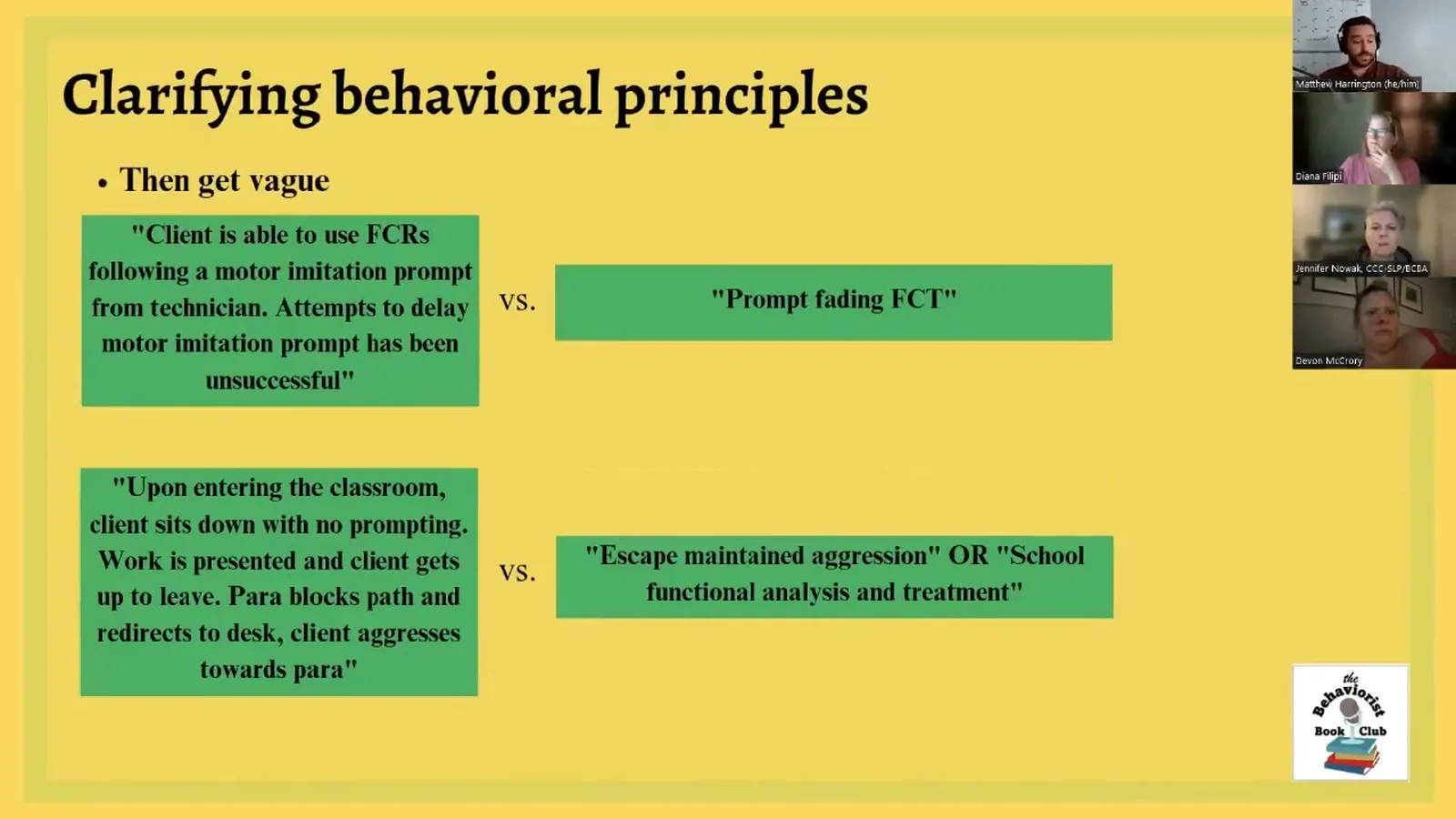
Research to practice - extending past the pages
Free learning path on this topic
Master PFA and SBT
Matt Harrington's 12-article walk through practical functional assessment and skill-based treatment, from Hanley's 2014 study to the enhanced choice model. Then assent, since SBT depends on it, and the ethical guardrails that keep behavior reduction defensible. Five CEUs, one of them ethics.
Experts who cover this
2 recordings on openceu cover micro-shaping.
- Featured talk1 CEU
Research to practice - extending past the pages
Matt HarringtonThe Behaviorist Bookclub
Described as the practice of breaking a shaping step down further when a client is stuck between steps, and tied to percentile-schedule math as a way to make…
- 1 CEU
The Math Behind Behavior Reduction
Matt HarringtonThe Behaviorist Bookclub
Cited as the SBT term for the very small, high-reinforcement-density shaping steps used when the response class carries real danger, corresponding to a high W…
On this page · 6 sections▾
Micro-shaping means breaking a skill step into an even smaller step. Shaping already rewards small moves toward a goal. Micro-shaping shrinks those moves down further when a learner gets stuck. You reward a tiny bit of progress, then a tiny bit more.
This tool helps BCBAs, RBTs, teachers, and parents. It keeps a learner moving when a jump feels too big. It also lowers stress, since each ask is easy to meet. Small wins stack up into real progress over time.
What micro-shaping solves#
Sometimes a learner sits between two steps and cannot cross. The next step is just too large a leap. Micro-shaping is the answer to that gap. You add a smaller step in the middle.
Matt Harrington describes this move in practical functional assessment work, a way of finding why behavior happens. When a learner cannot get from one step to the next, the team shrinks the step. It is a first-line fix, not a last resort.
In the PFA world, we love a good micro shape when you're like, oh, I can't get from cab two to cab three. And then we're like, oh, did you try to micro shape it? From the talk — Matt Harrington
So the question is almost a reflex. If a learner is stuck, ask if the step is too big. Then break it down and try again.
Tiny steps after a big escalation#
Nikki brings micro-shaping into the classroom. She uses it in skill-based treatment, a way to teach calm skills. Her example is a student who has fully escalated. You cannot rush that child back to the original demand.
Sometimes we have to micro shape is what we call it in skill based treatment, which is we have to take tiny steps. From the talk — Nikki
Picture the moment after a student flips a desk. They are now hiding in the back of the room. Asking them to sit down at once will fail. The gap between now and calm is far too wide.
You've just flipped the desk. I cannot ask you. And now you're hiding in the back of the room. I cannot ask you to come back and sit at your seat. That is not going to work. From the talk — Nikki
Instead, you rebuild cooperation in small pieces. Maybe you just want the child to look at you. Then a step closer. Then a word. Each tiny step is a step back toward safety.
The math behind the steps#
 Advertisement
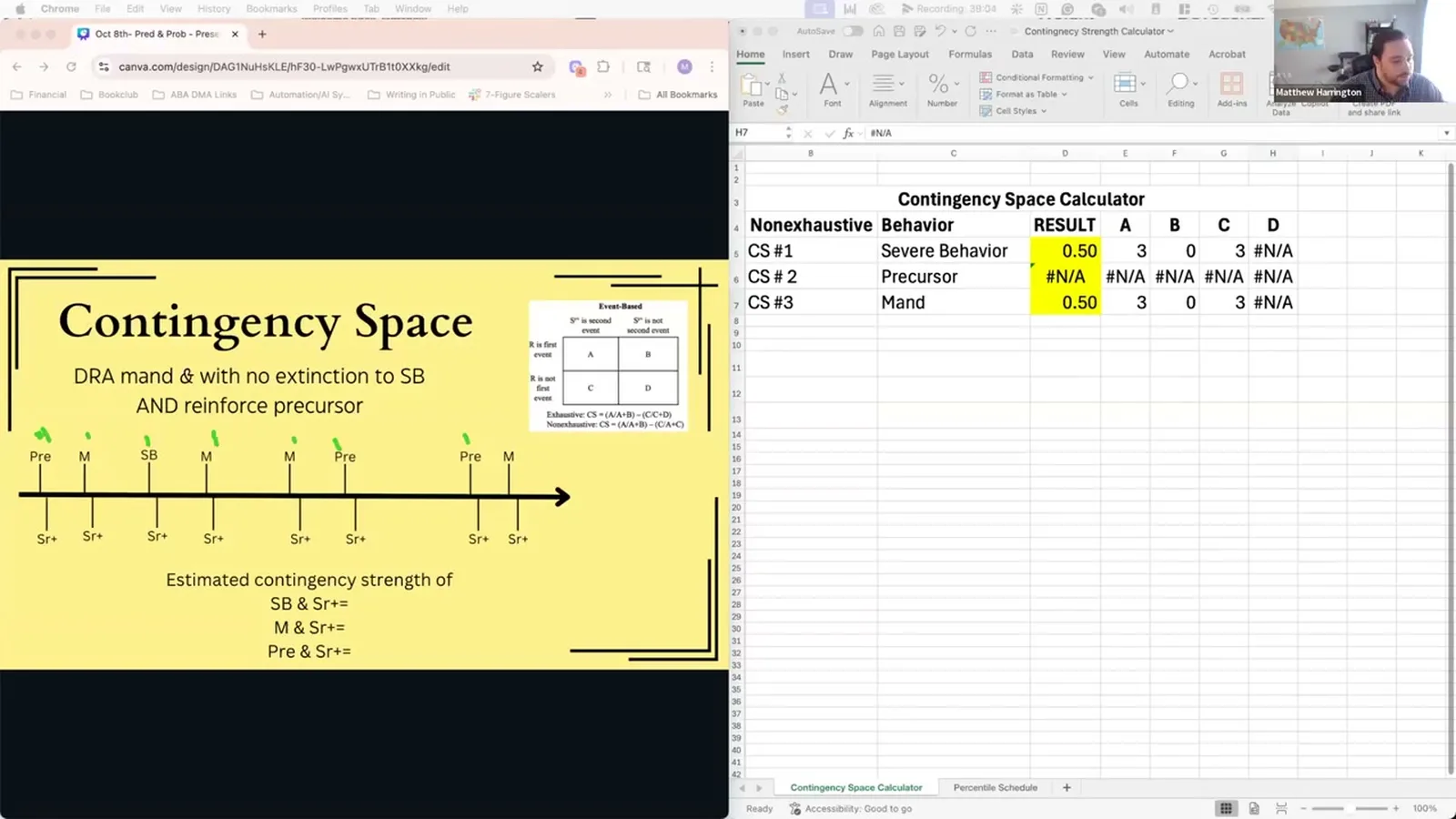
Matt also gives micro-shaping a number-based backbone. He ties it to the percentile schedule, a formula that sets how hard the next step is. You can use its math to make steps as small as you want. That turns guessing into a plan.
This is, I think, the closest thing we have to micro shaping is, of course, using this math, this K value in the equation to lift the probability of reinforcement occurring to near 100%. From the talk — Matt Harrington
The idea is to keep reward almost certain at each step. When reward comes nearly every time, the learner stays in the game. The K value in the formula is what you tune to do this. It sets how much better the next response must be.
Matt connects this to danger too. When the behavior carries real risk, you want very small steps. Small steps with steady reward mean slow, safe progress. That is micro-shaping made concrete.
Very tiny, small shaping steps, low or high reinforcement density, which means slow and steady progress. From the talk — Matt Harrington
He frames the math as a way to pin down a fuzzy word. Micro-shaping can sound vague until you attach numbers. The equation gives it a clear, testable meaning. This is how you make the term concrete in skill-based treatment.
Why small steps beat big leaps#
Micro-shaping works because success builds momentum. Each easy win gives the learner a reason to keep going. A string of wins feels good and lowers stress. That good feeling keeps the learner in the task.
Big leaps do the opposite. When a step is too hard, the learner fails. Failure brings frustration and often escape behavior. The plan then stalls or slides backward.
Small steps also protect the relationship. The learner sees you as someone who sets them up to win. Trust grows when demands feel fair and doable. That trust makes the next step easier to try.
This is why micro-shaping fits high-stakes work so well. When a behavior carries real risk, you cannot afford a failed leap. Tiny steps with rich reward keep progress safe. Slow and steady wins here, every time.
Small steps also make data cleaner and clearer. When a learner meets each tiny step, you know it worked. When they stall, the exact sticking point is easy to see. That clarity helps you adjust the plan fast.
How to try micro-shaping in practice#
Start by naming the exact step where the learner is stuck. Then ask what a half-step would look like. Reward that half-step every time it happens. Only raise the bar once the learner is steady.
Keep the reward rich and quick at each step. The goal is near-certain success on every ask. If the learner stalls again, shrink the step once more. There is no shame in going smaller.
Raise the bar only when the learner is clearly ready. Rushing the next step can undo your progress. Let a few easy wins pile up first. Then nudge the step size up by a small amount.
You can see the math-based version in The Math Behind Behavior Reduction. The classroom version shows up in IEP Advocacy, Tier 1 Behavior Support, and Compassionate Behavior Change in Schools.
FAQ#
What is micro-shaping in ABA? It is shaping with much smaller steps than usual. You reward tiny bits of progress toward a goal. When a learner gets stuck between steps, you add a smaller one. This keeps success high and frustration low.
How is micro-shaping different from regular shaping? Regular shaping rewards steps toward a target behavior. Micro-shaping just makes those steps far smaller. You use it when the normal step size is too big. It is a way to rescue a plan that stalled.
When should I use micro-shaping? Use it when a learner cannot move from one step to the next. It also helps after a big escalation, when calm feels far away. Break the goal into tiny pieces and reward each one. Slow, steady steps often beat one large leap.
 Advertisement
Turn this topic into a CEU
You just studied this. Now get credit for it.
Watch Research to practice - extending past the pages with Matt Harrington and earn 1 free BCBA CEU. Detailed certificate, delivered the moment you finish.
Keep going with a free learning path
Master PFA and SBT
Matt Harrington's 12-article walk through practical functional assessment and skill-based treatment, from Hanley's 2014 study to the enhanced choice model. Then assent, since SBT depends on it, and the ethical guardrails that keep behavior reduction defensible. Five CEUs, one of them ethics.