The Children's Sleep Habits Questionnaire (CSHQ)
The CSHQ is a parent-rated sleep screener for kids. Learn what it measures, why item counts differ, and how BCBAs use it before a full sleep assessment.
Key takeaway
The Children's Sleep Habits Questionnaire, or CSHQ, is a short survey parents fill out about their child's sleep. It asks how often certain sleep behaviors happen and whether they cause problems.
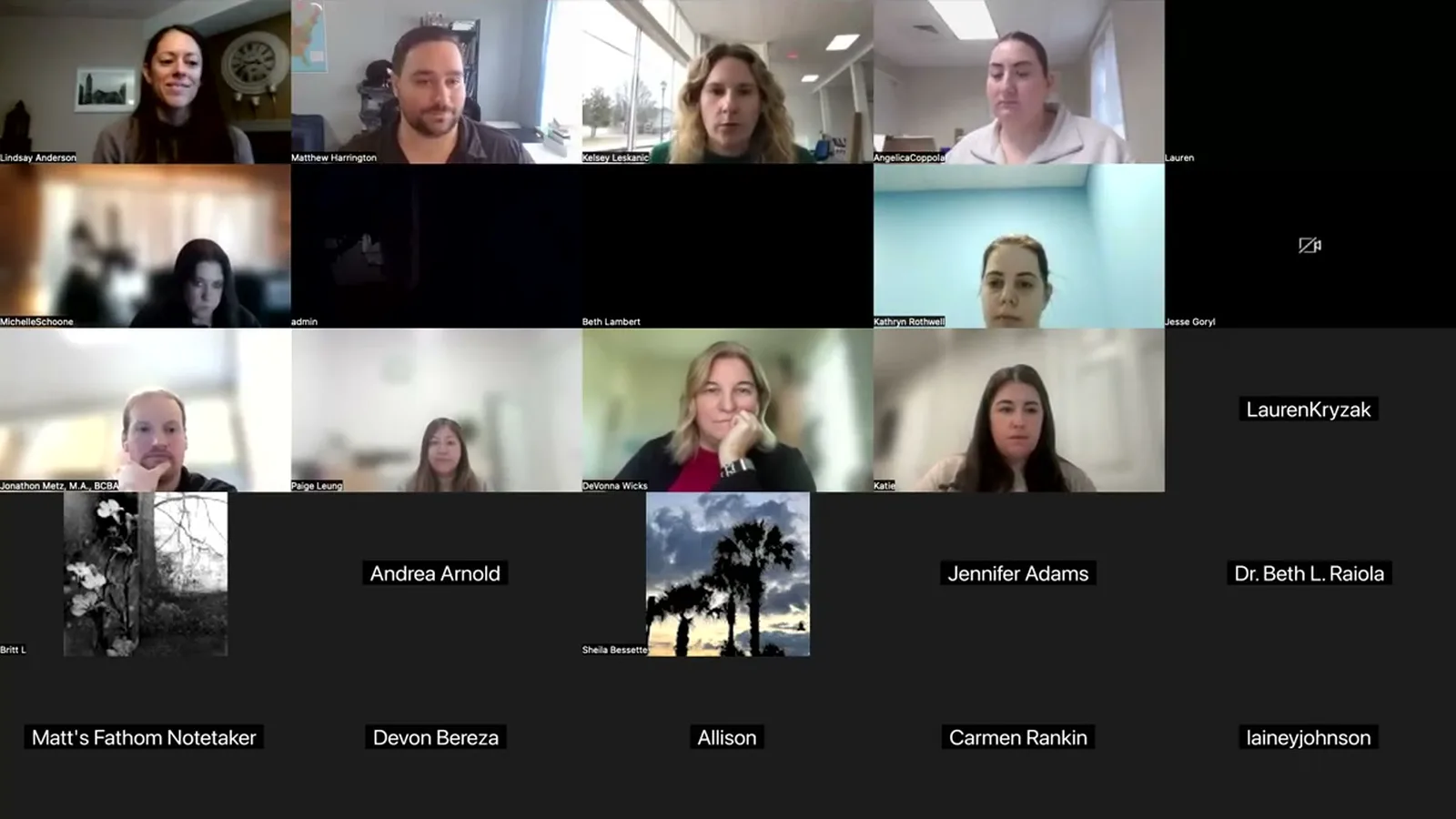
Why are they Waking up at 2 AM?
Free learning path on this topic
Child Development for Behavior Analysts
Typical development for behavior analysts. Kristen Byra's overview, then Kelly Brzak's deep dives on ages 2 to 5, 6 to 8, and 9 to 11, with milestones, common problem behaviors, and programming tips for each band.
Experts who cover this
The recording behind this guide covers children's sleep habits questionnaire.
- Featured talk1 CEU
Why are they Waking up at 2 AM?
Lindsay AndersonThe Behaviorist Bookclub
Describes the CSHQ as a 23-item parent-rated pre-assessment tool that can be completed remotely and used to narrow down the focus before a full sleep…
On this page · 6 sections▾
The Children's Sleep Habits Questionnaire, or CSHQ, is a short survey parents fill out about their child's sleep. It asks how often certain sleep behaviors happen and whether they cause problems. It is a screening tool, not a full diagnosis.
This matters because sleep problems are very common in autistic children. Poor sleep can hurt learning, mood, and behavior during the day. A quick parent survey helps a BCBA see the shape of a problem before doing deeper work.
What the CSHQ measures#
The CSHQ asks parents to rate real bedtime and nighttime behaviors. Parents mark how often each one happens and if it bothers the family. Lindsay Anderson describes the version she uses.
a children's sleep habits questionnaire or the CSHQ. And that's going to be a 23 item questionnaire that asks parents to rate behaviors that their child might engage in as sometimes, rarely or usually, and then whether or not that behavior is a problem for them. From the talk — Lindsay Anderson
So the tool captures two things at once. It shows how often a behavior happens. It also shows how much stress it causes. Both facts help you decide where to focus.
Why the item count is different#
You may see the CSHQ listed with different numbers of questions. This is not an error. There is more than one version in use.
Dr. Emily Ice describes a longer form of the same tool.
The Children's Sleep Habits Questionnaire is another parent-completed questionnaire. It's 33 questions, and it focuses more on... the habits that are surrounding bedtime. From the talk — Dr. Emily Ice
The original CSHQ has 33 items. A shorter 23-item version was later built for autistic children. Both come from the same tool, so pick the one that fits your population and setting.
A first step, not the whole picture#
The CSHQ is a starting point. It helps you narrow your focus before a longer assessment. It does not replace a full sleep evaluation.
Ice notes that it can flag more serious issues too.
it does screen for some of the more complex sleep disturbances, such as night terrors. From the talk — Dr. Emily Ice
This makes the CSHQ useful as an early filter. A parent can finish it from home before you meet. The answers point you toward what to ask about next.
How BCBAs use it in practice#
 Advertisement
Use the CSHQ to guide your questions, not to hand out labels. The scores tell you where sleep is breaking down. From there you dig deeper with interviews and data.
Send it early, even before the first full visit. Parents can complete it on their own time. This saves session time for the harder work.
Watch the "is it a problem" column closely. A behavior may happen often but not bother the family. Another may be rare but very stressful. That gap helps you set goals that matter to the parents.
Pair the CSHQ with other data when you can. A simple sleep diary adds detail the survey misses. The survey shows the pattern. The diary shows the timeline, night by night.
You can also repeat the CSHQ later in treatment. Give it the same way each time. Note the date and who filled it out. Then compare the two sets of answers to track change.
What the research says#
Researchers have studied how well the CSHQ holds up for autistic children. One team tested the 33-item version in nearly 2,900 kids in the Autism Treatment Network. They found a shorter 23-item, four-factor version that may fit this group better (Modification of the Children's Sleep Habits Questionnaire for Children with Autism Spectrum Disorder).
Another study looked at preschoolers with autism. It could not confirm older factor models but found a new five-factor structure that fit the data well. The sleep scores were tied to aggression, anxiety, and attention problems, not to autism symptoms themselves (Factor analysis of the children's sleep habits questionnaire among preschool children with autism spectrum disorder).
Sleep gaps also differ by sex. In one study, almost 85% of autistic girls showed sleep problems on the CSHQ. That was higher than autistic boys and higher than peers without autism (Delayed Milestones and Demographic Factors Relate to the Accuracy of Autism Screening in Females Using Spoken Language).
The tool also shows up in studies of daily habits. One study followed 108 autistic children ages 6 to 12. Kids with heavy, problematic screen time had more severe sleep disturbances on the CSHQ. Differences in sensory processing helped explain that link (Problematic Screen Exposure and Sleep Disturbances in Children With Autism Spectrum Disorder: The Mediating Role of Sensory Processing).
Researchers also use the CSHQ next to objective tools. A pilot study in China tracked 53 children with wrist actigraphy, sleep diaries, and the CSHQ. Autistic children showed more bedtime resistance, longer time to fall asleep, more night waking, and shorter sleep. Night waking was a key correlate of behavior problems in both groups. Longer daytime naps also softened the tie between poor sleep and behavior problems (Unlocking the Potential of Habitual Napping to Moderate the Association Between Sleep Disturbances and Behavioral Problems Among Autistic and Typically Developing Children).
FAQ#
How many questions are on the CSHQ?
The original CSHQ has 33 questions. A shorter 23-item version was made for autistic children. Both come from the same tool, so check which one you have.
Who fills out the CSHQ?
A parent or main caregiver fills it out. They rate how often each sleep behavior happens. They also note whether it is a problem for the family.
Is the CSHQ a diagnosis?
No. It is a screening tool that flags possible sleep problems. It helps you narrow your focus before a full sleep assessment.
For a look at how sleep and reinforcement connect during the night, see Waking to Reinforcement.
 Advertisement
Turn this topic into a CEU
You just studied this. Now get credit for it.
Watch Why are they Waking up at 2 AM? with Lindsay Anderson and earn 1 free BCBA CEU. Detailed certificate, delivered the moment you finish.
Keep going with a free learning path
Child Development for Behavior Analysts
Typical development for behavior analysts. Kristen Byra's overview, then Kelly Brzak's deep dives on ages 2 to 5, 6 to 8, and 9 to 11, with milestones, common problem behaviors, and programming tips for each band.
Parent or caregiver? Find a vetted ABA provider near you on ProviderSpark.