Your Signature Offer Blueprint + First Funnel
Presented by Mellanie Page
Cancel any time. Cert delivered to your inbox the moment you pass the quiz.
About this CEU
This session shifts clinicians from provider mindset to CEO mindset by teaching them how to identify, structure, and package their expertise into a signature offer. Many helping professionals struggle to articulate what they would actually sell online, despite having years of clinical experience solving complex problems. This workshop introduces the Problem > Promise > Pathway framework - a systematic approach to transforming clinical knowledge into marketable coaching programs or digital courses. Participants will examine real examples of both coaching and course-based offers within the clinical space, learning how the natural steps they already use to solve client problems can become the modules of a course or the structure of a coaching program. Rather than overwhelming attendees with multiple product ideas, this session emphasizes the power of starting with one focused offer that solves one specific, aligned problem for their ideal audience. Clinicians will leave with clarity on what to build first and confidence that they already possess the expertise needed to create transformative outcomes for their future clients or students.
Credits
0 CEUs · 75 min
From the talk
What was covered
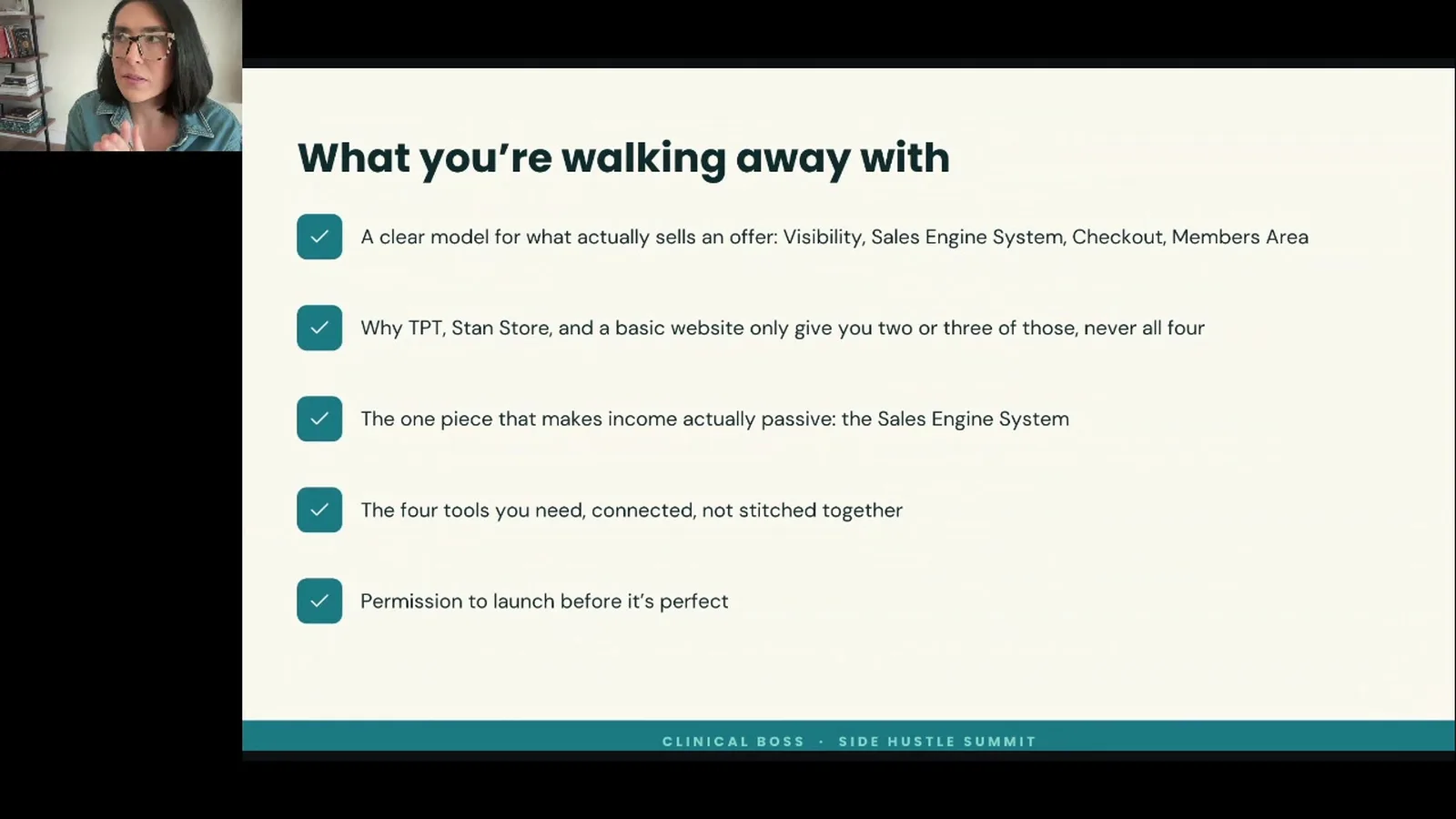
Turn clinical expertise into one offer using Problem, Promise, Pathway. Then build the four funnel parts that sell it.
- Write your offer as one exact person, one exact pain, and one exact outcome with a date attached.
- Base your promise on your best average result. Add a disclaimer and let the buyer own their part.
- Test every step of your pathway with one question: can someone answer yes or no to it?
- Map the client's milestones, not your intake steps, so the pathway shows what changes inside the person.
- Pick one problem and one dream client first, because a focused offer outsells a long menu of services.
- Audit your funnel against four parts: visibility, a sales engine, checkout, and a place to deliver.
From Provider Mindset to CEO Mindset
Mellanie Page opened with a claim that lands hard. You have been selling change for years. You move people from where they are to where they want to be. You already have a method. The insurance model just paid for that work in one narrow way: by the hour worked.
She split this into two mindsets. A provider mindset says, I bill the hours I work. You trade time for money, and the clock sets your ceiling. A CEO mindset says, I solve one problem and I package the solution. Your credential (the letters after your name) is the credibility. Your method is the product. It is the bridge from point A to point Z.
In the insurance model, someone else prescribes almost everything. They decide who you may serve, how you serve them, what is approved, and what gets paid. Page asked the room to flag that in the chat, and the ones poured in. With your own offer, those calls are yours: who you serve, how you deliver, and what is included.
She also named the quiet blocker. Most of us carry a rough learning history (past events that shape what we do) around selling. We have all met the sleazy salesman. Her answer was to separate yourself from that event. Your intent is your own. Run a values aligned business and get comfortable saying what you do.
You don't have an idea problem. But you may have a packaging problem.
From the talk — Mellanie Page
The Problem > Promise > Pathway Framework
The spine of the workshop was three words: Problem, Promise, Pathway. The problem is the specific painful thing your dream client is stuck on right now. The promise is what is true for them after they work with you. The pathway is the set of steps that actually gets them there.
Page called the pathway a bridge. The problem is one bank and the promise is the other. Each step is a plank you know will hold. The trap is teaching everything you know. You teach the functions (the reasons behind a behavior), then every way to treat every function, then every exception to that. The bridge gets heavy and your client stops walking.
Her line for this was simple: when you lose the focus, you dilute the outcome. She repeated it on purpose. Freedom in this model comes with one requirement. The offer has to work. Structure is most of what makes it work.
If your client gets to the outcome, you will never have to market again.
From the talk — Mellanie Page
Naming a Problem Specific Enough to Sell
Vague problems do not sell, and they do not help either. Page pushed for the exact person, the exact situation, and the exact pain. Her example: a mom who swore her child would never sleep in her bed. The child is five now. The crying starts at the same time every night. She is too exhausted to fight it, so she says yes.
Notice what that does. A parent living that reads it and knows it is about them. A phrase like better sleep does nothing. Specific problems also keep your pathway honest, because you can see where the finish line sits.
She gave a second example from supervision. A BCBA (board certified behavior analyst) candidate is curious about OBM (using behavior science at work). Everyone else around them offers standard clinical supervision. That gap is the problem. Name the gap clearly and the rest of the offer gets easier to build.
How to Promise an Outcome Without Overpromising
The promise is not better sleep. It is the exact outcome and by when. Page used a Saturday morning test. Picture tomorrow morning for your client. What is happening that was not happening before? Can they play with their child on the rug? Can they breathe through the hard minutes? Can they start a different kind of conversation?
For the sleep example, her promise was concrete. The toddler falls asleep in their own bed, without you in the room, within about two weeks. She set that against a softer line like you will feel more confident. Brains want a concrete picture. Few people buy confidence on its own.
So how do you stay honest? Her answer was the best average result. What does your average committed client achieve? That is your promise. Add a results disclaimer and be transparent that some people will not get there. Then hold the line, because the buyer carries their own part of this. You can engineer the environment and set up motivation. You cannot walk the bridge for them.
One attendee described a company that promised toilet training, then blamed the parent when it did not happen. Page did not defend that. The fix is honesty, not vagueness. She says openly that some members in her program do not succeed. She stays confident in the method anyway. She also warned against shrinking your claims out of fear, because you are producing real outcomes.
And again, you do not have to promise it to everyone.
From the talk — Mellanie Page
Building a Pathway of Verifiable Steps
Every step in the pathway has to pass one test. Can you answer yes or no? A module called communicate better fails, because there is no way to check it. A step like identify the trigger for co-sleeping passes, because you can check whether it happened. That sniff test keeps you moving toward the outcome.
Then reverse engineer from the promise. For the sleep offer, the steps were clear. Identify what is triggering the co-sleeping. Map a replacement behavior (a new response to use instead) to that trigger instead of a random sleep script. Practice fading (slowly stepping back) out of the routine. Build a plan for the regression night. Four planks, and you can check each one.
Page also caught a common mix up in the chat. Some people listed their intake steps as the pathway: complete the form, schedule the intake, receive the report. Those are your logistics, not the client's milestones. Ask what is actually changing inside the client at each stage. Some of it may be mindset, not technique.
The analogy she used will feel familiar. A newer clinician pulls fifty targets from the VB-MAPP (a common skills checklist) and twenty more from another tool. The learner masters some targets and still makes no meaningful progress. A seasoned clinician stacks skills so they compound, generalize (carry over to new places), and maintain over time. Offers work the same way.
Structure is the shortcut, it's the secret.
From the talk — Mellanie Page
Why You Build One Offer First
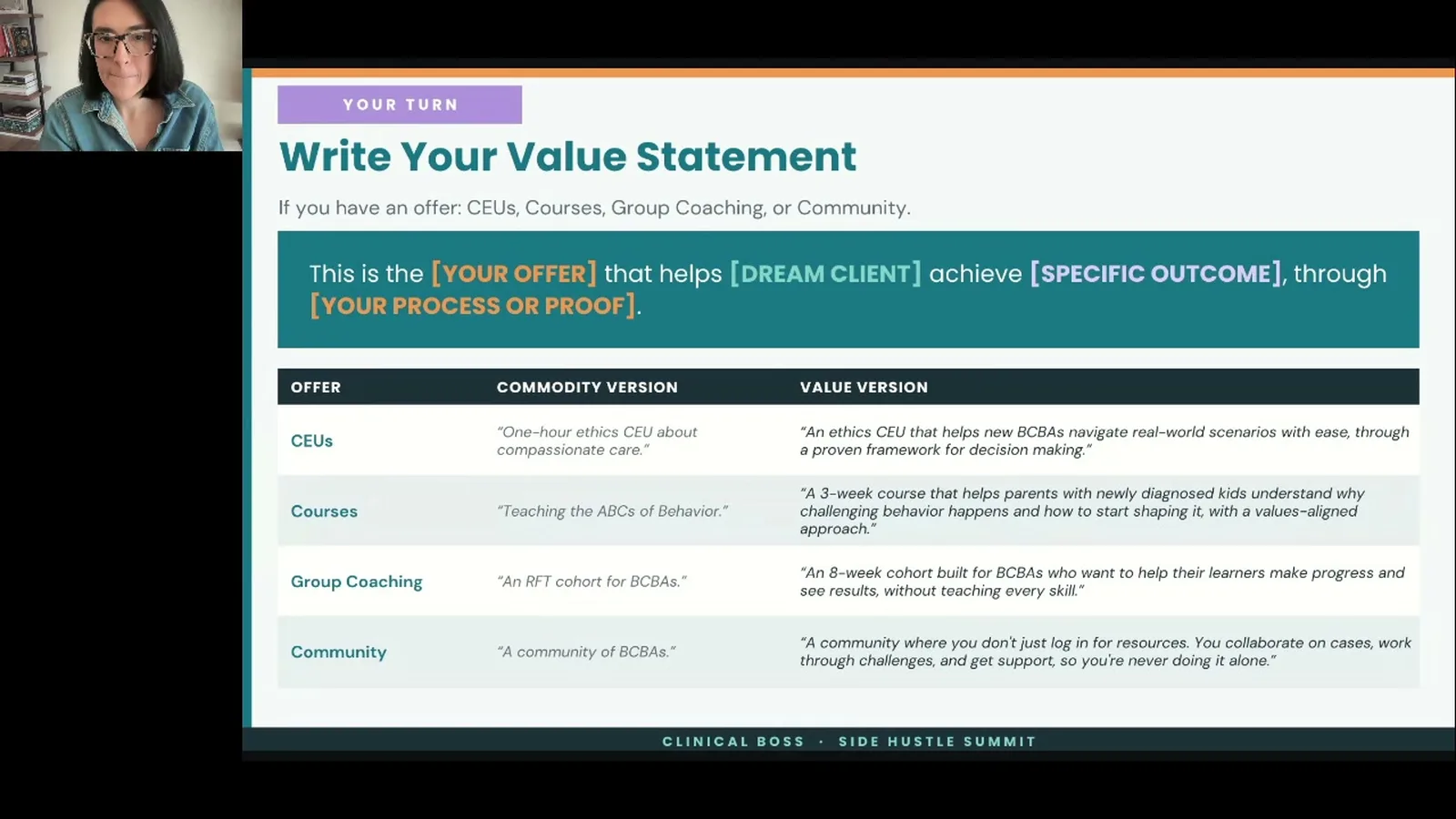
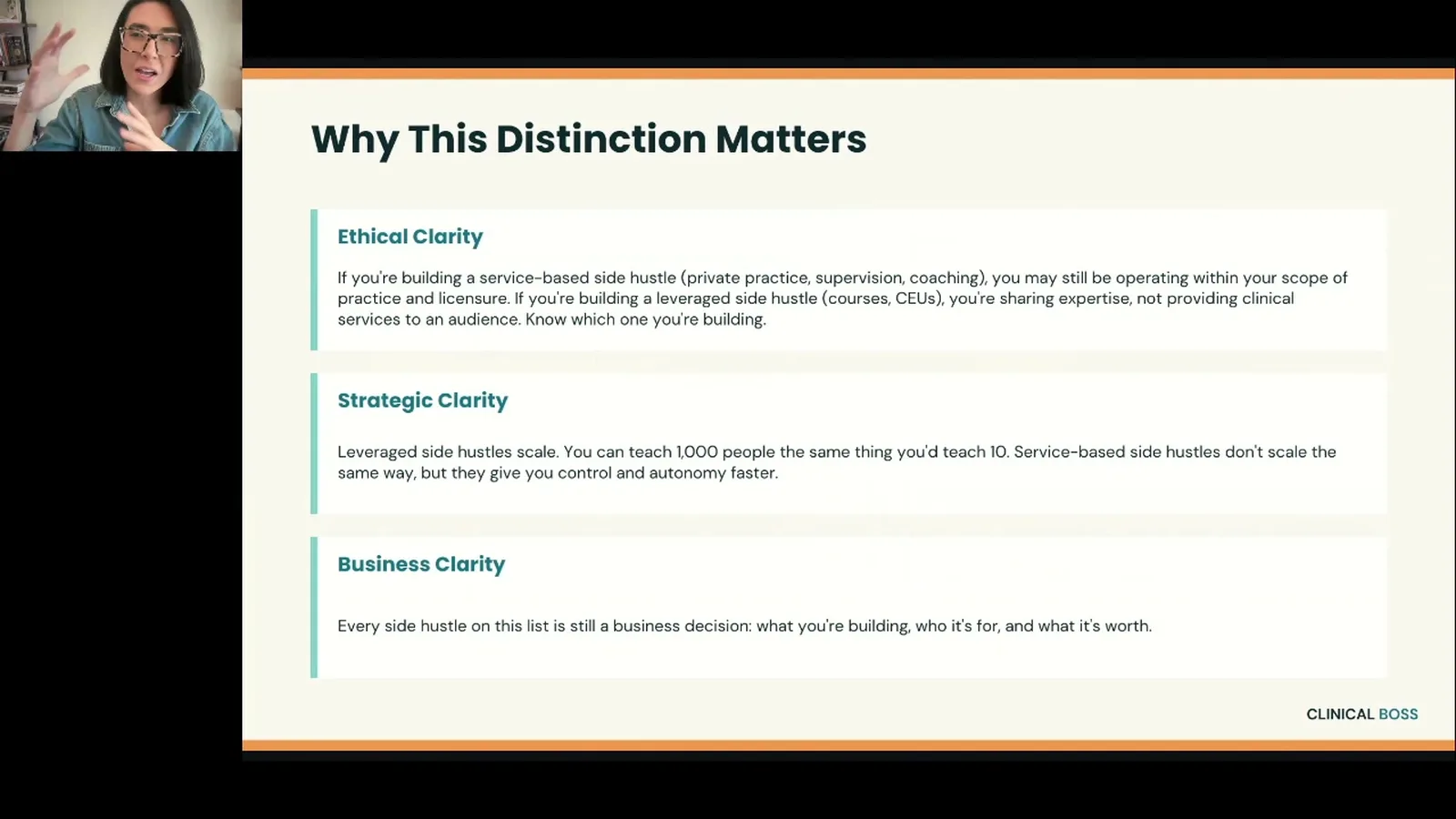
Once the pathway exists, the format follows. If you coach, the steps become your sessions. If you build a course, the steps become your modules. If you build a CEU (a continuing education unit for licensed professionals), the steps become the concepts you teach. The pathway is your content outline.
Page was firm about scope. The biggest mistake new business owners make is building everything at once. You try to solve eighteen problems and write the full guide to parenting with ABA (applied behavior analysis). One problem and one clear dream client wins instead. She pointed to one attendee focused on performance management and said that narrow focus will outsell broad business consulting.
To find your one problem, she offered three prompts. What do people always come to you for advice on? What change have you helped someone make more than once? What makes you light up when you talk about solving it? Friends and family count here. It does not have to come from billable work.
If you are multi-passionate, you are not disqualified. She said her best results came from staying focused on one thing at a time. She later used that credibility to expand into other areas. Extra free resources are fine if they share a through line. Those resources also give you data. If one takes off, that may be your next offer.
So one problem. One dream client. One offer is the goal.
From the talk — Mellanie Page
The Four Components of Your First Funnel
A funnel (the path a buyer takes to buying) is not mysterious. Page described it as engineered momentum. You heard about it. You looked into it. You started to trust it. You bought it. Everyone in the room had walked that path as a buyer. Often it started with an ad that felt a little too well targeted.
She broke the system into four parts. Visibility is how people learn you exist. That can be weekly posts, a blog, a workshop, or a summit talk. It can also be a lead magnet (a free resource that draws people in). A sales engine system (emails and content that build trust) does the follow up for you. Checkout is one click to pay with instant access. A members area (where buyers get what they paid for) delivers the course, the community, or just your calendar.
The sales engine is the part most people skip, and visibility alone goes nowhere without it. It handles objections for you. Is this too expensive? Do I have time? Will it really work? Are you really an expert? Page compared manual outreach to working a conference booth alone. One chatty visitor holds you for twenty five minutes while ten people walk past. A sales engine is like having twenty people at that booth.
She also pushed back on the fantasy. Trust can build while you sleep, but someone has to build the system first. On exposure, she said the old rule of seven touches no longer holds. Newer numbers are multiples of that, she said. She called the current climate a trust recession. Her own list hears from her at least once a week for that reason.
This is the heavy hitter. This is what actually makes you money.
From the talk — Mellanie Page
Marketplaces, Websites, and the Gaps They Leave
Marketplaces come with traffic, and that is real. They also come with over a million products under the special education category alone. You do not own the buyer. Policy bars you from adding those buyers to your email list. That means you cannot start a follow up conversation. A string of small one time sales is a nice something. It is not a business you can scale.
A checkout only store works for a few people. If you see that succeeding on Instagram, you are watching an outlier with a large warm audience. The trust got built somewhere else first. A website alone leaves a different gap. Websites do one thing well. Then you need a separate place for the course, the calendar, email, and downloads. Your funnel ends up spread across tools that do not talk to each other.
Two practical notes closed the session. Email means an email service provider (a tool built for mass email) that tracks subscribes and unsubscribes. Blind copying your whole contact list is an easy way to get in trouble. On privacy, Page drew a clean line: your marketing list is not your client list. HIPAA (the health privacy rules) matters once someone becomes a client. You deliver that care through a protected system.
Page sells an all in one platform to her own members and said so plainly. She also said the tool was not the takeaway. The takeaway was the four parts. A leveraged offer (one that sells without you working each sale) only works when it is truly leveraged. If you are still doing every step by hand, you have built a second job instead of a second income.
marketplace can sell your offer, but they were never built to sell it for you
From the talk — Mellanie Page
Common questions
What is the Problem > Promise > Pathway framework?▾
It is a three part structure for packaging clinical expertise into an offer. The problem is the exact pain your dream client faces right now. The promise is the exact outcome they reach and by when. The pathway is the set of steps that bridges the two, where each step can be answered yes or no.
How do I promise results when I cannot control whether the client follows through?▾
Base the promise on your best average result, not on a guarantee for everyone. Page recommends a results disclaimer and plain transparency that some people will not get there. The buyer carries responsibility for doing the work. You engineer the environment and set up motivation, but you do not hand hold anyone across the bridge.
Should I sell my digital resources on Teachers Pay Teachers or Etsy?▾
Page says no for anything you want to grow. Those platforms own the customer, and their policy stops you from adding buyers to your email list. That means you cannot follow up, offer anything else, or build a relationship. Build your own marketplace instead, even a small one, so you keep the contact.
Do I need a HIPAA compliant tool to market a parent coaching offer?▾
Page separated the front end from the delivery. People on your marketing list are not your clients yet. You are not collecting protected health details just to send them a free resource. Once someone becomes a client, you move that work into a protected system. She also noted that a general mass email tool is not HIPAA compliant, so do not hold clinical conversations there.
I have several interests. Do I have to pick just one?▾
For your first build, yes. Page said her best results came from staying focused on one thing at a time. She later expanded once she had credibility. You can still put out other free resources if they share a through line. Those resources double as data about what your audience wants next.
How do the steps in my pathway turn into an actual product?▾
Directly. If you coach, each step becomes a session. If you build a course, each step becomes a module. If you build a CEU, each step becomes a concept you teach. The pathway you reverse engineered is already your content outline.
About the speaker
Mellanie Page led this session as part of a multi session side hustle summit for clinicians. In it she walked behavior analysts through the Problem > Promise > Pathway framework, the four components of a first funnel, and the tool choices that commonly trap new business owners. She also shared her own missteps, including a website she paid a developer to build and never used, plus the patchwork of disconnected tools she later scrapped.
This summary was generated from the recording’s transcript. Quotes are taken word for word from the talk.
What you'll learn
- 1Learn how to package your expertise for results. Discover the four components you need in your funnel. Design a system that creates passive income.
Concepts in this CEU
Related talks
Talks that cover the same concepts
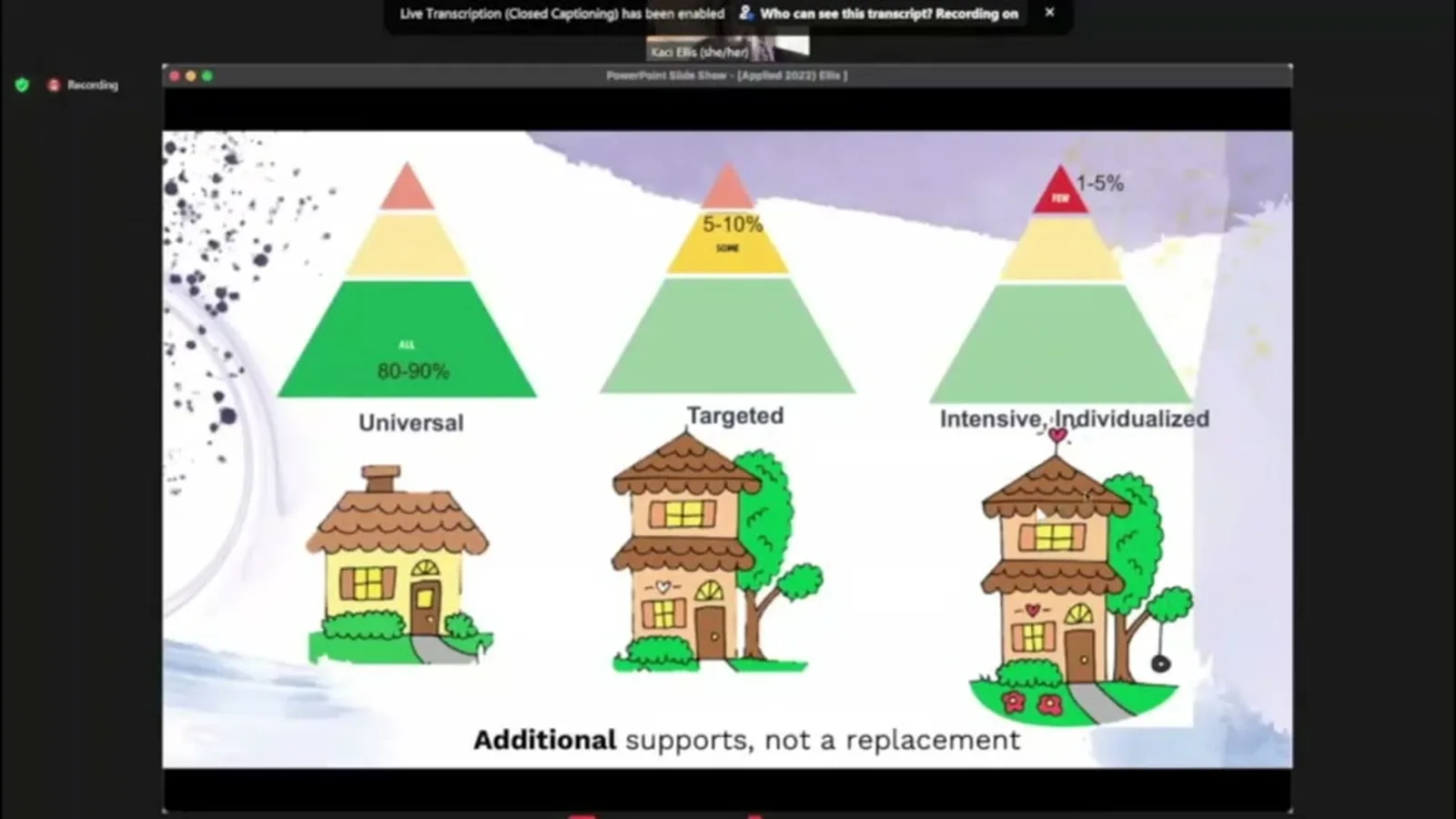
Practical Takeaways for School-Based Behavior Analysts
The Behaviorist Bookclub
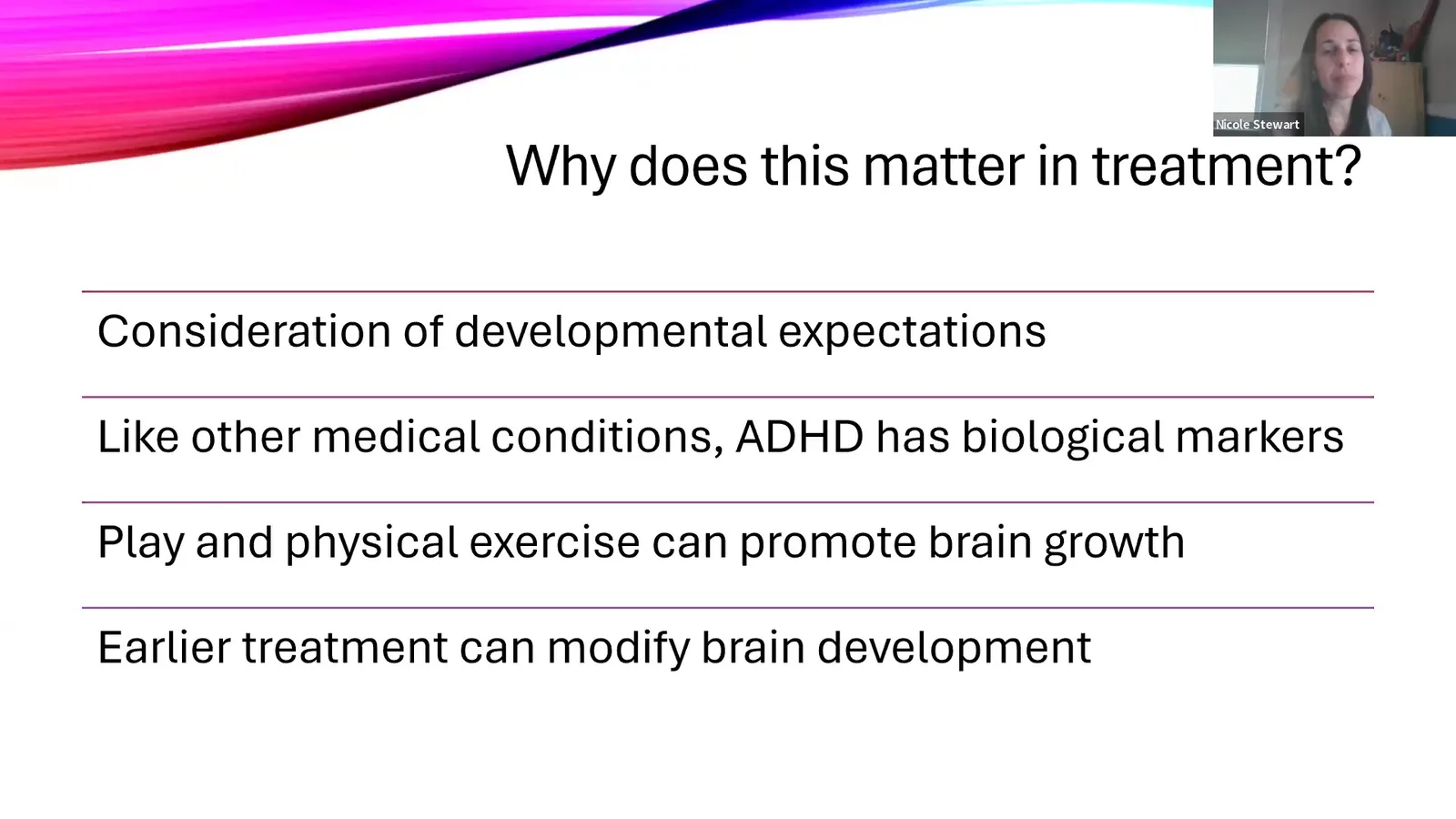
The ADHD Exchange: Understanding the Neurobiology of ADHD
ABA Made Ez
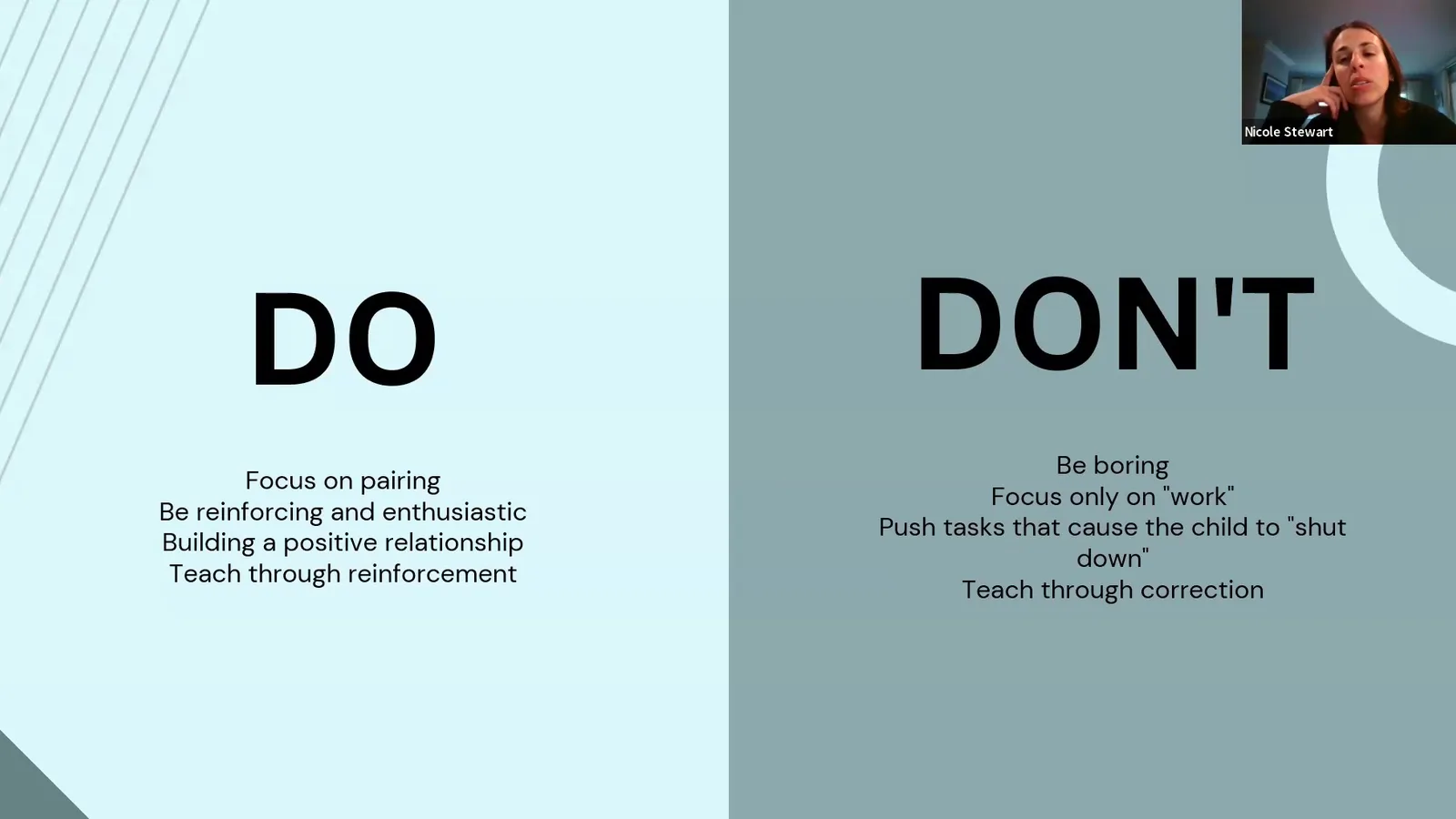
The ADHD Exchange: Best Practices
ABA Made Ez

Real World” BCBAs, the “Behavior Crisis”, and Pathological Demand Avoidance
The Behaviorist Bookclub

Beyond Competence: Using ACT to Cultivate Psychological Flexibility in Behavior Analytic Supervision
Rooted Consultation, LLC

Providing Fieldwork Supervision in a School Setting
Rooted Consultation, LLC
More from The ABA Collective, LLC.
OpenCEU is supported by advertising from third-party sponsors. Sponsors are clearly labeled, have no influence over course content, instructors, or CEU decisions, and never appear on certificates. The BACB does not sponsor, approve, or endorse OpenCEU sponsors or their products.