How to Run a Staff Debrief After a Client or Resident Dies
A debrief script and structure for DSPs and BCBAs after a client death, with what to say and what to avoid, from a BCBA-led CEU.
Key takeaway
A staff debrief after a client death is a short, structured meeting where the people who cared for that person sit together, name what happened, name what they felt, and write down what they will do for the residents who are still here.
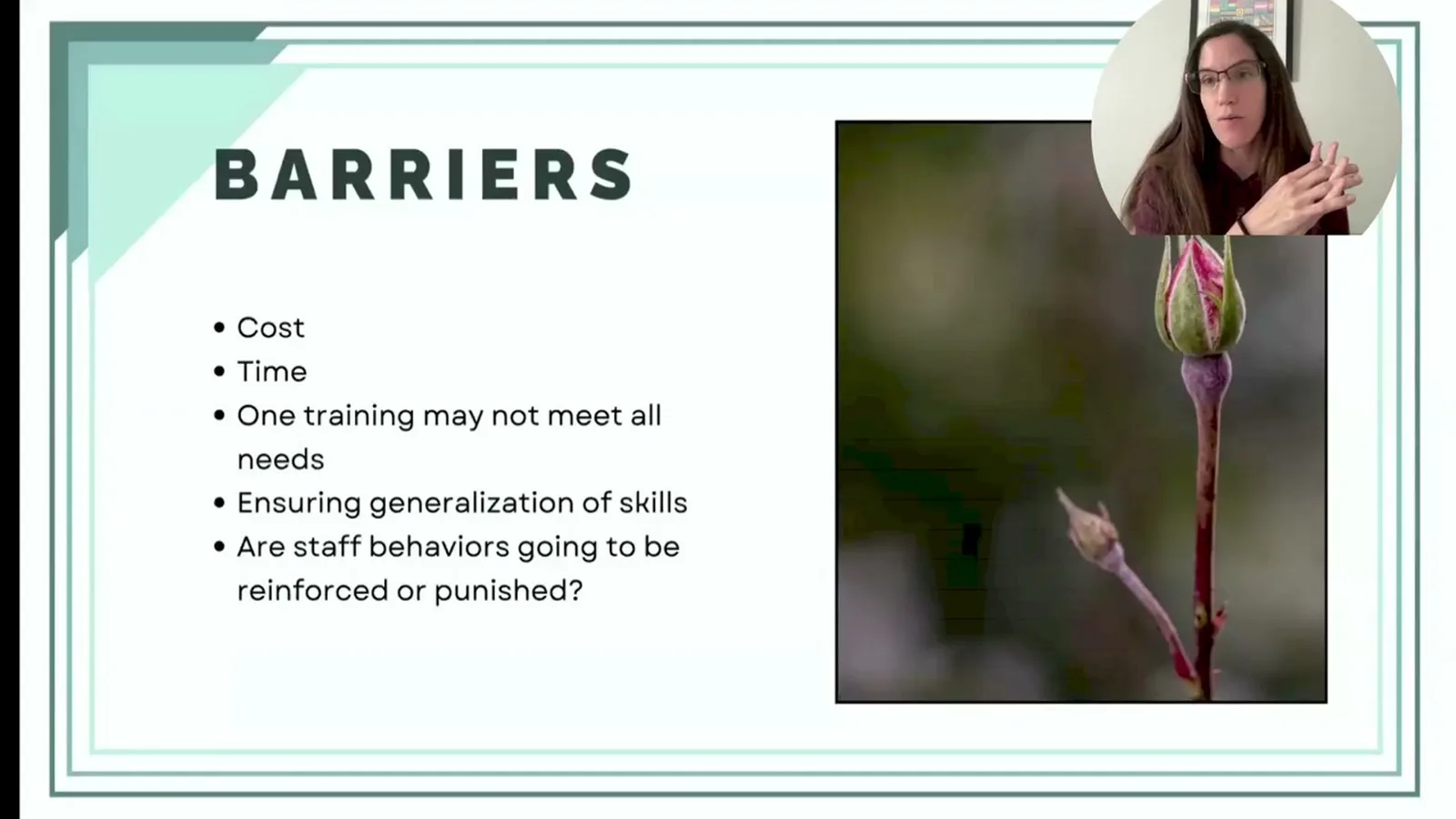
Grief Support at the Front Lines: Training Day Hab and Group Home Staff to Support Adults with IDD Through Bereavement
Free learning path on this topic
PDA and Demand Avoidance
B. Kuereine Gray's three PDA talks plus Clelia Sigaud on the logic of anxiety. What PDA is and isn't, how to collaborate with caregivers, how to handle complex profiles and replacement behaviors, and why demand-avoidant learners respond the way they do.
On this page · 8 sections▾
A staff debrief after a client death is a short, structured meeting where the people who cared for that person sit together, name what happened, name what they felt, and write down what they will do for the residents who are still here. The case that proves why this meeting must exist: a young woman in a group home had just lost her mom. Her aunt called her on the phone. The aunt heard the staff walk in and start yelling at the niece to be quiet so the other residents would not have behaviors. That staff member was not a bad person. She was a person with no training, no script, and no one to debrief with. A 30 minute meeting could have changed what came out of her mouth that day.
This page gives you a script you can run tonight. It is written for BCBAs, program directors, and lead Direct Support Professionals (DSPs) in day habilitation programs and group homes that serve adults with intellectual and developmental disabilities (IDD).
Why debriefs matter more in IDD settings than in most workplaces#
In an office, a coworker who dies has a family who handles the funeral, a friend group who shows up at the wake, and an HR department that sends a card. The grief is shared across many rooms.
In a group home, the person who died was someone the DSP fed, dressed, gave meds to, and watched TV with for years. The DSP is the family. The DSP is also the one telling the other residents what happened. And the DSP is the one absorbing the questions that come back every hour for the next three weeks.
That is too much weight for one person to carry on a regular shift. The debrief is the place where the weight gets put down for 30 minutes so the staff can pick it back up in a better way.
A lot of our staff also come in with a history. They come in with their own grief. To hold space for grief that maybe you haven't dealt with and help someone else who's grieving can be really, really difficult. From the talk — Tricia Lund
When to hold the debrief (within 48 hours, before the next shift)#
Hold it within 48 hours of the death. Ideally before the next full shift. If the death happens on a Friday night, do not wait until Monday standup. People will already be raw, already snappy, and already coping in ways you do not want them coping.
Two practical timing rules:
- Schedule it for paid time. If the staff has to clock out to attend, they will skip it. If they stay past their shift, they will resent it.
- Hold it before you write the behavior plan updates. The debrief is for the humans first. The plan comes after.
If your full team cannot meet in one room, run the same script twice. Once with the day shift. Once with the overnight shift. Do not let any shift be the one that did not get to talk.
A simple debrief script you can run in 30 minutes#
This is a script. Read it out loud if you need to. The goal is not eloquence. The goal is that every person in the room gets to say something out loud, hears that other people felt the same way, and walks out with one clear action.
Minutes 0 to 2. Open the room.
"Thank you for being here. [Resident's name] died on [date]. We are here for 30 minutes to talk about what happened, what we are feeling, and what we want to do for the other residents who are still here. I am going to assume everyone in this room cared about [Resident]. If something I say lands wrong, tell me. We can fix it in the room."
Minutes 2 to 12. Go around the circle.
Ask one question. "What is one thing you are carrying from this week?" Let each person answer for one or two minutes. No interrupting. No fixing. No "at least." If someone passes, that is fine. Come back to them at the end.
Minutes 12 to 22. Name the hard stuff.
"Sometimes when someone dies, we react in ways that surprise us. We get short with the other residents. We want to change the subject. We start a coloring sheet instead of letting someone cry. None of that makes you a bad person. It means you are tired. Has anyone noticed themselves doing something like that this week?"
This is the part of the meeting that protects the residents. Naming distraction, irritation, and avoidance out loud takes them out of the shadows. Once they are named, the team can watch for them.
Minutes 22 to 28. Plan for the residents who are still here.
Ask three questions:
- Who is asking the most questions about [Resident], and what are we saying back?
- What are we keeping in the home that reminds us of [Resident]? A photo, a pillow made from a t-shirt, a candle.
- What is the anniversary plan? Mark the date on the calendar now, even if it is a year away.
Minutes 28 to 30. Close.
"Thank you. One more thing. If any of you are struggling tonight or next week, here is who you can call." Hand out a paper with the EAP number, your number, and the local crisis line. Paper, not an email. Email gets ignored.
What to surface: distraction, irritation, the staff's own grief history#
Three things almost always come up, and three things should be named even if no one volunteers them.
Staff irritation with the resident who keeps asking. A resident whose dad just died will ask "where's dad?" again and again. The staff will explain. The resident will ask again 20 minutes later. By the third day, the staff is short. Name this out loud. The repeated question is not the resident being difficult. It is the resident checking, because the brain has not made the death permanent yet.
Distraction as a shortcut. This is the most common quiet harm. When a resident starts to cry about their mom, the staff suggests a coloring sheet, a snack, or the cooking class on the schedule. It works for 20 minutes. It also tells the resident that their grief is not welcome in this house. Name distraction in the debrief so the team can catch each other doing it.
Even if we're not talking about punishment, there is a tendency for staff to use strategies that might exacerbate the grief later on. They might use distraction. Well, we're not going to talk about right now, focus on your coloring sheet. From the talk — Tricia Lund
The staff's own grief history. Many DSPs are working this job because life got hard somewhere else. They have buried parents, siblings, partners, children. A resident's death in the home will pull on all of it. You do not need a therapist in the room to ask "is this bringing up anything from your own life?" You just need to ask.
The three things to name even if no one volunteers them: the "easy" resident (the one who suddenly stopped having behaviors and went quiet, which is grief, not progress), the somatic stuff (new complaints of stomachaches, headaches, sleep changes), and the staff member who has been clocking extra hours since the death.
What NOT to do: don't make it a behavior planning meeting#
Do not turn this into a behavior planning meeting. That meeting happens later, with the BCBA, with data. The debrief is a different thing. If it turns into "what are we going to do about Joe's elopement," the staff who needed to cry will swallow it and leave.
Do not skip the staff who say "I'm fine." They are usually not fine. Circle back at the end of the meeting and ask one more time, gently.
Do not promise things you cannot deliver. Do not say "we are going to get everyone grief therapy." You probably are not. Say what you can actually do this week.
Do not use the word "passed" or "lost." Use "died." The residents in this home will mirror the language you use. If you sound uncomfortable, they will think death is a thing you do not say out loud, and they will stop bringing it up.
I think a lot of times they care. I've seen staff that don't care, but I also have seen staff that care. A lot of times with staff, it's coming from a place of caring, but the intent and the result are two different things. From the talk — Tricia Lund
Following up one week, one month, and one year later#
A single debrief is not enough. Put three calendar reminders on your phone right now.
One week. A 15 minute check-in at the next team meeting. Ask: how are the residents doing? How are you doing? What is harder than you thought it would be?
One month. A second 15 minute check-in. Look for the quiet residents who never spoke up. Look for the staff who started calling out sick. Both are grief signals.
One year. Mark the anniversary on the home calendar today. Plan one small ritual. A rice paper note dissolved in a stream. A photo set out on the table. A candle lit at dinner. The anniversary will hit the residents whether or not you plan for it. Planning makes the day feel held instead of ambushed.
Frequently asked questions#
Should a debrief be required or optional?
Required. Make it part of the protocol that triggers automatically when a resident dies. If it is optional, the staff who need it most will skip it, and the ones who attend will feel singled out.
Who should facilitate the debrief if there's no BCBA on site?
The program director or the lead DSP. Facilitating a debrief does not require a clinical license. It requires a script (this one), 30 minutes of paid time, and a willingness to sit in the room without fixing anything. If you are nervous, read the script out loud verbatim. That is allowed.
Can a debrief replace EAP or external counseling for staff?
No. The debrief is the team putting words to what happened together. EAP and outside counseling are for the individual staff member who needs more. A good debrief makes it easier for staff to use EAP because they have already said the hard thing out loud once.
Run the debrief, even an imperfect one#
A debrief that you actually hold is worth more than a perfect one you keep meaning to schedule. Pick a time in the next 48 hours, send the calendar invite, print the script, and walk into the room.
The 60 minute talk from Tricia Lund goes deeper into why staff respond the way they do, how to write behavior plans that do not punish grief responses, and what to include in a full DSP grief training curriculum. It is a free CEU.
Turn this topic into a CEU
You just studied this. Now get credit for it.
Watch Grief Support at the Front Lines: Training Day Hab and Group Home Staff to Support Adults with IDD Through Bereavement with Tricia Lund and earn 1 free BCBA CEU. Detailed certificate, delivered the moment you finish.
Keep going with a free learning path
PDA and Demand Avoidance
B. Kuereine Gray's three PDA talks plus Clelia Sigaud on the logic of anxiety. What PDA is and isn't, how to collaborate with caregivers, how to handle complex profiles and replacement behaviors, and why demand-avoidant learners respond the way they do.