Sleep Deprivation and Clinical Decision Making in ABA
Tired BCBAs make different calls. See what the research says about sleep loss and clinical reasoning, plus what to do, from a BCBA-led CEU.
Key takeaway
Sleep loss hits four cognitive systems we lean on every day: risk taking goes up, reasoning slips, planning falters, and problem solving gets slower, which means a tired Board Certified Behavior Analyst (BCBA) writes a weaker behavior intervention plan (BIP), misreads a graph at the end of a long day, and struggles to coach a parent through the same protocol they could explain in their sleep last month.
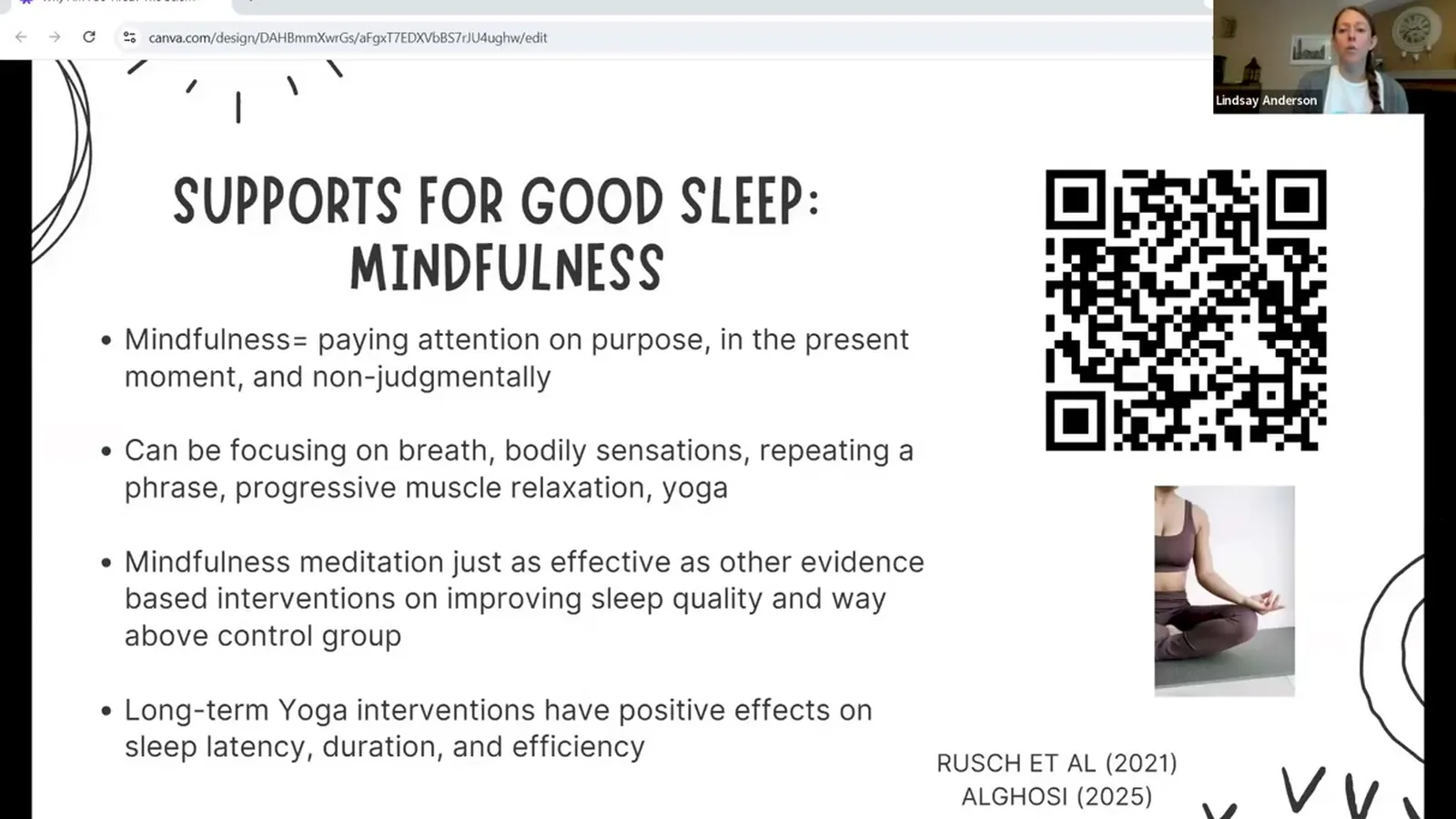
Why Am I So Tired? The Science of Sleep for BCBAs
On this page · 8 sections▾
Sleep loss hits four cognitive systems we lean on every day: risk taking goes up, reasoning slips, planning falters, and problem solving gets slower, which means a tired Board Certified Behavior Analyst (BCBA) writes a weaker behavior intervention plan (BIP), misreads a graph at the end of a long day, and struggles to coach a parent through the same protocol they could explain in their sleep last month. The good news is that one of the only evidence-backed buffers, sleep banking, is something you can start tonight. This page pulls the science from a BCBA-led talk and points it straight at the work you do.
What sleep loss actually does to reasoning and risk taking#
When you lose sleep, your prefrontal cortex is the first part of the brain to wobble. That is the part that weighs trade-offs, says "wait, let me think," and stops you from picking the fast answer when the careful answer is better.
In practice, that shows up as more risk taking. You might agree to a session change you would normally push back on. You might sign off on a data point that looks off. You might tell a parent "sure, that should be fine" when, rested, you would have asked two more questions first.
Decreased sleep duration has been shown to lead to increased work-related injuries, critical mistakes in the workplace... worse clinical decision making, worse problem solving, and more irritability. From the talk — Lindsay Anderson
The studies behind that quote use cognitive vocabulary BCBAs already respect: reasoning, decision making, planning, problem solving. These are the same skills your BACB ethics code expects you to bring to every session. When sleep is short, the skills are not gone, but they are slower and less accurate.
Why BIP writing and graph reading suffer first#
BIP writing and graph reading both ask a lot of the same prefrontal systems. You have to hold a lot of pieces in mind at once. The function, the antecedents, the replacement behavior, the data trend, the parent's capacity, the staff's training level. Working memory is exactly what gets thinner first when you are short on sleep.
Graph reading is the same picture. You scan a chart, hold the baseline in your head, compare it to the intervention phase, watch for a trend change, decide if the trend is real or noise. Tired brains take longer on every step, and they accept patterns that are not really there. That is how a flat line gets called "improving" and a treatment phase stays in place for two more weeks than it should.
Parent training rides on top of both. You are reading the parent's face for understanding while you explain the protocol while you watch the child while you remember to praise the right behavior. Sleep loss steals the spare attention you need to do all of that at once.
The four cognitive deficits to watch for in yourself#
This is the line worth taping to your monitor.
Cognitively, we see an increase in risk taking, deficiencies in reasoning and decision making, and impaired planning, coping, and problem solving. From the talk — Lindsay Anderson
Four things to watch for in yourself this week:
- Risk taking. Are you saying yes to things you would normally pause on? Are you trying a new prompt level without thinking through the data plan first?
- Reasoning. Are you skipping steps in your "why" when a parent asks why? Are you giving the answer first and the rationale second, or not at all?
- Planning. Are your session plans getting shorter and vaguer? Are you ending the day with more loose ends than usual?
- Problem solving. When a session goes sideways, are you reaching for the same one or two strategies instead of the full toolkit?
If two or more of these feel true, your sleep is part of the clinical picture, not separate from it.
Banking sleep before a heavy week#
You cannot store sleep forever. But you can stack a small buffer before a stretch you know will be rough. Conference week. Quarterly reviews. The week a new staff member starts and you are running double on supervision.
If you know you're going to be sleep deprived for a certain period of time, you can bank your sleep by sleeping more ahead of time, which can minimize the cognitive impairment that comes along with sleep deprivation. From the talk — Lindsay Anderson
In practice, that means looking at your calendar a week out. If you see a stretch where you will be on planes, in late client meetings, or buried in report writing, give yourself an extra hour the three or four nights before. That extra hour is not a luxury. It is the same kind of prep you do when you pre-read a file before a meeting. You are loading the brain before the demand hits.
What weekend catch-up can and cannot fix#
This is the part of the science that gets oversold the most. So here is the honest version.
We can never catch all the way back up on the health benefits after we've missed sleep. But one area that does recover more than others is heart health. So this study by LUO 2025 found that sleeping in on the weekends, as long as it was less than four hours, significantly lowered participants' risk of high blood pressure. From the talk — Lindsay Anderson
Read that carefully. Weekend catch-up helps your heart. It does not fully restore the cognitive systems you need at work on Monday. Sleeping in for ten hours on Saturday will not undo five short nights of dull decision making during the week.
Two practical reads on that:
- A small catch-up of one to two hours on a weekend morning is fine. The National Sleep Foundation supports it when weekday sleep is short.
- Do not use weekend catch-up as your main plan. It is a patch for your body, not a refund for your week.
A pre-session check you can do in 30 seconds#
Before your next direct session or parent training, run this short check on yourself. It takes about half a minute.
- How many hours of sleep did I get last night, and the night before?
- On a 1 to 10 scale, how clear is my head right now?
- Am I about to make a decision that needs reasoning, planning, or graph reading?
- If the answer to 3 is yes and 1 or 2 looks rough, what is the smallest version of the decision I can make right now, and what can wait until I am sharper?
This is not a self-judgment exercise. It is a clinical safety check. The same way you would not run a session with broken materials, you can name when your judgment is the resource that is running low. Sometimes that means rescheduling a high-stakes parent training. Sometimes it means asking a colleague to second-read a BIP before it goes out. Sometimes it just means writing the harder note tomorrow morning instead of tonight.
Frequently asked questions#
How many hours of sleep loss starts to affect clinical judgment?
The research does not give one clean number, but the pattern is steady. Going below the seven-to-nine hour adult range, even by an hour or two, starts to show up in reasoning, risk taking, and reaction time within a few nights. By the third or fourth short night in a row, the cost is hard to hide. The takeaway is not "one bad night ruins you." It is "two or three short nights in a row is already a clinical issue worth noticing."
Is it safer to reschedule a parent training when I am running on four hours?
Often, yes. Parent training is one of the highest-stakes things you do because the parent will keep running the protocol all week without you in the room. If your reasoning and planning are dulled, the chance that you skip a step, mis-explain the contingency, or miss a parent's confusion goes up. If you can move it by a day, move it. If you cannot move it, shorten the agenda to the one or two most important pieces, write the rest down, and follow up by email the next day when you are sharper.
Does caffeine actually offset the cognitive cost of a bad night?
Caffeine helps you feel more alert. It does not fully restore the deeper cognitive functions sleep loss damages. You will feel more awake, but reasoning, planning, and judgment do not return to baseline just because you had a coffee. Treat caffeine as a short-term tool to get through a session, not as a replacement for the sleep your brain actually needs. And keep an eye on the timing. The research in the talk says coffee should be cut off at least 8.8 hours before bedtime, or you start digging the next night's hole.
Where to go from here#
If this is the first time you have thought about sleep as a clinical variable instead of a personal habit, the talk this page is built on is a one-hour CEU from Lindsay Anderson. It walks through the four pillars of sleep, the most common barriers, and a concrete plan you can build for yourself this week.
Turn this topic into a CEU
You just studied this. Now get credit for it.
Watch Why Am I So Tired? The Science of Sleep for BCBAs with Lindsay Anderson and earn 1 free BCBA CEU. Detailed certificate, delivered the moment you finish.