Cognitive Defusion in ACT: Unstick From Your Thoughts
Cognitive defusion helps you see thoughts as words, not facts. Learn simple ACT defusion exercises BCBAs use to loosen sticky, unhelpful thoughts.
Key takeaway
Cognitive defusion is a skill from Acceptance and Commitment Therapy, often shortened to ACT. It helps a person step back from a thought. Instead of treating a thought as the truth, you see it as just words in your head.
Explore free BCBA CEU courses
Free learning path on this topic
Supervision, Done Right
Four supervision CEUs that build on each other. What reflective supervision is, how to build a supervision system, how to assess supervisee competence instead of counting hours, and how supervision affects provider outcomes. The BACB asks supervisors for three supervision CEUs per cycle. This covers it.
Experts who cover this
2 recordings on openceu cover cognitive defusion.
- 1 Supervision CEU
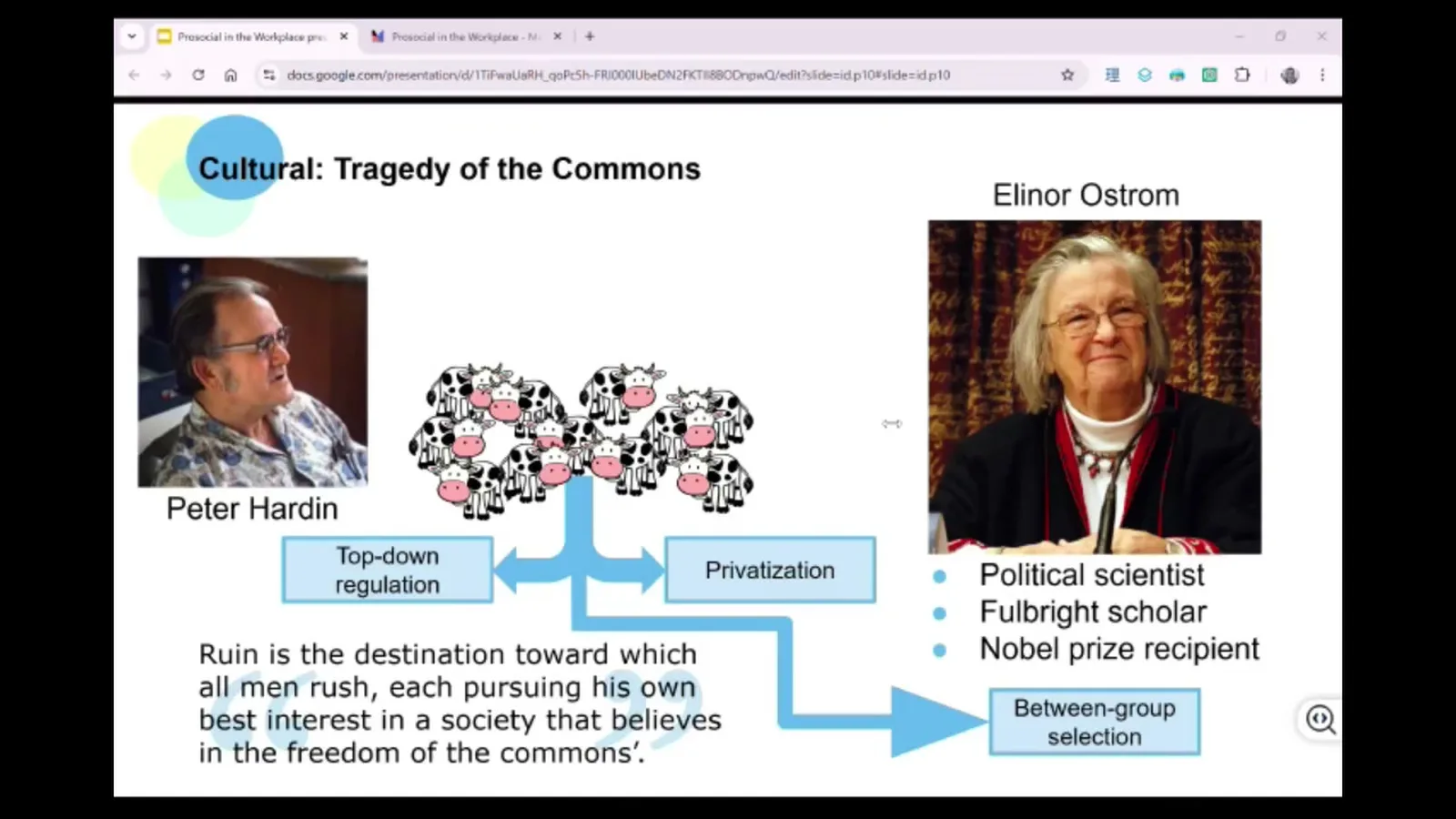
Prosocial in the Workplace
Jason StaufferThe Behaviorist Bookclub
Describes cognitive defusion (transcribed as 'diffusion') as one of ACT's six processes, teaching people to see their thoughts as words or stories rather than…
- 1 CEU
ABA Beyond Autism
Nicole ParksThe Behaviorist Bookclub
Presented as the key skill within ACT, helping clients step back from their thoughts by reframing them as thoughts rather than facts.

On this page · 8 sections▾
Cognitive defusion is a skill from Acceptance and Commitment Therapy, often shortened to ACT. It helps a person step back from a thought. Instead of treating a thought as the truth, you see it as just words in your head.
This matters for BCBAs, RBTs, teachers, and parents. Hard thoughts show up for everyone. A thought like "I am failing this kid" can freeze you. Defusion does not erase the thought. It changes how much power the thought holds over what you do next.
What defusion actually means#
Defusion is the opposite of fusion. Fusion is when you and your thoughts feel glued together. The thought feels like a fact you have to obey. Defusion loosens that glue.
Dr. Tom Szabo frames the whole aim of ACT in one plain sentence.
So, we aim in ACT to defuse, to separate out thoughts and emotions from actual behavior. From the talk — Dr. Tom Szabo
Notice the goal is separation, not deletion. You still have the thought. You just stop letting it drive the car. Your behavior gets to follow your values instead.
See thoughts as words, not truth#
A big part of defusion is a shift in how you hold a thought. You start to see it as a story your mind tells. Jason Stauffer puts this simply.
Diffusion is learning to step back from thoughts and see them as words or stories. Not necessarily absolute truth. From the talk — Jason Stauffer
Nicole Parks shows how one small word change can help a client. The thought stays. The grip on the person loosens.
instead of thinking I am a failure, the client learns to see this thought as I'm having a thought that I'm a failure. This small shift can dramatically reduce the power and impact of negative thinking patterns, allowing individuals to move past barriers. From the talk — Nicole Parks
"I am a failure" sounds like a fact. "I am having a thought that I am a failure" sounds like a mind event. That gap is where a person gets room to act.
Simple exercises you can try#
Defusion is easy to practice. Kendra Thompson uses playful exercises in her talks. One is calling up a sticky thought on a pretend phone. Another is saying a rigid rule in silly voices.
a bit of diffusion, much like we did with the pick up the phone and call that sticky thought. Tom attempted to target the have to monster with Juan... practicing saying, you know, we have to do this or I have to do that, saying that in funny different voices to again kind of change that relation to that that rule, that kind of rigid rule. From the talk — Kendra Thompson
Saying "I have to" in a cartoon voice sounds silly. That is the point. The rule loses its heavy, bossy feel. The child hears it as words, not a command.
It can be a body move, not just a word#
 Advertisement
Defusion is not only a mind trick. Brian Middleton learned it in a very real moment near a bonfire. He was fused with his pain. Then he took a step back, in both senses.
I defused from it. So I learned to take that step back. I and I literally took a step back. Not just figuratively. I literally stepped away from the fire and went to a cooler place. From the talk — Brian Middleton
This shows defusion in plain life. You notice you are stuck. You create a little distance. Then you can choose a better move. For a client, that "step back" might be a breath, a phrase, or a small pause.
Defusion changes your relation to a thought#
Here is the key idea across every talk. Defusion does not fight the thought. It does not try to prove the thought wrong. That is a different tool.
Fighting a thought often makes it stronger. Thompson compares it to holding a beach ball underwater. It keeps popping back up. Defusion lets the ball float. You let the thought be there while you keep working.
So the target is your relationship with the thought. You go from "this is true and I must react" to "this is a thought and I can carry it along." That switch is small but powerful.
Why this helps you as a clinician#
Defusion is not only for clients. It helps the people who do this work too. Hard thoughts hit BCBAs and RBTs on tough days.
You might think, "I am not good enough for this case." That thought can make you freeze or avoid. Defusion lets you notice it and keep moving. You act from your values, not from the thought.
Kendra Thompson models this with her own imposter thoughts. She invites the thought along instead of fighting it. That stance keeps her free to do the work she cares about.
What the research says#
Lab work backs up how defusion works. In one study, people practiced defusion on a feared nonsense word. Defusion raised the odds they would approach instead of avoid. The authors classed defusion as a way to change how a thought functions, not what it says (Donati, M. R., Masuda, A., Schaefer, L. W., Cohen, L. L., Tone, E. B., & Parrott, D. J. (2019). Laboratory analogue investigation of defusion and reappraisal strategies in the context of symbolically generalized avoidance. Journal of the Experimental Analysis of Behavior, 112(3), 225-241. https://doi.org/10.1002/jeab.550).
Other studies test defusion on real negative self-talk. A five-day study had people use defusion on a personal negative thought. Defusion lowered how much they believed the thought. It also raised comfort and positive mood more than other methods (Using Brief Cognitive Restructuring and Cognitive Defusion Techniques to Cope With Negative Thoughts).
Defusion also seems to be its own active ingredient. A reanalysis of ACT and cognitive therapy data found ACT cut depression more. Levels of cognitive defusion helped explain that gain (Resolving Barriers to an Applied Science of the Human Condition: Rule Governance and the Verbal Behavior of Applied Scientists). This suggests defusion is a real, separate process worth teaching.
FAQ#
What is the difference between fusion and defusion?
Fusion means you feel fused with your thoughts. The thought feels like the truth you must obey. Defusion is stepping back so the thought becomes just words. You get space to choose your actions.
Is cognitive defusion the same as thought stopping?
No. Thought stopping tries to push a thought away. Defusion lets the thought stay while you loosen its grip. You change your relationship to the thought instead of fighting it.
Can I use defusion with kids in ABA?
Yes, with playful language and simple moves. Silly voices, a pretend phone call, or a small step back all work. Keep it light and concrete so the child can join in.
Defusion is one piece of a larger ACT toolkit, which Dr. Tom Szabo unpacks in ACT in ABA: Quixotic or Pragmatic?. The same skills show up at work too, as covered in Prosocial in the Workplace.
 Advertisement
Keep learning
Earn free BCBA CEUs on openceu
Browse on-demand recordings from verified ACE providers and earn CEUs across autism, ABA, and behavior analysis. Detailed certificate, delivered the moment you finish.
Keep going with a free learning path
Supervision, Done Right
Four supervision CEUs that build on each other. What reflective supervision is, how to build a supervision system, how to assess supervisee competence instead of counting hours, and how supervision affects provider outcomes. The BACB asks supervisors for three supervision CEUs per cycle. This covers it.