Ethically Scaling an ABA Company
Presented by Matt Harrington and 3 Pie Squared
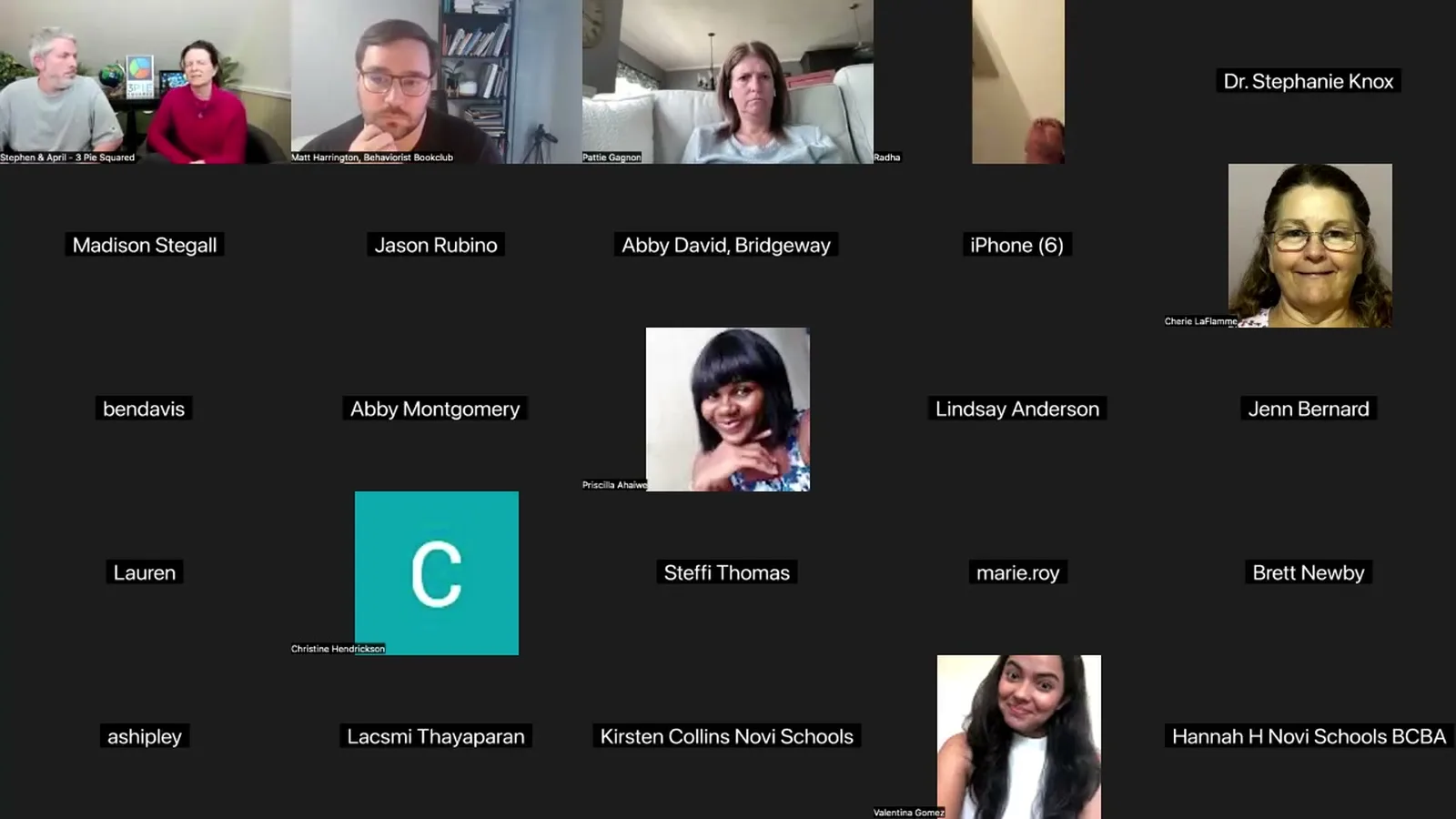
As the field of Applied Behavior Analysis (ABA) continues to evolve, many providers face the challenge of scaling their businesses without compromising clinical quality or ethical standards. This course is designed for business owners, clinical directors, and mid-level leaders navigating the complex terrain of business expansion. With a special focus on the ethical responsibilities of employers, employees, and their impact on clients, this course draws from real-world experience and ethical principles to provide actionable strategies for maintaining quality care during growth. Led by Matt Harrington and featuring ABA business experts Steven and April from 3 Pie Squared, participants will learn to identify early warning signs of declining quality, assess organizational readiness for expansion, implement safeguards to protect clinical standards, and understand the importance of clearly defined roles, transparent communication, and sustainable systems. The session includes frameworks for defining “quality,” setting benchmarks, aligning team roles with business goals, and ensuring clinician voices are heard during times of change.
Register free & watch nowCancel any time. Cert delivered to your inbox the moment you pass the quiz.
Learner ratings
from 52 learners
97% would recommend this CEU to other professionals in their field (37 responses)
“good enough to understand”
— Anika E.“Looking foreword for more training”
— Prianka R.“This is an important topic to discuss that is typically ignored.”
— Danielle S.
About this CEU
As the field of Applied Behavior Analysis (ABA) continues to evolve, many providers face the challenge of scaling their businesses without compromising clinical quality or ethical standards. This course is designed for business owners, clinical directors, and mid-level leaders navigating the complex terrain of business expansion. With a special focus on the ethical responsibilities of employers, employees, and their impact on clients, this course draws from real-world experience and ethical principles to provide actionable strategies for maintaining quality care during growth. Led by Matt Harrington and featuring ABA business experts Steven and April from 3 Pie Squared, participants will learn to identify early warning signs of declining quality, assess organizational readiness for expansion, implement safeguards to protect clinical standards, and understand the importance of clearly defined roles, transparent communication, and sustainable systems. The session includes frameworks for defining “quality,” setting benchmarks, aligning team roles with business goals, and ensuring clinician voices are heard during times of change.
From the talk
What was covered
How to grow an ABA company without losing clinical quality: warning signs, quality metrics, and how staff raise concerns.
- Write down your end goal before your next hire. Know how many clients and sites you want, and what your own week should look like.
- Define quality in plain words for clients, families, and staff. Then turn that definition into two or three numbers you track.
- Budget 15 to 20 hours of admin time for every new team. That is one BCBA (the person who plans treatment) plus six or seven staff.
- Start tracking turnover and cancellation rates this week, since both hit client care before any survey shows it.
- Give staff a data-based script for raising quality concerns. Add an anonymous route for anyone who cannot go to their supervisor.
- When you cannot fix a barrier, say so out loud and name the next step. Acknowledgment is what staff ask for most.
Why ABA Quality Slips When a Company Grows
Most small ABA companies start the same way. One BCBA (the person who plans treatment) takes a few clients. They hire an RBT (the staff who run sessions). The owner knows every family by name. They do the billing, the hiring, and the firing. Quality stays high because one person sees everything.
Then the second BCBA joins. Stephen from 3 Pie Squared described the drift that follows. The owner spends hours supervising instead of seeing kids. The new hire does not know the families the same way. Hours climb from 45 a week to 60. Add a third BCBA and it hits 70 or 80. Burnout shows up, and client care pays for it.
Matt framed this as an ethics problem, not only a business one. He pointed to codes on truthful recruiting, working inside your defined role, and responsibility to clients. He also named advocating for services, continuity of care, competence, delegation, and supervision. One example: an RBT hired to write treatment plans because that is cheaper. Another: a family promised a location near home that was two years away. Growth is where those codes get tested.
And we see that quality soon starts to go down simply because they cannot micromanage as much as they could as they're scaling.
From the talk — Matt Harrington and 3 Pie Squared
The Canary in the Coal Mine: Early Warning Signs of Decline
April said her warning signs did not look like data. They looked like drama. Staff did not follow her rules. People skipped shifts. Every day turned into another fire to put out.
She traced it back to one cause. The rules lived in her head and nowhere else. She never took the time to write them down or teach them. She was asking her team to read her mind. Stephen came from operations. He compared the fix to a task analysis (breaking a skill into small steps). You break the job into pieces and write each one down. It took her a while to accept that help.
Her own work showed the strain too. She was still seeing kids and had lost her energy for sessions. She cut small corners to hit the minimum. She had to reach full burnout before she asked to step back clinically. Stephen named the trap Mighty Mouse Syndrome. You get a hit from saving the day, so you stop planning ahead.
I had to have a serious conversation with Steven saying I have to pull back clinically.
From the talk — Matt Harrington and 3 Pie Squared
Name the End Goal Before You Hire the Next BCBA
Stephen's biggest regret was simpler than any policy. He had no picture of the finish line. Three BCBAs meant hire a fourth. Four meant hire a fifth. Nobody asked why.
The two owners wanted different things and had not said so out loud. April wanted a small in-home agency. She wanted to know everyone's name and visit each client every quarter. Stephen wanted a national company. That gap matters, because every hire pushes you toward one answer or the other.
April's frame is useful: design your dream job first. What do you want your day to look like? Which parts of the business do you enjoy? What do you hand off, and in what order? Matt added a warning he hears often. A BCBA leaves a practice over things they found wrong. A year later they own the same practice with their name on the window.
It was just I'm scaling for scaling's sake.
From the talk — Matt Harrington and 3 Pie Squared
Define Quality Before You Try to Protect It
April asks owners one question at conferences: what is quality here? Most people struggle to answer. You cannot protect a standard you cannot describe. You also cannot build KPIs (numbers you watch on purpose) without one.
Satisfaction surveys came up as a start, not a finish. A 98 on a survey is not proof of good care. April's team tracked skill acquisition (new skills a client learns) as well. Another conversation pushed her further, toward quality of life for the whole family.
Matt offered numbers an owner can set today. Pick your minimum supervision hours per week. Pick your minimum family training per week. Pick how often the BCBA sees each client. Write them down, then teach them during onboarding. He also suggested three assessments every client gets twice a year: intake, reassessment, and exit. That might be a Vineland (a common life skills test), a quality of life measure, and a family survey. It will not capture everything ABA does. It does give you a baseline. Add three BCBAs, watch the scores dip, and you can pull them back up before the next step.
if they can't go to Walmart together as a family, you're not meeting your expectations and this is not quality of services.
From the talk — Matt Harrington and 3 Pie Squared
Hats, Admin Hours, and the Policies to Build First
What you delegate depends on the vision you just named. Billing is the clearest case. Stephen once spent 18 hours over three days with one funder on five denials. That started as a half hour call. Scheduling is the other big one. The perfect schedule falls apart the moment you send it out.
Stephen also listed the hats an owner wears without noticing. Safety officer. Security officer for HIPAA (the health privacy law). Clinical director. Operations director. Ethics officer. The ethics job may take a half hour a month today. It grows with the team, so it needs a plan before it does.
Policies are living documents. April said something will always happen that you never wrote a rule for. A few still belong in place early. Employment law, including what you may not ask in an interview. HIPAA basics. Staff safety in homes you do not control, down to the friendly 150 pound dog. A plan for when someone gets hurt at work. For checklists, she pointed to the ABA practice handbooks on the 3 Pie Squared site. She also named the ACQ accreditation requirements and the in-network audit checklist Optum posts on Provider Express. If you take insurance, you are a healthcare company whether you feel like one or not.
Some, you know, numbers that I put in place is like for a team, which would be a BCPA and probably six to seven staff, you're looking at maybe 15 to 20 hours of admin work, right, that come into play.
From the talk — Matt Harrington and 3 Pie Squared
How a BCBA Raises a Quality Concern and Gets Heard
The BCBA is often the first to notice a decline, and to have real data behind it. A technician may feel it sooner, day to day. Without six months of data, that report is hard to size up.
April's advice is to start with your supervisor, and to bring data. Pick the specific data points that show the concern.
because sometimes coming to your superior and bringing that very clear data takes the emotion out of it and helps us just to look at it as a problem that we can both solve together.
From the talk — Matt Harrington and 3 Pie Squared
A Script for the Uncomfortable Conversation
Matt gave a sequence that works. Say what you noticed. Say you got curious and looked into it. Then give the finding: this client has not had a steady technician in three weeks. Or 20 hours of service split across six technicians. Then bring a solution, like tighter teams, and name the tradeoff the caregiver will hear. Then stay open to the answer you get.
Matt also gives supervisees a test for the discomfort. If nothing changes, what happens to this client? If the answer is lost skills and wasted therapy time, the hard conversation is part of the job. That is what you signed up for. Compare what you see against the company's stated standard. That is easier when the owner has written that standard down.
Stephen added a backstop for staff who cannot go to their own supervisor: a whistleblower policy (a safe anonymous reporting route). He also pushed back on blaming owners alone. If your techs do not feel safe raising an issue, the system is broken in both directions.
I think it's a top-down, bottom-up. It goes both ways.
From the talk — Matt Harrington and 3 Pie Squared
Two Numbers to Start Tracking This Week
Sometimes the honest answer is no. The money is not there, or the barrier will not move. April's advice is to be as transparent as you appropriately can. Name the barrier. Say what you are working on. Say plainly what you are not getting to right now. Nobody needs a 20 page report. Stephen hears the same complaint from staff across the country, and it is rarely about a purchase. It is that feedback goes nowhere. Matt's habit as a director was to reinforce (make a behavior more likely) the act of reporting itself. He would listen fully and name the next action step. Then he would send a short email the next day with what he actually did.
Then watch the numbers. Turnover (how often staff quit) is the first. At 75 percent turnover your BCBAs spend their time training instead of moving goals. Cancellation rate is the second, for staff and for clients.
Those are two almost no-brainer ones that you could, you could start tracking immediately.
From the talk — Matt Harrington and 3 Pie Squared
Quick and Dirty Data a Director Will Actually Check
Add a light progress check on top of those two rates. Ask every BCBA for a couple of high level data points each month. Are goals moving? Are clients making progress? Keep it fast. It tells you which case to open up and which questions to ask next.
Stephen also runs short pulse surveys for staff and clients. How happy are you with our services? Would you recommend us? Watch the trend, not a single score. A clinical director cannot review every case for skill selection and developmental fit. You need a few fast numbers you will really look at.
Matt closed on the honest version of all this. You will scale, something will break, you will fix it, then you will scale again. Growth pulls you away from the care. Delegate on purpose and communicate the entire way. Your expectations will stay next to the client, even when you cannot be there yourself.
Common questions
What are the first signs an ABA company is scaling too fast?▾
The panel named people problems first, not clinical ones. Staff stop following rules, shifts get missed, and the owner spends every day putting out fires. Owner hours creep from 45 a week toward 70 or 80. Those show up before any chart shows a drop in client progress.
How do I define quality in my ABA practice?▾
Start by answering the question for yourself in writing, for clients, families, and staff. April found most owners cannot do this on the spot. The panel used skill mastery, family quality of life, minimum supervision, and family training as places to anchor. Then pick two or three numbers that stand for that definition and track them over time.
How much admin work does each new ABA team add?▾
Stephen estimated 15 to 20 hours of admin work for one new team. That team means one BCBA (the person who plans treatment) plus six or seven staff. That figure assumes you have a billing team in place. Some funders are easier than others, so your number will move. The point is to put the hours in your math before you hire, not after.
What should a BCBA do when quality slips at their company?▾
Go to your supervisor first and bring data, not just a feeling. Say what you noticed, what you looked into, and what you found. Bring a proposed solution and stay open to the response. If going to your supervisor is not possible, a whistleblower policy should give you an anonymous route.
Is this talk an ethics CEU?▾
Yes. Matt opened by saying this was an ethics CEU, not a deep dive on rate negotiation or financial projections. The focus is the impact of growth on clinical quality and the duties of employers, employees, and clients. You watch the recording and pass the quiz to earn the credit.
About the speaker
Matt Harrington is a BCBA and LBA (a state behavior analyst license) licensed in Arizona. He runs the Behaviorist Book Club and hosts CEU events for clinicians. He was joined by Stephen and April, the co-owners of 3 Pie Squared, which they started in 2017. They work with roughly 1,500 BCBA owned businesses across the country on insurance, rate negotiation, and building sustainable practices.
This summary was generated from the recording’s transcript. Quotes are taken word for word from the talk.
What you'll learn
- 1Learning Objectives
- 2Understand Ethical Growth Strategies
- 3Define ethical scaling and its importance in maintaining trust and credibility in ABA business practices.
- 4Identify common pitfalls in scaling an ABA business and how to avoid them while prioritizing client-centered care.
- 5Clarify Roles in Business Growth
- 6Analyze the distinct responsibilities of the employer, employee, and client in the business scaling process.
- 7Develop strategies to foster collaboration and alignment between these roles to support sustainable growth.
- 8Integrate Ethical Decision-Making
- 9Evaluate how ethical considerations impact business growth decisions, including hiring, service expansion, and client relationships.
- 10Create a framework for balancing profitability with ethical practices in everyday operations.
- 11Apply Sustainable Growth Tactics
- 12Design actionable steps to expand services while maintaining high-quality care and employee satisfaction.
- 13Implement strategies to build a scalable infrastructure that supports long-term success without compromising ethical standards.
- 14Enhance Client and Employee Relationships
- 15Develop approaches to ensure that client needs remain the foundation of business growth.
- 16Identify ways to create a positive workplace culture that empowers employees and enhances team retention during scaling efforts.
Concepts in this CEU
Related talks
Talks that cover the same concepts
Supervising Beyond Technical Skills: Professionalism, Communication, and Clinical Judgment
The Behaviorist Bookclub
That's Outside My Scope of Competence
Willow Mentorship & Consulting, LLC

Teaching RBTs to Think Clinically: Training In-the-Moment Decision Making
Copper Consulting Group

genArete: Milestone based comparison criteria in Skill Assessment
The Behaviorist Bookclub
Stronger Together: Care Collab
The Behaviorist Bookclub
New Year, New Care Collab Goals
The Behaviorist Bookclub
More from The Behaviorist Bookclub
OpenCEU is supported by advertising from third-party sponsors. Sponsors are clearly labeled, have no influence over course content, instructors, or CEU decisions, and never appear on certificates. The BACB does not sponsor, approve, or endorse OpenCEU sponsors or their products.