Beyond 1:1: The Ethical Path to Creating a Scalable Course as a BCBA
Presented by Mellanie Page
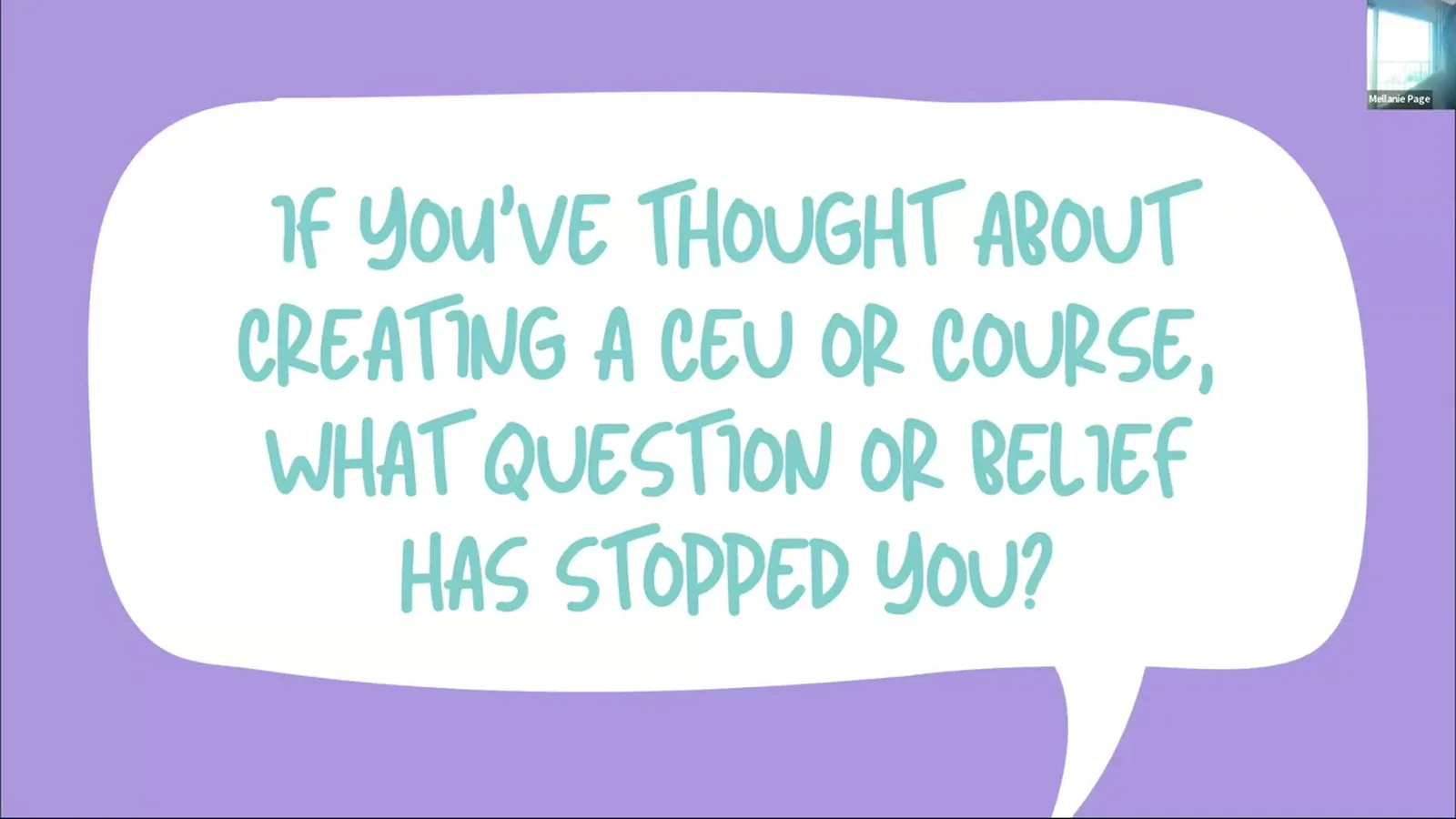
As online education expands, many BCBAs are exploring how to share their expertise through scalable digital courses. Yet questions around ethics, scope of competence, and appropriate use of behavior-analytic content often stop them before they begin. This masterclass provides a clear, ethics-aligned roadmap for turning behavior-analytic knowledge into a high-quality educational course that serves the public without crossing into clinical treatment. Participants will learn how to distinguish educational content from professional services, how to ethically represent their course without implying individualized treatment, and how to select a course topic that aligns with competence and avoids misrepresentation. The session will introduce a practical framework for designing a scalable learning experience, including boundaries for non-clinical instruction, informed content creation, and mechanisms for redirecting learners who may need treatment rather than education.
Register free & watch nowCancel any time. Cert delivered to your inbox the moment you pass the quiz.
Learner ratings
from 32 learners
95% would recommend this CEU to other professionals in their field (20 responses)
“great presentation Mellanie”
— Cynthia G.“Mellanie did a good job covering the topic.”
— Antonija M.
About this CEU
As online education expands, many BCBAs are exploring how to share their expertise through scalable digital courses. Yet questions around ethics, scope of competence, and appropriate use of behavior-analytic content often stop them before they begin. This masterclass provides a clear, ethics-aligned roadmap for turning behavior-analytic knowledge into a high-quality educational course that serves the public without crossing into clinical treatment. Participants will learn how to distinguish educational content from professional services, how to ethically represent their course without implying individualized treatment, and how to select a course topic that aligns with competence and avoids misrepresentation. The session will introduce a practical framework for designing a scalable learning experience, including boundaries for non-clinical instruction, informed content creation, and mechanisms for redirecting learners who may need treatment rather than education.
From the talk
What was covered
How BCBAs can turn clinical expertise into an ethical online course: the education versus treatment line, scope of competence, and the SCALE build framework.
- Pick your course topic from the thing you already explain over and over at work.
- Run the five part competence check before you teach inside a new niche.
- State in writing that the course is education and not clinical treatment.
- Decide up front whether you are building education, implementation, or transformation.
- Choose the outcome first, then build every module backward toward it.
- End each lesson with something to do, not just something to think about.
Why BCBAs Are Looking Past the Billable Hour
Page opened with a map of where ABA work usually sits. It lives in autism services, school support, behavior plans, and supervision duties. Most BCBAs serve one group of clients and one caseload at a time. She said that is not wrong, just narrow. It also leans on funding systems that we do not control.
That base is shifting under us. Caseload numbers keep climbing, and audits have become routine. Funders deny more, restrict more, and ask for more paperwork. Page said funding limits are starting to drive clinical decisions instead of the other way around. When that happens, people lose control of their own work, and burnout risk grows right behind it.
Then she flipped the picture. A course lets the same expertise reach further than one caseload. You can teach parents, teachers, other providers, and whole organizations. You can help people who would never qualify for services at all. You build the resource one time, and it keeps working after that. Teach other BCBAs well and you touch every case they hold. Your income also stops being capped by direct hours.
So the goal here is to regain control of your time, expertise and purpose and use courses to expand your impact, your audience, your professional freedom while still honoring the science.
From the talk — Mellanie Page
Where Education Ends and Treatment Begins
The first fear Page took on was simple. Is a course just therapy sold online? Her answer was no, and the reason is the design. A course teaches ideas, frameworks, and strategies to many people. Treatment is built and adjusted for one person. The worry behind the fear is real, though. Nobody wants blurred lines or an accidental treatment relationship.
She drew the two sides plainly. In treatment you assess, write the plan, take data, and change course based on that data. You carry professional accountability for that client. Education does none of that. It teaches a repeatable process that a broad group can use. A parent with no diagnosis in the house can still benefit.
She also gave a check you can run on a finished course. Are you assessing a specific child? Are you writing a plan for one family? Are you collecting clinical data on their progress? Are you directing a caregiver through clinical decisions? Four clear noes mean you are still teaching. Note that naming common barriers does not break the rule. A shared barrier with a shared script is still education.
So courses are education and dissemination, not treatment.
From the talk — Mellanie Page
Your Best Course Topic Is the Thing You Repeat
Many BCBAs stall on the same belief. My idea is not new or unique enough. Page called that a misread of your own work. Watch what you repeat instead. The same explanation to new staff. The same diagram for caregivers. The same strategy across very different cases. That repetition is a curriculum you have not named yet.
Those repeated patterns become your framework, and that framework is yours. It is shaped by the people you serve and by how you explain things. It does not need original research behind it. Learners are not shopping for a topic nobody has covered. They want a clear translation they can actually use. Two people can teach the same topic and land very differently.
She gave prompts to surface your topic fast. What problem do you explain over and over? What skill do people keep asking you for help with? Where do you feel unusually clear and confident? What do you mentor others on without being asked? Then narrow the answer. Not just I teach ABA. Try behavior in classrooms, parent routines, functional communication (teaching a child to ask), self regulation, or transition planning.
And you're so close to it sometimes, so close to your expertise that you can't see its value.
From the talk — Mellanie Page
A Five Part Check on Your Scope of Competence
Scope of competence (the work you are trained for) confused Page for years. The ethics code (the rules our field follows) names the sources. Education, training, supervised experience, credentials, and professional experience all count. She boils that into two words: preparation and performance. You need documented prep, and you need to have really done the work. Thinking about a topic does not count as doing it.
Step two is foundational knowledge in the new area. Your behavior analysis base is already there and it counts. The niche needs its own base too. If you apply the science to fitness, learn the fitness side as well. Look for structured training, CEUs tied to that niche, reading, and journal clubs. The test is whether you can teach the basics of that niche clearly.
Step three is guided practice with feedback, and this is where people trip. They believe they need a famous mentor before they can start. Page said the bar is much lower. One case or project with supervision will do. You need someone who can observe you, debrief with you, and read your plan. A sounding board who checks that you are applying the science well.
Steps four and five close the loop. Independent performance means you can do the work safely without direct oversight. Start small with a pilot, a limited coaching scope, or role plays. Ask two questions: are my outcomes steady and explainable, and can I spot when I am out of depth? Then maintain it. Keep taking training, consult now and then, review your learner outcomes, and hold clear referral lines.
And just as kind of a prereq here, I just want to share that most of us are actually more competent than we think.
From the talk — Mellanie Page
Ethics Rules That Still Apply When You Teach
Ethics does not switch off when the work stops being therapy. Page framed a course as professional communication. You are using your credentials. You are teaching behavior science. You are marketing an offer. You are shaping how other people apply what you teach. All of that sits inside the code.
Representation comes first. Do not exaggerate what the course does for a learner. Do not describe outcomes that sound like treatment results. Say who the course is for and who it is not for. Use your titles and credentials accurately. She suggested a plain line on the page: results will vary based on context, consistency, and individual factors.
Next comes harm and transparency. Skip prescriptive advice aimed at one child. Tell learners when to seek professional help instead. You do not have to solve that case, but you do have to point somewhere. State the scope, the objectives, and the format up front. Say whether it is self paced, and say if feedback or live support is included. Also label your claims honestly.
She gave sample wording you can lift for a sales page. This course provides educational strategies and frameworks, not clinical treatment recommendations. That line matters most when parents and families can buy the course.
Distinguish clearly when something is research-supported, emerging practice, or just your professional opinion.
From the talk — Mellanie Page
Three Layers of Course Design: Education, Implementation, Transformation
Page sorts courses into three layers, and each one answers a different learner question. Pick your layer before you build anything. Mixing them is how courses turn into an information dump nobody can use.
Education is the taste. One time trainings and standalone CEUs live here. You cover concepts at a high level and build interest. The barrier to entry is low by design. The goal is not mastery of the topic. It answers what is this, and why should I care?
Implementation goes deeper through structure. Think sequential CEUs, a series, or a small program. Concepts build on each other in order. You add guided practice, examples, and reflection. It answers how do I actually do this? Page noted that one hour is not enough room for that, even at her speaking pace.
Transformation targets real skill change over time. It can include a community, a certificate program, or supervised practice. You add competency checks and feedback loops. Learners try something, come back, and get corrected. You track skill growth for longer than a single sitting. It answers whether they can perform the skill reliably in real life.
You're just trying to make people aware, again, of the problem and some of the ways that you address that problem uniquely.
From the talk — Mellanie Page
The SCALE Framework for Building the Course
SCALE starts at the end. Select the outcome before you write a single lesson. Without a clear outcome you drift into teaching concepts, and the goal feels out of reach. Her sample course helps parents build a steady bedtime routine. The outcome is fewer protests and easier sleep onset (falling asleep) at night. It is not fixing every sleep problem or treating a sleep disorder. Specific, teachable, and behavior focused is the bar.
C is clarify the client. Name the learner, the setting, and the real constraints. In the example that is parents of kids ages three to ten with bedtime resistance, at home. Their limits are time, energy, and competing demands. Name your assumptions too. No medical red flags. The problem is routine based, not medically driven. Those choices then shape the design: short lessons, visuals, and flexible options.
A is arrange instruction, and each module moves one step closer. Module one explains why bedtime resistance happens. Module two designs the routine with a set bedtime and a visual chart. Module three builds reinforcement (rewards that make behavior repeat) and then thins it out. Module four names the common barriers and gives scripts and simple response plans. Troubleshooting comes last, because that is where real homes live.
L is link concepts and E is equip learners. Every lesson ends with an action, not a thought. Learners chart the routine, spot their own stall tactics, and pick one strategy for tonight. Reflection prompts ask what worked and what they would change tomorrow. Then you hand over tools: printable routines, script cards, checklists, a troubleshooting guide, a tracker. The goal is to cut response effort (how hard a step feels) to almost nothing.
So every lesson should end with something to do, not just something to think about.
From the talk — Mellanie Page
What SCALE Looks Like in a Real Program
Page ran her own program in organizational behavior management (using ABA inside workplaces) through the same five steps. The outcome is concrete. BCBAs design and finish a practical project that improves how their organization performs. The learner is a working BCBA who wants that experience but needs a roadmap. The context is a real workplace with limited time and limited control.
Instruction follows a step by step path: idea, data, intervention, evaluation, and presentation. Each milestone carries an assignment. Members bring the work back and she gives feedback at that step. The tools include project templates, checklists, assessments, guides, and live coaching. People leave with a finished project instead of a folder of notes.
Someone asked how to tell a real course idea from a hobby. Page tied the answer back to the outcome. If you can help someone reach a clear outcome, you have clearance to teach it. If you have seen your approach work more than once, competence is there. On whether people will care, she was blunt. Interest is a marketing question, not a topic question.
And so if I know that's my outcome, I want to make sure I know who I'm talking to.
From the talk — Mellanie Page
Common questions
Is selling an online course as a BCBA an ethics violation?▾
No, as long as the course teaches and does not treat. Page framed a course as education: concepts, frameworks, and strategies for a broad group. Ethics still applies to your credentials, your claims, and your marketing. The line breaks when you assess a specific child, write their plan, or direct a caregiver's clinical decisions.
How do I know a course topic is inside my scope of competence?▾
Page uses five checks. First, documented preparation and proof you have done the work. Second, foundational knowledge in that specific niche. Third, guided practice with feedback from someone who knows the work. Fourth, safe independent performance on a small pilot. Fifth, an ongoing plan to stay current. If you can teach the basics clearly and explain your outcomes, you are likely there.
What wording keeps a course on the education side of the line?▾
She offered one line to adapt: this course provides educational strategies and frameworks, not clinical treatment recommendations. Add that results will vary based on context, consistency, and individual factors. State the scope, objectives, and format, and say clearly what is not included, such as consultation or assessment. Tell learners where to go if they need more than the course.
Do I need original research or citations to build a CEU or course?▾
You do not need new research to build one. Cite the research your approach is grounded in and give credit where it is due. Page said the strongest courses add your own translation, story, and structure on top. Do not copy someone else's published framework and teach it as your own.
How do I give feedback to course members without sliding into treatment?▾
Set the expectation at the start about which questions coaching covers. If a question drifts toward one child's clinical care, take it offline and share referrals or resources. Page also suggested changing your audience: train other BCBAs instead of families when the content gets nuanced. That keeps the impact wide while the individualized work stays with a clinician.
About the speaker
Mellanie Page teaches BCBAs how to turn clinical expertise into ethical online education. In this session she walked through the education versus treatment line and a five part scope of competence check. She also covered three layers of course design and her SCALE build framework. She runs a practitioner program in organizational behavior management (using ABA inside workplaces) that guides BCBAs through a real project. She also runs the Clinical Boss membership community for behavior analysts building online offers.
This summary was generated from the recording’s transcript. Quotes are taken word for word from the talk.
What you'll learn
- 1Learning Objectives
- 2Identify ethical distinctions between clinical behavior-analytic services and educational course content, referencing relevant BACB Ethics Code standards
- 3Describe how to choose a course topic that aligns with your scope of competence, avoids clinical representation, and meets ethical dissemination practices
- 4Outline a framework for designing a scalable online course
Concepts in this CEU
Related talks
Talks that cover the same concepts
Practical Takeaways for School-Based Behavior Analysts
The Behaviorist Bookclub

Supervision Articles Deep Dive
The Behaviorist Bookclub
School Collaboration as an Area of Competence - Applied 2022
The Behaviorist Bookclub

Scaling Influence- Coaches
The Behaviorist Bookclub
Interdisciplinary Grief Support for People with Disabilities: Enhancing Outcomes Through BCBA-LPC Collaboration
The Behaviorist Bookclub
Shaping Behavior Change when ADHD is in the Picture
The Behaviorist Bookclub
More from The Behaviorist Bookclub
Harm Reduction Within ABA Practice
The Behaviorist Bookclub
Supervising Beyond Technical Skills: Professionalism, Communication, and Clinical Judgment
The Behaviorist Bookclub
Reflective Supervision and Client Outcomes
The Behaviorist Bookclub
OpenCEU is supported by advertising from third-party sponsors. Sponsors are clearly labeled, have no influence over course content, instructors, or CEU decisions, and never appear on certificates. The BACB does not sponsor, approve, or endorse OpenCEU sponsors or their products.