genArete: To Teach or not to Teach!
Presented by Mark Malady, BCBA

In the final talk of his three-part genArete series, Mark Malady, BCBA, addresses what clinicians should do after a skill-based assessment identifies underperforming skills. He begins with target selection in the context of the whole person, revisiting Wolf's (1978) three levels of social validity and noting that only about 17-18% of JABA studies from 2010-2020 included any social validity measure. He challenges the standard definition of skill acquisition, arguing that all new skills are built by leveraging existing skills, and that assessments should identify functional skills within a hierarchy rather than treating developmental and functional approaches as a dichotomy. Using an example of a learner with 83 skills below the presumed functional range, he presents a five-way sorting framework: leave conditions the same, use environmental arrangements, create and use accommodations, build foundational skills, or build the target skill. He details when accommodations are appropriate, their functions (increasing reinforcement in historically aversive settings, reducing corrective feedback, establishing early self-advocacy through mand-tact repertoires), and myths about foundational skills, including how topography-based targets like eye contact led to coercive practices. He closes with component-composite skill relations, requirements different teaching strategies place on learner repertoires, realistic time-to-mastery commitments, termination criteria that incorporate caregiver report and quality-of-life indicators, and anticipating side effects of new skills, such as joint attention potentiating socially maintained challenging behavior.
Register free & watch nowCancel any time. Cert delivered to your inbox the moment you pass the quiz.
Learner ratings
from 45 learners
100% would recommend this CEU to other professionals in their field (25 responses)
“This presentation made me realize the importance of skill acquisition. It plays an important role in the foundation of Applied Behavior Analysis as it helps set the stage for a client's long-term independence. Skill acquisition appears to reduce frustration majority of the time and teaches applicable behaviors we as BCBAs and RBTs seek.”
— Cristina G.“Awesome, thank you!”
— Savannah A.
About this CEU
In the final talk of his three-part genArete series, Mark Malady, BCBA, addresses what clinicians should do after a skill-based assessment identifies underperforming skills. He begins with target selection in the context of the whole person, revisiting Wolf's (1978) three levels of social validity and noting that only about 17-18% of JABA studies from 2010-2020 included any social validity measure. He challenges the standard definition of skill acquisition, arguing that all new skills are built by leveraging existing skills, and that assessments should identify functional skills within a hierarchy rather than treating developmental and functional approaches as a dichotomy. Using an example of a learner with 83 skills below the presumed functional range, he presents a five-way sorting framework: leave conditions the same, use environmental arrangements, create and use accommodations, build foundational skills, or build the target skill. He details when accommodations are appropriate, their functions (increasing reinforcement in historically aversive settings, reducing corrective feedback, establishing early self-advocacy through mand-tact repertoires), and myths about foundational skills, including how topography-based targets like eye contact led to coercive practices. He closes with component-composite skill relations, requirements different teaching strategies place on learner repertoires, realistic time-to-mastery commitments, termination criteria that incorporate caregiver report and quality-of-life indicators, and anticipating side effects of new skills, such as joint attention potentiating socially maintained challenging behavior.
From the talk
What was covered
Mark Malady on what to do after a skill assessment. Five ways to sort underperforming skills, when to accommodate, and side effects to expect.
- Before you teach a flagged skill, sort it into one of five buckets. Leave it alone, arrange the environment, build an accommodation, build a foundational skill, or teach the target.
- Read your assessment for the boxes that are filled in, not just the empty ones. Those filled boxes are the skills you will leverage.
- Recommend accommodations only for settings that will actually allow them. Pair every accommodation with an early asking and naming repertoire so the learner can request it.
- Check the component skills (the smaller skills built into a bigger one) before you target a big composite skill. A failed target teaches the family that the learner cannot learn.
- Tell families the side effects of a new skill up front. Joint attention or new requests can drive new challenging behavior.
- Write termination criteria (the rule for deciding when a skill is learned). Include a report from the person or their support network, not just in-session performance.
Social Validity Should Filter the Target List
A skill assessment hands you a long list of gaps. It does not tell you which gaps matter. Malady starts there. The person in front of you is more than the concern that brought them in. Who they are and where they want to go should drive the choice.
Older tools already do this work. A pinpointing checklist walks you through the features of a good target. The ranking matrix in the standard intro textbook weighs nine variables before you commit. Malady's point is that most of us stop using these tools once we feel fluent. We drift into private, made up methods for picking targets. He suggests reading both tools side by side and noting where they disagree.
Then he goes back to Wolf's 1978 paper on social validity (do the people served value this). Wolf named three levels. Are the goals ones the person actually wants. Do the people involved find the procedures acceptable. Are consumers happy with the results, including results nobody predicted. Malady lingers on that third one. The effects we do not plan for are where the field has the most room to grow.
The track record is thin. From 2010 to 2020, only about 160 studies in the field's flagship journal included any social validity measure. That is roughly 17 to 18 percent of what was published. The breakdown is worse than the total. Goals got the most attention. Procedures got about the same. Satisfaction with all the results got almost nothing.
So we have a long way to go in how we understand, orient to, and use social validity.
From the talk — Mark Malady, BCBA
Every New Skill Is Built From a Skill the Learner Already Has
One common definition of skill acquisition sounds fine at first. You build a new action, in a set context, under natural consequences, to a set level. Malady does not buy it. Nothing in nature comes from nothing. That definition pulls the action loose from its roots and hides where it came from.
His version is different. You leverage current skills to build new forms that serve what the learner values. The shift changes how you read a report. Your assessment is not just a map of empty boxes. The filled boxes are your starting points. Some targets on the list sit close to what the learner can already do. Others sit far away. That distance should shape your plan.
He also pushes on the split between developmental and functional assessments (one ranks by age, one by use). Developmental tools give you a rank order of skills. Functional tools point to skills that change something right now. But in our science, every action changes the environment. So the split is softer than it looks. Purely functional lists often hide the order in which skills depend on each other. Malady wants both at once: real utility, kept inside a hierarchy.
So all new skills start with existing skills.
From the talk — Mark Malady, BCBA
Sorting 83 Underperforming Skills Into Five Buckets
Malady walks through one case shape. The learner wanted entry level employment. The assessment flagged 83 skills below the presumed functional range (the level a skill needs to work). He avoids the word mastery here on purpose. The question is whether the skill works in the settings where it is used.
No one teaches 83 skills. So he treats the report as a sorting task with five bins. Leave conditions the same. Use environmental arrangements (changing the setting instead of the skill). Create and use accommodations. Build foundational skills. Build the target skill. Teaching looks like the obvious answer. It is the last bucket for a reason.
Four pieces of information drive the sort. Filter by long term vision first, using what the person wants to accomplish. Then look at immediate utility: what brings joy, relieves pressure, or gives the person more of what they want today. Then the known history of acquisition, meaning how long this learner takes and with what supports. Last, the existing skills you can build from. Those four turn a wall of empty boxes into a short, honest list.
So we're obviously not going to target 83 skills at the same time.
From the talk — Mark Malady, BCBA
When the Right Move Is to Leave the Skill Alone
Some gaps do not need your attention now, or maybe ever. Malady's example is stimming (repeating movements or sounds for self soothing) in a classroom. The student is passing everything. Peers are fine with them. The class runs as designed. Nothing about the goal is blocked. Twenty years ago the field chased that anyway, because society called it odd. That is social validity at the first level only, and it caused harm.
Safety changes the order. The textbook matrix puts the safety of the person and others first. Everything else waits. A learner may have the skills to leverage for a rich target. If safety is keeping them out of the settings that matter, that target still waits.
Eye contact is his third example. A learner shows low rates of it, but is acquiring asking and naming skills on track. The family goal is simple: five safe minutes alone so a parent can shower. Eye contact is not blocking that. You can tell a tidy story about eye contact and social skills. The story is not the same as evidence in this learner's life.
The environmental arrangement bucket handles what has to happen anyway. Eating is the clean case. The person has to eat, so some teaching strategies are off the table. Here you change conditions to bring out the skill right now. Malady also asks for realism about capacity. Every hour spent on a low weight target is an hour taken from a critical one.
we are taking instructional time away from critical targets and we need to be realistic about kind of the balance of that
From the talk — Mark Malady, BCBA
Accommodations: What They Do and What They Require
Definitions of accommodation are a mess, so Malady borrows the workplace one. A reasonable accommodation is a change to the hiring process, the way the job is done, or the work environment. It lets a qualified person with a disability do the essential parts of the job. It is reasonable if it creates no undue hardship or direct threat. He likes this language because it makes the clinical task easier.
Four checks decide whether an accommodation is a real recommendation. The critical settings must actually allow it. You need information that the change will bring out the performance you want. A setting with low reinforcement (few rewards for the person) raises the priority. You want that person reaching success while you build other skills. The learner also needs a mand and tact repertoire (asking for things, naming things). Paper agreements do not get used on their own. Self advocacy does. That repertoire can be very early, and it can use any medium, not just speech.
Accommodations do three jobs worth naming. They raise reinforcement in settings that have felt bad for years. Almost every learner arrives with a failed teaching history, because adults tried before you did. They also cut the number of adult corrections. That resets the feedback to correction ratio without retraining everyone in the room. And they build the motivation (what makes something worth doing) for early self advocacy. That lets the learner share a view and make informed choices.
So basically, what can we change that allows the person to be successful that is not changing the skill sets of the person?
From the talk — Mark Malady, BCBA
The Myth That Foundational Skills Have No Payoff
The developmental versus functional split left a myth behind. Functional skills are said to produce meaningful change, and foundational skills are said to produce none. Malady calls that false. Foundational skills have functions. Our trouble is that we rarely say what those functions are. If you cannot state the function, you cannot advocate for the target or defend it.
The bigger failure is topography (what the behavior looks like). Our field is more comfortable with form than with function. We noticed eye contact in typically developing children and made the form the goal. What mattered was what it did: it opened social interaction and created more chances to learn. Chasing the form created coercive practices that many people lived through. Autistic advocates pushed hard on this one, and the field has been working to answer them.
Malady adds a gap he says has bothered him for years. We appeal to the repertoire constantly. We do not have a unified account of what a repertoire is across all settings and all time. A few branches have partial answers. The whole picture is still missing from our basic science.
Foundational skills require a functional orientation.
From the talk — Mark Malady, BCBA
Component and Composite Skills, and What Strategies Demand
Component composite relations (small skills inside bigger skills) sit at the center of his target selection. A 1972 article on tool skills and synthesized skills is a good entry point. An intro text from 2012 covers it well too. Every skill breaks down into other skills, almost without end. Even early learner skills break down, sometimes to reflexes.
Guessing at components is easy and wrong. In the question period he gave a favorite example from writing. People assume a child's vocabulary size predicts sentence writing. Strokes per minute, meaning how fast the hand makes lines, turns out to be the better predictor. That is the kind of mix-up this check is meant to catch.
Strategies have requirements too, and this is where individual differences get useful. Models require generalized imitation (copying new actions on sight). Verbal prompts require solid listener skills (following what others say). You use them, then fade them out, meaning you slowly remove them. Massed practice (repeating the same trial again and again) requires endurance and something to do while no reinforcer is available. Miss the requirement and the strategy fails, and the learner takes the blame. On errorless teaching (prompting so mistakes rarely happen), his answer was cautious. If your prompt fading stalls, go back and check whether the components are really there.
Targeting composite skills with missing components can create hardships for all involved, especially the learner.
From the talk — Mark Malady, BCBA
Side Effects, Time to Mastery, and Better Termination Criteria
Every new skill changes how a person meets the world, so every new skill carries risk. Joint attention (sharing focus with another person) is his sharpest case. A learner without it may have no behavior that is maintained by, or kept going by, social interaction. Teach it well and a whole new set of challenging behavior can appear. Mands can arrive without tolerance for no, which is exhausting for everyone. Stimulus equivalence (linking symbols without direct teaching) can produce faulty rules the learner then lives by. Even categorization can backfire, once good and bad get attached to things the learner used to enjoy. None of this argues against teaching. It argues for warning families first and planning for the fallout.
Malady also wants honest math before you propose a target. Tell the learner and the family the full cost: learning time, billable time, and calendar time. Your service structure should let you predict that. When we pick a target and it fails, the culture does not read it as our failure. It reads as the learner's limit. That is how families end up describing a person as unable to learn.
Finally, stop using in session criteria as your stopping point. It produces false positives, where a skill looks mastered and then never shows up where it is needed. His team pairs a session criterion with a report from the person or their support network. Both have to line up. Quality of life indicators and values belong inside the termination criteria, not in a separate conversation after the program ends.
if we fail it isn't usually seen as a failure of us it is seen as a failure of the learner
From the talk — Mark Malady, BCBA
Common questions
What are the five options after an assessment flags an underperforming skill?▾
Leave conditions the same, use environmental arrangements, create and use accommodations, build foundational skills, or build the target skill. Teaching is only one of the five. Malady treats the whole report as a sorting task, since no team can teach dozens of skills at once.
How do I decide between an accommodation and teaching the skill?▾
Ask whether the critical settings will actually allow the accommodation. Also ask whether you have good reason to think it will work. Accommodations are strongest when the person has been in a setting with very little reinforcement. Pair every accommodation with an early asking and naming repertoire, because formal agreements alone do not get used.
What side effects should I warn families about before teaching a new skill?▾
New skills open new ways to interact with the world, and some of that is hard. Joint attention can create behavior maintained by social attention where none existed. New requests can arrive without tolerance for no, and new rules can be faulty. Prepare families for the specific hardship that is likely, not just the gain.
Is it okay to leave a skill deficit untreated?▾
Yes, when the gap does not block what the person is trying to accomplish. Malady's example is a student who stims in class, passes everything, and gets along with peers. If the goal is not blocked, the skill can stay in the leave alone bucket for now or for good.
What should termination criteria include besides session data?▾
Add a report from the person or their support network confirming the skill shows up where it is needed. In session criteria alone produce false positives. Quality of life indicators and values clarification belong inside the mastery criteria rather than in a separate step afterward.
About the speaker
Mark Malady, BCBA, has over 18 years of clinical experience and estimates more than 18,000 direct hours with learners on skill acquisition and reduction targets. He is a co-developer of the genArete assessment and co-author of two books on the system, and he names that role as a bias up front. He opened this talk by citing his own lived experience of being on the receiving end of skill based assessments.
This summary was generated from the recording’s transcript. Quotes are taken word for word from the talk.
What you'll learn
- 1Learning Objectives
- 2By the end of this CEU, participants will be able to:
- 3Select options for responding to underperforming skills following the results of skill-based assessments.
- 4Describe features of selecting accommodations versus skill building.
- 5Identify potential side effects of teaching new skills (e.g., joint attention, mands, stimulus equivalence) and describe how component-composite skill relations inform whether a target is ready to be taught.
Concepts in this CEU
Related talks
Talks that cover the same concepts
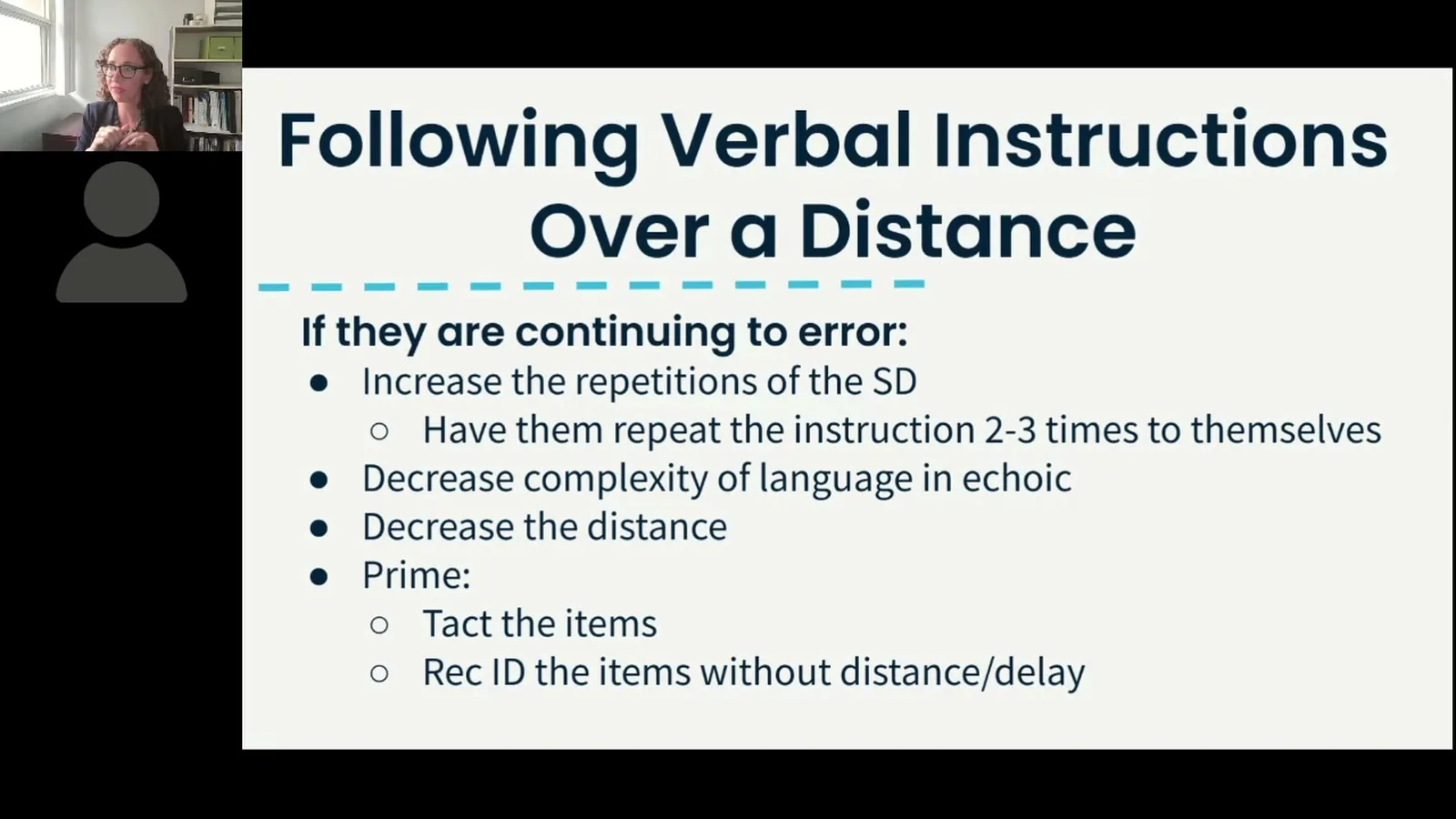
Getting the Right Answer Isn’t Enough: Establishing Speaker–Listener Repertoires for Complex Learning
The Behaviorist Bookclub
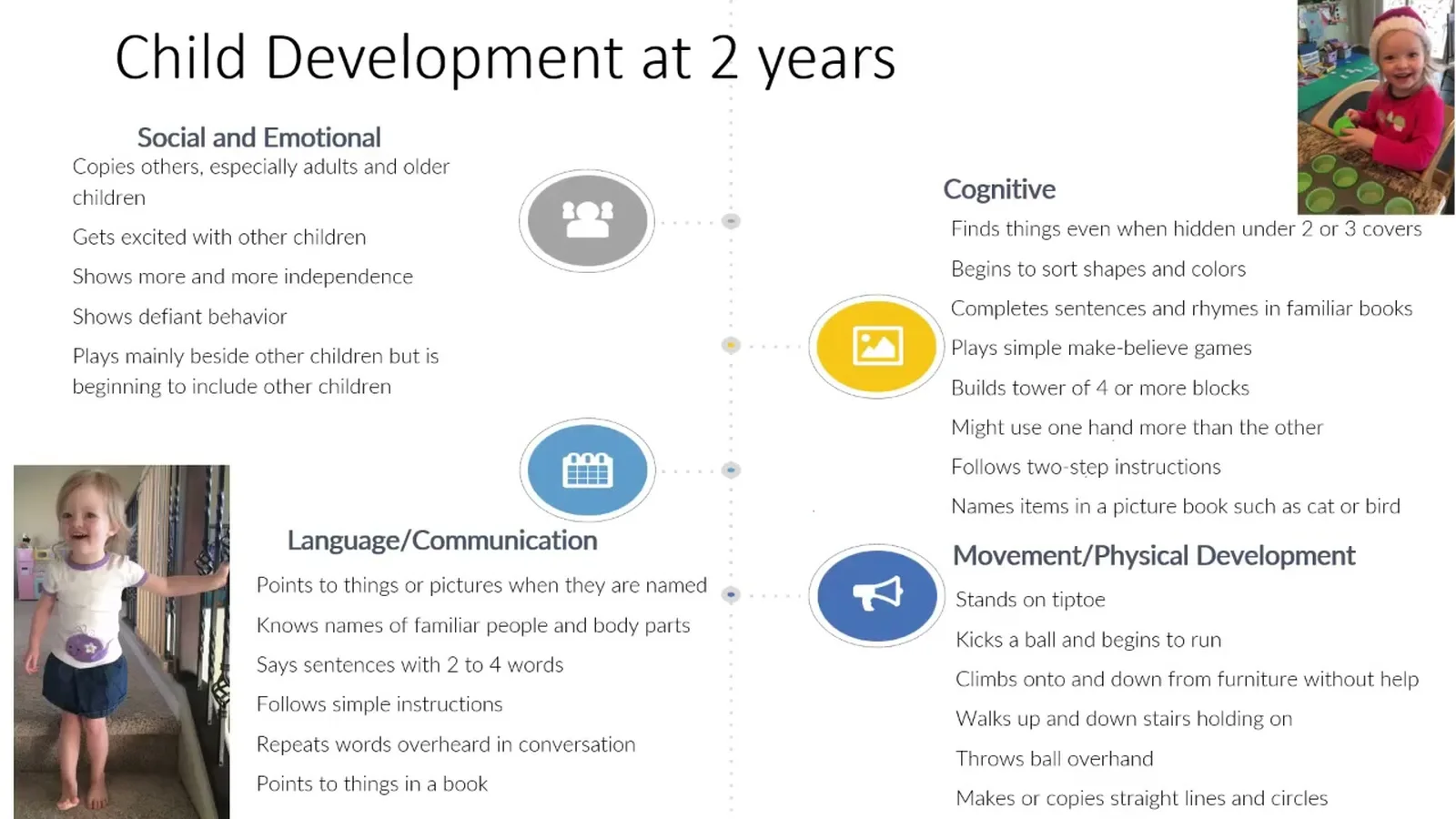
Child Development for Behavior Analysts
The Behaviorist Bookclub
Research to practice - extending past the pages
The Behaviorist Bookclub
Is It Technical or Relational? A Framework for Pinpointing Caregiver Collaboration Breakdowns
Parenting with ABA

When the Foundations Are Right: Unlocking Advanced Verbal Repertoires
The Behaviorist Bookclub
Shaping Behavior Change when ADHD is in the Picture
The Behaviorist Bookclub
More from The Behaviorist Bookclub
Supervising Beyond Technical Skills: Professionalism, Communication, and Clinical Judgment
The Behaviorist Bookclub
Reflective Supervision and Client Outcomes
The Behaviorist Bookclub
Empowering Autonomy and Self-Management in ADHD Learners
The Behaviorist Bookclub
OpenCEU is supported by advertising from third-party sponsors. Sponsors are clearly labeled, have no influence over course content, instructors, or CEU decisions, and never appear on certificates. The BACB does not sponsor, approve, or endorse OpenCEU sponsors or their products.