Values-Based Intervention in ABA: What It Means
Values-based intervention uses a person's long-term goals to drive change today. Learn how BCBAs identify values and build programs around them.
Key takeaway
A values-based intervention builds a program around what a person cares about most. Values are the long-term goals that matter to someone. Think of things like independence, friendship, or a real job.
Analyzing Assent and Taking Data
Experts who cover this
2 recordings on openceu cover values-based intervention aba.
- Featured talk3.50 Ethics CEUs
Analyzing Assent and Taking Data
Matt HarringtonThe Behaviorist Bookclub
Argues assent shouldn't be equated with avoiding all effort or aversiveness: people, including clinicians, assent into short-term unpleasant tasks (laundry…
- 1 CEU
Research to practice - extending past the pages
Matt HarringtonThe Behaviorist Bookclub
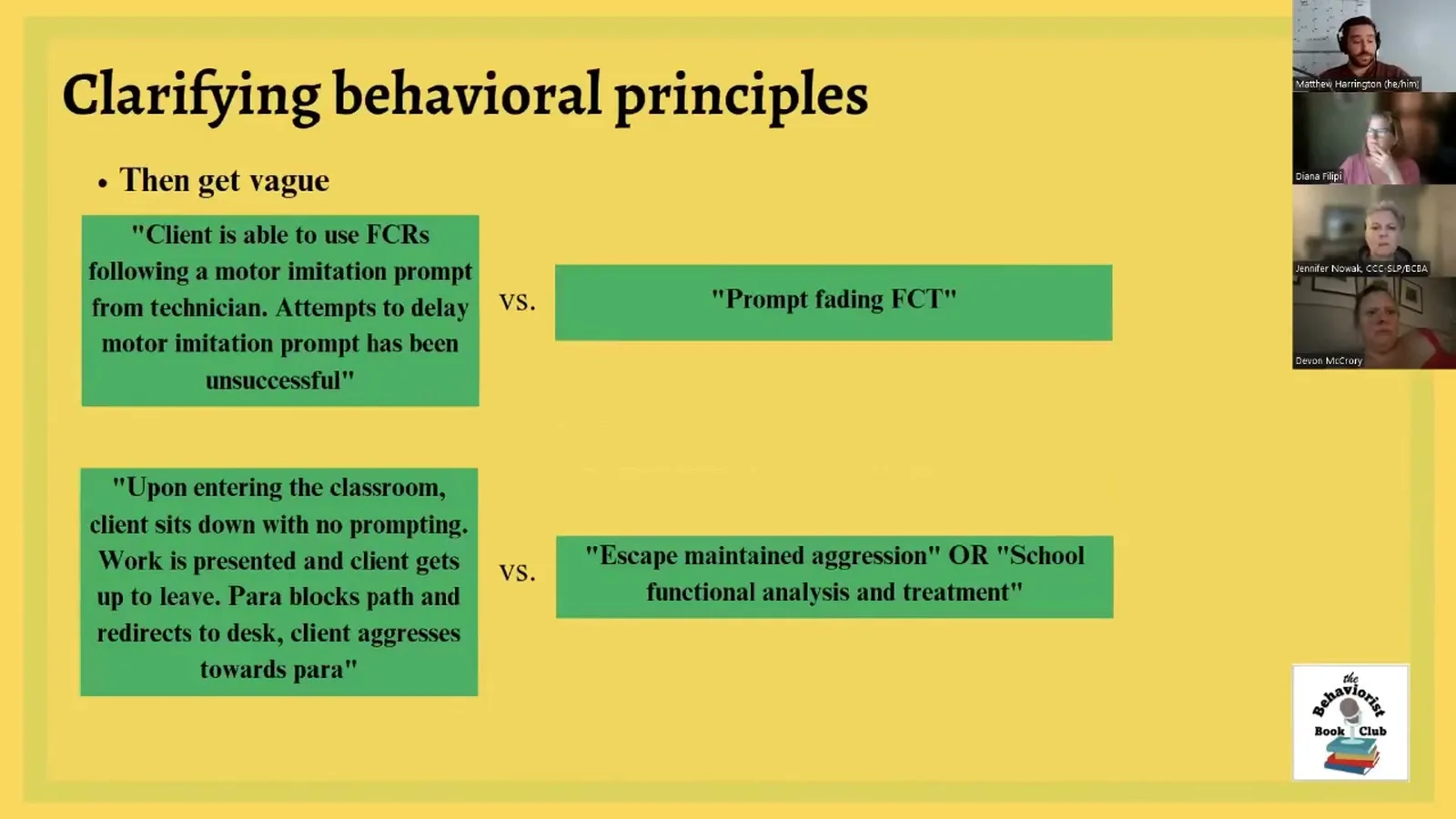
Pulled from a separate research article to identify a client's long-term motivators (independence, working at a coffee shop) and use them to drive a…
On this page · 8 sections▾
A values-based intervention builds a program around what a person cares about most. Values are the long-term goals that matter to someone. Think of things like independence, friendship, or a real job. The plan uses those big goals to shape behavior right now.
This matters because it changes why a person works. It moves the focus off short-term rewards and onto what the client truly wants. BCBAs, RBTs, teachers, and parents can all use this lens. It treats clients as people with their own goals, not just responders to rewards.
What "values" means in ABA#
Values are qualities or goals a person holds as high priority. They are not the same as a single reward. A reward is small and happens now. A value is bigger and stretches into the future. A values-based intervention connects the two.
Matt Harrington explains the point simply. The plan works by finding what the person wants long-term. Then it pulls that goal into the present moment.
so values is all about creating those long-term or identifying those long-term motivators and pulling them into the now so that we can identify, so we can reinforce, reinforce current behavior. From the talk — Matt Harrington
This gives the work a clear direction. You know what the person is aiming for. Every step can tie back to that goal.
Whose values come first#
A common mistake is using the wrong person's goals. The team may pick values that fit the clinic or the parent. But the plan should serve the client. Their goals come first.
Matt is direct about this. The values must belong to the learner, not the adults around them.
it's not our values. It's not the teacher's values. It's not the parent's values. It's the kid's values. From the talk — Matt Harrington
This keeps the work honest. You start by learning what the client wants. Then you build the program to move them toward it.
Why hard tasks can still make sense#
 Advertisement
Some people think good treatment means avoiding all unpleasant work. That view misses how real motivation works. Adults choose hard tasks all the time. They do it because those tasks serve a bigger goal.
Matt uses himself as the example. He does chores and reports he does not enjoy.
Those are all aversive stimuli that if you made a behavior contingent on the presentation of those aversive stimuli, that behavior would decrease. Right? I would decrease that. However, all of those things get done and I do all of those things. From the talk — Matt Harrington
He does them because they lead somewhere he values. Clients deserve that same chance. Denying it treats them as less than human.
not allowing our clients that same option to choose to do hard things is almost the most dehumanizing thing we can do. Because we're assuming that their behavior is automatically just going to be controlled by these short term ABC contingencies that we set up. From the talk — Matt Harrington
So a values-based plan can include hard steps. The key is that the hard steps serve the client's own goal.
Turning a value into a real program#
Values are not just a nice idea. They can drive a whole skill program. This helps when no study matches your exact case.
Matt shares one example from his own work. A client was in an adult day program with little meaning to them. Matt learned the client valued independence and a coffee shop job. He used that value to build a program that fit.
Well, let's go to values. And I pulled another research article and I learned more about the values and how to take a context that maybe has no impact to the learner and adult day program and develop a context that does the cafe that I wanted to work at. From the talk — Matt Harrington
The value became the blueprint. It shaped the skills he taught and the setting he built. You can see this approach in Research to practice - extending past the pages.
How to find a client's values#
Start by watching and asking. What does the person move toward when given a choice? What do they talk about or return to? These signals point to what they care about.
Talk to the people who know them well. Family and staff often see patterns you miss. But check those views against the client's own actions. The goal is the client's values, not the team's guesses.
Once you name a value, write it down as your target. Let it guide the skills you pick. Then tie daily reinforcement back to that larger goal.
Keep checking that the value still fits. People grow and their goals shift over time. Ask again and watch for new signals. A value from last year may no longer drive the client today.
Mistakes to avoid#
The biggest mistake is guessing the client's values for them. It feels faster to pick a goal yourself. But a borrowed value will not motivate the person. The plan drifts when it serves the wrong goals.
Another trap is treating all hard work as harm. A good plan does not remove every effort. It asks the client to do hard things for a reason they care about. That is respect, not cruelty.
Watch for plans that only chase short-term rewards. Small rewards can teach a skill. But they miss the bigger picture on their own. Tie each reward back to the client's larger goal.
What the research says#
Values are more than a clinical trend. One review frames values as a core guiding principle for the whole field. It calls values a central process in acceptance and commitment therapy, also called ACT (Paliliunas, 2021). ACT is a therapy that builds action around what a person cares about.
That same review shows values reaching far beyond one setting. It describes values-based work in guided decision making and parent training. It also names uses in staff development and treatment plans for children and adults (Paliliunas, 2021). The author notes the research is promising but still growing. More study is needed to map how values work best.
FAQ#
What is a values-based intervention in ABA?
It is a plan built around what a person cares about most. Values are long-term goals like independence or a real job. The plan pulls those goals into the present. It then reinforces the small steps that move the client toward them.
How is a value different from a reinforcer?
A reinforcer is a reward that happens right now. A value is a bigger goal that stretches into the future. A values-based plan links the two together. It uses today's rewards to move a person toward their long-term goal.
Whose values should guide the treatment plan?
The client's values should come first. Not the clinic's, the teacher's, or the parent's. The team's job is to learn what the client truly wants. Then they build the program around that goal.
 Advertisement
Turn this topic into a CEU
You just studied this. Now get credit for it.
Watch Analyzing Assent and Taking Data with Matt Harrington and earn 3.5 free BCBA CEUs. Detailed certificate, delivered the moment you finish.