Screen Time Before Bed: What a BCBA Tells Parents
How screens really affect autistic kids at bedtime and which shows are okay before sleep, from a BCBA-led CEU.
Key takeaway
Here is the honest version: the blue light story most parent articles still lead with is mostly wrong, and the worst part of screen time before bed is YouTube auto-play sliding the next video in before your kid can even think about getting tired.
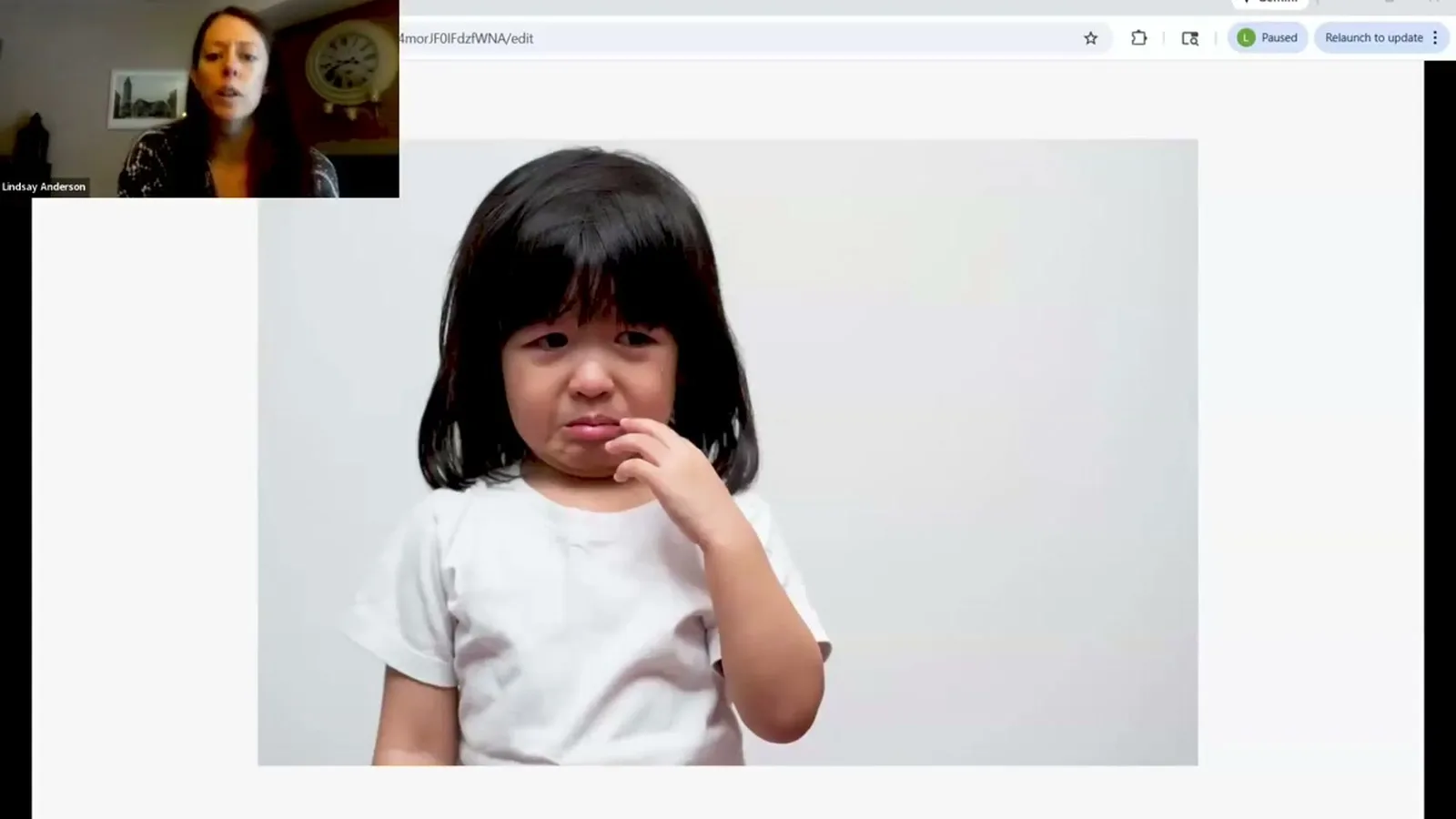
Why Won’t They Go to Bed? A BCBA’s Guide to Effective Bedtime Routines
On this page · 8 sections▾
Here is the honest version: the blue light story most parent articles still lead with is mostly wrong, and the worst part of screen time before bed is YouTube auto-play sliding the next video in before your kid can even think about getting tired. Behavioral sleep researcher Lindsay Anderson, BCBA, walked through this in her CEU on bedtime routines, and the punchline matters most for autistic kids and kids with ADHD, because screens hit harder when self-regulation skills are still being built. This page pulls her plain rules for the last hour before lights out.
The blue light story was wrong. Here's what matters instead#
For a long time, parents were told to ban screens before bed because blue light was hurting melatonin. That was the headline on every sleep article. Newer research has walked that claim back. The light itself is not the main problem.
Researchers used to think that it was the blue light in screens that was suppressing melatonin and making it more difficult to fall asleep but newer research has found that the effect of blue light itself isn't as significant as they thought and they're instead now focusing on the behavioral effects of screen time. From the talk — Lindsay Anderson
So what does matter? What your kid is doing with the screen. Scrolling, gaming, and tapping pulls the brain into an active, focused state right when it needs to be slowing down. A calm show in the background does not do the same thing. That is a real, useful distinction, and it gives parents permission to stop fighting a battle that was not the right battle.
The screen-time rule for bedtime is not about light. It is about how engaged your kid's brain gets.
Why YouTube auto-play is the worst bedtime screen choice#
YouTube has a feature that quietly causes more bedtime problems than parents realize. The next video starts on its own. There is no end. There is no natural stopping point. Your kid never gets the cue that says, "this is over, time to go to sleep." Instead, they get a fresh hit of something new every few minutes.
Using technology in a more engaging way like video gaming or scrolling is going to delay bedtime much more than just watching television and then they also cautioned against the continuous play features like on YouTube where another video automatically comes on which is going to delay sleep even more. From the talk — Lindsay Anderson
This is also true for TikTok, Reels, and any "for you" feed. The whole design is built to keep someone watching. That is great for the app and bad for sleep. If your kid currently watches YouTube as the last 30 minutes of the day, that is the single highest-impact change you can make without an argument: swap the platform, not the time.
A show on a regular streaming service that ends at the end of an episode is a different experience for the brain. Your kid sees credits. The screen pauses. There is a built-in moment to stop.
Why screens hit autistic and ADHD kids harder#
Not every kid reacts to bedtime screens the same way. Some kids can watch a show and roll right into sleep. Others get wound up by it for an hour. This is not just personality. There is a pattern in the research.
They found that the negative impacts of screen time are particularly strong in individuals that have poor self-regulation skills and who engage in more risk taking behaviors. From the talk — Lindsay Anderson
This matters for the families on most BCBA caseloads. Autistic kids and kids with ADHD are often still working on the skills that let a brain shift from "alert" to "calm" without help. So when a screen ramps a kid up, the kid does not have an easy off switch yet. The same 20 minutes of YouTube that is no big deal for an adult can mean an extra 45 minutes of bedtime resistance for a 6-year-old who is learning to regulate.
Read this as a reason to be more careful, not as a reason to feel bad. The kids whose brains have the hardest time settling are also the kids who get the biggest payoff when you protect that last hour.
The okay screen: calm show with a clear ending#
The goal is not "zero screens before bed." For a lot of families, that is not realistic, and it can actually make bedtime harder because you have removed one of your kid's reliable calming tools. The goal is the right kind of screen.
It's really okay to incorporate a calm show that has a discreet beginning and ending into the bedtime routine especially if that helps the learner settle down but we really want to avoid more of that up close active screen time close to bed. From the talk — Lindsay Anderson
What "calm show with a clear ending" looks like in real life:
- A single 11- or 22-minute episode of a slow-paced cartoon, not a playlist
- The TV across the room, not a tablet two inches from your kid's face
- Picked before the show starts, so your kid is not choosing during the wind-down
- Same show, same time, most nights. The brain likes the pattern
- The show ends, the TV goes off, and the next step in the routine starts
Active versus passive matters more than minutes. Five minutes of scrolling is more activating than 20 minutes of a quiet show your kid has seen 12 times. The repeat factor is a feature, not a bug. Familiar content is less stimulating than new content.
How to swap one show for a calmer one without a meltdown#
The honest part: if your kid is currently getting YouTube right before bed, taking it away in one move will probably blow up bedtime for a few nights. Most behavior plans do better with a swap than a removal.
A way to do this that usually holds:
- Keep the time slot. The last 30 minutes still has screen time.
- Change what plays in that slot. Put YouTube earlier in the evening, ideally right after dinner, and move the calmer show to the bedtime slot.
- Tell your kid the new rule the day before, not at bedtime. Bedtime is not the place to introduce policy changes.
- Use a visual schedule if your kid uses one in the day. The new screen goes on the schedule in the bedtime slot.
- Pair the calmer show with something your kid already likes about bedtime: a snack, a parent in the room, a blanket they like.
If you can, build in a choice without changing the structure. "Do you want Bluey or Tumble Leaf tonight?" gives your kid control over the part that does not matter to sleep and leaves the part that does matter to sleep alone.
Expect 3 to 7 rough nights. After that, the new routine usually starts running on its own. If you are still seeing big resistance after two weeks, the screen is probably not the actual problem. Look at the bedtime itself, the wake time, and any napping.
What to do during the last 30 minutes before lights out#
The last 30 minutes is the part of the day with the biggest payoff for sleep. Spend it on purpose.
What works in that window:
- Lower the lights in the room your kid is in. Overhead lights signal "still daytime" to the brain.
- Keep the bedroom between 65 and 70 degrees. Cooler is better for sleep than warmer.
- Put loud noises away. If you live somewhere noisy, a white noise machine under 50 decibels can help.
- Do calm activities in a predictable order. Same order every night. Bath, then pajamas, then book, then lights out, for example.
- Save your kid's favorite calm thing for last. Massage, snuggles, or a parent reading out loud all work and have research behind them.
What to skip in that window:
- Running around, jumping, wrestling, or trampoline time. Exercise within two hours of bed can push sleep back more than 30 minutes.
- Scrolling, gaming, or any app with a feed.
- New shows your kid has not seen before. New means alert.
- Big conversations about hard topics. Save those for the next day.
- Bright bathroom lights right before getting in bed if you can dim them.
The pattern your kid's brain is learning is: when these things happen in this order, sleep comes next. The screen rule is one piece of that pattern. The lights, the temperature, the noise, and the order of the routine all do their part too.
Frequently asked questions#
Is a tablet ever okay in a bedtime routine?
A tablet is harder than a TV because it is up close, it is usually held by your kid, and the apps on it are usually feed-based. A tablet showing one downloaded episode of a calm show, propped up across the room, is not very different from a TV. A tablet in your kid's hands with YouTube open is the worst-case version of bedtime screen time. If the tablet is the only screen you have, take the device out of your kid's hands and put it where they cannot tap during the show.
Does turning on Night Shift or dark mode fix screens at bedtime?
Probably not by very much. Night Shift, dark mode, and blue-light filters target the part of the problem that newer research says is not the main problem. They do not change what the app is doing to your kid's attention. If you only change the color of the screen and keep YouTube auto-play running, you have not really changed the bedtime problem. Use these settings if you want, but do not count on them.
How far before bed should screens be off?
There is not one number that fits every kid. A practical version of the rule: the last 30 minutes before lights out should not have active screen time. That means no tablets in hand, no gaming, no scrolling. A calm show on a TV across the room can be part of that 30 minutes if it helps your kid wind down. For kids who get very wound up by screens, push the active-screen cutoff to one hour before bed and use that last hour for the calm routine.
Watch the full CEU#
Lindsay's talk walks through the rest of the bedtime routine in the same plain way: how to pick a bedtime that actually matches your kid's tired time, how to use a faded bedtime when the current one is too early, the bedtime pass for curtain calls, and how to use the daytime ABA session to teach the skills bedtime needs. If the screen swap is the first piece you change, the rest of the talk is the next 90 percent of the work.
Turn this topic into a CEU
You just studied this. Now get credit for it.
Watch Why Won’t They Go to Bed? A BCBA’s Guide to Effective Bedtime Routines with Lindsay Anderson and earn 1 free BCBA CEU. Detailed certificate, delivered the moment you finish.