Should BCBAs Write Goals to Reduce Stimming? An Autistic BCBA's Answer
When stimming is on the goal list, ask who the goal is really for. A neurodiversity-affirming look at stereotypy goals, written from a BCBA-led CEU.
Key takeaway
A kid sitting in a beanbag chair with a small wooden block in their hands is not a problem to solve, and most of the time a goal to reduce stimming says more about the adults in the room than it does about the kid.
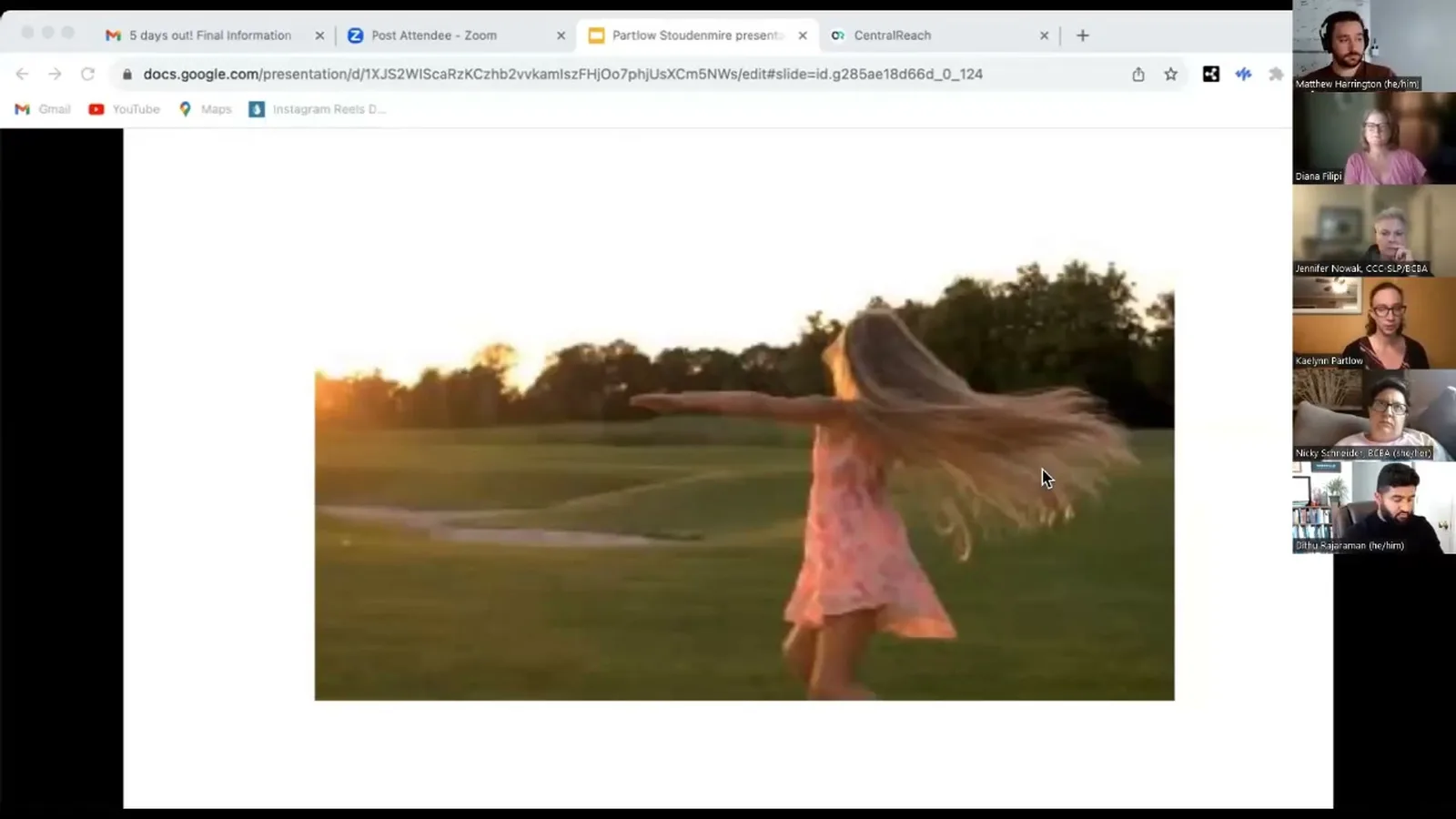
The Ethics of Socially Significant Goal Selection - Applied 2023
On this page · 8 sections▾
A kid sitting in a beanbag chair with a small wooden block in their hands is not a problem to solve, and most of the time a goal to reduce stimming says more about the adults in the room than it does about the kid. If you are a Board Certified Behavior Analyst (BCBA) and your gut already knew that, this page is going to give you the words for it. If your gut is telling you something different, stick around anyway. The question of stimming goals is one of the messiest questions in our field, and we owe our clients a real answer instead of a script.
The short version of my answer is this. I do not write goals to reduce stimming as a default. I write goals that expand a kid's world so the stim is no longer the only good thing in it. Sometimes those two paths look similar on paper. They are not the same thing on the ground.
Who is uncomfortable with the stim? Start there#
Before you write any line on a treatment plan, sit with this question. Who is the stim bothering? The kid? The parent? The teacher? The funder? Your supervisor? You?
If the honest answer is "the kid is fine, but it makes the adults around them uncomfortable," you do not have a clinical goal yet. You have an adult feelings problem, and a goal to reduce the stim is going to do real harm dressed up as treatment. The kid will learn that the thing that helps them feel okay is the thing the people they trust want to take away.
Walk through the list out loud with the team. Is the stim hurting the kid? Is it stopping them from getting to something they want? Is it putting them in danger? If the answers are no, no, and no, you are not writing a stim reduction goal. You are writing a "make the grown ups feel better" goal, and that is not what families are paying us for.
I am autistic. I stim. I am a BCBA. I have written treatment plans for autistic kids and I have been an autistic kid getting services. I am telling you, the discomfort the adults feel in the room is real, but it is not the kid's job to fix it.
The beanbag chair test (and why taking the block away backfires)#
Kaelynn tells a story in the talk that has become the test I run in my head before I sign off on any goal that touches stereotypy. A kid is in a therapy room. They are on a beanbag chair, holding a small wooden block, twirling it in their hands. The speech therapist comes in to run a session. She tries tickles. She tries squeezes. She tries singing. She offers to push the kid around in an office chair. The kid is not interested. The kid wants the beanbag and the block.
Here is the moment that matters. Some clinicians, watching this play out, will start to think the speech therapist should take the block. Make the kid mand for it back. Use the only thing the kid likes as the lever.
We cannot reasonably hope to expand someone's motivation by shrinking down their worlds, which are already far too small. From the talk — Kaelynn Partlow
Read that twice. The block and the beanbag are not the kid's only options because the world is short on blocks and beanbags. They are the kid's only options because nobody has spent the time helping them find more. Taking the only good thing away to force a request for it back does not grow the kid's world. It just shrinks the kid down to the size of the room.
What we are in short supply of is time to teach this individual to engage with and ideally enjoy other items and activities. From the talk — Kaelynn Partlow
That is the pivot. Time is the scarce thing. Spend it on expansion, not on contraction.
When stimming actually is a barrier (and when it just looks like one)#
I want to be honest with you. Sometimes stimming is in the way of something the kid wants. A kid who hand flaps so intensely during a board game that they cannot pick up the dice when it is their turn, and who is melting down because they are losing turns, has a real barrier. A kid who chews their shirt collars through to holes in a single school day, and who is upset that other kids have started to comment, has a real barrier. A kid whose stim involves head banging hard enough to bruise is a safety conversation, not a social significance one.
In those cases, the goal is still not "reduce the stim." The goal is to remove the barrier the kid is bumping into. Sometimes that looks like teaching a different way to get the same sensory input. Sometimes it looks like an accommodation. Sometimes it looks like making sure the kid has access to the thing their body is asking for before the situation gets to the breaking point.
People come to therapy seeking help in removing the barriers they face as a result of a diagnosis. And these barriers, like sensory needs, communication challenges, or executive functioning difficulties, stand in the way of a person taking full advantage of the opportunities that life gives them. From the talk — Kaelynn Partlow
The stim is rarely the barrier. The thing the stim is helping the kid cope with is the barrier. Write goals against that.
Better goals to write instead of 'reduce stereotypy'#
Here is what I write instead, and why.
I write goals around teaching new play and leisure skills the kid actually enjoys, so the stim has company on the menu instead of being the only dish. I write goals around expanding the kid's reinforcer pool. I write goals around teaching the kid to ask for the stim, the break, the sensory input, or the alone time they need. I write goals around communicating discomfort before it gets to a meltdown. I write goals around peer engagement when the kid is already showing me they want it.
When setting goals for autistic students, we are teaching them skills to help them remove the barriers they face as a result of their diagnosis. From the talk — Kaelynn Partlow
Notice what is not on that list. There is no "reduce hand flapping to X per hour." There is no "increase quiet hands." There is no "decrease stereotypy by 80 percent." Those goals do not pass the question, "what barrier am I removing for this kid." Quiet hands is not a skill. It is a request that the kid be more comfortable to be around.
If you find a stim that is genuinely standing between the kid and a thing they want, write the goal as the thing they want. "Will complete a board game turn with their peers" tells you something. "Will reduce hand flapping" tells you nothing about whether the kid's life got better.
What to say when a funder or school demands a reduction target#
This one is real, and I am not going to pretend it is not. Funders ask for reduction targets. Schools ask for reduction targets. Sometimes the team you work for asks you to put one on the plan because that is what has always been on the plan.
Here is what I do. I document the stim under a different question. I note what the kid is communicating with the stereotypy. I note the function. I note the environments where the stim is happening more, and what is going on in those environments. I write a skill acquisition goal that addresses the underlying need. If the stim drops as the new skill comes online, the data will show that without me writing a line on the plan that says I am trying to make the kid look less autistic.
If the funder pushes back, I tell them what the literature has been saying for almost fifty years. The point is socially significant outcomes, not the elimination of behaviors that look different. I have not yet had a funder come back at me and say, no, please make the autistic kid more visibly autistic-suppressed. They mostly want to see that the kid is making progress. Show them progress on the thing that matters.
If a school is asking for it, I have the conversation about what the stim is actually getting in the way of in class. Nine times out of ten it is not getting in the way of anything academic, and the request will quietly drop once it is named out loud.
A script for the parent conversation#
This is the conversation that scares clinicians the most. It does not have to. Here is the version I use, more or less, with families who ask me to put hand flapping or rocking or vocal stim on the goal list.
"I hear you. I want to talk about what flapping is doing for your kid before we talk about taking it away. From what I am seeing, it is helping them stay regulated when things get loud or fast. If we write a goal to stop it, we are taking away the tool they are using to cope, and the underlying overwhelm is still going to be there. What I would rather do is figure out what is overwhelming them, teach them to ask for what they need before they get to that point, and give them more ways to feel good in their body. If the flapping naturally comes down as we do that, great. If it does not, we will have a kid who is more regulated and more connected, and that is what we are actually going for."
Most parents are not asking for compliance. They are asking, in the only language they have, for their kid to be okay. If you can show them that you have a plan for their kid being okay that does not include shrinking them, they are usually with you. The ones who are not with you usually have something going on underneath, often grief, sometimes shame, and that is a longer conversation worth having.
Frequently asked questions#
Is it ever okay to write a goal that reduces stimming?
The honest answer is, almost never as the goal itself. There are narrow cases where a specific stereotypy is causing tissue damage or putting the kid in real danger, and even then, I am writing a goal around safety and replacement, not around reduction for its own sake. If you are about to write a stim reduction goal, run the beanbag chair test first. Whose discomfort is this goal really treating?
How do I respond when a parent asks me to stop their child's hand flapping?
Start by getting curious about what is underneath the ask. Is it embarrassment in public? Is it worry the kid is going to get bullied? Is it concern that the kid is not paying attention in class? Each of those leads to a very different conversation, and almost none of them lead to a goal to suppress the flap. Use the script in the section above. Lead with the kid being okay. Bring the parent along with you instead of writing the goal you do not believe in just to keep the peace.
What do I document for the funder if I'm not running a reduction program?
You document the skill acquisition program you are running, the function the stereotypy appears to be serving, and the data you are taking on the related skills. Most funders want to see that the kid is making progress on socially significant goals. They are not going to refuse a renewal because you wrote "teaching the learner to request a sensory break" instead of "decrease stereotypy." If your specific funder is genuinely demanding a reduction target on paper, talk to your clinical director about how your team is going to hold the line.
Want the version straight from Kaelynn?#
Everything I just walked through is built on the talk Kaelynn Partlow gave on the ethics of socially significant goal selection. She tells the beanbag chair story in her own words, walks through her four-part question for any goal you might write, and uses case examples from her own caseload. Watch the full session for the version that is not filtered through me.