Minimum Functional Analysis Duration: What BCBAs Actually Need
How short is too short for an FA? Jessel's research suggests 3 to 15 minutes works for most cases if you do it right. Practical guide from a BCBA-led CEU.
Key takeaway
A functional analysis can run as short as 3 to 15 minutes of actual test time when you structure it right, the BACB does not require a specific length (any functional assessment satisfies the rule), and the duration you pick should follow your caseload realities and how dangerous the behavior is.
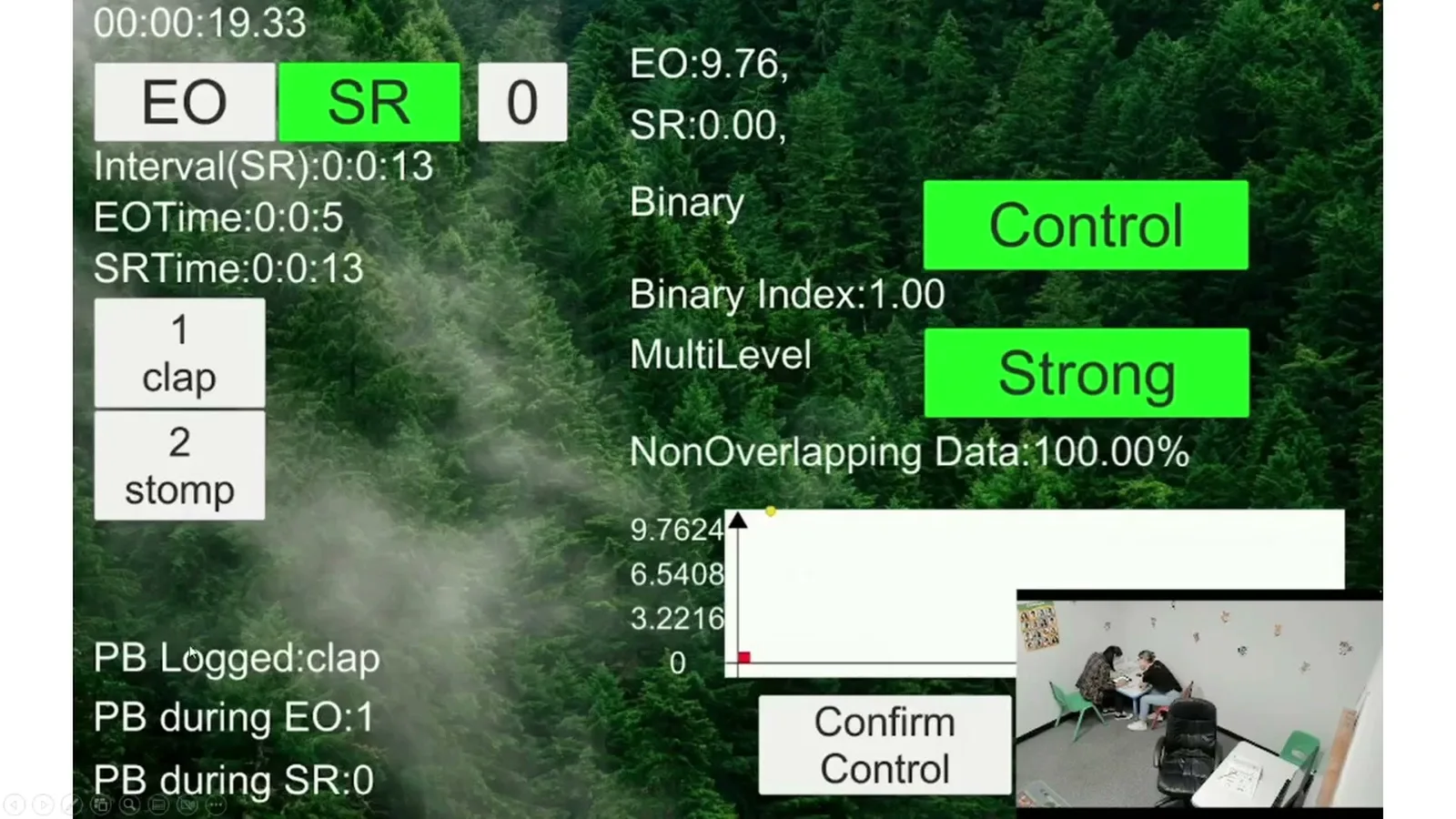
Redefining the Boundaries of Efficiency during a Functional Analysis of Problem Behavior - Applied 2022
On this page · 9 sections▾
Minimum Functional Analysis Duration: What BCBAs Actually Need
A functional analysis can run as short as 3 to 15 minutes of actual test time when you structure it right, the BACB does not require a specific length (any functional assessment satisfies the rule), and the duration you pick should follow your caseload realities and how dangerous the behavior is. That is the short version. The rest of this page walks through how Dr. Joshua Jessel arrived at those numbers, where the floor really sits, and how a working BCBA should decide.
What the BACB actually requires for FA duration (the answer is nothing)#
Most BCBAs assume the BACB has set a minimum number of sessions or minutes for a functional analysis. It has not. The rule only says that when a child shows problem behavior, you must run a functional assessment of some kind. As Jessel puts it:
If a child is exhibiting problem behavior, you're required to conduct a functional assessment, but really any functional assessment will do.
That includes an indirect survey, a quick descriptive observation, or a full functional analysis. The legal floor is low. The ethical floor is higher because some methods are not reliable and others are too hard to actually run in a clinic. So the duration question is not a regulatory question. It is a clinical one, and that is where research starts to matter.
Why most clinicians never run an FA#
If functional analyses are the gold standard, you would expect them to be common. They are not. Jessel referenced a clinician survey by Oliver and colleagues that asked how often practicing BCBAs used a functional analysis in their daily work. The combined "never" and "almost never" responses came out to 427 of all answers, which is 63 percent. Most BCBAs are not running them at all.
The reasons are practical: too much time, too much risk, too much staffing. A standard functional analysis (think attention, escape, alone, tangible, and a play control across multiple sessions) runs about three hours of actual analysis time once you total the sessions. That number does not include setup, prep, or training. For a working clinician with a full caseload, three hours per client per assessment is a non-starter.
This is the real reason the duration question matters. If we want BCBAs to actually use the most reliable assessment we have, we need a version that fits inside a real workday.
The three pressures every BCBA juggles#
Before we talk minimums, name the pressures honestly. Jessel sums them up cleanly:
We have countless number of clients we need to serve. And we don't have unlimited resources or staff members.
Add safety to that, and you have the three forces pushing on every duration decision: caseload size, staffing, and how dangerous the target behavior is. A longer FA means more billable hours pulled away from treatment for other clients on your list, more staff time you may not have, and more total exposure to the very behavior you are trying to fix. Every minute of test condition is a minute someone is being asked to do something that triggers them.
So when you ask "what is the minimum," the honest answer is whatever length still gives you a clear functional relation while keeping all three pressures under control.
What "minimum" looks like in Jessel's IISCA: about 15 minutes for 5 sessions#
The IISCA (interview-informed synthesized contingency analysis) was Jessel and Hanley's first big efficiency move. Instead of testing each reinforcer in its own condition, the IISCA uses a single test condition built from an open-ended caregiver interview, compared to a matched control. Most IISCAs need only five sessions (three tests, two controls).
When Jessel added the 127 IISCAs in the published literature to his timing review, the average analysis time was about 30 minutes. That is an 80 percent improvement in efficiency over the standard three-hour FA. Then his team pushed further. They ran a study using only 3-minute sessions and still saw strong functional control in most cases.
With this format, you can use sessions as brief as three minutes, creating analysis that could only require 15 minutes.
So the practical IISCA floor is around five sessions of 3 minutes each. Fifteen minutes of test time. That is the number to anchor on when you need a defensible multi-session FA.
The single-session route: 3 to 5 minutes if you structure it right#
Jessel's team then asked whether even five sessions were necessary. Inside a single test session, you can flip between a reinforcer-absent interval (the test) and a reinforcer-present interval (the control) several times. Eight switches inside one session gives you eight mini-comparisons. If problem behavior happens reliably when the reinforcer is gone and stops reliably when it comes back, you have your functional relation in one shot.
The single-session ISCA can run in 3 to 5 minutes total. In the studies Jessel showed, sessions as short as 3 minutes produced strong control for most participants. The trade-off is that the data live on a tighter timescale, so you either need a partner watching the clock or an app like PBMLI to log responses and graph them while you run the session.
For a BCBA on a tight schedule, this is the actual floor. Three minutes of test time, plus your setup and your interview-informed contingency, can deliver an interpretable FA.
How to choose your duration based on topography severity#
Picking a duration is not about being clever. It is about matching the assessment to the behavior. Use this as a rough decision frame:
- If the target is severe self-injury or aggression that puts the client or staff at real risk, run the performance-based ISCA. It terminates after about five instances of evoked problem behavior, often inside 10 minutes, and uses non-dangerous precursors so you never need a full burst.
- If the target is moderate (frequent but not dangerous), the single-session ISCA at 3 to 5 minutes is usually enough.
- If you want a more conservative paper trail (new client, supervisee running it, unfamiliar topography), use the IISCA with 3-minute sessions across five sessions. Fifteen minutes of test time.
- If you genuinely cannot get a clear answer in any short format, you have not failed the efficiency test. You have learned something. Step up to a longer IISCA before defaulting to the three-hour standard.
The general rule: the more dangerous the topography, the more you want to minimize total exposure time. That points you toward the shortest defensible format, not the longest.
Safety first: less exposure to evoked behavior is the point#
The reason short FAs matter is not bragging rights. It is harm reduction. The functional analysis is the one part of your assessment where you deliberately evoke and reinforce the behavior you are trying to eliminate. Every minute you sit in test condition is a minute the client is being put under that EO.
The briefer the functional analysis, the less exposure to therapist-evoked problem behavior.
That is the ethical case for choosing the shortest format your data can support. The clinical case is just as direct: the sooner you finish the FA, the sooner you start treatment.
The faster it is completed, the faster we can move on to the most important part, treatment.
A BCBA who can run a defensible FA in 3 to 15 minutes is a BCBA who can offer the most reliable assessment in the field without burning a full afternoon, without exhausting staff, and without subjecting the client to a long stretch of evoked behavior. That is the whole argument for minimum-duration FAs.
FAQ#
What's the shortest FA I can ethically run as a BCBA?
Jessel's research supports a single-session ISCA of 3 to 5 minutes for most cases, with strong functional control observed in his published studies. That is the floor only when you have a clean interview-informed contingency, a way to log within-session data, and the behavior is not so severe that even brief exposure is unsafe. For the safest version of "very short," use the performance-based ISCA, which terminates after about five instances of problem behavior rather than after a set clock.
Does the BACB require a specific FA length?
No. The BACB requires a functional assessment when problem behavior is present, but it does not specify a minimum number of sessions or minutes. An interview, a brief observation, or a full functional analysis can all satisfy the rule. The duration choice is clinical and ethical, not regulatory.
How do I decide between a 15-minute IISCA and a single-session version?
Use the IISCA (five sessions of about 3 minutes each, roughly 15 minutes of test time) when you want a conservative multi-replication record, when a supervisee is running it, or when the contingency is less obvious. Use the single-session ISCA (3 to 5 minutes, one session with repeated EO/reinforcer switches) when you have high confidence in the contingency from the open-ended interview and you want the shortest defensible exposure. Both produce strong functional control in Jessel's data.
What if my client's behavior is too dangerous for even 3 minutes of test condition?
Switch to the performance-based ISCA. It uses non-dangerous precursors as part of the response class, terminates after about five EO presentations, and waits for 30 seconds of calm before re-presenting the EO. You never need a full dangerous burst to make the interpretive leap. If even precursors are too risky, you are no longer in functional analysis territory. That is when extended assent-based assessment and a safety-first treatment plan come before any FA at all.
Run the FA your caseload can actually carry#
If you want to see Jessel walk through the single-session and performance-based ISCAs with live data, the full session is on openceu.com and is BACB-eligible.
Watch the full CEU on openceu.com