Milestone-Based Comparison Criteria in ABA Assessment
Milestone-based comparison criteria judge a learner against their own goals, not against same-age peers. See how BCBAs use this in skill assessment.
Key takeaway
Milestone-based comparison criteria are a new way to score skill assessments. Instead of comparing a learner to same-age peers, you compare them to a goal.

genArete: Milestone based comparison criteria in Skill Assessment
Free learning path on this topic
Child Development for Behavior Analysts
Typical development for behavior analysts. Kristen Byra's overview, then Kelly Brzak's deep dives on ages 2 to 5, 6 to 8, and 9 to 11, with milestones, common problem behaviors, and programming tips for each band.
Experts who cover this
3 recordings on openceu cover milestone-based comparison criteria.
- Featured talk1 CEU
genArete: Milestone based comparison criteria in Skill Assessment
Mark MaladyThe Behaviorist Bookclub
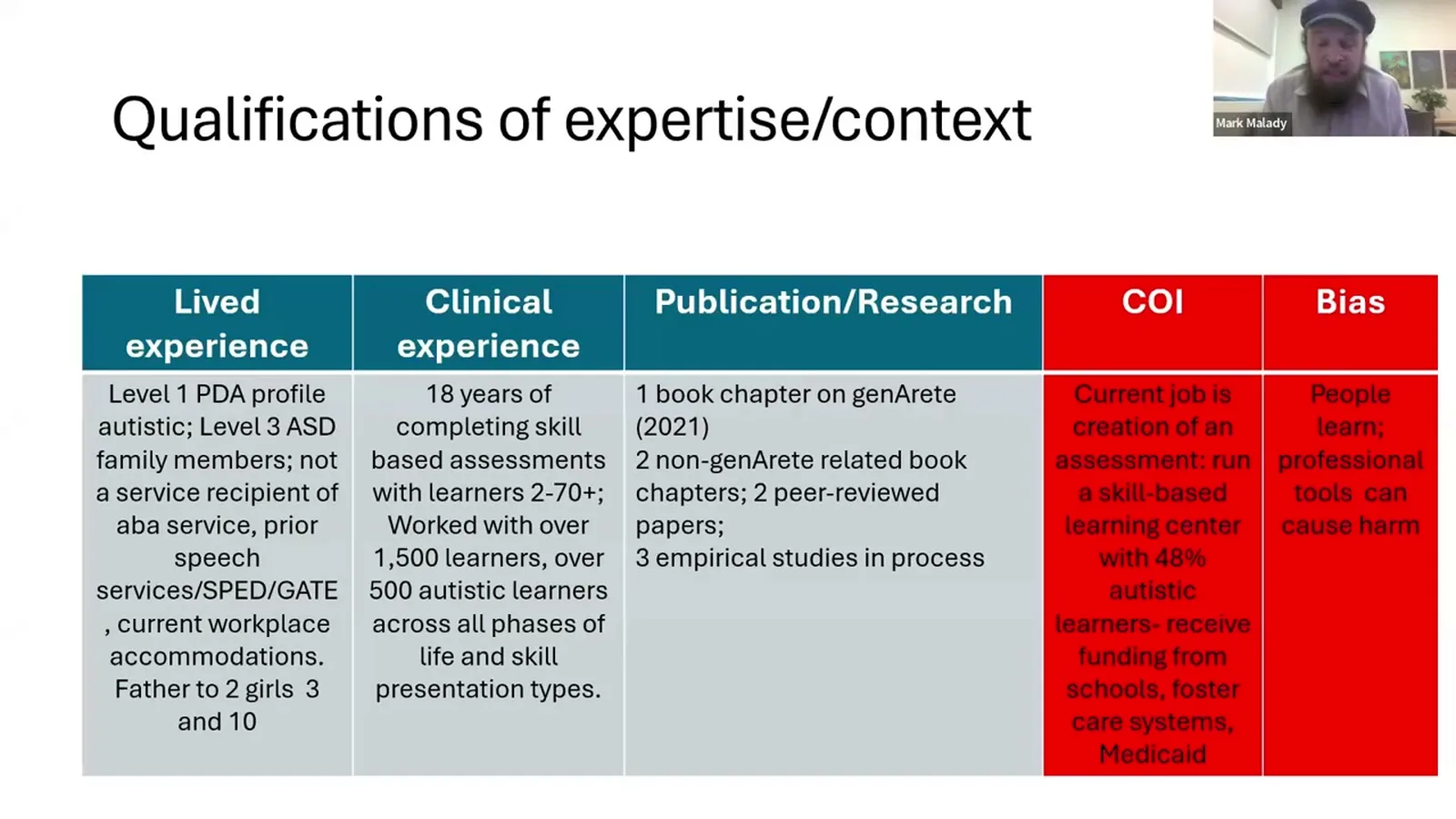
Mark Malady's core proposal: overlay a flexible, person-selected, outcome-based milestone as a second data path on top of a skill-based assessment, so progress…
- 1 CEU
Generate: Learner Centered Skill Assessments
Mark MaladyThe Behaviorist Bookclub
Generate's central design feature: rather than comparing a learner to same-age peers, milestones are benchmarked against competent performers matched to what…
- 1 CEU
genArete: Learner-Centered Skill Assessment
Mark MaladyThe Behaviorist Bookclub
Central to Generate's design, Mark contrasts comparing a learner's skills against a specific personally meaningful milestone, like staying home alone or caring…


On this page · 7 sections▾
Milestone-based comparison criteria are a new way to score skill assessments. Instead of comparing a learner to same-age peers, you compare them to a goal. That goal is something the learner actually wants to do. It could be staying home alone or caring for a pet.
This matters for BCBAs, RBTs, teachers, and parents. Old assessments often ask if a skill is "on track" for a certain age. But age is not always the point. The real point is the life the person wants to live. Milestone-based criteria keep that goal front and center.
What "relative evaluation" really means#
Mark Malady built this idea into an assessment tool called Generate. He starts with a simple shift in how we compare data. He calls it relative evaluation. In his words, skills get compared to the person's own goals and values. They are not measured against a fixed norm.
This flips the usual order of things. You do not wait for a learner to "catch up" to a chart. You look at what they want, then check the skills that goal needs. That keeps the assessment tied to real life.
Comparing to a goal, not to peers#
The core move is choosing the right thing to compare against. Malady uses the learner's own target to set the bar. That target sets the parameters for the whole assessment.
we created a milestone-based approach where we are using the thing that the person wants to accomplish to set the parameters on what we're going to compare their data to. From the talk — Mark Malady
So how do you build a fair bar? Malady's team looks at people who already do the task well. They find competent performers who match the learner's situation. Then they measure what those performers can do.
the standard ways that we go about making our milestones, we find competent performers that are representative of that person. We benchmark performer skills. From the talk — Mark Malady
Those benchmark skills become the milestone. The learner's data gets laid over that milestone on a graph. Now you can see over-skilled and under-skilled areas at a glance.
Getting specific helps you see gaps#
 Advertisement
A vague goal gives you vague answers. A specific milestone gives you a sharper picture. Malady says detail is what makes this method useful.
when we get really specific about the milestone that the person is trying to accomplish, it gives us more functionality in making determinations of when people are under skilled or over skilled. From the talk — Mark Malady
Say the goal is staying home alone for 15 minutes. You can list the exact safety skills that task needs. Then you check each one against the learner's data. The gaps you find are real and tied to the goal.
When the finding is dignity, not skill#
Here is where the method gets powerful. Sometimes the learner already has the skills. They just have not been given the chance to use them. Malady shares a case that made this clear.
We looked at, hey, what does it take for people to stay home alone without any risk? And we were able to come up with a milestone-based comparison. And when we compare the learner's data to it, we saw that they far exceeded this specific milestone, even though they weren't being afforded the opportunity. So it changed it from a skill-building conversation to a dignity at risk conversation. From the talk — Mark Malady
This is a big deal for practice. The learner did not need more teaching. They needed the door opened. The assessment showed the team was holding someone back. That is a finding a peer chart would never surface.
An extra tool, not a replacement#
Malady is careful about how this fits with current tools. It does not throw out what you already use. It adds a flexible option on top of your normal assessment.
our alternative is flexible, person-selected, outcome-based milestones. And the idea being that any assessment instrument can have multiple outcome-based milestones that then can be matched to the needs of the person that the assessment is being used to. From the talk — Mark Malady
He frames it as a third choice. Most assessments already offer two ways to score progress. The milestone-based criterion sits beside them. You can bolt it onto tools you have or build new tools around it. Malady walks through the person-centered roots of this idea in genArete: Learner-Centered Skill Assessment.
Why this protects against bias#
There is also a subtle safety benefit. When you only compare to norms, cases can blur together. Everyone starts to look like the same "delayed" profile. Malady warns about this trap. His fix is to add in the learner's current milestone, or something that really matters to them. That protects the team from falling into the pattern.
The milestone keeps each person distinct. It reminds the team who this plan is for. That guards against copy-paste goals that fit no one well.
FAQ#
How is this different from norm-referenced assessment?
Norm-referenced tools compare a learner to a large group, often by age. Milestone-based criteria compare a learner to a personal goal. The bar comes from competent performers who match that goal. This keeps the focus on the learner's own life, not a chart.
What is a "competent performer" in this model?
A competent performer is someone who already does the target task well. They should be a fair match for the learner's setting. Their skill level sets the milestone you compare against. This gives you a real-world bar instead of a guess.
Can this change a treatment plan?
Yes, and it can change it in surprising ways. If a learner meets the milestone, they may not need more teaching. They may need more access and choice instead. That can turn a skill goal into a rights and dignity goal.
 Advertisement
Turn this topic into a CEU
You just studied this. Now get credit for it.
Watch genArete: Milestone based comparison criteria in Skill Assessment with Mark Malady, BCBA and earn 1 free BCBA CEU. Detailed certificate, delivered the moment you finish.
Keep going with a free learning path
Child Development for Behavior Analysts
Typical development for behavior analysts. Kristen Byra's overview, then Kelly Brzak's deep dives on ages 2 to 5, 6 to 8, and 9 to 11, with milestones, common problem behaviors, and programming tips for each band.