What Assent Actually Looks Like in an ABA Session
How to read assent, when to honor a withdrawal, and when withdrawal is a teaching signal, from a BCBA-led CEU.
Key takeaway
Assent in ABA practice is the kid's moment-to-moment yes. Aaron, age 12, told a researcher, "It makes me feel a lot better if I'm included.
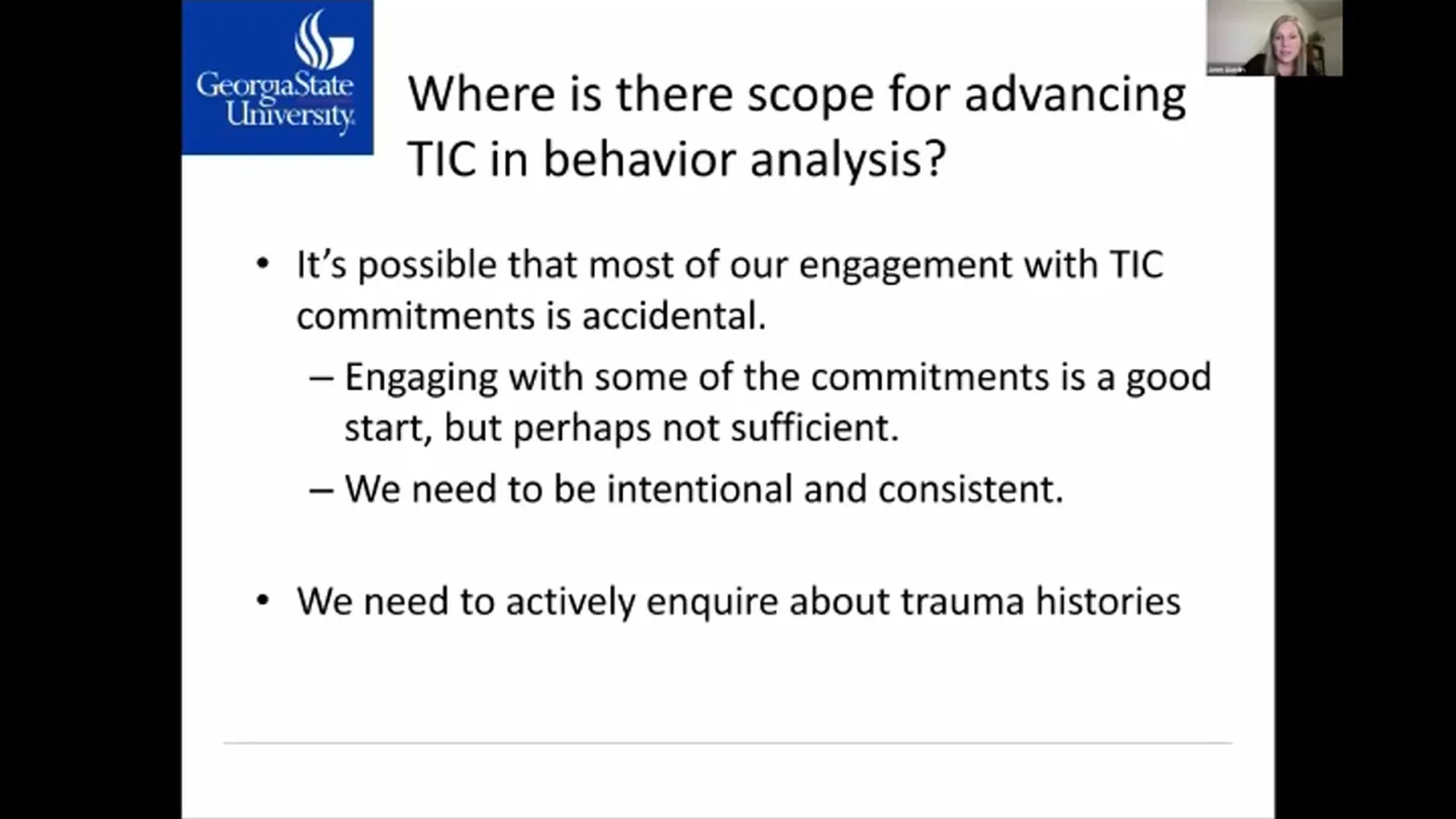
Clarifying Trauma Informed Care
On this page · 7 sections▾
Assent in ABA practice is the kid's moment-to-moment yes. Aaron, age 12, told a researcher, "It makes me feel a lot better if I'm included. I enjoyed it when they told me and let me say yes or no first." Rajaraman pushed back on the idea that you can get a yes every minute of every session, and she named the tool that lets you check anyway: a concurrent chains arrangement, where the learner uses their feet to pick door number one or door number two. That is assent as a procedure, not a feeling.
Assent versus consent (and why it matters in ABA)#
Consent is the paperwork. A parent signs it. It covers the program, the goals, and the right to stop services. Assent is different. Assent is the learner saying, right now, that this lesson is okay. The signature on the consent form does not transfer. The kid still gets a vote, every session.
This split shows up in ABA work because most of our learners are kids, and a lot of them cannot read a treatment plan. So the field has had to figure out what a yes looks like when the learner can't say "yes." The panel kept coming back to one rule: if you cannot tell whether the learner is on board, you do not have assent yet. You have a guess.
This matters more in trauma-informed care than anywhere else. A kid with a trauma history has already had adults override their no. Running a session on top of that history without checking for assent is how you teach the kid that adults still do not listen. That is the opposite of what therapy is for.
What assent looks like with a kid who has language#
For a learner who can talk, assent is mostly what it sounds like. You tell the kid what is about to happen. You let them say yes or no. You give them a real chance to say no without it costing them anything good.
Aaron, in Austin's interview study, said it plain:
It makes me feel a lot better if I'm included. I enjoyed it when they told me and let me say yes or no first. From the talk — the panel
Read that twice. He did not ask for fewer demands. He asked to be told first. He asked to vote first. That is a low-cost change for any BCBA. Walk in, say what you are going to work on, ask if it is okay to start. If the kid says wait, you wait.
The trap here is the fake choice. "Do you want to do your work now or in two minutes?" is not assent. Both options are the same demand. A real choice means one of the doors is "not this, not now." If you cannot honor that door, do not open it.
What it looks like with a kid who does not#
For a learner who is nonvocal, or who is vocal but not yet using words to refuse, assent has to be read off behavior. The body talks first. Leaning in is a yes. Reaching for the materials is a yes. Backing away, going limp, crying, dropping to the floor, pushing the task away, all of that is a no. You do not need a definition. You need to stop missing it.
Kolu gave the panel a fast field test for this. If a kid scatters the second you walk in the room, the problem is not the program. The problem is you, or the room, or the history they have with both:
If a learner that you can't even walk up to or say, hey good job, without them doing the opposite of what you just said, or them crying or backing away or falling down or showing emotional behavior, you may have a problem with respect to your maybe conditioning approach. Maybe approach is conditioned as punishment. From the talk — the panel
That is the no-demand challenge in one paragraph. Before you run a single trial, can the kid be near you and stay regulated? If not, that is the first goal. Approach has to predict good things, not work. You fix that first, and then you ask for assent. Not the other way around.
The concurrent chains arrangement, in practice#
For a learner who cannot tell you in words which lesson they want, you can still let them pick. Rajaraman named the procedure:
The concurrent chains arrangement is a broader preference assessment, a way for learners to use their feet to go into door number one versus door number two to indicate what type of intervention they might prefer. From the talk — the panel
The setup is simple. Two areas. Each one is paired with a different version of the lesson. Door one is the program with errorless prompting and a high rate of reinforcement. Door two is the same program with a slower prompt fade and more independent trials. You bring the learner up to the choice point and you watch which way the feet go. Then you run that version.
You can do this for almost anything. Two task formats. Two reinforcement schedules. A staff member they pick versus the one assigned today. A short session versus a long one. The point is not the design of the doors. The point is that the kid casts a vote with their body, and you count the vote.
If they pick the same door every time for a week, that is your data. If they switch, that is also data. Either way, you stopped guessing.
When assent withdrawal is the teaching signal#
The hot take from Rajaraman was that 100 percent assent every minute is not a real goal, and treating it like one will hurt the kid. Some withdrawals are a signal that the environment is wrong. Some are a signal that the learner is missing a skill we have not taught yet.
There are situations where behaviors indicative of assent may not be reinforceable. When students are withdrawing assent regularly, we need to be analytic in that moment. We need to understand what is deficient about our teaching environment. From the talk — the panel
What that means on the floor: if the kid withdraws once, you honor it. Take the break. Drop the demand. But if they withdraw from the same step every session for a week, that is not just a no. That is a request for help. Maybe the prompt is too thin. Maybe the schedule of reinforcement is too lean. Maybe the task is too long. Maybe approach is still conditioned as punishment and you skipped step one.
This is also where Matt's reframe lands. Some kids do not yet have the skill of choosing. They cannot picture door one and door two and pick. That is not a reason to take their vote away. It is a target.
If you have a learner who can't make that choice, who doesn't have the skill set to choose something and experience it and acknowledge that relation, that's a skill you can teach as well. And it's a pivotal skill. From the talk — the panel
Teach choice the same way you teach manding. Two items. Pick one. Get the one you picked. Repeat until the link between "I pointed" and "I got that thing" is solid. Then widen the menu. Then move to lessons.
The no-demand challenge: a 10-minute test#
You can run this tomorrow. Block out the first 10 minutes of a session. No targets. No prompts. No "good job." Just be in the room. See if the kid will be near you. See if they will let you sit next to them. See if they will look up when you say their name.
If yes, you have assent to start. Begin small. One short task, high reinforcement, easy exit.
If no, you have your data for the day. The relationship needs work before the program does. Pair. Bring preferred items. Let the kid lead. Run a concurrent chains check on which version of you they would rather be near. You are not behind on goals. You are doing the work that makes the goals possible.
Done daily for two weeks, this test usually moves. The kid starts approaching. The team learns to read withdrawal earlier. The session looks calmer because it is calmer. That is trauma-informed ABA in practice. Not a slogan. A 10-minute warm-up.
Frequently asked questions#
Does assent-based ABA mean I can never run a demand? No. It means the demand starts after the kid is regulated and after you have a read on whether they are on board. Rajaraman was clear that 100 percent assent every minute is not the goal. Honor the first withdrawal. If a learner withdraws from the same step every day, treat that as a signal that the teaching setup is off, and fix the setup before pushing the demand again.
How do I read assent in a learner who is nonvocal? Use the body first. Approach, reach, engage, and stay are yes. Back away, drop, scatter, push away, cry are no. For programmatic choices, set up a concurrent chains arrangement. Two doors. Each door is paired with a different version of the lesson. The learner walks toward the one they prefer. You run that one.
What if the parent wants compliance and the kid is withdrawing assent? This is a teaching moment with the family, not a reason to override the kid. Share what you saw. Show them the data on which steps the learner is withdrawing from. Explain that pushing through a withdrawal without changing the environment usually slows progress, not speeds it. Offer the no-demand test as a starting point. Most families say yes when they see the kid walk into the room calmer the next week.
Want the full panel? Watch the recording on openceu.com and earn the CEU while you're there.