Psychological Flexibility and the ACT Hexaflex, Explained
What psychological flexibility means in ABA, how the six ACT hexaflex processes work, and how behavior analysts teach and use them.
Key takeaway
Psychological flexibility is the skill of noticing hard thoughts and feelings while still acting on what matters to you. It is the main goal of Acceptance and Commitment Training (ACT).
Prosocial in the Workplace
Free learning path on this topic
Supervision, Done Right
Four supervision CEUs that build on each other. What reflective supervision is, how to build a supervision system, how to assess supervisee competence instead of counting hours, and how supervision affects provider outcomes. The BACB asks supervisors for three supervision CEUs per cycle. This covers it.
Experts who cover this
2 recordings on openceu cover psychological flexibility.
- Featured talk1 Supervision CEU
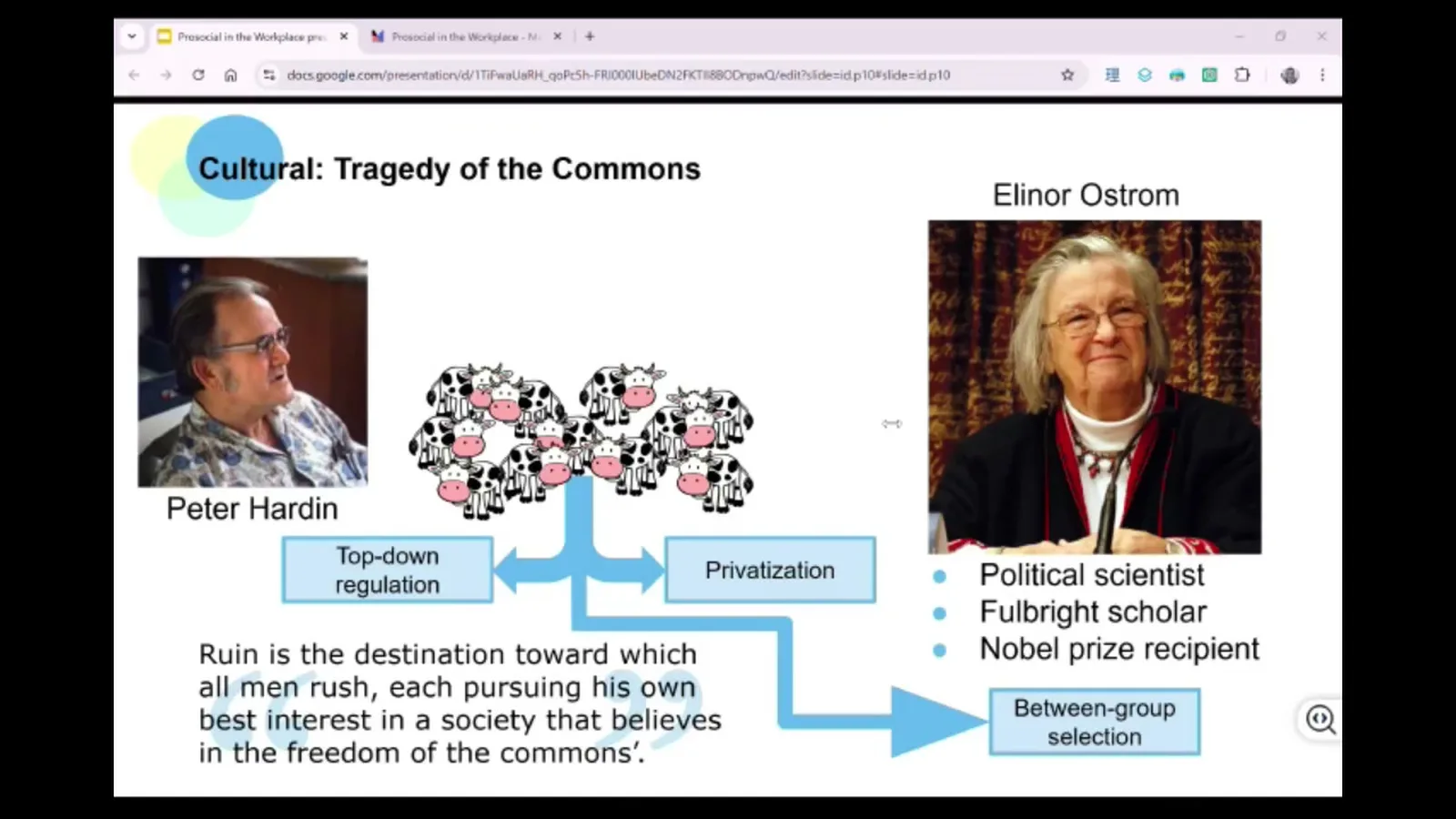
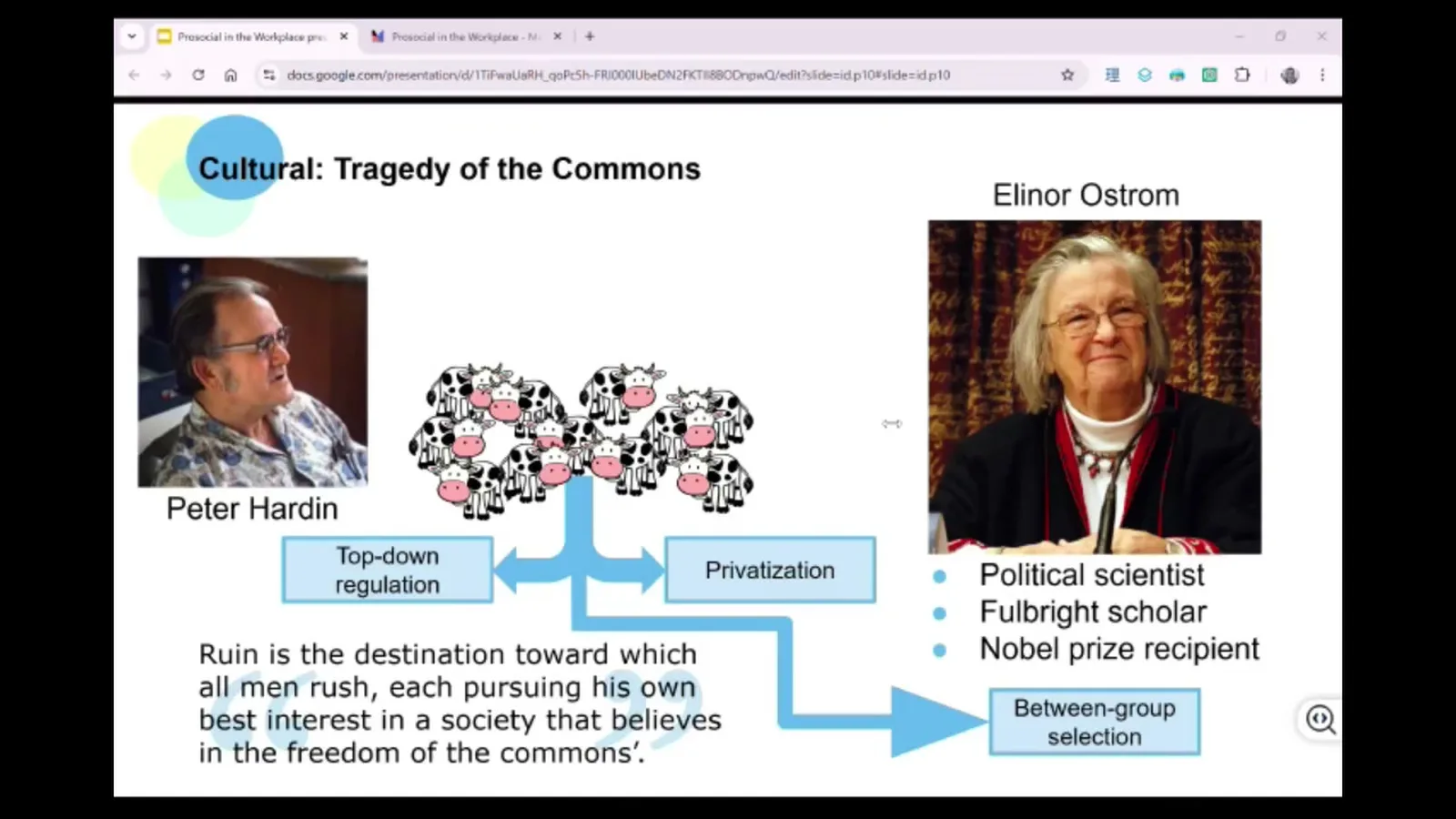
Prosocial in the Workplace
Jason StaufferThe Behaviorist Bookclub
Argues psychological flexibility drives group cooperation through three mechanisms: fostering trust via vulnerability and openness, supporting long-term…
- 1 Supervision CEU
So You Think You Can Lead, Ten Self Reflection Questions for Leaders in ABA
Sean YocumHickory Learning Group
Cited via Castro et al. (2022) and Moran (2010): leading with intention and pursuing personal growth as a leader requires psychological flexibility, especially…

On this page · 11 sections▾
Psychological flexibility is the skill of noticing hard thoughts and feelings while still acting on what matters to you. It is the main goal of Acceptance and Commitment Training (ACT). It is often drawn as a six-sided shape called the hexaflex.
Why does it matter in behavior analysis? Many problems are not about avoiding people or places. They are about avoiding painful thoughts, memories, and feelings. When that kind of avoidance runs the show, people lose track of their goals. Behavior analysts use ACT to help clients, parents, and staff get unstuck. The speakers below show how the model works, how to teach it, and how it helps teams work together.
The six processes of the ACT hexaflex#
Dr. Tom Szabo describes the hexaflex as a map of six repertoires. A repertoire is simply a set of behaviors a person can do. Each point on the map has a flexible side and a stuck side.
It's been most effectively in the last 15 years conceptualized in a hexagon format. We call this the ACT-EXA-FLEX. And as you can see, each point along the hexagon can be looked at both in terms of flexible and inflexible processes.
From the talk — Dr. Tom Szabo
Szabo gives acceptance as an example. Acceptance means being willing to feel all of life's emotions. Its flip side is experiential avoidance, which means trying to escape your own inner experience. He points out that this is not the avoidance most analysts studied in grad school. It is not about dodging people, places, or things. It is about dodging thoughts, emotions, and memories about them.
Szabo also says ACT helps people relate to the past, present, and future in clearer ways. It helps them tell apart what was, what will be, and what is. Finally, it points action toward what a person truly cherishes. That is different from chasing whatever feels good right now. The goal is a deeper connection to other people and to life.
Why the terms sound strange: middle-level language#
The hexaflex labels can feel odd at first. Szabo calls them "middle-level terms." They include cognitive defusion (stepping back from thoughts) and self as context (seeing yourself as separate from your thoughts). They also include willingness (staying open to whatever you feel) and present moment awareness (staying focused on what's happening right now).
They're middle-level because they're not words that are precise behavioral principles, nor are they the words that you use with your clients.
From the talk — Dr. Tom Szabo
In other words, these terms sit between lab science and everyday talk. They help clinicians organize their thinking. But they are not meant for a session with a child or a parent. Szabo offers simpler client words instead. "Let things in." "Let things go." "Be here now." "See yourself and others kindly." "Finding your why." "Committing to action." He even suggests calling the whole thing "tuning your antennae."
He also names a model built for young children.
Louise Hayes developed a way of doing ACT. She calls the DNAV model, which was intended to be developmentally appropriate for little kids who also need psychological flexibility.
From the talk — Dr. Tom Szabo
His point is that ACT does not have to be complicated. You can shape it to fit your setting. In ABA, he adds, that still means using direct contingency management strategies alongside it.
Starting with values: the flexahex#
Brian Middleton teaches the six processes in his own order. He calls his version the "flexahex." He puts values at the very top, because in his work everything starts there.
values is at the top. And this is how I teach act skills. I teach in this order, but here's the thing about derived relational responding. Right. Relational frame theory. You can teach in this order and then the individual can apply in any order they want.
From the talk — Brian Middleton
Relational frame theory is the behavioral account of how people link ideas together. Middleton's point is practical. A fixed teaching order helps people see the structure. But once learned, the skills can combine in any order a person needs.
He frames each process as a question from the "me" point of view. Values asks, "What is important to me?" Defusion asks how to put space between me and the struggle point. Acceptance asks whether I can willingly experience hard moments. Committed action asks what steps move me toward what matters. He frames them this way on purpose. If you want to apply ACT, he says, you must start by applying it to yourself.
Middleton also shares a story about a learner. The young man hit a wall twice, then signed "alone time." He sat, breathed, and calmed down in about five minutes. Middleton says it all started with values.
ACT as a self-management tool#
Middleton pushes back on a narrow view of how ACT gets used. Many trainings, he says, show ACT as a "stop and practice" exercise. He thinks those are fine, but they are not the whole picture.
Act is a self-management system. It's strategies that you can utilize that have evidence based behind them that support that there's some consistent changes that occur when we apply this technologically.
From the talk — Brian Middleton
Self-management means a person uses strategies to guide their own behavior. Seen this way, ACT is not just a set of worksheets or scripted exercises. It is a set of skills a person carries into daily life. The word "technologically" matters here too. In ABA, it means the steps are described clearly enough for someone else to repeat them.
Middleton adds one more idea. He notes that self as context has a sibling: others as context. Self as context means seeing yourself as the observer of your thoughts, not the thoughts themselves. Others as context applies that same kind view to the people around you. He says this whole structure matters because it shows how to actually apply ACT, not just describe it.
How flexibility builds trust on a team#
 Advertisement
Jason Stauffer brings psychological flexibility into the workplace. He sums up all six processes in one sentence. You are here now, accepting how you feel and noticing your thoughts, while doing what you care about most. Then he explains why that matters for groups.
Psychological flexibility works towards cooperation on three fronts.
From the talk — Jason Stauffer
The first front is trust. Stauffer says being open about hard feelings makes vulnerability possible. Vulnerability means letting others see that you are unsure or struggling.
Holding space for uncomfortable feelings allows for vulnerability, which is a necessary component when you're working with groups.
From the talk — Jason Stauffer
He adds that sharing values builds connection and transparency. When I know what my coworkers care about, I can better predict what they will do. Flexibility also supports perspective taking, which is seeing a situation from someone else's side. That leads to more empathy inside the group. For clinic leaders, this gives a clear reason to model openness in staff meetings and supervision.
Long-term thinking and less impulsive choices#
Stauffer's second front is long-term thinking. He ties it to a classic behavior analysis idea: choosing between smaller, sooner rewards and larger, later ones. Clarifying values, he says, shifts people toward the larger, later rewards. Those are usually the ones we really want.
Openness and awareness lead to reductions in impulsivity. It allows us to sit with short-term pain for long-term gain.
From the talk — Jason Stauffer
Impulsivity here means grabbing the quick payoff even when it costs more later. Stauffer's point is that thoughts and fears do not have to control what you do. You can have them and still keep the bigger picture in mind.
His third front is social value orientation. That is a fancy term for caring about other people's outcomes along with your own. Values work and perspective taking both feed it. Put together, these three fronts explain how one person's flexibility can make a whole team more cooperative. It is a useful frame for supervisors who want better teamwork without adding more rules.
Flexibility as a leadership skill#
Sean Yocum makes a related point about leaders in ABA. He warns against waiting passively for growth. Some people wait for HR to offer training or for the CEU budget to open up. Meanwhile, their skills sit unused like a muscle that slowly weakens.
leading with intention requires psychological flexibility and a commitment to personal growth even when the process is uncomfortable.
From the talk — Sean Yocum
Yocum credits this idea to Castro and colleagues (2022) and Moran (2010). His examples are concrete. Read research outside your niche. Seek out mentors. Practice the hard conversations you know you need to have. Use ABA on yourself by setting goals and tracking progress. Each of these asks a leader to feel some discomfort for a longer-term payoff. That links directly back to Stauffer's point about short-term pain and long-term gain. You can hear Yocum's full talk in So You Think You Can Lead, Ten Self Reflection Questions for Leaders in ABA.
Learning to spot the six repertoires#
If you want to use ACT well, what should you practice? Szabo is direct about the core skill. You must learn to tell the six processes apart in real behavior.
You'll need to learn how to discriminate between those six repertoires of behavior that I was describing to you, discriminate behavior with respect to rules and emotions and time and self and values and action.
From the talk — Dr. Tom Szabo
To "discriminate" here means to reliably tell one thing from another. Szabo suggests training this skill the way analysts train any skill. Break it into very small units. Add units slowly. Mix easy and hard examples, which is called task interspersal. Then build up to longer samples, such as spoken words, written text, and videos of people talking.
He adds a second layer. First, learn what each repertoire looks like. Then learn to watch for more than what people say. Szabo contrasts "tells" with "reads." Tells are what a person tells you. Reads are what their body language shows. Someone may say "I feel just fine" while their posture says something else.
Where experts differ on the name and the model#
The speakers agree on the core ideas. All of them treat the six processes as real, teachable skills. Where they differ is on the label and the shape of the model itself.
Szabo keeps the standard hexaflex. He calls the hexagon the most effective way the model has been drawn in the last 15 years. He accepts that its terms are odd. His answer is to keep them for clinicians and translate them for clients.
Middleton goes further. He questions the name of the goal itself.
psychological flexibility. That's that's psychobabble. Right. It's what does that mean? OK, well, flexible engagement. That's that's a better that's better words to describe what we're looking for.
From the talk — Brian Middleton
So Middleton renames the goal "flexible engagement." He also redraws the model as the flexahex and moves values to the top. That is a bigger change than swapping words during a session. It reshapes how clinicians themselves learn the model.
This is a real difference in approach, though not a fight over the science. Szabo's path keeps a shared language across the field. Middleton's path aims for plainer words from the start. Both say you can adapt ACT to fit your learners. Which path fits best may depend on who you train and who you serve.
What the research says#
Research backs the idea that psychological flexibility matters for families in ABA settings. Coyne and colleagues wrote a practice guide for behavior analysts during the pandemic (Coyne, Gould, Grimaldi, Wilson, Baffuto, & Biglan, 2020). They argue that flexibility and self-care are core parts of psychological health. For parents, building these skills may support family warmth, children's prosocial behavior, and steady use of proven parenting practices.
A systematic review of 26 studies looked at parents of children with disabilities. It found that flexibility was linked to parents' mental health and daily functioning. It also found that ACT-based programs raised parents' flexibility. A separate study of 230 parents of autistic children found that more psychological inflexibility went with more emotional reactivity. That reactivity, in turn, predicted more parental burnout.
Other studies point the same way. In a sample of 181 parents of autistic children, flexibility and resilience fully explained the link between mindfulness and lower parenting stress. A study of 281 autistic adults found that values progress partly explained how health worries during COVID-19 affected mental health. And transition-age autistic youth reported lower flexibility and higher stress than a community sample.
FAQ#
What is psychological flexibility in simple terms? It is the ability to notice painful thoughts and feelings without letting them run your choices. You stay present, accept what you feel, and keep acting on what you care about. Jason Stauffer sums it up as being here now, accepting your feelings, and noticing your thoughts while doing what matters most.
What are the six processes of the ACT hexaflex? The six processes are acceptance (also called willingness), cognitive defusion, present moment awareness, self as context, values, and committed action. Each one has a flexible side and a stuck side. For example, the stuck side of acceptance is experiential avoidance, which means trying to escape your own inner experiences.
How do behavior analysts use psychological flexibility with clients? They teach the six processes as skills, often in plain words like "let things go" or "be here now." Some start with values, as Brian Middleton does. For young children, Louise Hayes's DNAV model offers a simpler version. In ABA, ACT is used alongside direct contingency management, not instead of it.
 Advertisement
Turn this topic into a CEU
You just studied this. Now get credit for it.
Watch Prosocial in the Workplace with Jason Stauffer and earn 1 free BCBA CEU. Detailed certificate, delivered the moment you finish.
Keep going with a free learning path
Supervision, Done Right
Four supervision CEUs that build on each other. What reflective supervision is, how to build a supervision system, how to assess supervisee competence instead of counting hours, and how supervision affects provider outcomes. The BACB asks supervisors for three supervision CEUs per cycle. This covers it.