Rad N Bad: The Digital Tightrope — Social Media, Public Statements, and Supervisee Digital Ethics
Presented by Sean Yocum, MA, BCBA, LBA

Social media gives behavior analysts a powerful public platform, along with real ethical risk. In this solo episode, host Sean Yocum examines professional social media activity through the BACB Ethics Code for Behavior Analysts. He discusses how algorithms that reward conflict and outrage can amplify unprofessional content; why personal accounts that reference professional activity function as professional communication; the risks of posting client anecdotes, session memes, or complaints about caregivers or employers; the ethical line between critique that improves practice and oversimplified 'hot takes' that present opinion as scientific fact; and why diluting complex concepts for engagement can contribute to misinformation. He emphasizes the supervisor's responsibility to train and oversee supervisees, including RBTs, on confidentiality and appropriate public statements on social media. He offers a guiding question for every post: does this benefit the client and the community, or only me? Participants will leave with a pre-post checklist and a supervisee training outline.
Sign in to buy — $7.50One-time purchase, permanent access. Cert delivered to your inbox the moment you pass the quiz.
About this CEU
Every post is a professional billboard, whether you mean it to be or not. In this solo episode I talk about where the Ethics Code meets social media. We cover confidentiality and public statements, what happens when we dilute the science for clicks, and why training your supervisees on digital ethics is your responsibility. Disclosures & Publication Info No commercial products discussed. The instructor hosts a podcast and is active on social media. Published: 2025-11-12 Listening to the podcast episode does not earn CEUs; credit is earned only by completing this OpenCEU event.
Abstract
Social media gives behavior analysts a powerful public platform, along with real ethical risk. In this solo episode, host Sean Yocum examines professional social media activity through the BACB Ethics Code for Behavior Analysts. He discusses how algorithms that reward conflict and outrage can amplify unprofessional content; why personal accounts that reference professional activity function as professional communication; the risks of posting client anecdotes, session memes, or complaints about caregivers or employers; the ethical line between critique that improves practice and oversimplified 'hot takes' that present opinion as scientific fact; and why diluting complex concepts for engagement can contribute to misinformation. He emphasizes the supervisor's responsibility to train and oversee supervisees, including RBTs, on confidentiality and appropriate public statements on social media. He offers a guiding question for every post: does this benefit the client and the community, or only me? Participants will leave with a pre-post checklist and a supervisee training outline.
Credits
0.5 ethics CEUs · 27 min
From the talk
What was covered
Sean Yocum on how the BACB code applies to your feed: confidentiality, hot takes, supervisee digital ethics, and a pre-post checklist.
- Treat any account that touches your professional role as professional communication, private setting or not.
- Do not post a client story, photo, or skit without explicit, documented consent from everyone involved.
- Assume a few stacked details can identify a child, so stop trusting your own de-identification.
- Build digital ethics into supervision for technicians, then monitor it the way you monitor clinical skills.
- Before you post a hot take, name what is under it: current research and data, or a trend.
- Run every post through one filter: does this benefit the client and community, or only me?
Why the Algorithm Rewards the Worst ABA Content
Sean Yocum opens with a shift most of us lived through. Behavior analysts used to be quiet, data-driven clinicians. Now many of us are accidental content creators. The pull to post is real. We want to share accurate science. We want to reach new families. We want to push back on bad information. But Sean argues that every platform is also an ethical landmine.
The online conversation about applied behavior analysis (therapy built on behavior science) is not calm debate. Sean calls it a war zone. Much of it is intense and negative. It centers on criticism of our procedures and claims of harm. Then he offers one number to sit with. Negative posts pull far more engagement than neutral or positive ones.
Why does that happen? Because algorithms (code that ranks what you see) are built for conflict. They reward outrage. So your tired rant does not sink quietly into the feed. Neither does your funny client story. The platform picks it up and pushes it out. Sean's framing is blunt. Casual content is professional liability. It hands critics free, high-engagement ammunition.
Negative posts about ABA get around three times the engagement of positive or neutral ones.
From the talk — Sean Yocum, MA, BCBA, LBA
Critique That Improves Practice vs. Hot Takes With Nothing Under Them
Sean is not asking anyone to go quiet. He hosts a podcast built on hot takes with his co-host, Mike Carrero. He says they are committed to calling out practice that needs to do better. Being critical is ethical. Demanding that the field improve takes courage, data, and evidence.
The difference is what sits under the take. Sean says his are backed by two decades of work, hard data, and a dive into current research. The hot take grabs attention. The content underneath it still has to hold up. So he asks a fair question. What is backing yours? A trending sound? A meme template?
He names two harms when an opinion gets dressed up as scientific fact. First, we legitimize outside attacks. We show critics that we will not state our own science correctly. Second, we misrepresent our expertise. Selective citing (quoting only research that agrees) belongs here too. Sean does not call that laziness. He calls it professional fraud.
However, there is a razor-thin ethical difference between being critical for the sake of improving the science or being cavalier for the sake of clicks, okay?
From the talk — Sean Yocum, MA, BCBA, LBA
Autistic Self-Advocates, Dignity, and the Cost of a Bad Meme
Sean makes a point clinicians often skip past. Social media is the main place where autistic self-advocates (autistic people speaking for themselves) voice opposition to ABA. They describe real felt harm. They describe autonomy (control over your own choices) being compromised. They describe being invalidated by professionals.
They are also asking for something specific. They want nuanced discussion that accounts for intersectionality (how race, gender, and background overlap). ABA affects different people in different ways. Sean says ignoring those voices is a failure of compassion and dignity. So is answering with disrespect. It widens the gap with the community we are bound to serve.
He explains why this is personal for him. Sean's brother has profound autism and did not get good services early on. Sean says he has seen what poorly delivered ABA can do. So when an autistic adult posts about harm from a procedure, that is not a textbook concept to him. His instruction is simple. Listen, then look hard at your own posting.
Stop alienating the community you claim to support.
From the talk — Sean Yocum, MA, BCBA, LBA
Your Personal Account Is Professional Communication
The split between work life and personal life is gone, Sean says. A private label does not bring it back. Neither does an alias. The moment you use an account to talk about the field, it becomes a professional billboard. He points to the BACB code (ethics rules for certified analysts). It holds you accountable across all delivery modes.
Run the usual examples through that filter. The late-night rant about a tough client. The passive-aggressive meme about a parent. The public complaint about your employer. Sean reads each one as a direct reflection of your professional judgment. He says it can affect your ability to practice. He has seen people report losing jobs over social media activity.
His test is useful because it is broad. If a post can be reasonably tied to your professional role, the code applies. Your feed is an open window into your character, your compassion, and your judgment. That is what boards look at. You can change your handle, but you cannot outrun your license.
You are confusing the ability to post with the ethical right to post.
From the talk — Sean Yocum, MA, BCBA, LBA
Supervisor Duties for Supervisee and RBT Digital Conduct
This is the part Sean wants every BCBA (board certified behavior analyst) to sit up for. In what he sees online, most of the risky casual content is not posted by BCBAs. It comes from RBTs (the technicians who run sessions) and BTs (behavior technicians doing similar work). They are on TikTok and Instagram making skits and memes. They are also under your clinical umbrella.
Then he walks the nightmare scenario. A supervisee posts a 15-second funny client moment. It breaks confidentiality (keeping client information private) or misstates the science. Sean asks who the BACB calls first. The answer is you. Your certification is exposed. So is your company's reputation. So is the credibility of the field.
The fix is not a memo. Sean's position is that digital ethics training belongs inside supervision, not in an optional folder. Teach it, then monitor it. He also puts it plainly to technicians. Stop auditioning for influencer status. And he tells companies to stop putting their logo on unethical content and calling it marketing.
You are ethically responsible for training and managing their digital footprint.
From the talk — Sean Yocum, MA, BCBA, LBA
Why a De-Identified Client Story Still Breaks Confidentiality
Sean calls out a belief he hears often. If information is already out there, it is fair game. He rejects it flatly. A diagnosis, a school or district name, or a photo of an empty therapy room can all be public. That does not make any of it content for your feed.
He explains why de-identifying (removing names and other details) often fails. The ABA community is smaller than you think. Your audience is smarter than you assume. A few details stacked together do the damage. The region. One unusual behavior. The type of toy on the floor. That mix can be enough to identify a child.
So he draws a hard line. You are not clever enough to disguise your client or your workplace. Posting a disguised story dares the public to figure out who it is. The risks are real: broken trust, a lawsuit, a BACB complaint. The standard he names is explicit, documented, informed consent (clear written permission to share) from all parties. Without that, the story is not yours to post.
The public domain is not a safe zone.
From the talk — Sean Yocum, MA, BCBA, LBA
Dilution, Clickbait, and Staying Inside Your Scope
We hold ourselves out as stewards of behavior science. Sean argues the rush to simplify is undercutting that claim. The four-panel carousel. The fast graphic. The quick answer to a complex clinical question. A lot of it is oversimplified, outdated, or simply wrong. He treats that as an ethical failure, not a small mistake.
Take a concept that needs context and baseline data (how behavior looks before treatment). It might also need a functional analysis (a test of why behavior happens). Now shrink it into four panels. Sean says you have not made it accessible. You have made it useless. The public does not need simple. It needs accurate. Sounding certain on a reel is not the same as being competent.
Scope is the other half of the problem. Sean says he will not argue with an occupational therapist or a speech-language pathologist about research inside their field. It is not his lane, so he stays out of it. He asks us to apply that rule to our own posts. A BCBA who works in early intervention (services for very young children) should stay in that lane. Giving advice on adult sex education or complex organizational work just because it is trending crosses a line. Be ruthless about your scope of competence (the areas you were trained in).
You are confusing simplification with dilution.
From the talk — Sean Yocum, MA, BCBA, LBA
A Pre-Post Checklist and a Supervisee Training Outline
Sean lands the episode on one filter. Every post, meme, and video gets run through a single question. Does this benefit the client and the community, or only you? He adds two gut checks. Would you be comfortable showing this post to the client? Would it make that client or family feel like a caricature (a cartoon version of a person)?
Here is the pre-post checklist drawn from the talk. One: what is backing this claim, research and data or a trend? Two: could any mix of details identify a client, family, or site? Three: do I have explicit, documented consent from everyone involved? Four: is this topic inside my scope? Five: does this trivialize a struggle someone actually lives with? Six: would a licensing board read this as sound judgment? Seven: does this help the community more than it helps my ego?
The supervisee training outline follows the same spine. Teach that the duty to protect client information does not end at upload. Teach that a personal account becomes professional communication the moment it touches the field. Rule out client anecdotes, session memes, and skits about behaviors of concern (challenging behavior a client is working on). Rule out public complaints about caregivers and employers. Teach scope limits with examples. Then watch what your staff post. Give feedback on digital behavior the way you give feedback on clinical behavior.
His closing summary is three short lines. The blurred line is gone. Mockery is malpractice. Your personal is always professional.
Does this genuinely benefit the client and the community, or does it just benefit me?
From the talk — Sean Yocum, MA, BCBA, LBA
Common questions
Does the ethics code apply to my private or anonymous social media account?▾
Sean's answer is yes. If a post can be reasonably tied to your professional role, the code applies. It does not matter what privacy setting or alias you use. Once people know you are a BCBA or RBT, the association is made. He adds that the code holds you accountable across all delivery modes.
Is it unethical to criticize ABA practices in public?▾
No. Sean says being critical and demanding better practice is ethical, and it takes courage, data, and evidence. The violation happens when you present a watered-down opinion as scientific fact, or cite research selectively to win engagement. The test is what is backing the take.
Am I responsible if my RBT posts something unethical?▾
Sean says yes, and he calls it the point that should make every BCBA sit up. If a supervisee's post breaks confidentiality or misrepresents the science, the board comes to the supervisor. That makes digital ethics training and monitoring a core supervisory duty, not an optional add-on.
Can I share a client story if I remove the identifying details?▾
Sean argues that most de-identification fails. The community is small and the audience is sharp. A region plus one unusual behavior plus a specific toy can be enough. He names explicit, documented, informed consent from all parties as the standard. Without it, do not post the story.
About the speaker
Sean Yocum, MA, BCBA, LBA, hosts the Rad N Bad podcast with co-host Mike Carrero through Hickory Learning Group. In this solo episode he draws on about two decades of experience to connect the BACB ethics code to social media: confidentiality, public statements, hot takes, scope of competence, and supervisee digital conduct. He also speaks openly about his brother, who has profound autism and did not receive good services early on, and about helping build a conference focused on the messier parts of professional ethics.
This summary was generated from the recording’s transcript. Quotes are taken word for word from the talk.
What you'll learn
- 1Identify Ethics Code standards that apply to social media activity, including confidentiality and public statements. Distinguish between public critique intended to improve practice and content that misrepresents behavior analysis or presents opinion as scientific fact. Describe the supervisor's responsibilities for training and monitoring supervisees' digital conduct. Apply a pre-posting decision checklist to evaluate whether content protects client dignity and accurately represents the science.
Concepts in this CEU
Course materials
Related talks
Talks that cover the same concepts

Beyond Competence: Using ACT to Cultivate Psychological Flexibility in Behavior Analytic Supervision
Rooted Consultation, LLC
The Life of a Showgirl (BCBA’s Version)
Upskill ABA
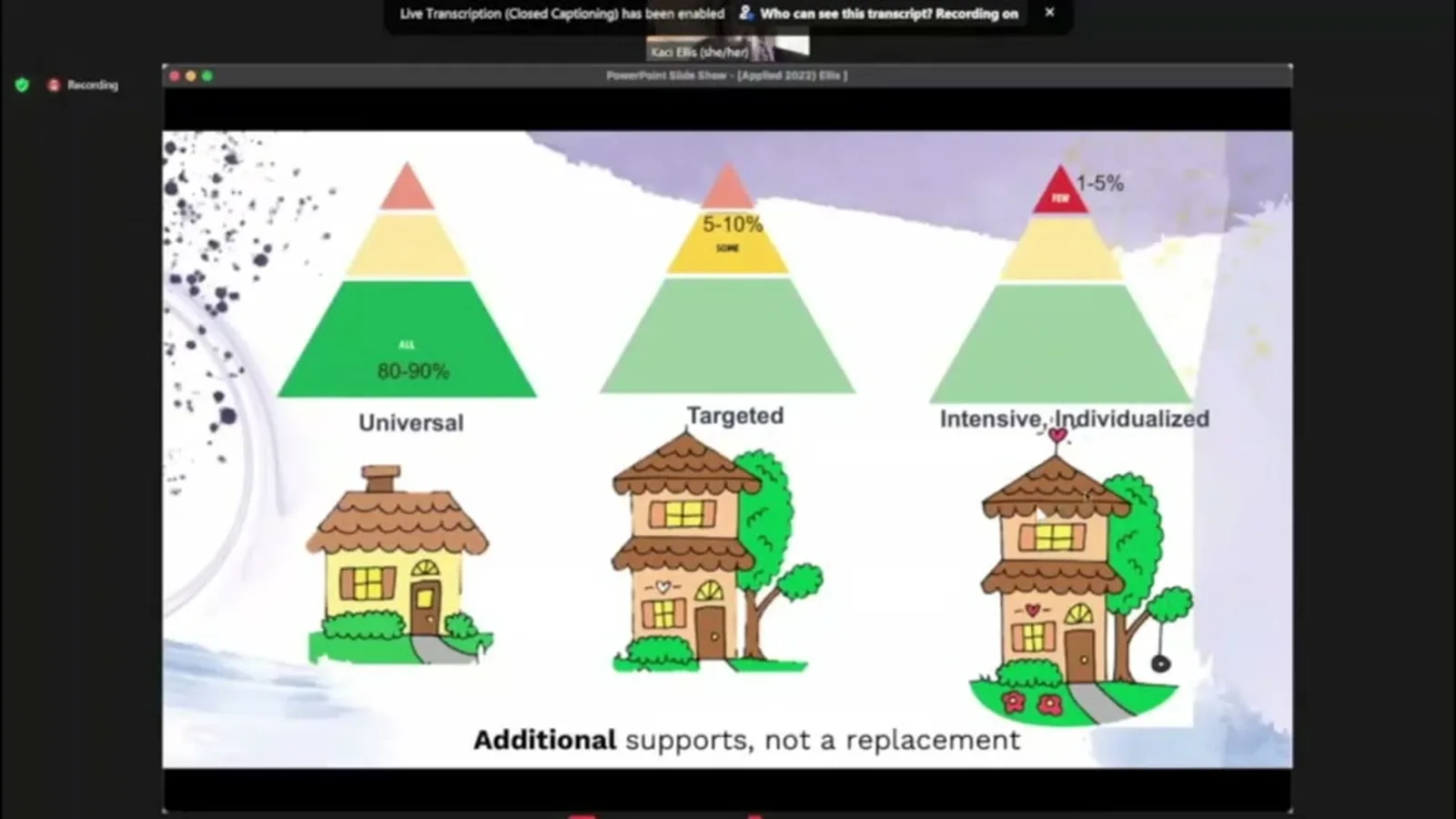
Practical Takeaways for School-Based Behavior Analysts
The Behaviorist Bookclub
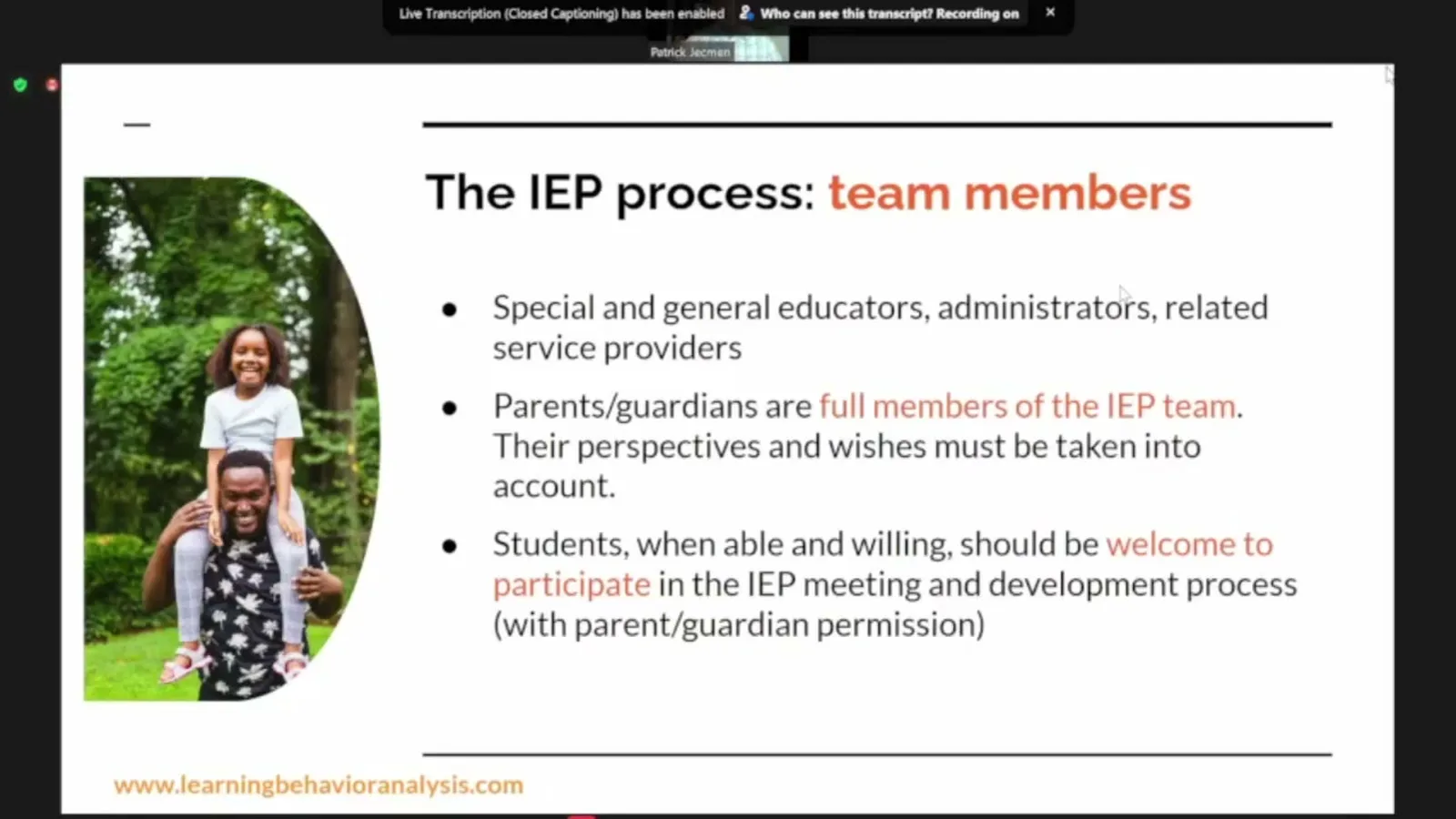
School Collaboration as an Area of Competence - Applied 2022
The Behaviorist Bookclub
Beyond 1:1: The Ethical Path to Creating a Scalable Course as a BCBA
The Behaviorist Bookclub
The ADHD Exchange: Understanding the Neurobiology of ADHD
ABA Made Ez
More from Hickory Learning Group

Intersection of Cultural Ontogeny, Ecological FBA and the Behavior Instructional Plan
Hickory Learning Group

Rad N Bad: Your Error Correction Sucks — Error-Correction Assessments, Trials to Mastery, and Learner-Informed Procedures
Hickory Learning Group

Rad N Bad: Your Prompting Hierarchy Sucks — Individualized Prompt Selection, Written Fading Rules, and Preventing Prompt Dependency
Hickory Learning Group
OpenCEU is supported by advertising from third-party sponsors. Sponsors are clearly labeled, have no influence over course content, instructors, or CEU decisions, and never appear on certificates. The BACB does not sponsor, approve, or endorse OpenCEU sponsors or their products.