How to Explain Reinforcement to Parents Without the Textbook Voice
A short, friendly script for explaining reinforcement to caregivers using the blue-cheese rule and everyday wins, from a BCBA-led CEU.
Key takeaway
If a parent offers you blue cheese as a thank-you and you hate blue cheese, the gift did not work, and that is the whole point of reinforcement; so the three-step script in this guide is simple (say the parent's own word, slide the technical word in next to it, then hand the parent's word back), and you teach it for one reason that matters more than rapport, which is that real informed consent is impossible if the caregiver does not understand the operant your team is bending around at home.
Verbal Behavior & Functional Language: A Practical Guide to Translating from & to Behaviorese
On this page · 8 sections▾
If a parent offers you blue cheese as a thank-you and you hate blue cheese, the gift did not work, and that is the whole point of reinforcement; so the three-step script in this guide is simple (say the parent's own word, slide the technical word in next to it, then hand the parent's word back), and you teach it for one reason that matters more than rapport, which is that real informed consent is impossible if the caregiver does not understand the operant your team is bending around at home.
That is the job of this page. Not to teach you what reinforcement is. You are a Board Certified Behavior Analyst (BCBA), so you already know. The job is to give you a short, kitchen-table script you can hand a parent on a Tuesday night and have them actually use it by Wednesday morning.
Why the textbook definition flops in the kitchen#
Most of us were taught to define reinforcement like this: "a consequence that follows a behavior and increases the future probability of that behavior." It is correct. It is also the wrong sentence for a parent who just wants to know why their kid keeps throwing the iPad.
A few things go wrong when you lead with the textbook line.
The parent hears "consequence" and thinks "punishment." That is the word's older, everyday meaning. You have already lost the next thirty seconds to a small fight you did not pick.
The parent hears "probability" and quietly checks out. It sounds like math. They came to you about bedtime, not statistics.
The parent hears "increases the future" and pictures something far away. Reinforcement, the way it actually works in a home, is right now, today, at dinner. The textbook sentence makes it feel like a lab.
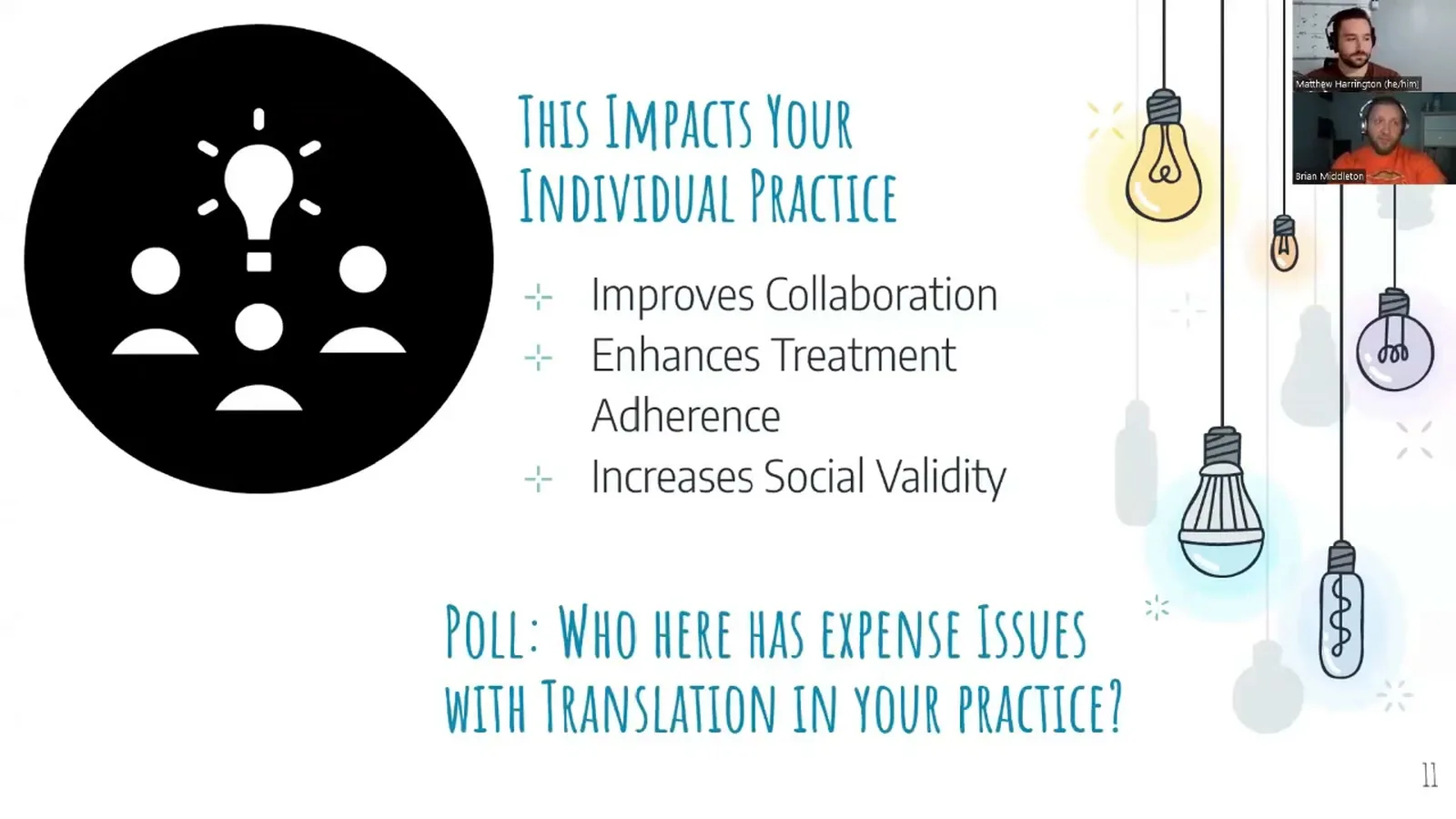
None of that means the definition is wrong. It means the definition is for you. Parents need a different opening. Brian Middleton, the BCBA who gave the talk this page is built around, said it plainly:
I always start with everyday language when I'm interacting with people who are not behavior analysts. And then I translate back and forth. So it might be that I might start with the concept they think they understand. From the talk — Brian Middleton
That is the move. Start where the parent already lives. Then walk them across the bridge.
The blue-cheese rule, in one sentence#
Here is the line that does more work than any definition I have ever tried in a parent meeting. Steal it.
"What counts as a reward is decided by your kid, not by you."
That is it. That is the rule. Say it once, slow, and then give the example Middleton uses, which is the one that makes it stick.
Keep in mind, reinforcement means something that follows a behavior that increases future behaviors. So like, what is reinforcing to you is not the same as me. Like if you offer me blue cheese, that's not reinforcing to me. Please don't do that. From the talk — Brian Middleton
The blue-cheese line works because it is funny and personal and it lands the most-missed point about reinforcement in one breath. A reward is not a reward because you call it one. It is only a reward if the next time the kid does the same thing more often.
Hand the parent that one sentence. The rest of the conversation will get easier.
The three-step script: parent word, BCBA word, parent word again#
Here is the actual script. Three steps. Use it the next time a parent says "I tried rewarding her and it didn't work."
Step 1. Use the parent's word. They said "reward." Stay with "reward" for one more breath. "Got it, so you tried a reward, and it didn't bump her behavior up at all the next day."
Step 2. Slide the technical word in next to it. Same sentence, no pause. "In our world we call that piece reinforcement, which just means a reward that actually works, because the kid did the thing more often after you gave it. If she did not do it more often, then by our definition it wasn't reinforcement. It was just a thing you handed her."
Step 3. Hand the parent's word back. End on their language, not yours. "So the question is not 'did I reward her.' The question is 'did the reward work.' If her behavior went up the next day, you had a winner. If it didn't, we go shopping for a new reward."
That is the whole script. Three steps, maybe forty-five seconds out loud. Notice what it does. It never tells the parent they used the wrong word. It just adds one new word next to theirs and gives it back.
This is the move Middleton calls translation fluency. It is not dumbing anything down. It is sharing a concept the parent already half-knows, in language they can use tonight at dinner.
What to say when a parent insists ice cream is reinforcing for every kid#
You will get this one. A parent will swear that ice cream, or stickers, or screen time, is a sure thing for any kid on the planet. They are not wrong to think that. Most of those things work for most kids most of the time. But the parent in front of you is asking about one specific kid, and that kid sometimes hands the ice cream back.
Here is what to say. "You're right that ice cream works for most kids. Your kid is the test we care about. The way we know it worked is not how much he liked it in the moment. It is whether he tried harder to earn it tomorrow. If he tried harder tomorrow, ice cream is in. If he forgot about it by breakfast, ice cream is out, and we pick something he chases."
Then give them the blue-cheese line one more time. "Some adults love blue cheese. I would rather skip dinner. Your kid gets to vote the same way."
You are doing two things in this little exchange. You are protecting the parent's intuition (most kids, most of the time) and you are teaching them the one test that actually matters (does the behavior go up tomorrow). That is enough for one conversation.
Signs the explanation actually landed (and what to do when it didn't)#
You will know the script worked when the parent starts using it on you. Watch for these.
The parent says, "I tried it Tuesday and it didn't reinforce her, so I switched." That sentence, said in a kitchen, by a parent, is a small miracle. They used your word correctly and made a clinical decision in the same breath. Celebrate it out loud.
The parent emails you a list. "Here are five things I think might be reinforcers for him. Can we test?" Now you are running the program together. That is the goal.
The parent corrects another adult at the dinner table. Grandma says "He doesn't want the reward." Parent says "It's only a reward if he works for it next time." You have a co-pilot.
Now the harder side. Sometimes the script does not land. Here is what that looks like and what to do.
The parent nods through the whole script and then says, "So how do I make him want it." Translation: they heard you, but the old frame snapped back. That is okay. Do not lecture. Just go back to step one of the script next visit and try again. Middleton called this part out:
It empowers everyone from staff to clients to caregivers and beyond. We need to stop this man in a high castle snootiness of, well, I'm the behavior analyst and they're not. Like, we're born behavior analysts. From the talk — Brian Middleton
The parent already has the instincts. You are just lending them the vocabulary. Some weeks they borrow it. Some weeks they leave it at the door. Both are fine. Keep the script consistent and they will pick it up.
How this connects to real informed consent, not the hope of it#
Here is the part that is bigger than rapport, bigger than parent training, bigger than any one session.
If the parent does not understand reinforcement, they cannot consent to a plan that uses it. They can sign the form. They can nod in the meeting. But they cannot actually consent, because consent without understanding is a polite shrug.
As I translate back and forth and create that fluency and train parents on how to do these things, I start having parent coaching sessions where parents are using behavior analytic concepts and translating them back and forth and using both behaviorese and everyday functional language. Informed consent. Not a hope of it. Actual informed consent. From the talk — Brian Middleton
That is why this script is not a soft skill. It is an ethics skill. Every time you hand a parent the blue-cheese line and walk them through the three-step script, you are moving them from "I signed something" to "I get what we are doing and I am in." That is the version of consent the BACB Ethics Code actually asks for. The textbook voice gets you the signature. The kitchen voice gets you the consent.
So write the script on an index card if you have to. Tape it inside your binder. The next time a parent looks lost, do not reach for the definition. Reach for the blue cheese.
Frequently asked questions#
What is the difference between a reward and a reinforcer?
A reward is anything you hand a kid hoping it will work. A reinforcer is a reward that actually worked, because the kid did the behavior more often the next day. Same object, different test. The kid tells you which one it was, not you.
How do I find a reinforcer for a kid who likes nothing?
Start by widening what counts. Ask the parent what the kid asks for, looks at longest, or melts down to get back. Those are clues. Then test small. Offer one item right after a behavior you want more of, and check the next day. If the behavior went up, it was a reinforcer. If not, you cross it off the list and try the next clue. Most "likes nothing" kids actually like several things; the family just has not noticed which ones move behavior.
Can praise stop being a reinforcer over time?
Yes. Anything can lose its punch if it shows up too often, gets paired with stress, or stops feeling true. Watch the behavior, not the kid's face. If "good job" used to bump effort up and now does not, the praise is no longer doing the work. Switch it up. Be more specific. Cut back the frequency. Or pair it with something fresh and check again next week.
Keep reading#
Want the full talk this script came from? Brian Middleton walks through translation fluency, the blue-cheese line, and a dozen more parent-ready moves in the recording above. Earn 1 BACB CEU while you watch.