Alternatives to Extinction for Supporting Extreme Demand Avoidant Behavior
Presented by Nicola Schneider, MA, BCBA, LBA-NJ
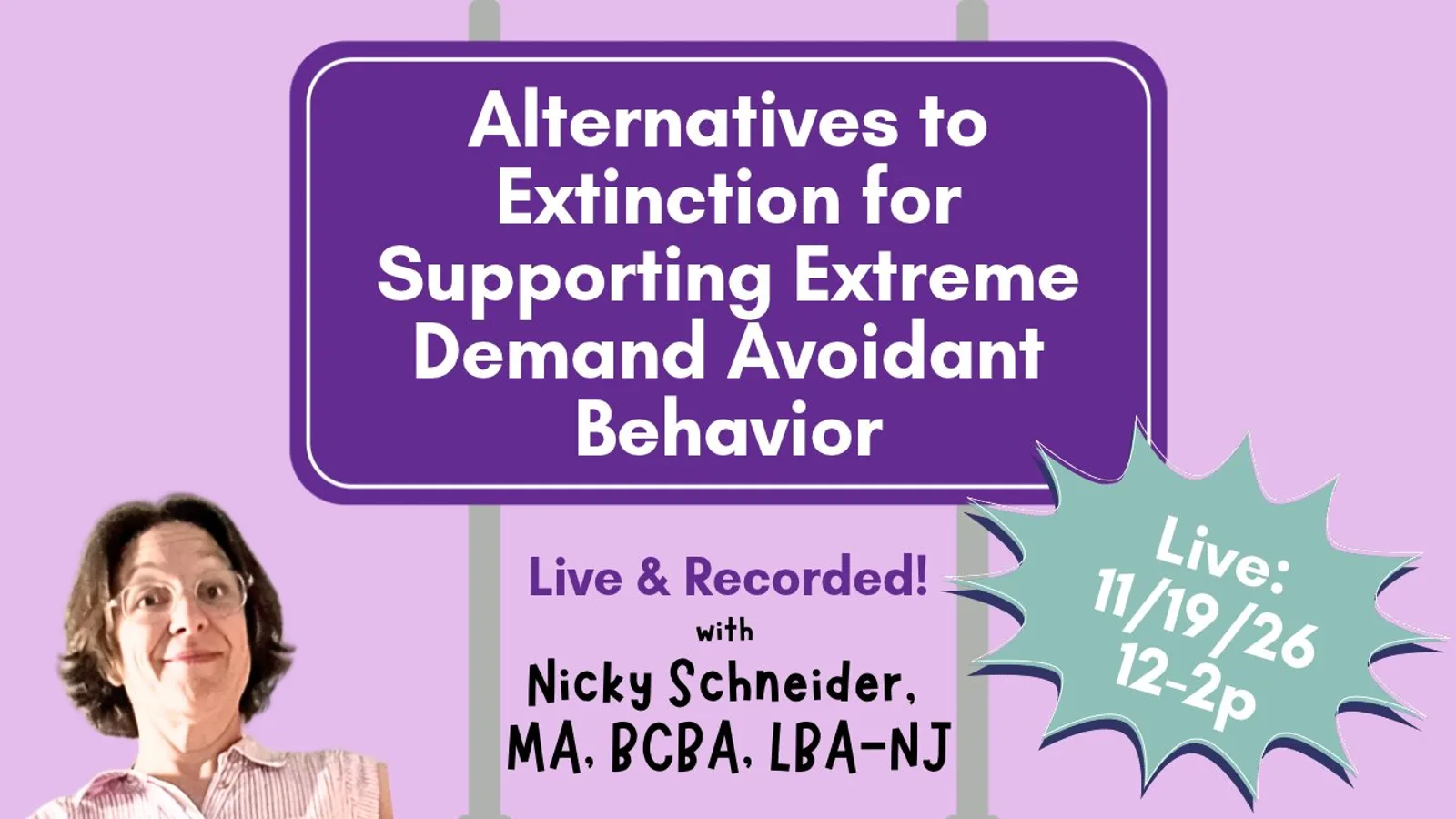
When
Tue, Nov 10, 2026, 12:00 PM EST
Regardless of co-morbid medical diagnosis/symptomology (e.g. PDA- Pathological/Pervasive Demand Avoidance; ODD- Oppositional Defiance Disorder), when demand-avoidant behaviors impede an individual’s quality of life, the technology of behavior analysis can be utilized to observe, analyze and support behavior change that is meaningful to the individual. Throughout this workshop, participants will explore how explicit or perceived demands impact the nervous system and set the occasion for future behavior. The impact of co-morbid symptomology that may contribute to behavior change will be reviewed. Participants will also learn how to define multi-functional behavior as it relates to autonomy and control over their environment. This is not a “PDA” or “ODD” workshop. This is a workshop for behavior analysts on how to ethically and meaningfully support behavior change for individuals that present with target behaviors of extreme demand avoidance. A major focus of this workshop is on evidence-based alternatives to escape-extinction that rely heavily on trauma-informed antecedent strategies.
Attend live and your CEU certificate is issued after the session.
See all upcoming live CEUs →About this CEU
All humans attempt to escape or avoid unpleasant events. However, when the frequency and intensity of escape and avoidant behaviors rise to a level in which an individual attempts to escape or avoid neutral and pleasant events, their quality of life may be impacted.
What you'll learn
- 1Participants will define the behaviors and key features of extreme demand avoidance.
- 2Participants will be able to explain the impact of (perceived) demands on the nervous system.
- 3Participants will be able to identify 3-5 trauma-informed antecedent and replacement skills that are helpful in supporting individuals who engage in extreme demand avoidance.
OpenCEU is supported by advertising from third-party sponsors. Sponsors are clearly labeled, have no influence over course content, instructors, or CEU decisions, and never appear on certificates. The BACB does not sponsor, approve, or endorse OpenCEU sponsors or their products.