Rad N Bad: The Healthcare Fortress — Interdisciplinary Integration, Rational Therapeutics, and Ethics in ABA
Presented by Sean Yocum & Michael Carrero

For decades, Applied Behavior Analysis (ABA) within autism service delivery has functioned largely as an isolated clinical silo, insulated by insular terminology, legislative mandates, and rigid service delivery frameworks. In this 2.0 CEU course, co-hosts Sean Yocum and Mike Carrero sit down with pediatrician, healthcare executive, and system strategist Dr. Steven Merahn to evaluate ABA’s role within the broader pediatric healthcare ecosystem. Part 1 (1.0 Learning CEU) deconstructs the conceptual and clinical gap between behavior analysis as a foundational natural science and the commercialized business model of ABA in autism services. The discussion evaluates the medical model of "rational therapeutics," contrasts neurodevelopmental conditions with pure behavioral disorders, and examines why administrative hours do not equal pharmacokinetic dosage. Part 2 (1.0 Ethics CEU) addresses systemic ethics, interprofessional collaboration, and professional humility under the Ethics Code for Behavior Analysts (Sections 1.02, 1.05, 2.01, 2.10, and 2.11). The presenters critically assess ableism in traditional normative/criterion-referenced assessment tools (e.g., VB-MAPP, ABLLS-R), the ethical mandate to offer non-behavioral alternatives during informed consent, and practical behavioral repertoires required to earn professional equity across interdisciplinary healthcare teams.
Sign in to buy — $25One-time purchase, permanent access. Cert delivered to your inbox the moment you pass the quiz.
About this CEU
Has ABA’s refusal to collaborate turned our own discipline into an endangered species? In this hard-hitting installment of Rad N Bad, hosts Sean Yocum and Mike Carrero are joined by Dr. Steven Merahn, MD—a veteran physician executive, public health strategist, and author of Care Evolution—to confront the uncomfortable truths the rest of the healthcare world discusses behind our backs. Hour 1: Rational Therapeutics & The Ecosystem (1.0 Learning CEU): Dr. Steve challenges the fundamental premise of ABA's isolation. Moving beyond turf wars, he explains why autism is fundamentally a complex neurodevelopmental condition with behavioral manifestations rather than a pure behavioral condition. The panel unpacks "rational therapeutics"—grounding clinical interventions in underlying developmental and neurological science rather than administrative billing blocks. Sean, Mike, and Dr. Steve explore how the field can transition from bloated 40-hour clinic models to agile, stepped-care models, parent-mediated interventions, and true dosage parameters grounded in pharmacokinetic analogies where hours are not assumed to equal therapeutic active ingredients. Hour 2: Interdisciplinary Ethics & Professional Humility (1.0 Ethics CEU): Shifting directly into professional ethics, the discussion dissects why behavior analysts often alienate adjacent medical disciplines. Grounded in BACB Ethics Code Standards 1.02 (Conforming with Legal and Ethical Requirements), 1.05 (Practicing within Scope of Competence), 2.01 (Providing Effective Treatment), and 2.10 (Collaborating with Colleagues), the hosts confront the ableist deficit assumptions embedded in common curriculum assessments, the absence of non-behavioral alternatives in typical informed consent workflows, and the myth that ABA alone owns the child's care. Dr. Steve provides a concrete, 5-part blueprint for earning professional equity—challenging behavior analysts to trade clinical supremacy for authentic professional humility.
From the talk
What was covered
Dr. Steven Merahn explains why ABA sits outside health care, and names five behaviors that earn a seat.
- Build goals from development and neurology first, not from the next item on a skill checklist.
- Stop treating hours as a dose: start low, define the active ingredients, and track response closely.
- Ask the child's pediatrician which behaviors block health care, medication, or safety, then write those goals.
- Offer non-behavioral options out loud during informed consent, the way surgeons must offer non-surgical ones.
- Subscribe to one free table of contents from an adjacent journal and attend one non-ABA meeting this year.
- Name the deficit frame (focus on what's missing) in your assessment tools when you explain results to a family.
Behavior Analysis the Science Versus ABA the Autism Service Model
Dr. Steven Merahn draws a hard line in the first few minutes. Behavior analysis is a science. ABA in autism care is a service model. He says the two are not the same thing, and his critique lands on the second one. He is not anti-ABA. He calls himself anti-professional supremacism (one field claiming to own care). He says he has aimed that same charge at the American Medical Association.
He also likes the science. In his book he argues for behavior analysis as a basic science in medicine. Put it next to microbiology, genetics, and biochemistry. Then let it branch into many uses. He points to the work of Dr. Hank Roane at Upstate Medical Center. That book sits on his desk. It lists dozens of jobs the science could do outside autism.
So why does the fortress matter? Because the field is guarding a niche it may lose. Merahn says half of health conditions are seen as environmental or behavior based. Pills cannot fix those. Behavior can help. Yet behavior analysts are not in those rooms. The risk to the discipline is not its critics. The risk is being left out.
Those are two completely different things.
From the talk — Dr. Steven Merahn
Rational Therapeutics: Reasoning Autism Treatment From Development
Medicine has a framework called rational therapeutics (reasoning treatment from basic science). You start with the biology of the condition. Then you reason the treatment from there. For autism that means development, neurology, and physiology. Merahn says ABA for autism does not meet that test.
His reason is simple. Autism is a neurodevelopmental condition (a brain development difference). The behavior is a manifestation of it. Those behaviors can be serious, and he does not wave them off. But he says you cannot build a whole care system on one behavioral treatment. That is not rational design.
Sean pushed for a crisp definition. Is it a minimum effective dose? Is it functional outcomes? Merahn said no, and named the habit: reductionism (cutting a problem into small parts). Medicine has spent decades trying to drop it. It is a tool in the box, not a model of care.
He pointed to work by Dr. Ruth Stein on children with chronic conditions. Four criteria define complex needs (many needs, many providers). They are a chronic condition, functional impact, several providers, and a family that needs support. Autistic children meet all four. So the plan is never one service. Merahn goes further. He says behavior analysts are not trained in child development or in autism as a neurodevelopmental condition. They can support behavioral needs. Choosing which behaviors to target should not be theirs alone.
It means we are reasoning an intervention from its basic science.
From the talk — Dr. Steven Merahn
How Insurance Mandates Locked the Autism Service Model in Place
Merahn says ABA did not win its place in autism care. It inherited it. In the late 1990s parents were frustrated and under-served. They found ABA. Payers said it was not evidence based. So parents took the literature they had to state legislatures.
Legislators did what legislators do. They helped their constituents. Nobody mapped the side effects. The first mandate came around 2000. The last state passed one about two decades later. In between, the science moved. We learned more about the brain, about genomics, and about lived experience.
In normal health care, new knowledge changes the model of care. Here the infrastructure blocks that change. A whole community now has money riding on it staying the same. That is where the conflict sits.
Money runs through the whole talk. Medicaid gives each child a fixed amount, adjusted for complexity. If one service eats a large share, other needs go unmet. Merahn notes that medical necessity (proof a service is needed) has been part of medicine for fifty years. New analysts often hear the phrase as an insult. He says the field never asked anyone outside it how the rule works.
They built a system that can't evolve based on emerging science.
From the talk — Dr. Steven Merahn
Hours Are Not Dose Equivalents: Intensity, Dosage, and Stepped Care
Merahn has a paper in press at a behavior analytic journal. The title is the argument: hours are not dose equivalents. He took the basic list of pharmacokinetic principles (how drugs move through the body). Then he found an analogy for each one in behavior science. His point is that dosage has a real definition, and it is not intensity.
That is where words stop matching actions. The field says it individualizes care. The field also says forty hours a week. Both cannot be true. Merahn says that gap is the message the rest of medicine actually hears.
The hosts described their own work as the counterexample. Low hours. Heavy family involvement. Parents taught with behavior skills training and simple behavior principles. They report developmental gains tracked on the Vineland three (a scale of daily life skills). They also report time left over for other therapies and for being a kid.
Merahn's preferred path is stepped care (start small, add more later). Start low. Watch closely. Escalate only if the data says so. He notes stepped care is proven in other conditions, with depression the clearest case. The catch is honest: no stratification tool (a way to sort patients by risk level) for autism exists yet, so someone has to build it. He also borrows a lesson from prostate cancer care. Not every cancer needs aggressive treatment. Not every behavior needs an intervention.
You start with easy, low intensity, and you watch carefully.
From the talk — Dr. Steven Merahn
The Outcome Gap and the Missing Safety Surveillance
Sean asked the hard question. Are there studies that show long-term benefit of ABA for autistic children? Merahn answered with one word: zero. He then read from a paper he published that day, a call to action. Intervention systems are still organized around observable behavior. Adult outcomes in work, independent living, and social life stay poor.
The follow-up window is the core problem. He says the longest is about three years. After that, nobody knows. That is a thin case to carry to a payer funding the service at scale.
There is one signal pointing the other way. A claims study (based on insurance billing records) found something striking. People who got ABA in childhood were more likely to be hospitalized for mental health conditions as adults. Merahn handles it carefully. Retrospective claims data cannot prove cause. He still says a signal deserves follow-up, not dismissal.
He frames it with drug rules. Drugs clear three phases of trials. Some are still pulled later, because real use reveals harm. That is why post-marketing surveillance (watching for harm after release) is required. Legislative mandates endorsed ABA the way an approval would, with no safety profile and no surveillance after. He adds that reports of masking and camouflaging (hiding autistic traits to fit in) were waved off for years. He also wonders whether escape behavior (behavior that gets someone out of something) is sometimes an early signal of harm.
Is it definitive? No. Is it causative? No, but it's a signal.
From the talk — Dr. Steven Merahn
Five Behaviors That Earn Professional Equity
Merahn gave this talk in 2022 and again in 2025. He says the slides were identical because nothing changed. His frame is professional equity (earned standing among peers). The claim is that the field assumes it instead of earning it. Here is the list he keeps repeating.
One: be present in the microenvironments (the rooms where others work) of the people who share your patients. Go to the state pediatric chapter meeting. Do not present. Show up, listen, ask good questions, meet people. He did that himself at a provider conference in 2017 as the only pediatrician there. Two: read the literature of nearby fields, since the tables of contents are free. He names one example that should sting. A pediatric guideline on childhood obesity mentions behavior change, behavior therapy, and behavior intervention twenty-six times. Behavior analysis and ABA appear zero times in the text and in none of the 801 references.
Three: align your standards of practice and your ethics with the fields around you. Four: build the network effect (people notice when you are missing). Five: send signals of shared identity. He borrows two terms from ecology for that. Kin selection (shared identity pulls you in) and green beard behavior (a signal that you belong) both play a role.
He also names the price of the opposite behavior. He lists national panels on care for children with special health care needs. Thirty-some people on one. Seventeen on another. No behavior analysts on any of them. Those seats come by invitation, and invitations go to people seen as trustworthy. Public attacks on other disciplines do the reverse. A behavior analyst sometimes attacks the methods used in a major medical journal. He says that makes the field look like it is attacking peer review itself.
just because you have a billing code doesn't mean you're getting past the velvet rope.
From the talk — Dr. Steven Merahn
Assessment Tools, Informed Consent, and Better Medical Necessity
His ethics argument starts with the tools. Norm-referenced tests (scored against other children's scores) compare a child to a peer distribution. Criterion-referenced tools (scored against a skill checklist) compare a child to a normative skill sequence. He says both are ableist (biased against disability), because both begin from the deficit model (a focus on what is missing). Calling a normative sequence a criterion does not change what it is. He adds that papers about neuroaffirming practice (therapy that respects autistic traits) do not fix tools that were never built for it.
So what goes on the plan instead? He suggests a set of functional questions for the pediatrician. What behaviors get in the way of this child's health care? Does the child have a chronic condition and medication to take? Is adherence a problem? Has a missed dose led to an emergency room visit? Those are goals a health plan can follow.
He also raises consent. Surgeons are required by law to offer non-surgical options before a patient signs. He asked when a behavior analyst last offered non-behavioral alternatives in that same conversation. The hosts said they do it. His point is the field norm, not the exception.
On goal writing he is less territorial than the hosts expected. Share your recommendations. Sit with the others who know the child and family. Then agree on the single most important target right now. He described giving pediatricians a prompt sheet before any assessment, with functional items rather than norm or criterion items. He also expects funder rules to loosen once equity is earned, because plans already understand adherence.
Okay, that's a great behavioral goal to work on, medication adherence.
From the talk — Dr. Steven Merahn
Inner Life, Co-Regulation, and Professional Humility
The last stretch goes where behavior analysts rarely go. Merahn says there is a wide split between the behavioral community and the rest of child development about inner life. Take joint attention (sharing focus on something together) as an example. He says neuroscience shows a person can have that experience with no outward sign at all.
He explains it with two brain systems. The default mode network (the brain's idle daydream mode) runs when nothing demands attention. The salience network (the brain's attention alert system) flags what matters in the room. In most people the default mode steps back when something salient shows up. In the autistic neurotype (a brain wiring pattern) it often stays active. That leaves two systems competing, and a child needs time to sort it out. Looking away is not the same as not attending.
His worry is what we train. Teach the visible sign of joint attention and you may skip the developmental process under it. He says the same about co-regulation (calming down with another person). Relational health (the quality of close relationships) is the base for emotional regulation. Work with parents in a developmental, relationship-based model and you support regulation itself. He notes that this model and parent-mediated work (parents deliver the daily work) have the strongest treatment response data. He is also blunt that some of this is not behavior analysis work at all.
The closing question was simple. What is the one thing the field must start today? He said professional humility, then defined it. You may be wrong. Ask whether you are sure. Ask whose definition of you you bought into. He says physicians are frightened much of the time and hide it well, because every prescription carries risk. Craftsmanship takes honest self-critique and lifelong learning. He says he does not see that commitment in the field right now. His test is easy to run. Name the last article you read from outside your own discipline.
You may be wrong. You may be wrong. Are you sure you're right?
From the talk — Dr. Steven Merahn
Common questions
What does rational therapeutics mean for autism treatment?▾
It means you reason the treatment from the basic science of the condition. For autism that science is developmental, neurologic, and physiologic. Merahn argues that a care system built around one behavioral intervention fails that test. Autism is a neurodevelopmental condition with behavioral manifestations. Behavior support still has a role, but it is one part of a larger plan.
Why does Dr. Merahn say hours are not a dose?▾
Because dosage has a real definition built on pharmacokinetic principles, and intensity is not that definition. His paper in press maps each of those principles onto an analogy in behavior science. Clock time tells you how long someone was present, not how much active intervention happened. That is why he calls the forty-hour default an administrative number rather than a clinical one.
Is there long-term outcome research on ABA for autistic children?▾
Merahn's answer in this talk is no. He says interventions have rarely followed children longer than about three years, so adult outcomes are unknown. He points to poor adult results in employment, independent living, and social participation. He also cites one claims study linking childhood ABA to later mental health hospitalization. He treats that study as a signal to investigate, not proof of cause.
How can a behavior analyst actually earn a seat at the table?▾
Start by showing up where other disciplines meet, with no slides and real questions. Read one adjacent journal, align your standards and ethics with nearby fields, and offer non-behavioral options during consent. Over time that builds the network effect, where a group notices your seat is empty and invites you. Merahn is clear that the invitation has to be earned, not claimed.
About the speaker
Sean Yocum and Mike Carrero host Rad N Bad, a podcast from Hickory Learning Group. They talk openly about problems in ABA service delivery. In this episode they interview Dr. Steven Merahn. He is a physician and health care executive, and the author of Care Evolution. He has served on autism standards and policy committees. He once worked as chief medical officer for a large multi-state ABA provider. The hosts describe their own practice as low hours with heavy family involvement. Sean recounts being the only ABA professional at an integrative health conference, where ABA spending itself was treated as the problem on the agenda.
This summary was generated from the recording’s transcript. Quotes are taken word for word from the talk.
What you'll learn
- 1Differentiate between the natural science of behavior analysis and the commercial service delivery model of ABA in autism, analyzing how legislative mandates inadvertently locked service models into administrative silos.
- 2Apply the medical framework of rational therapeutics to behavior-analytic treatment design, evaluating how neurodevelopmental science, relational health, and stepped-care stratification models alter intervention targets and dosage structures.
- 3Contrast administrative treatment duration with pharmacological dosage principles, explaining why "hours on the clock" do not functionally equate to active behavioral intervention dosage.
- 4Evaluate interprofessional collaboration under BACB Ethics Code 2.10, identifying common verbal and administrative barriers (e.g., insular jargon, dismissing external medical opinions) and establishing pro-social repertoires that foster genuine multidisciplinary partnerships.
- 5Analyze the ethical implications of assessment selection and informed consent under Ethics Code 1.05 and 2.11, comparing deficit-based criterion/normative tools against neurodiversity-affirming, functionally medical targets (e.g., medication adherence, physical safety, co-regulation) while presenting non-behavioral intervention alternatives to consumers.
- 6Define and operationalize "professional humility" in clinical practice, demonstrating how ongoing surveillance, cross-disciplinary literature review, and acknowledging the limits of behavioral intervention protect client welfare and advance the field's clinical credibility.
Related talks
Talks that cover the same concepts

Rad N Bad: The Other Side of the Table — Ethical Failures, Compassionate Care, and Consumer Realities in ABA
Hickory Learning Group

Rad N Bad: The Dosage Dilemma — Contingency, Evidence, and Ethics in ABA Treatment Intensity
Hickory Learning Group

Roadmapping: A Guide to Lasting Independence
Hickory Learning Group

Supervising Beyond Technical Skills: Professionalism, Communication, and Clinical Judgment
The Behaviorist Bookclub
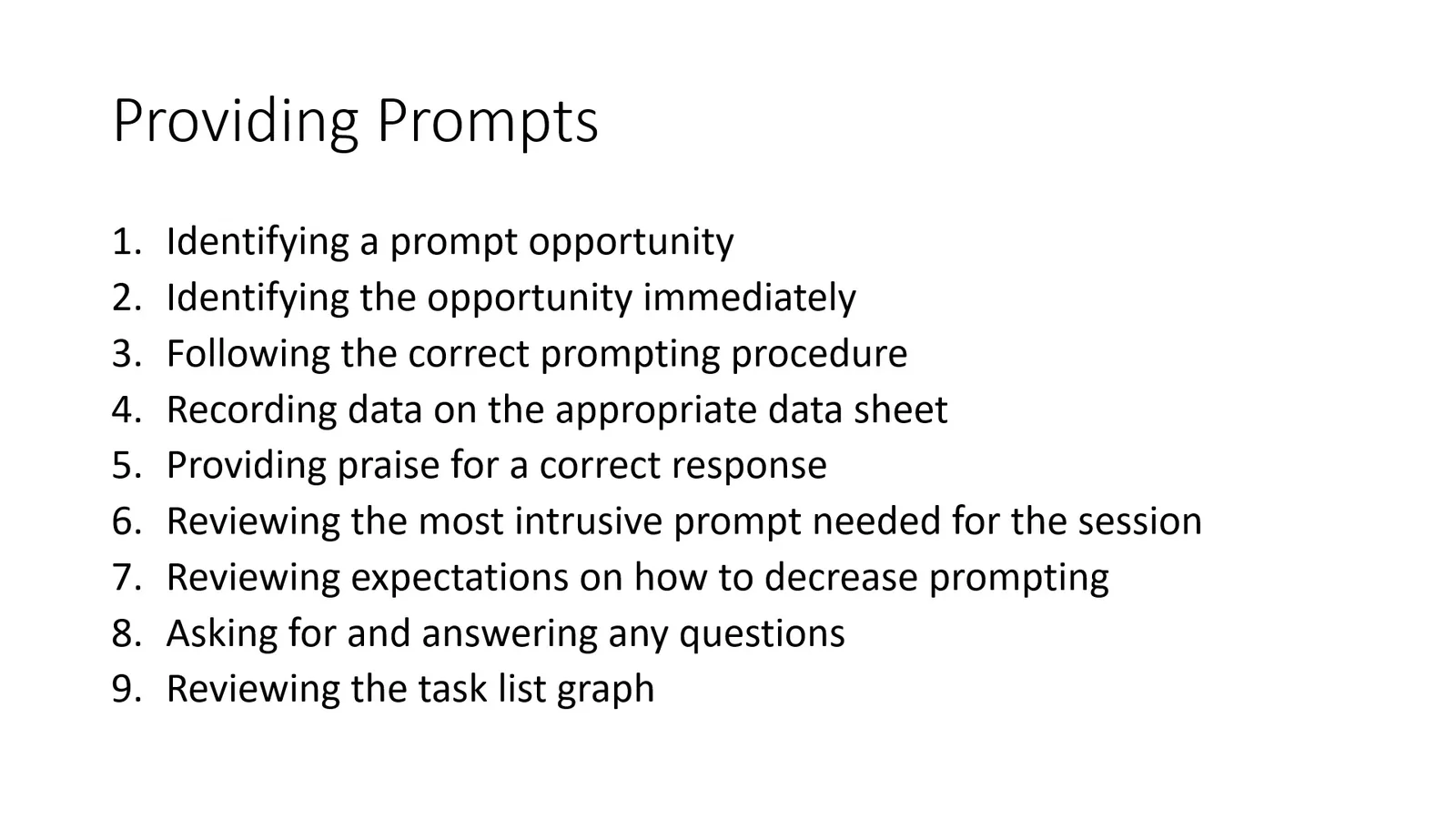
Toward an Evidence-based Supervision Model: Training Students in Independent Fieldwork
Willow Mentorship & Consulting, LLC
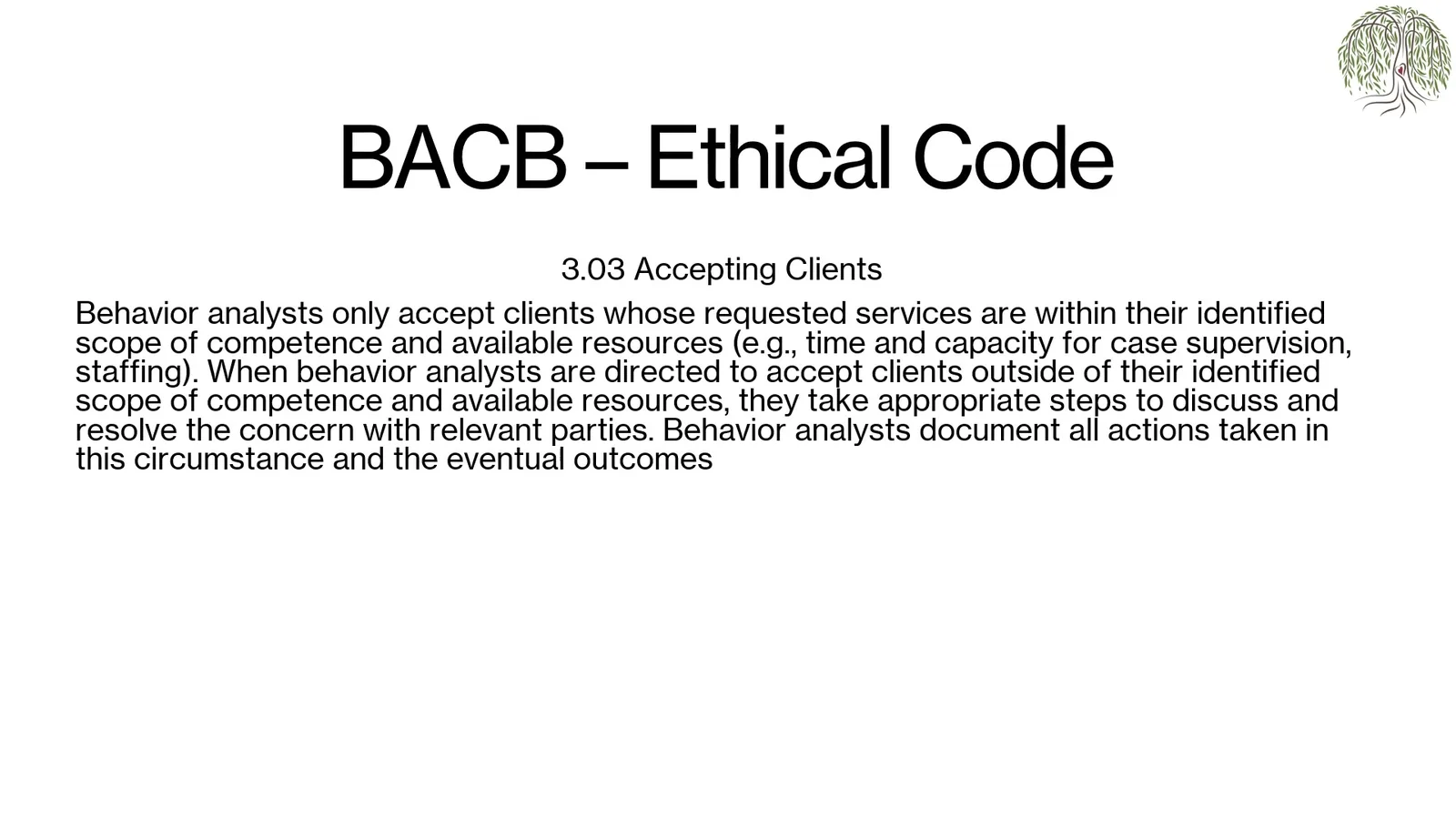
That's Outside My Scope of Competence
Willow Mentorship & Consulting, LLC
More from Hickory Learning Group

OpenCEU is supported by advertising from third-party sponsors. Sponsors are clearly labeled, have no influence over course content, instructors, or CEU decisions, and never appear on certificates. The BACB does not sponsor, approve, or endorse OpenCEU sponsors or their products.