How certificates and attendance tracking work
Every CEU earned on OpenCEU is backed by verified attendance and a BACB-ready certificate. Here’s exactly what learners see, and how we prove they were present — on both live and recorded courses.
What the certificate looks like
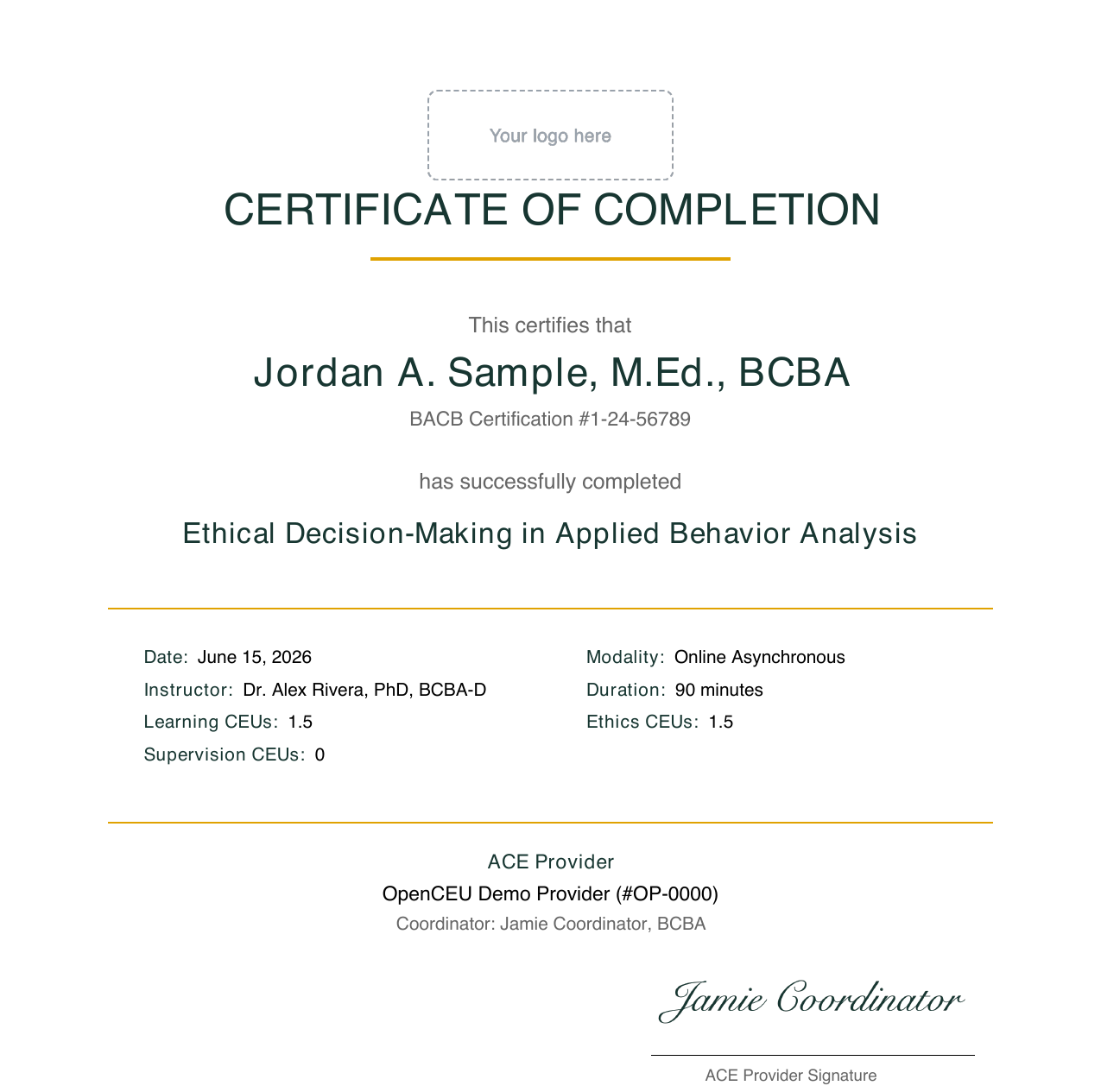
When a learner finishes, OpenCEU issues a certificate automatically. It carries everything a BACB audit needs: the learner’s name and BACB certification number, the course title, the earned date, the CEU breakdown (learning, ethics, supervision), the delivery modality, and the ACE provider’s name, number, and coordinator signature.
Each certificate is frozen to a snapshot at the moment it’s issued, so it never changes even if the course is later edited — and it’s kept as a durable record.
How attendance is verified — on live and recorded courses
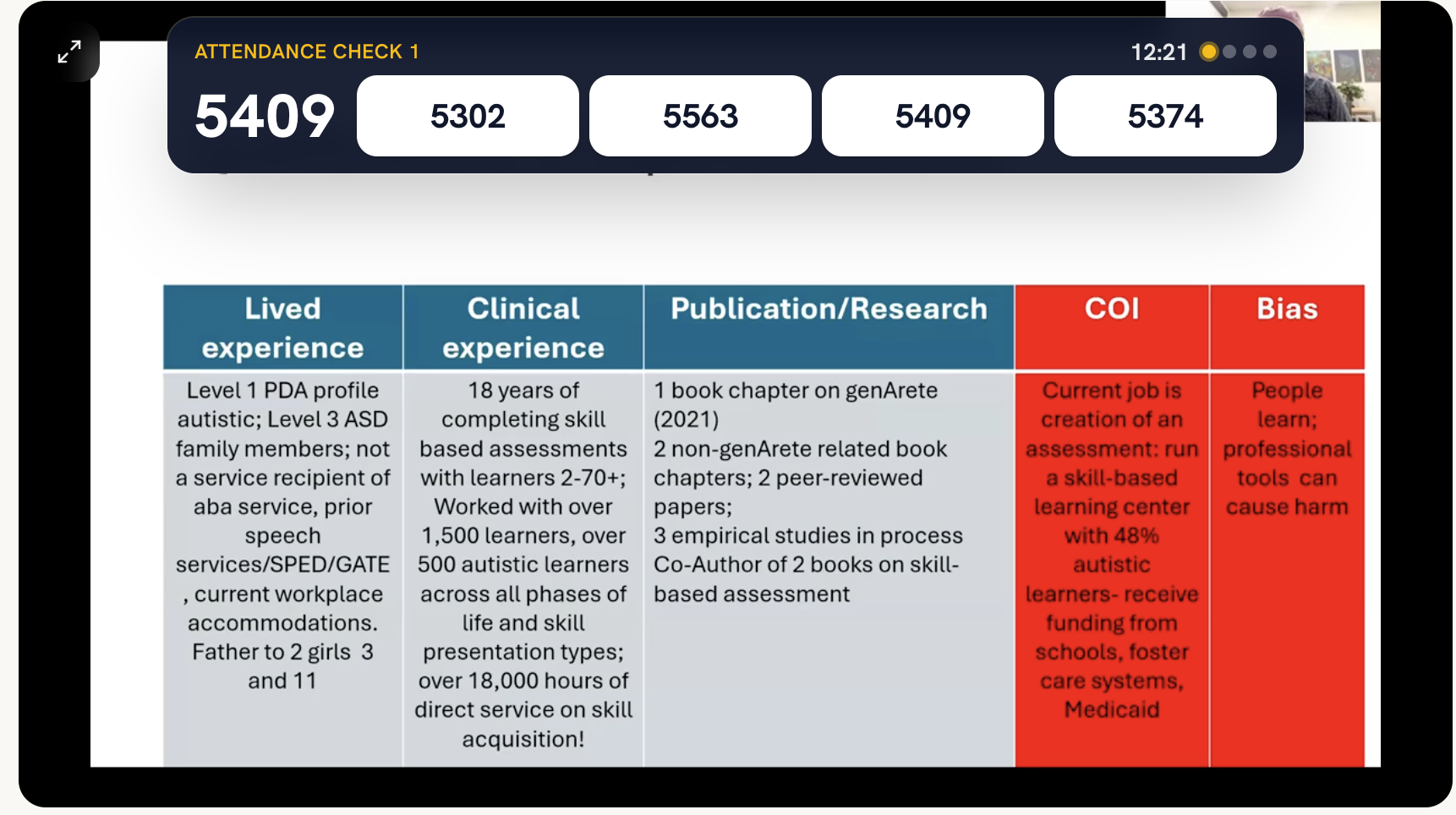
Passive watching isn’t enough for BACB active-responding requirements. On both live events and recordings, timed attendance checks appear as a code in a bar pinned to the top of the video, and the learner taps the matching code before the window closes.
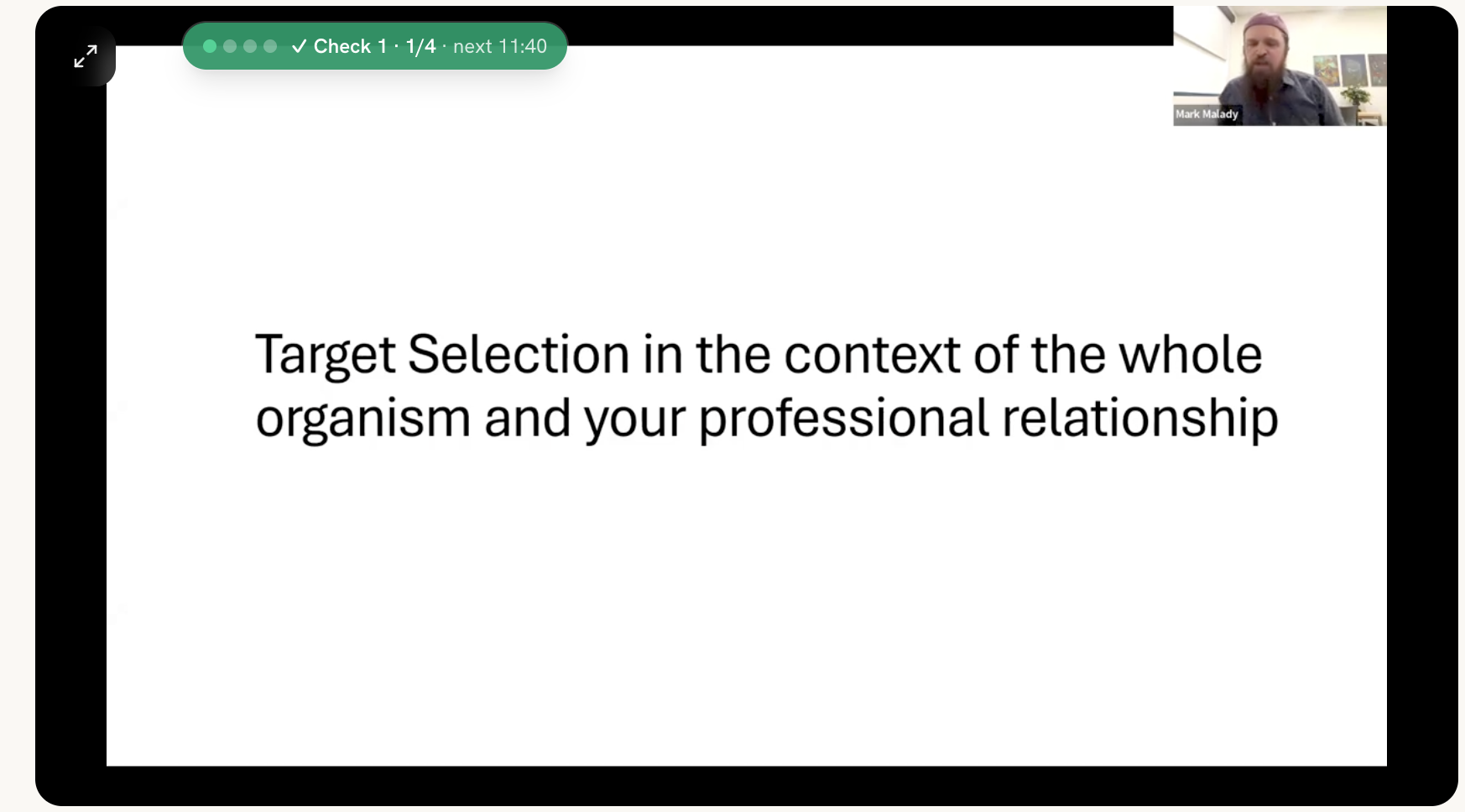
On a live event the checks fire in real time; on a recording they fire as the playhead reaches each point, and skipping ahead past one is blocked. Either way the checks are evenly spaced (more CEUs means more checks), correctness is confirmed on the server, and every check is required.
Recordings also require a short quiz
Live events are earned on attendance alone. Recordings add one more step: after clearing every attendance check, the learner passes a short quiz, and the certificate is generated on the spot.
All checks are required