Rad N Bad: The Forbidden E-Word — Extinction, Its Side Effects, and Compassionate Implementation
Presented by Sean Yocum, MA, BCBA, LBA & Michael Carrero, BCBA, LBA

Extinction is among the most misunderstood and criticized procedures in ABA. In this middle-ground episode, hosts Sean Yocum and Michael Carrero clarify that operant extinction is the discontinuation of reinforcement for a previously reinforced behavior. It is not ignoring the person, withholding compassion, or being cold. They review predictable effects, including extinction bursts, extinction-induced variability, emotional responding, and resurgence in settings with different contingencies. They distinguish operant from respondent extinction, discuss when extinction is not safe or practical (such as severe aggression, self-injury, elopement, and dangerous escape behavior), and describe differential reinforcement without extinction as an alternative in those cases. They make the case that extinction should rarely stand alone: it should be combined with reinforcement of replacement behavior, functional communication, skill building, and rapport. Extinction without reinforcement is suppression, and extinction without communication is frustration. Participants will leave with a pre-implementation checklist for extinction-based procedures.
Sign in to buy — $5One-time purchase, permanent access. Cert delivered to your inbox the moment you pass the quiz.
About this CEU
Extinction isn't ignoring, and it isn't withholding compassion. It's breaking a reinforcement contingency. Mike and I cover what to expect when you put extinction in place, like bursts, variability, and resurgence. We talk about when extinction isn't safe or practical, and why it belongs alongside reinforcement and functional communication. Disclosures & Publication Info No commercial products discussed. Both instructors are employed in ABA service delivery. Published: 2026-06-08 Listening to the podcast episode does not earn CEUs; credit is earned only by completing this OpenCEU event.
Abstract
Extinction is among the most misunderstood and criticized procedures in ABA. In this middle-ground episode, hosts Sean Yocum and Michael Carrero clarify that operant extinction is the discontinuation of reinforcement for a previously reinforced behavior. It is not ignoring the person, withholding compassion, or being cold. They review predictable effects, including extinction bursts, extinction-induced variability, emotional responding, and resurgence in settings with different contingencies. They distinguish operant from respondent extinction, discuss when extinction is not safe or practical (such as severe aggression, self-injury, elopement, and dangerous escape behavior), and describe differential reinforcement without extinction as an alternative in those cases. They make the case that extinction should rarely stand alone: it should be combined with reinforcement of replacement behavior, functional communication, skill building, and rapport. Extinction without reinforcement is suppression, and extinction without communication is frustration. Participants will leave with a pre-implementation checklist for extinction-based procedures.
Credits
0.5 CEUs · 33 min
From the talk
What was covered
Extinction is not ignoring. What to expect, when it is unsafe, and how to pair it with reinforcement and functional communication.
- Define extinction by the contingency change (the rule connecting behavior and its payoff), not by your tone, posture, or intent.
- Plan for four predictable effects: bursts, new or odd responses, emotional responding, and old behavior returning in a new setting.
- Screen for safety first. Severe aggression, self-injury, elopement (leaving a safe area without permission), and dangerous escape behavior usually call for differential reinforcement without extinction (teaching a replacement while still meeting the need).
- Do not run extinction on respondent responding (automatic reflex behavior), such as fight or flight.
- Pair every extinction procedure with a replacement behavior (a safer behavior to use instead), a dense reinforcement schedule (frequent rewards for the new behavior), and a functional way to ask for what is needed.
- Expect old behavior to return in a new setting where different rules apply, the way the Uno house-rules example shows.
What Operant Extinction Is, and Why It Is Not Ignoring
Extinction is not a mystery procedure. Operant extinction (ending reinforcement for one behavior) means the old payoff stops. You no longer deliver the reinforcement (the thing that keeps behavior going) that held that response in place. Over time, the behavior drops off. Sean keeps the example plain. A child screams and gets a cookie, so the screaming grows and sticks around. Break that link and the screaming fades. That is the whole mechanism.
The trouble in our field starts with what people picture when they hear the word. The public story goes like this: ignore a crying child until the child stops. Sean is blunt that this is not behavior analysis. Extinction targets one behavior, not the person in front of you. You are not pulling back all attention, and you are not going cold or flat. You are holding back one payoff for one response, and nothing more than that.
Mike adds a harder point. You are using extinction whether you notice it or not. Every time you praise one behavior, you are not paying off the other ones. Your feelings about that do not change what the learner actually learns. So look at the data instead. If the behavior keeps happening at the same rate, something is still feeding it.
extinction is not ignoring a child. It's not ignoring a client.
From the talk — Sean Yocum & Michael Carrero
You Are Already Using Extinction: Dogs, Shaping, and DR
Mike brings dog behavior into the talk on purpose. With people, we drift into guesses about motives and feelings. With a dog, nobody argues about intent. The dog jumps at the door because jumping gets petted. One guest in the corner saying good puppy keeps the jumping alive. So his own dog goes to a place first, and the calm behavior gets the greeting. Loud, mouthy behavior in the corner gets nothing from anyone.
He is careful with the comparison. Planned ignoring (not reacting to a behavior) with a dog is different from a person to person skill. Those two things sit in different places clinically. The underlying principle is still the same. You either reinforced that behavior or you did not.
Shaping makes this impossible to ignore. Shaping (rewarding closer and closer tries) only moves forward because older tries stop earning the payoff. Differential reinforcement (reward the replacement, not the problem) runs on the same engine. Mike argues that you cannot strip extinction out of DR and still call it DR. He also stresses that this is a sliding scale, not an all or none rule. If a learner usually says ball but can only manage bah today, take it and move on.
But simply put, you get what you pet.
From the talk — Sean Yocum & Michael Carrero
Four Side Effects to Plan For: Bursts, Variability, Emotion, Resurgence
First comes the extinction burst (behavior gets worse before improving). The response gets louder, longer, and harder before it weakens. You may see screaming, aggression, self-injury, property destruction, and real distress. The reason is simple: the learner is trying harder because that response has always worked. Mike tells families up front that it will probably get worse before it gets better.
Second is extinction-induced variability (new and different ways of responding). The vending machine example lands this one well. You put in a dollar and the candy bar hangs there. You shake the machine and give it a punch, and the bar finally drops. Now you have learned to beat on vending machines. When the old response stops paying, new forms show up, and intensity, frequency, and duration all shift.
Third is emotional responding. Viewed through a radical behaviorism lens (behavior explained by its history), escalation is not defiance or manipulation. It is behavior under a contingency that just changed. Fourth is resurgence (old behavior comes back later). Mike uses house rules in Uno. Stacking skip cards works at your house, but not at Timmy's house. Then you get to Johnny's house and try the old move again, just to see what happens.
That last one has real planning value. A response that looks finished can return in a setting where different rules apply. Think school, respite, or a new tech on the case. If the people there do not know the plan, the old response gets paid off again.
Why? Well, it's because the learner is trying harder.
From the talk — Sean Yocum & Michael Carrero
When Extinction Is Not Safe, Practical, or Ethical
Both hosts draw a hard line around danger. Severe aggression, self-injury, elopement, and dangerous escape behavior are poor candidates for extinction. Riding out a burst with those responses can lead to injury, harm, or a full crisis. The science is not wrong in those moments. It is simply not safe to run the procedure that way.
This is where differential reinforcement without extinction fits. You keep delivering the reinforcer that matches the function (the reason a behavior happens). At the same time, you prompt a replacement response. You pay it off on a denser schedule of reinforcement (how often the payoff comes). The problem behavior still works, but the replacement works faster and more reliably.
Mike adds useful nuance about real sessions. In most programs, several other responses already sit on extinction. Then safety forces your hand on one specific response. He compares it to a light switch that you flip when you have no other choice. You are not going to let someone drown, and you are not going to let someone cross the highway.
Sean raises a second limit that gets missed often. Operant behavior (behavior shaped by what follows it) and respondent behavior are not the same thing. Respondent extinction deals with reflex-like responding, like fight or flight. Telling someone to use their words in that state is like watching a person drown from the shore. Throw the raft first.
you cannot safely go through extinction with examples of like aggression, self-injury, elopement, dangerous escape behavior, right?
From the talk — Sean Yocum & Michael Carrero
Why Extinction Still Earns Its Place in a Plan
The hosts are not building a case against extinction. Sean calls it one of the most evidence-based procedures in the field. Decades of work in behavior analysis point in the same direction. When reinforcement stops, behavior decreases. That is not a trend or a style of practice. It is basic learning science.
Extinction also tells you something you cannot get any other way. If withholding attention drops the behavior, attention was likely the maintaining variable (what keeps it going). If blocking escape drops it, escape was doing the work. Sean describes that as diagnostic clarity (a clearer picture of why behavior happens) sitting on top of treatment. Mike agrees that extinction isolates the variable you actually care about.
There is an ethics argument here too. Compared with punishment procedures, extinction adds nothing aversive (no unpleasant thing added). There is no scolding, no timeout, and no response cost (taking something away as a consequence). You just stop delivering one payoff for one response. That is why many analysts treat it as the less intrusive and more humane option.
And through use of extinction, it isolates that variable and gets us more of a clear picture of whether or not our intervention is or isn't working.
From the talk — Sean Yocum & Michael Carrero
Kind Extinction Is Still Extinction
Sean spends real time on kind extinction, which came out of a recent article in the field. Instead of a stone face, you use a neutral tone and a calm presence. You might say you cannot give that right now and that you understand the frustration. You also say you are there when the learner is ready. The slogan is to ignore the behavior and not the person.
His position is direct. A procedure is not defined by tone or by good intentions. It is defined by the contingency change. If a response used to contact reinforcement and now it does not, that is extinction. Attention withheld is attention extinction. Escape blocked is escape extinction. A warm voice does not change the label on the procedure.
He also warns against expecting too much from the softer version. A calm adult may lower some of the emotional escalation. It will not erase the burst, the frustration, or the variability. Those effects come from the removal of reinforcement, not from your facial expression or your tone.
Mike raises a sharp clinical catch on top of that. Magnitude (how big the payoff is) still matters. Say the behavior is maintained by your attention. You kneel down, hold eye contact, and talk it through warmly for a full minute. For some learners, that is the reinforcer. At that point it is no longer extinction. Both hosts still support the rebrand if it helps providers implement the science better. Sean's summary is that better extinction is not a different procedure.
extinction itself isn't defined. It's not defined by tone. Extinction is defined by contingency change.
From the talk — Sean Yocum & Michael Carrero
A Pre-Implementation Checklist for Extinction-Based Procedures
Pull the episode together and you get a short list to run before you start. Do you know the function from data, not a guess? Is the response operant, or is it reflex-like responding you should leave alone? Can you safely withhold this payoff every single time the behavior occurs? If the answer is no, plan DR without extinction instead.
Then check the teaching side of the plan. What is the replacement behavior, and does the learner already have it in their repertoire (the set of skills they can already do)? Functional communication (teaching a request that works) belongs right here: break, help, wait, more. Is that replacement on a dense schedule while the old response slowly thins out? Is rapport strong enough to carry the learner and the team through a rough week?
Last, write the side effects into the plan before they arrive. Describe what a burst may look like and exactly how staff should respond. Name the point where you pause and reassess instead of pushing through. Decide who is trained and in which settings, so resurgence does not catch anyone off guard. Track frequency, duration, and intensity, not just your general sense that things feel better.
The hosts close on the same note they opened with. Extinction by itself is not a treatment plan. Paired with reinforcement, skill building, communication, and rapport, it is ordinary good practice.
Because extinction without reinforcement is suppression. And extinction without communication, well, that's frustration.
From the talk — Sean Yocum & Michael Carrero
Common questions
Is extinction the same thing as ignoring a child?▾
No. Extinction means you stop delivering the reinforcement that kept one specific behavior going. It does not mean you withdraw attention from the person, withhold warmth, or go emotionally cold. The hosts call the ignore-until-they-stop picture poor implementation, not behavior analysis.
What is an extinction burst, and should I expect one?▾
A burst is the period where behavior gets worse before it gets better. You may see louder or longer responding, aggression, self-injury, property destruction, and distress. Mike tells families to expect it, because the learner has a long history of that response working. Your plan should say what a burst may look like and how staff will respond.
When should I use differential reinforcement without extinction?▾
Use it when withholding the reinforcer is not safe or practical. The hosts point to severe aggression, self-injury, elopement, and dangerous escape behavior. In those cases, you keep delivering the reinforcer that matches the function. At the same time, you prompt a replacement response and pay it off on a denser schedule.
Is kind or compassionate extinction a different procedure?▾
Not in the hosts' view. A calm tone and emotional support may reduce some escalation and protect rapport, but the contingency change is identical. If reinforcement is removed, that is extinction. They also warn that warm verbal attention can accidentally reinforce attention-maintained behavior (behavior that happens to get attention).
Can I use extinction with fight or flight responding?▾
Sean says you probably should not. Respondent responding is not operant responding, so extinction is the wrong tool. His comparison is watching someone drown from the shore and telling them to use their words. Handle the safety need first.
About the speaker
Sean Yocum and Michael Carrero host Rad N Bad, a podcast from Hickory Learning Group that takes on debated topics in applied behavior analysis. In this middle ground episode, they work through operant extinction, its predictable side effects, the limits of using it with unsafe behavior, and why pairing it with reinforcement matters. One host describes work with higher intensity, higher interfering challenging behavior, and both argue the real problem is almost always implementation, not the science.
This summary was generated from the recording’s transcript. Quotes are taken word for word from the talk.
What you'll learn
- 1Define operant extinction and distinguish it from respondent extinction and from 'ignoring' behavior. Describe predictable effects of extinction, including bursts, induced variability, emotional responding, and resurgence. Identify conditions under which extinction is unsafe or impractical, and describe differential reinforcement without extinction as an alternative. Design an extinction-based procedure that includes reinforcement of a functional replacement behavior and a plan for side effects.
Concepts in this CEU
Course materials
Related talks
Talks that cover the same concepts
Prediction and Probabilities: Three foundational equations to successful behavior reduction
The Behaviorist Bookclub
The Math Behind Behavior Reduction
The Behaviorist Bookclub
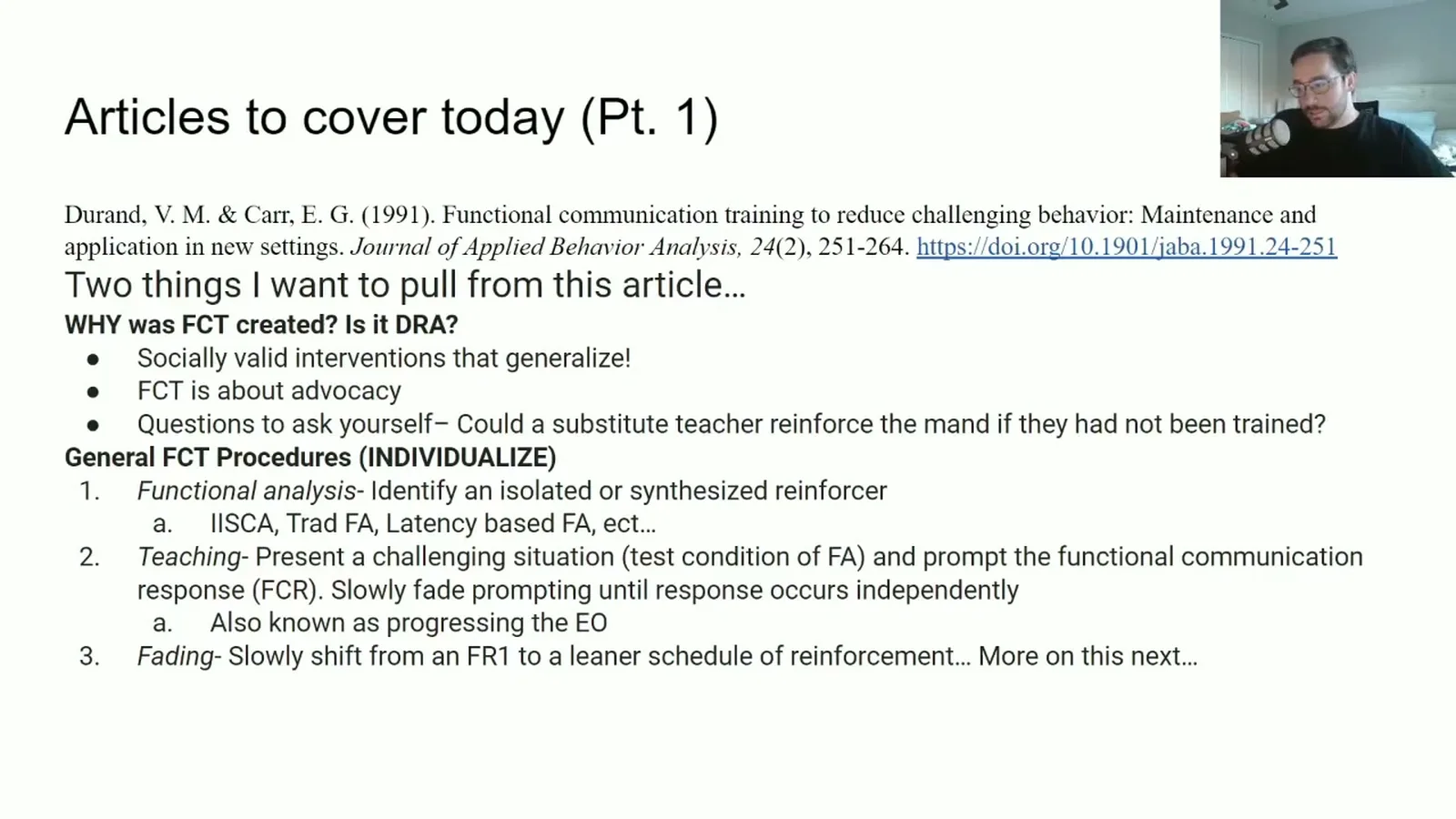
5 Days of Manding Mastery
The Behaviorist Bookclub
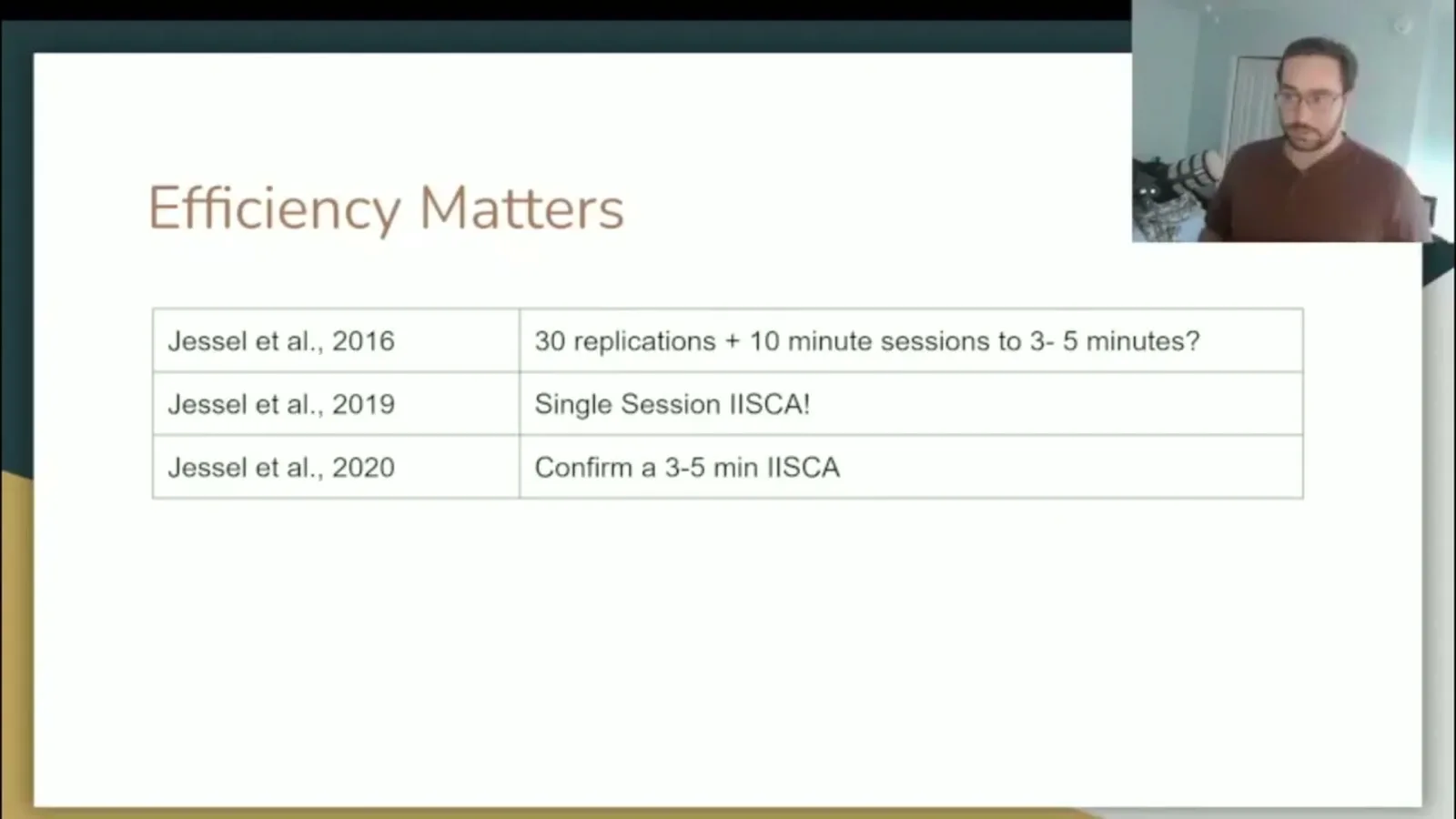
12 days of PFA & SBT
The Behaviorist Bookclub
Analyzing Assent and Taking Data
The Behaviorist Bookclub
The ADHD Exchange: Best Practices
ABA Made Ez
More from Hickory Learning Group

Intersection of Cultural Ontogeny, Ecological FBA and the Behavior Instructional Plan
Hickory Learning Group

Rad N Bad: Your Error Correction Sucks — Error-Correction Assessments, Trials to Mastery, and Learner-Informed Procedures
Hickory Learning Group

Rad N Bad: Your Prompting Hierarchy Sucks — Individualized Prompt Selection, Written Fading Rules, and Preventing Prompt Dependency
Hickory Learning Group
OpenCEU is supported by advertising from third-party sponsors. Sponsors are clearly labeled, have no influence over course content, instructors, or CEU decisions, and never appear on certificates. The BACB does not sponsor, approve, or endorse OpenCEU sponsors or their products.