Crisis Management is a Crisis in Behavior Analysis - Applied 2022
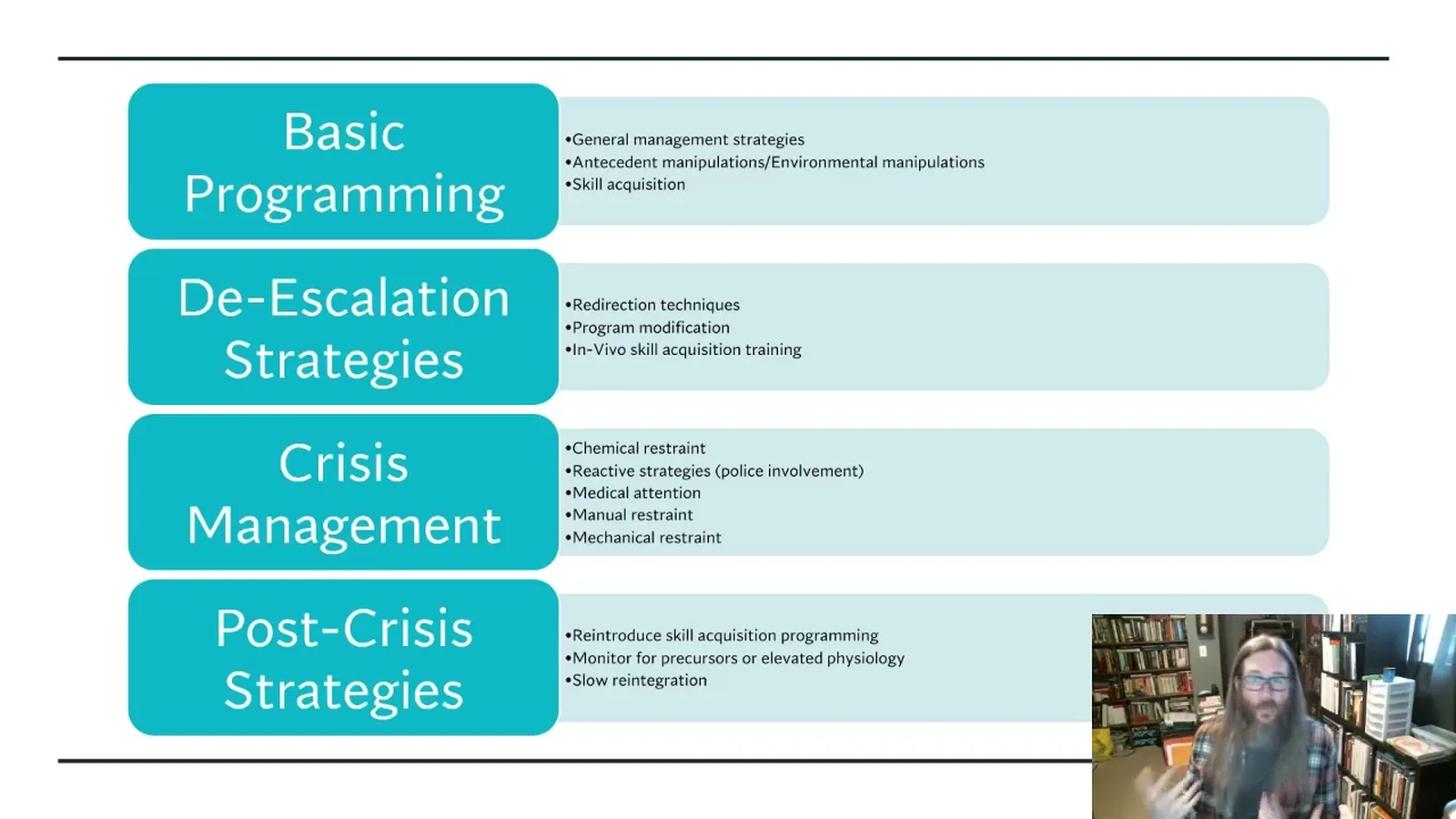
Abstract This session reframes “crisis management” as a preventable systems problem—not a treatment plan. Drawing on injury statistics, ethical obligations, and field trends, the talk defines crisis as an immediate risk to health/safety and locates it as a last-resort response (Plan Z). We examine common failure points that make crises more likely: missing precursors, over-sanitizing antecedents (losing teachable EOs), treating restraint/PRNs as “interventions,” reinforcing restraint through equipment or attention, failing to analyze restraint data, and ignoring contextual variables. The session then pivots to practical fixes: build a consistent, flexible assessment battery (including self-assessment of competence), adopt trauma-assumed practices, and center a prevent-teach-manage model with the “Big Four” (functional communication, attention-getting, tolerance to delays/denials, and independent play). Evidence for omnibus mands is reviewed. Participants learn to graph/analyze crisis events (type, duration, frequency), debrief and retrain from those data, and redesign environments to make crises rare. Finally, we address supervision culture (ditch “warrior” narratives), burnout and self-care as ethical imperatives, and embed social validity and culturally responsive tools (e.g., CIFAI) so goals, procedures, and outcomes are acceptable—and safer—for clients and stakeholders.
Cancel any time. Cert delivered to your inbox the moment you pass the quiz.
What you'll learn
- 1Learning Objectives By the end of this session, participants will be able to:
- 21. Define “crisis” in behavioral terms and differentiate crisis procedures from treatment procedures.
- 32. Identify at least five common contributors to crises (e.g., missed precursors, antecedent over-control, restraint as reinforcement, lack of data analysis, contextual mismatch).
- 43. Construct a flexible assessment battery that includes risk/benefit review, competence self-check, trauma-assumed considerations, and culturally responsive interviewing.
- 54. Design a PTM plan that teaches the Big Four (functional communication—including omnibus mands, attention-getting, tolerance, independent play) to reduce crisis likelihood.
- 65. Analyze crisis-management data (frequency, duration, type of restraint/PRN) and use debrief findings to revise environments, teaching, and staff practices.
- 76. Implement supervision and training practices that reduce reliance on restraint (BST, precursor detection, environmental tweaks) and replace “warrior culture” with safety-first norms.
- 87. Evaluate social validity across goals, procedures, and outcomes (and apply culturally responsive tools) to ensure plans are acceptable and less likely to precipitate crises.