The Interdisciplinary Case Conference
Presented by Michelle Vences

Interdisciplinary collaboration requires more than understanding the role of other professionals; it requires recognizing when another discipline’s expertise should guide assessment or intervention. This interactive case conference uses three mock clinical cases to explore collaboration among Applied Behavior Analysis (ABA), Occupational Therapy (OT), and Physical Therapy (PT). Each case is intentionally designed to highlight a situation in which the presenting concern may initially appear appropriate for one discipline but warrants consultation with or referral to another professional before proceeding. Presenters will examine each case through their respective disciplinary lenses, identify relevant observations and scope-of-practice considerations, and discuss when referral, consultation, or collaborative assessment is indicated. Through guided discussion, participants will practice distinguishing overlapping areas of practice from discipline-specific expertise while considering how behavioral, sensory, motor, environmental, and functional variables may interact. The conference emphasizes that effective interdisciplinary practice does not require professionals to work outside their scope, but rather to recognize the limits of their own clinical lens, communicate meaningful observations, and seek additional expertise when appropriate. Participants will leave with practical strategies for identifying referral needs and supporting more coordinated, person-centered clinical decision-making.
Sign in to buy — $10One-time purchase, permanent access. Cert delivered to your inbox the moment you pass the quiz.
About this CEU
What happens when the best clinical decision is recognizing that "your discipline shouldn't be the first one treating the concern?" For our Collaboration Case Conference, we worked through **three different mock cases**, each intentionally designed so that one of us. ABA, OT, or PT is sometimes needed to recognize when another discipline should be consulted or referred to first. The goal wasn't to prove which discipline could do more. It was to practice something much more important: "recognizing the limits of our own lens." We discussed what each profession might notice, what questions we should be asking, where our scopes intersect, and when the most ethical and clinically appropriate decision is to say: Because collaboration isn't about becoming an expert in someone else's discipline. It's about knowing enough to recognize when their expertise is needed. Three cases. Three disciplines. Three different perspectives. And one shared goal: better care for the person in front of us.
From the talk
What was covered
Three mock cases from a BCBA, a PT, and an OT show how to spot red flags early. Learn to catch toe walking, W sitting, and feeding problems, then refer them out fast.
- Ask caregivers about outdoor play and falls during intake. Climbing skill and frequent falls each tell you something different.
- Treat frequent toe walking as a physical therapy referral, not a behavior you shape with prompts.
- Run a quick toes-to-nose ankle stretch: if the ankle is tight, refer instead of programming around it.
- Before you call running escape, ask whether running and spinning are the child's current form of play.
- If a client cannot stay in a chair, try backless and unstable seating before you write a sitting goal.
- Screen sleep, last meal, bowel movements, and attention access before you change the behavior plan.
Referring Out Is a Clinical Skill, Not a Failure
Most referrals name one concern. It is usually the loudest one. A caregiver reports it, or a doctor writes it down. Then one discipline gets called first. Michelle Vences opened this case conference with that point. Often you are the first clinician the family sees. That seat comes with a duty.
The duty is not to work outside your scope (what your license allows you). It is to notice what your own lens does not cover. The human body is complex. Behavior, muscles, senses, and daily routines all pull on each other. One discipline will never see all of it at once.
The conference ran three made-up cases. One started in Applied Behavior Analysis (a field focused on behavior change). One started in Physical Therapy (care for movement and strength). One started in Occupational Therapy (care for daily life skills). In each case, the first clinician spotted a sign that belonged to someone else. None of them had to diagnose it. They had to name it and route it.
It's not your duty to know exactly what, but can we get an evaluation going to see if we can roll anything else?
From the talk — Michelle Vences
Case One: What the BCBA Noticed Before Treatment Started
The first mock case was an eight-year-old with an autism diagnosis. The referral was for behavior services due to safety concerns at home and in the community. Caregivers reported frequent elopement (leaving an area without permission). They also reported hitting, pushing, and kicking. Those happened during transitions, when preferred things stopped, and when demands went up. Activity stayed high all day. Structured tasks were hard without frequent chances to move.
Michelle's first move is not the observation. She calls caregivers and asks more questions. When does this happen? What does play look like? She listens for outdoor play and climbing. A child who climbs trees probably has the strength and balance. That tells her something. So does the answer she does not hear.
Falls are the next question. A child who climbs but falls often is a different picture. Michelle described that as a ding, ding, ding moment. She is not treating the falls. She is deciding who should look at them.
I sometimes like to just gather a little bit more.
From the talk — Michelle Vences
What a Physical Therapist Does With a Toe-Walking Referral
During the observation, Michelle saw frequent toe walking (walking up on the toes). She did not decide the cause. She sent it to PT. Lori, the physical therapist on the panel, said she sees toe walking often and the causes vary. In many states, families have direct access (seeing a PT without a referral). In Texas, a PT can evaluate without primary care sign-off. A clinic, an outpatient site, or home health can all take it.
Her evaluation starts with the musculoskeletal system (muscles, bones, and joints). Can the foot get flat on the floor? Is the calf tight? Is range of motion (how far a joint moves) full? If the body allows flat feet, the question changes. Now she asks why the child chooses toes. Is it stimming (repeated self-soothing movement)? Is it sensory? Does it happen more barefoot or more in shoes?
The options follow the answer. Some children do not respond well to verbal redirection. For them, a small ankle brace in the shoe gives a steady reminder all day. For a sensory driver, she uses input instead: a sandbox, grass, or sensory brushing. Feet that hate cold, dirt, or grass can drive the toes up. Michelle stressed the long-term stakes she learned from Lori. Tightness can lead to an orthotic (a brace worn in the shoe), then casting, then surgery.
Lori also gave BCBAs three things to try. Check the ankle with a quick toes-to-nose stretch. Tightness means refer. Add sensory input and movement. Use hills up and down, walking backwards, a curb, or a balance beam. A harder balance task often brings heels down. She avoids bouncers and jumping play with toe walkers.
So starting with toe walking, I see a lot of toe walking and there can be a lot of different reasons why.
From the talk — Lori, physical therapist
Elopement Is Not Always Escape
Michelle pushed back on a common read of running. The function (the reason a behavior happens) is not always escape. Sometimes running is the child's play. If cooperative play and turn taking are not there yet, spinning and running may be what play looks like today. That is still play.
The plan changes with that read. She works safety skills instead of framing it as defiance. Responding to stop and come here. Using a timer. Tracking where the caregiver is. She also expects mixed functions. A child may escape a hard task and get a run out of it at the same time.
She made a second point for behavior analysts. Sensory is not someone else's topic. We read our world through hearing, sight, smell, taste, and touch. Stimulus control (a cue that reliably triggers a behavior) depends on that input reaching the child. That is why the ABA and OT overlap here is useful, not threatening.
Sometimes it is sensory seeking. Sometimes that is the only type of play that these kiddos are currently engaging in.
From the talk — Michelle Vences
Case Two: W Sitting, a Weak Core, and Reflexes That Stayed
The second mock case came to PT. A six-year-old was referred for gross motor skills, posture, and balance. Caregivers reported W sitting (knees bent, feet out sideways) during play and table work. The child had trouble holding an upright posture. She tired fast in tasks that needed steady core work.
The evaluation added two more layers. Her toes turned inward when she walked, which follows the hip stretch that W sitting creates. Lori also found sensory processing differences and a few retained primitive reflexes (baby reflexes that should fade). Some kids show gravitational insecurity (fear when feet leave ground). Others seek or avoid vestibular input (the balance sense inside the ears).
The PT plan works the core in every position except W. A ball. A chair with no back. A swing with no back. A beanbag they have to sit up tall on. Walking across a trampoline counts too. She checks the opposite direction with butterfly sit and side sit. If the child cannot get there, she adds stretching. For the inward toes, she uses single leg balance and stairs in neutral alignment.
Then she refers out anyway. The sensory piece and the retained reflexes were her red flags for OT. Her reasoning was simple. Treat the mechanics alone, and progress stalls, because the reason for the position is still there.
So now we've got kind of a trifecta of things that maybe it started with postural instability.
From the talk — Lori, physical therapist
Fatigue and Fear Can Look Like Non-Compliance
Yadi, the occupational therapist on the panel, watches more than sitting. Does the child climb stairs? Go down a slide? Swing? Roll? Put their body in new positions? By six, most of that should happen without much fear. If it does not, she tests for retained reflexes and for fear of movement. Her work adds vestibular input so the head moves through many positions.
Michelle translated that for behavior analysts. A client who will not stay in a chair may be fatiguing, not refusing. You do not need a chair to run a session. Use the other positions Lori listed. She also borrows PT thinking inside ABA goals. Gross motor imitation can include standing on one leg.
The cost of missing this is social, not just physical. A child who cannot climb, swing, or keep up loses playground time. That is where turn taking, requesting, and peer talk live. Michelle called that a physical barrier hiding inside a social goal.
the reason they're not climbing and playing in the playground to socialize with their friends is because they are fatiguing
From the talk — Michelle Vences
Case Three: Six Foods, Hard Transitions, and Who Else Belongs on the Team
The third mock case came to OT. A four-year-old had suspected sensory differences and developmental delays. He ate fewer than six preferred foods, all dry and crunchy carbohydrates. New foods brought crying, gagging, and leaving the table. Dressing, hair washing, and nail trimming were hard. Certain fabrics and shoes were hard too. In class, tabletop work needed frequent movement, and transitions ended in meltdowns.
Yadi starts with a caregiver interview, because one hour will not show a real meal. She asks what mealtime looks like at home and who feeds whom. She also asks about utensils on purpose. A spoon or fork goal is a poor fit for a family that eats with hands or chopsticks. She asks caregivers what independence they actually want right now. A four-year-old may not need buttons yet.
Then she names everyone else the case may need. Speech for swallowing and the mechanics of chewing. A dentist to check for a tongue tie (tight band under the tongue). A dietitian if weight is a concern. And ABA for the long meltdowns and any head banging she cannot explain. She also talked about how to raise a possible autism referral with caregivers. Her approach was gentle: ask what they have already noticed.
Michelle answered from the ABA side. Rule the function in or out. Is it automatic (the behavior itself feels good)? Is it escape? Is it a combination? A sensory preference assessment (a check of what they like) can show whether self-injury is a preferred input. If it is, fill the cup first. Give heavy work (pushing, pulling, and carrying tasks) and proprioception (body input from muscles and joints) before demands. Escape around food still gets honored.
sometimes what we may think is typical for us is not typical for every family
From the talk — Yadi, occupational therapist
Look at the Whole Kid Before You Blame the Plan
Lori closed with a case from her own caseload. She sent a child to an allergist, which is far outside her scope. He was refusing foods because of an allergic reaction the family had not connected. The reaction led to eczema. He was itchy and uncomfortable in his clothes, and he had started to rock and fidget. After the allergy was handled, he ate far more food. The eczema mostly cleared. The rocking mostly stopped. His PT progress took off.
The cheap screens matter. Has the child pooped this week? Did they sleep? When did they last eat? Michelle trains behavior technicians (staff who run the sessions) to ask about sleep and the last meal every day. Offer a snack and a drink without waiting for a request. Some kids cannot ask yet, so hunger shows up as refusal.
The day before your session counts too. A loud cafeteria, a loud gym, and eight hours of demands leave very little left. Michelle suggested changing your approach instead of raising the pressure. Model more. Use tacting (naming what you see) instead of quizzing. Children learn by watching long before they answer questions.
I think it's important to make sure that we're not getting tunnel vision in our disciplines, that we really are seeing the patient as a whole.
From the talk — Lori, physical therapist
Common questions
When should a BCBA refer a client to physical therapy?▾
Frequent toe walking is a clear one, especially if it shows up across settings. Frequent falls without catching themselves is another, since that protective reflex (catching yourself when you fall) should stay for life. Unusual walking or jumping patterns also count, like galloping instead of hopping with both feet. You do not need to know the cause. You need to get an evaluation started.
Do families need a doctor's referral to see a physical therapist?▾
Not always. Lori said many states have direct access, and in Texas a PT can evaluate without a referral from primary care. A clinic, an outpatient site, or a home health agency can take the evaluation. Check the rules in your own state before you tell a family what to do.
Is toe walking a behavior or a medical problem?▾
It can be either, and the evaluation sorts it out. A PT first checks whether the foot can go flat and whether the calf is tight. If the body allows flat feet, the next questions turn to sensory or habit causes. For example, does it happen more barefoot than in shoes? Waiting is the risk, because tightness can move from a brace to casting to surgery.
Why does W sitting matter for a behavior plan?▾
W sitting often comes with a weak core, so the child tires fast in seated work. That fatigue can look like refusal during table time. It can also stretch the hips and turn the toes inward over time. If your client sits this way constantly, ask whether posture, not motivation, is driving the session data.
How do I keep my goals from duplicating the OT's or PT's goals?▾
Ask them directly what they are working on right now. Yadi described asking the PT what they are already targeting, like core strength. That way the two goals complement each other instead of repeating. Two disciplines can target the same activity for different reasons, such as balance versus sensory tolerance. Since ABA teams usually have far more hours, they are also the best place to generalize the other team's skills.
About the speaker
Michelle Vences is a BCBA who also works under an occupational therapist. She described about eight years of practice in occupational therapy settings. Her background spans pediatrics, adult rotations, hospitals, nursing assistant work, home health, outpatient clinic, and remote care. She organized this case conference with a pediatric physical therapist and an occupational therapist she has worked alongside for years.
This summary was generated from the recording’s transcript. Quotes are taken word for word from the talk.
What you'll learn
- 1Learning Objectives By the end of this Collaboration Case Conference, participants will be able to: Identify at least two clinical indicators within mock case scenarios that may warrant consultation with or referral to another discipline, including ABA, OT, or PT. Differentiate between discipline-specific responsibilities, overlapping areas of practice, and concerns that require interdisciplinary consultation or referral. Analyze behavioral, sensory, motor, environmental, and functional variables within clinical case scenarios to determine when additional interdisciplinary assessment or collaboration may be appropriate. Develop an interdisciplinary plan for a mock clinical case that incorporates appropriate professional roles, referral considerations, and person-centered outcomes.
Concepts in this CEU
Related talks
Talks that cover the same concepts

Shaping Behavior Change when ADHD is in the Picture
The Behaviorist Bookclub

It’s Complicated: Teaching Relationship Safety That Reflects Real Life
The Behaviorist Bookclub
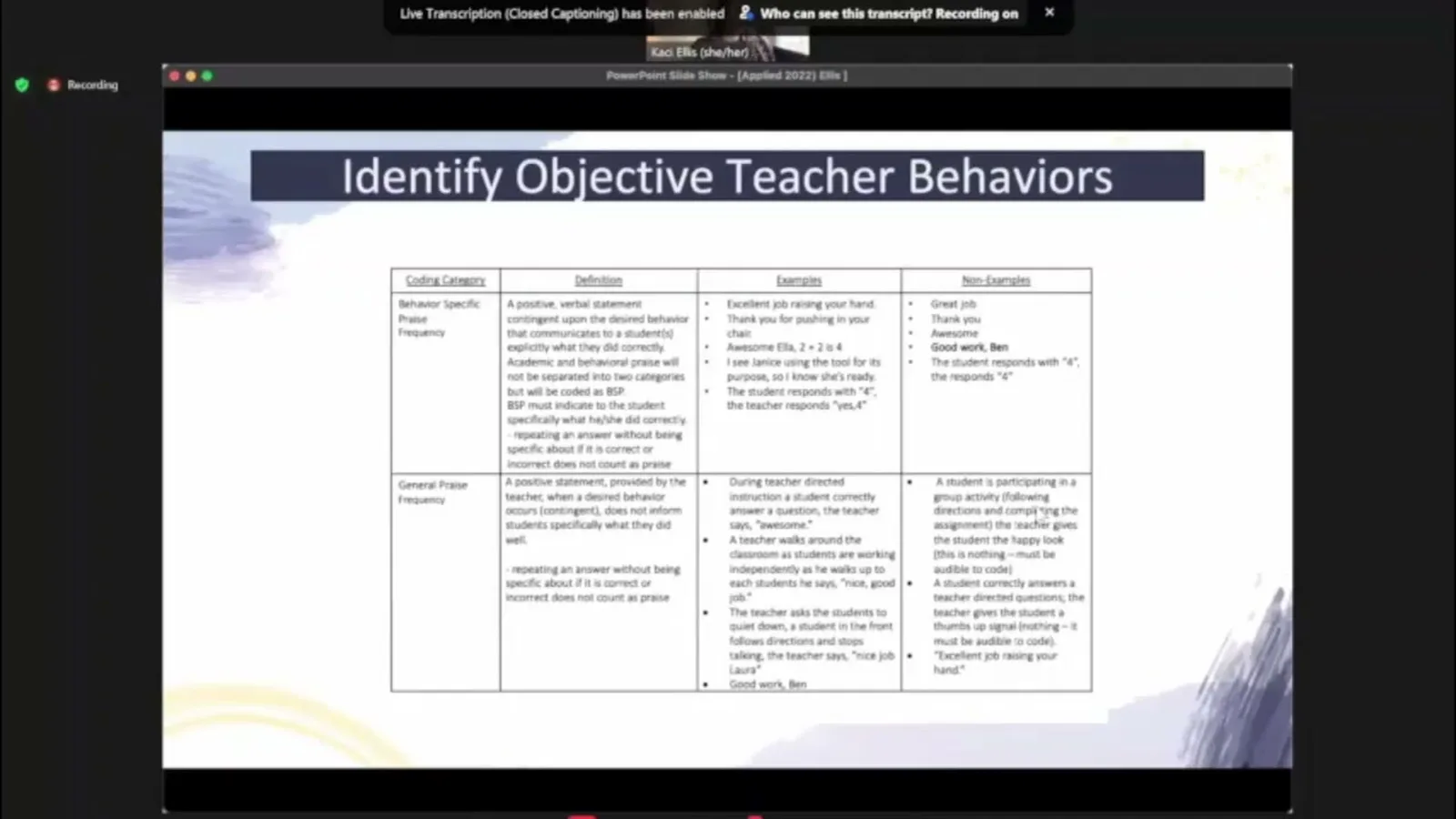
Practical Takeaways for School-Based Behavior Analysts
The Behaviorist Bookclub
Analyzing Assent and Taking Data
The Behaviorist Bookclub
Confessions of a New Behavior Analyst in Functional Analysis
The Behaviorist Bookclub
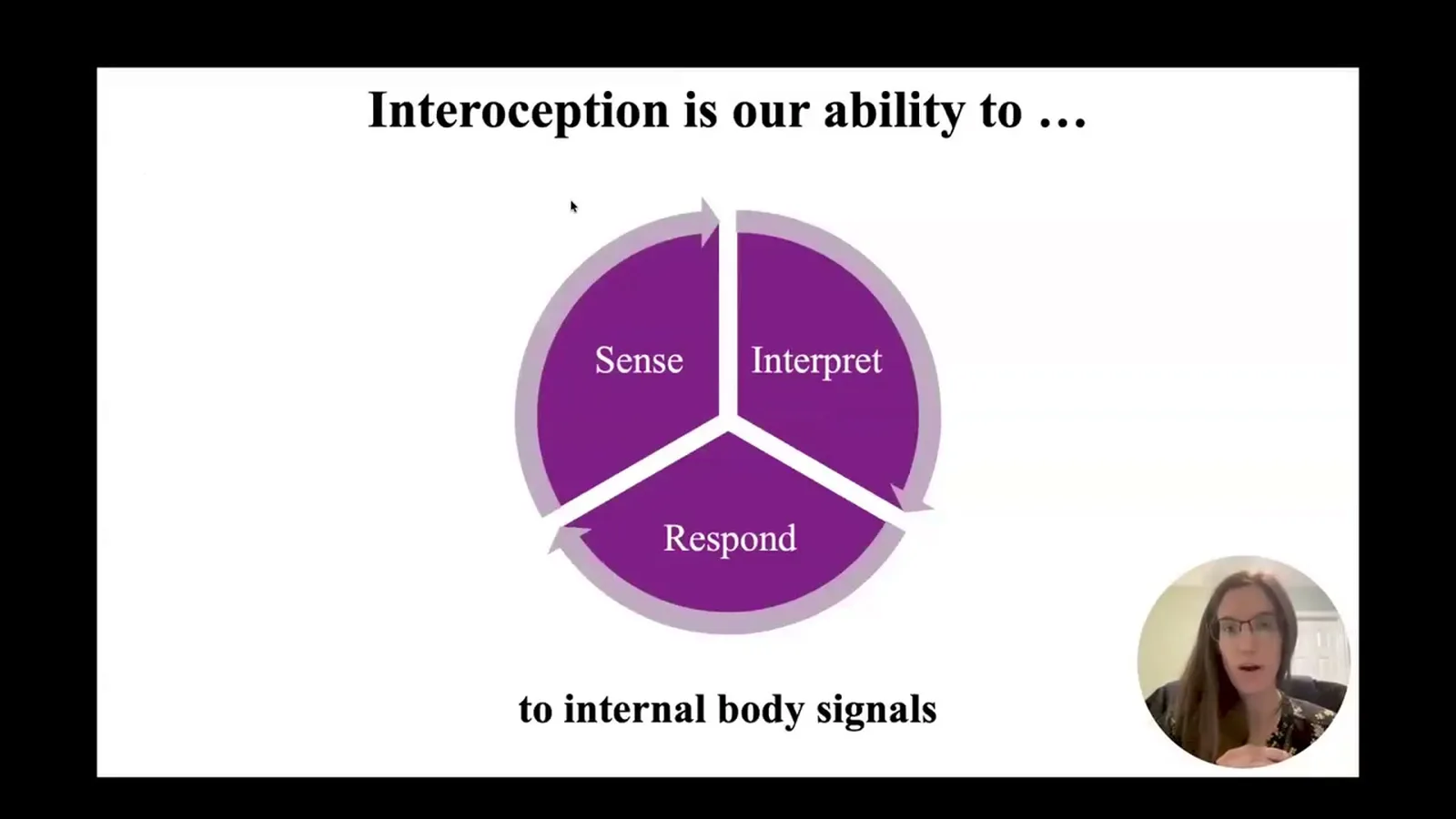
What Does Your Body Know? Teaching Individuals with IDD to Recognize Internal Warning Signs`
The Behaviorist Bookclub
OpenCEU is supported by advertising from third-party sponsors. Sponsors are clearly labeled, have no influence over course content, instructors, or CEU decisions, and never appear on certificates. The BACB does not sponsor, approve, or endorse OpenCEU sponsors or their products.